



Sharon has 21+ years of experience as a qualified Emergency Care Nurse registered with the Australian Health Practitioner Regulation Agency (APHRA) and 12+ years as a First Aid Trainer.
She takes pride in FirstAidPro making first aid training available, comprehensive and affordable to everybody.
You’ve probably heard various tips about what to do if you’re bitten by a snake, but many of these are dangerous myths. From sucking out venom to applying tourniquets, these well-intentioned actions can actually worsen your situation.
It’s essential to separate fact from fiction when it comes to snake bites, as misinformation could cost you precious time and potentially your life.
Let’s explore seven common snake bite myths and uncover the truth behind them. What you learn might surprise you and could one day save your life or the life of someone you know.
Key Takeaways
• Sucking out snake venom is ineffective and can introduce bacteria, increasing the risk of infection.
• Tourniquets for snake bites can increase tissue damage and the risk of limb loss.
• Applying ice to a snake bite site can exacerbate the effects of venom and mask important symptoms.
• Snake bite kits are scientifically proven to be ineffective and potentially harmful.
• Consuming alcohol after a snake bite worsens the situation by accelerating venom absorption.

Sucking Out Snake Venom
Many people mistakenly believe that sucking out snake venom is an effective first aid measure, but this method isn’t only ineffective but potentially harmful. This myth has been perpetuated by popular media and outdated first aid manuals, leading to widespread misinformation.
In reality, once venom enters your bloodstream, it’s impossible to remove it through suction. When you attempt to suck out venom, you’re likely to introduce bacteria from your mouth into the wound, increasing the risk of infection. Additionally, you may accidentally ingest venom, which can cause harm to your mouth and digestive system. By debunking this harmful myth, we can promote more effective and safer snake bite management.
Tourniquets for Snake Bites

You may have heard that applying a tourniquet is an effective first aid measure for snake bites, but this practice can actually increase the risk of tissue damage and potentially lead to limb loss.
Tourniquet Risks
Three risks associated with using tourniquets for snake bites include tissue damage, increased venom absorption, and potential limb loss.
When you apply a tourniquet, you’re restricting blood flow to the affected area, which can lead to severe complications. Prolonged use can cause irreversible tissue damage due to oxygen deprivation, potentially resulting in necrosis and eventual amputation.
Contrary to popular belief, tourniquets can actually increase venom absorption. By concentrating the venom in a smaller area, you’re inadvertently allowing it to penetrate deeper into the tissues. This can accelerate the venom’s toxic effects and make treatment more challenging.
Given these tourniquet complications, medical professionals now recommend alternative treatments. By understanding the risks associated with tourniquets, you can make informed decisions and potentially save a limb—or a life—in snake bite emergencies.
Ice on the Bite Site

Contrary to popular belief, applying ice to a snake bite site can exacerbate the venom’s effects and potentially increase tissue damage. While ice application and cold therapy are often used to reduce inflammation in other injuries, they’re counterproductive in snake bite scenarios. The cold constricts blood vessels, slowing circulation and concentrating the venom in the affected area. This can lead to more severe localised tissue destruction.
Moreover, the use of ice can mask important symptoms that medical professionals rely on to assess the severity of the bite and determine appropriate treatment. Swelling, discoloration, and temperature changes at the bite site provide essential information about venom spread and tissue damage. By altering these indicators, ice application may delay proper diagnosis and intervention.
Identifying Venomous Snakes

To identify venomous snakes, you’ll need to take into account multiple factors.
Physical characteristics, such as head shape, pupil shape, and scale patterns, can provide essential clues. However, you should also examine the snake’s habitat and behaviour.
It’s significant to acknowledge that while these indicators can be helpful, they’re not foolproof, and some non-venomous snakes have evolved to mimic their venomous counterparts.
Physical Characteristics
When attempting to identify venomous snakes, you’ll need to observe several key physical characteristics that distinguish them from their non-venomous counterparts. One essential feature to examine is the shape of the head.
Venomous snakes typically have triangular or arrow-shaped heads, which are distinct from their necks. This shape accommodates their venom glands. In contrast, non-venomous snakes often have rounded heads that blend seamlessly into their bodies.
Pay close attention to the eyes. Venomous snakes usually possess elliptical or cat-like pupils, while non-venomous species have round pupils. However, this rule doesn’t apply universally, as some venomous snakes, like coral snakes, have round pupils.
The scales’ texture and colour patterns can also provide valuable clues. Venomous snakes often have keeled scales, which give them a rougher appearance, whereas non-venomous snakes tend to have smooth scales.
Habitat and Behaviour
In addition to physical characteristics, understanding the habitat preferences and behavioural patterns of venomous snakes is essential for accurate identification and risk assessment.
Behavioural patterns can aid in identification. Venomous snakes often display defensive postures when threatened, such as coiling, hissing, or rattling. They’re generally less aggressive than commonly believed and will typically try to avoid human contact. However, they may strike if cornered or startled.
Understanding activity patterns is significant; many venomous snakes are nocturnal or crepuscular, becoming more active during cooler hours. Some species exhibit seasonal behaviour changes, such as brumation in colder months or increased activity during mating seasons.
Catching the Snake for Identification

Attempting to catch a snake for identification after a bite is an extremely dangerous and ill-advised practice that medical professionals strongly discourage. Your safety should be the primary concern, and pursuing the snake could lead to additional bites and complications. Instead, focus on seeking immediate medical attention and providing accurate information about the incident.
Alcohol as First Aid
A common misconception in snake bite first aid is the use of alcohol, which you should avoid entirely. Contrary to popular belief, alcohol consumption doesn’t help in snake bite emergencies and can actually worsen the situation. This is one of the most persistent myths in snakebite treatment.
When you drink alcohol after a snake bite, it can accelerate the absorption of venom into your bloodstream. This happens because alcohol dilates your blood vessels, allowing the venom to spread more quickly throughout your body. Additionally, alcohol’s pain-masking effects might lead you to underestimate the severity of the bite, potentially delaying vital medical treatment.
Alcohol can also interfere with your body’s natural responses to the venom and complicate medical interventions. It may increase the risk of excessive bleeding, as alcohol thins your blood. Moreover, if you’re inebriated, it becomes challenging for medical professionals to accurately assess your symptoms and administer appropriate treatment.
Basic First Aid Steps For A Snakebite
Here are the basic first aid steps for snakebite in the Australian context:
- Call 000 for emergency assistance immediately.
- Keep the person still and calm. Have them lie down to prevent movement.
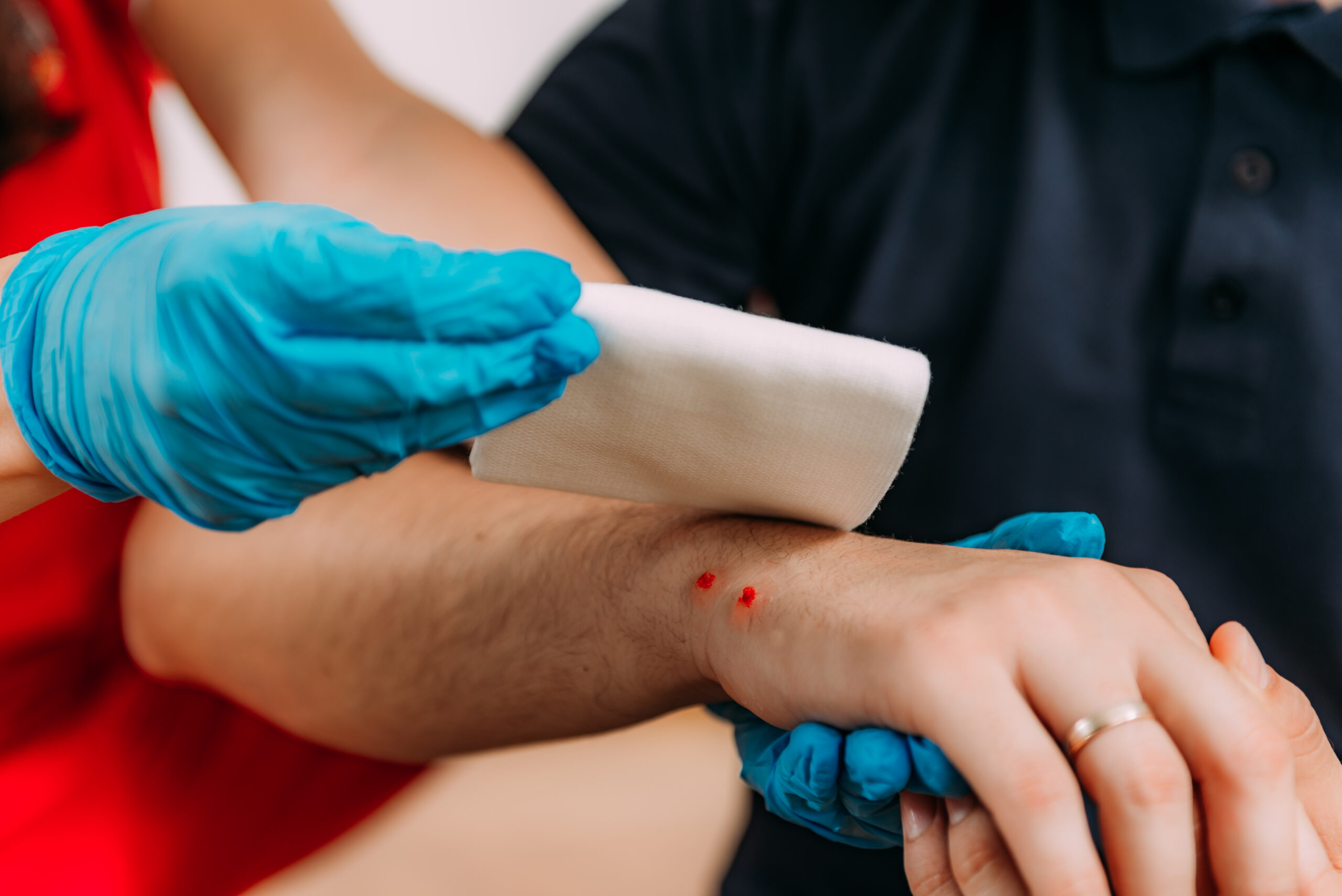
- Apply a pressure immobilisation bandage:
- Start bandaging from just above the fingers or toes, moving up the limb.
- Use a broad (7.5 cm wide) elastic bandage, applying firm pressure (55-70 mmHg for legs).
- Extend the bandage as high as possible on the limb.
- Mark the location of the bite on the bandage.
- Immobilise the affected limb:
- Use splints to keep the entire limb still.
- For leg bites, consider splinting both legs together.
- Do not wash the bite area, as venom residue can help identify the snake.
- Do not apply a tourniquet, cut the wound, or attempt to suck out the venom.
- Monitor the person’s condition and be prepared to perform CPR if necessary.
- Wait for medical help to arrive. Keep the pressure bandage on until instructed otherwise by medical professionals.
Remember, all snake bites in Australia should be treated as potentially life-threatening, even if symptoms are not immediately apparent.
Frequently Asked Questions
What should I do if you’re in a remote area and bitten by a snake without immediate access to help?
Try to stay as calm and still as possible to slow venom spread. Apply a pressure immobilisation bandage correctly, immobilise the affected limb, and call for emergency assistance as soon as you can. If communication is unavailable, send someone for help without delay while you remain immobilised. Avoid any attempts to walk or move unnecessarily.
Can a dry bite still cause medical issues?
Yes, even a dry bite, where no venom is injected, can lead to localised swelling, pain, or infection at the bite site. Medical attention is crucial to confirm whether venom was delivered and to ensure that complications like infection are prevented.
How can I safely coexist with snakes in areas where they are common?
Minimising encounters involves keeping your yard tidy by clearing debris, sealing gaps in structures, and avoiding tall grass. When outdoors, wear protective clothing like boots and avoid placing your hands or feet in places you cannot see. Understanding local snake species and their behaviours can also reduce risks.