



Sharon has 21+ years of experience as a qualified Emergency Care Nurse registered with the Australian Health Practitioner Regulation Agency (APHRA) and 12+ years as a First Aid Trainer.
She takes pride in FirstAidPro making first aid training available, comprehensive and affordable to everybody.
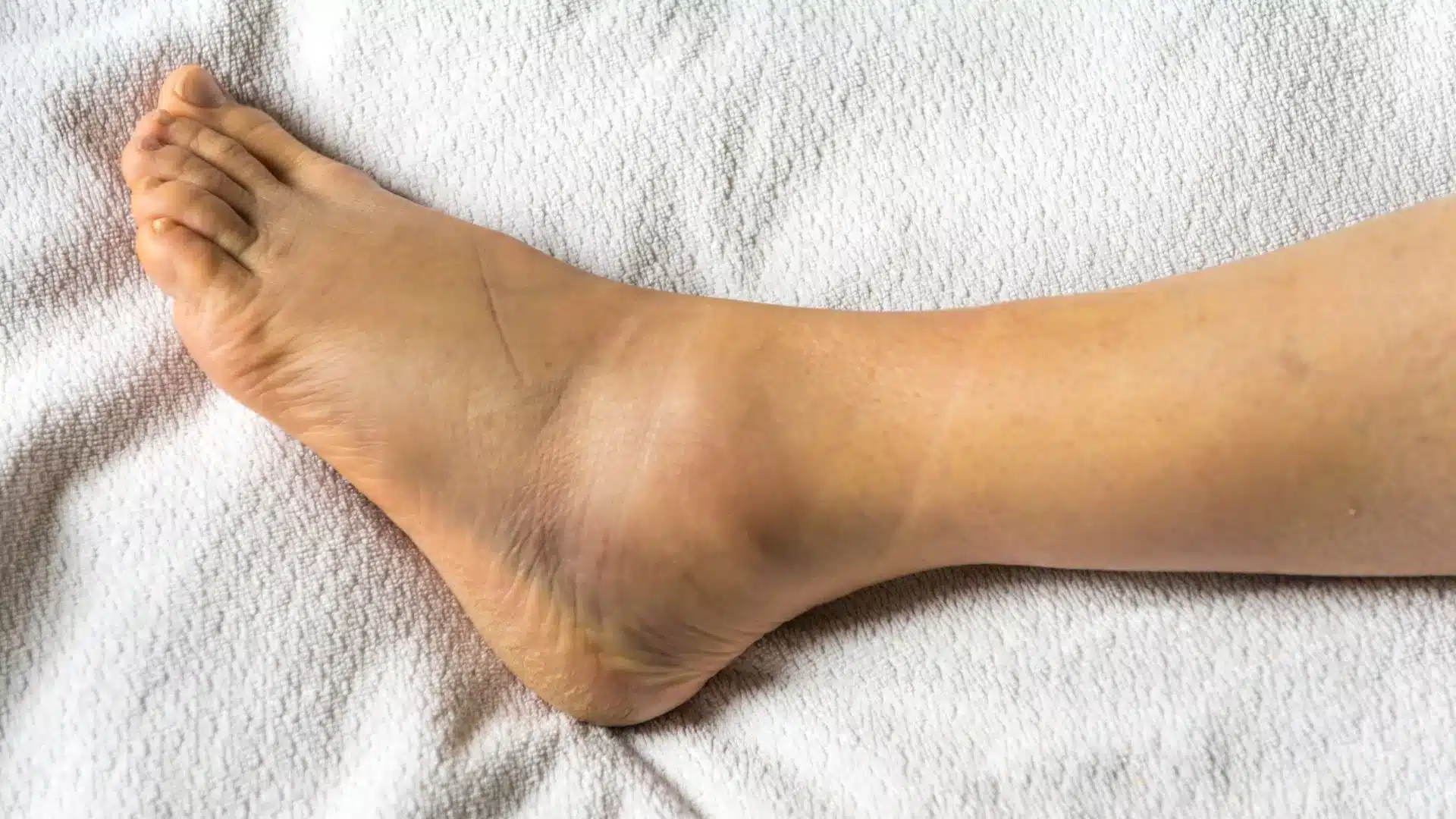
A sprain is a common soft-tissue injury that occurs when a ligament is stretched or torn, usually after a fall, twist, or sudden impact. Sprains are often confused with strains, yet the correct first aid response can differ. Understanding the difference between a sprain and strain, recognising symptoms early, and applying appropriate first aid guidance helps reduce pain, limit swelling, and support safe recovery at work, in sport, and at home.
Build confidence in injury response—enrol in a nationally recognised first aid course with First Aid Pro and learn practical, compliant injury management skills.
Key Takeaways
- Sprains affect ligaments; strains affect muscles or tendons.
- Early first aid reduces swelling and supports recovery.
- Use DRSABCD whenever there is a significant incident or deterioration.
- Ongoing pain or instability needs medical review.
What Is a Sprain?
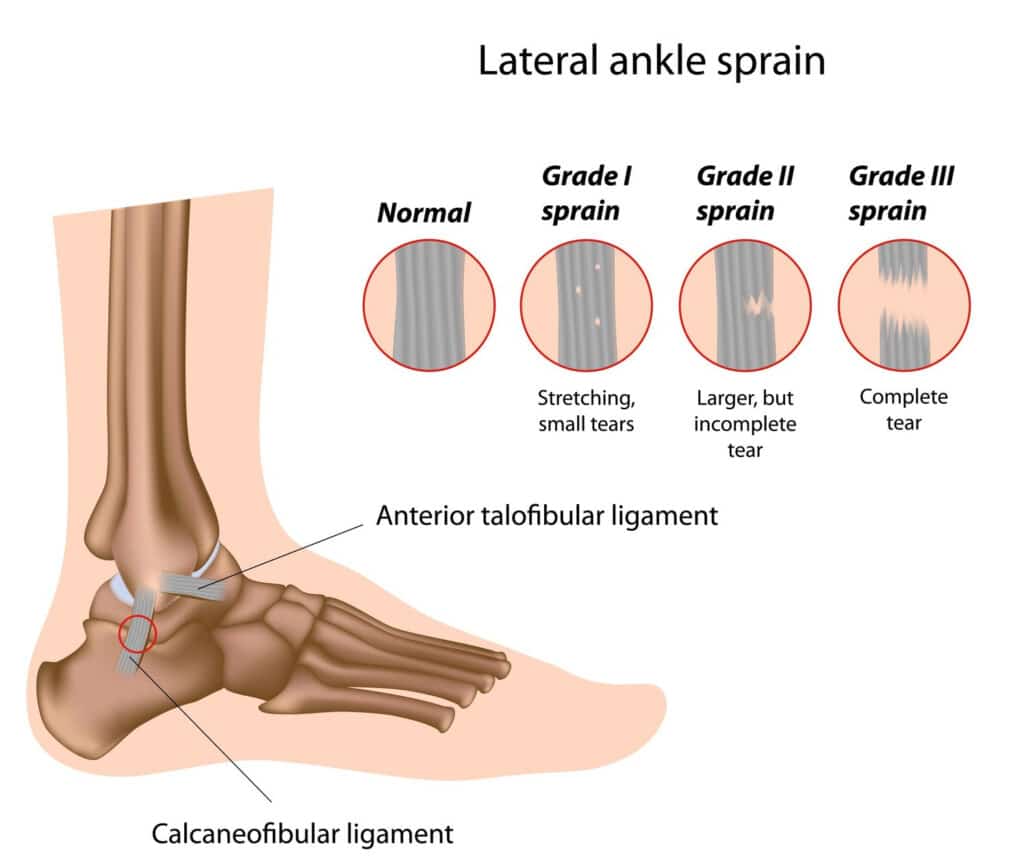
Ligaments are tough bands of connective tissue that stabilise joints by connecting bones to each other. A sprain happens when a ligament is overstretched or torn, commonly around the ankle, knee, wrist, thumb, or shoulder. Sprains range from mild stretching to partial or complete tears.
How sprains occur:
They typically result from a sudden twist, awkward landing, or force that pushes a joint beyond its normal range—think rolling an ankle on uneven ground or bracing a fall with an outstretched hand.
What Is a Strain?
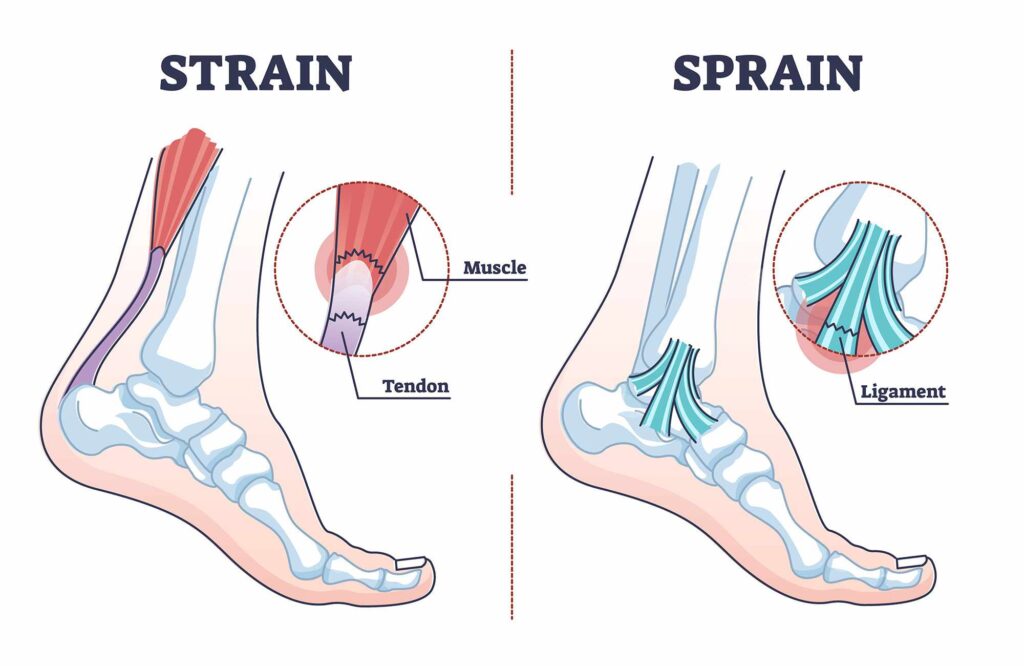
A strain affects muscles or tendons (the tissue connecting muscle to bone). Strains often develop through overuse, lifting, or sudden contraction—such as pulling a hamstring while sprinting or straining a lower back during manual handling.
Why confusion matters:
Because ligaments and muscles heal differently, early care and load management can vary. Getting the identification right improves outcomes.
Sprain vs Strain: What’s the Difference?
Quick comparison table
Feature | Sprain | Strain |
Tissue injured | Ligament (bone to bone) | Muscle or tendon (muscle to bone) |
Common locations | Ankle, knee, wrist, thumb | Hamstring, calf, lower back |
Typical cause | Twist, fall, impact | Overstretch, overuse, lifting |
Key symptoms | Joint pain, swelling, bruising, instability | Muscle pain, tightness, weakness |
First aid focus | Control swelling, protect joint | Reduce load, control pain |
Why it matters for first aid:
Sprains often involve joint stability, so compression and protection are crucial. Strains may tolerate gentle movement sooner once pain settles.
Common Types of Sprains
- Ankle sprains: the most common, often from inversion injuries.
- Wrist and hand sprains: falls onto an outstretched hand.
- Knee sprains: ligament stress during pivoting or contact sports.
- Thumb sprains: gripping or falls affecting the ulnar collateral ligament.
Signs and Symptoms of a Sprain
Sprain symptoms can vary by severity:
- Pain at the joint, especially with movement or weight bearing
- Swelling and bruising developing within hours
- Reduced range of motion
- Instability or a feeling the joint may “give way”
Severe pain, rapid swelling, or inability to bear weight can indicate a serious ligament injury or fracture and requires medical assessment.
First Aid Treatment for Sprains
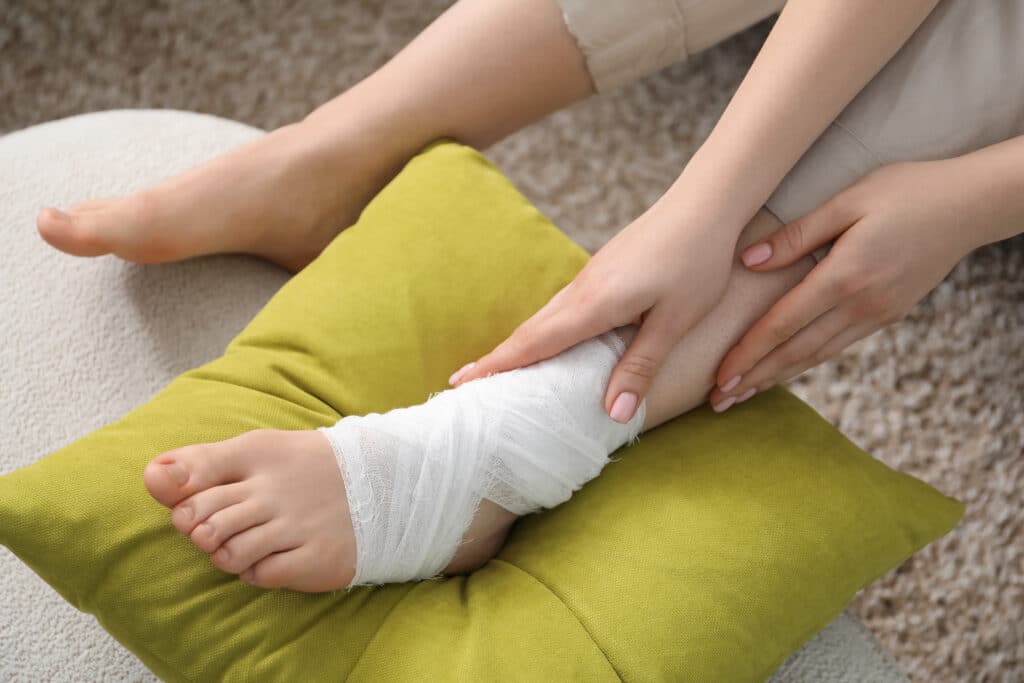
Early management aims to limit swelling, protect the joint, and relieve pain.
Immediate first aid steps
What not to do (early phase)
Avoid heat, alcohol, and massage soon after a sprain, as these can increase bleeding and swelling.
RICER and Modern Advice
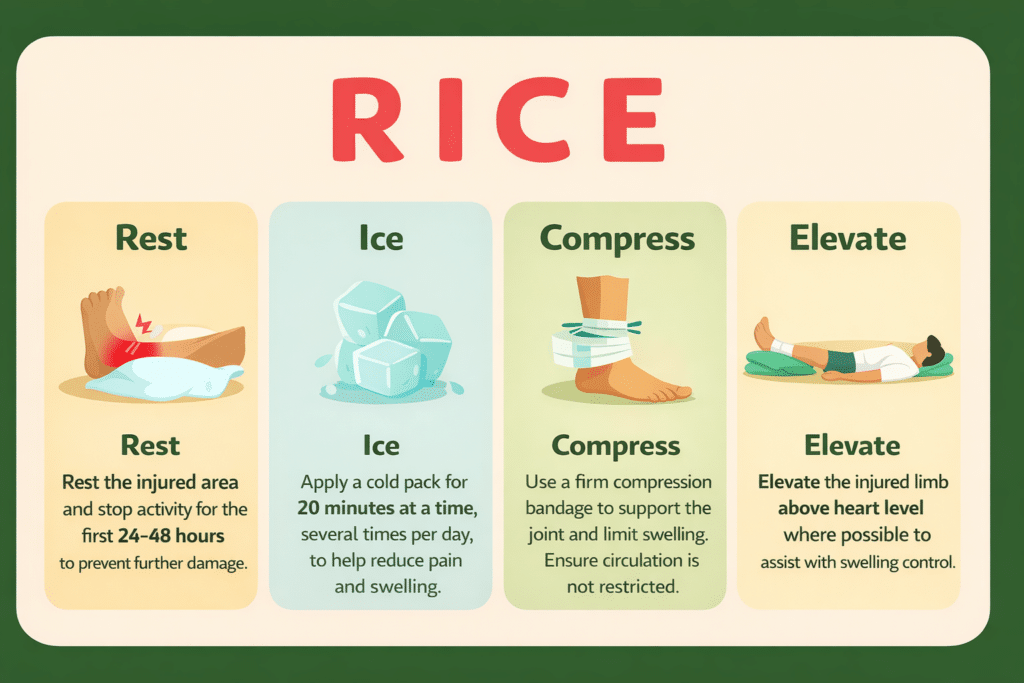
The traditional RICER approach is still widely taught for initial care, with modern advice emphasising protection and gradual return to movement as pain allows. Please note that early, excessive loading can delay recovery.
The RICER method illustrates the first aid approach used in the first 48–72 hours after acute soft-tissue injuries like sprains, strains or bruises to reduce pain and swelling and promote healing. It is an extension of the older RICE protocol and stands for Rest, Ice, Compression, Elevation, Referral.
DRSABCD Alignment: When to Use It
While most sprains are not life-threatening, DRSABCD applies whenever there is a significant fall, collision, or the casualty is in distress.
- D – Danger: ensure the area is safe (e.g., traffic, uneven ground).
- R – Response: check responsiveness after a fall.
- S – Send for help: call 000 if there is severe pain, deformity, suspected fracture, head injury, or collapse.
- A–D: assess airway, breathing, and circulation if the person is unwell or deteriorates.
First aiders should always prioritise life-threatening issues before focusing on limb injuries.
Managing Sprains and Strains: Treatment and Recovery
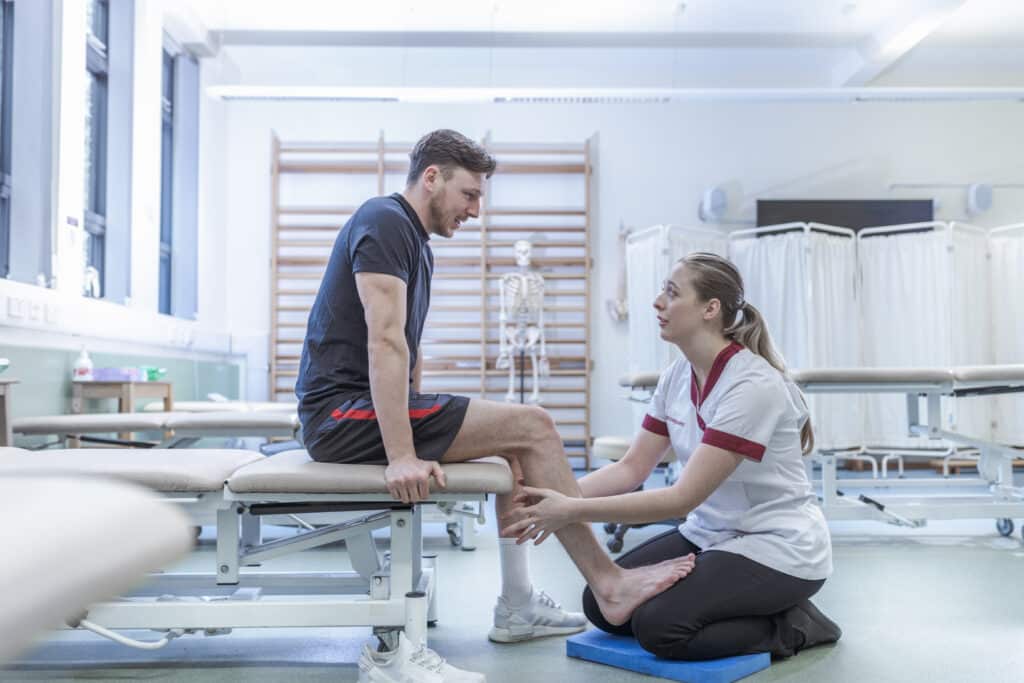
Recovery from sprains and strains varies from person to person. Most soft tissue injuries heal within several weeks, depending on how severe the injury is, whether there are complications such as stiffness, weakness, or reduced balance, and the individual’s overall health and activity level.
Some injuries tend to recover faster than others. Hamstring strains, which are among the most common muscle injuries, often allow a return to normal activity within around three weeks. Lateral ankle sprains, one of the most frequent ligament injuries, typically improve within two to three weeks. That said, recovery times can differ significantly, with some cases taking several months before full function returns.
Early and appropriate treatment plays a key role in speeding up recovery. You should seek medical or physiotherapy advice if normal movement does not return, or if pain and swelling persist beyond a few days after the injury.

Treatment approaches may include:
Targeted exercises, prescribed by a doctor or physiotherapist, to restore strength, flexibility, and movement
Bracing or external supports to protect the injured area and allow safer participation in daily activities while healing occurs
Hands-on techniques, such as joint mobilisation or soft tissue therapy
Electrotherapy, where clinically appropriate
Pain relief medications, used cautiously and only after advice from a doctor or pharmacist, as some medicines may affect soft tissue healing
A gradual return to activity, increasing load and intensity as function improves
In more serious cases, where the tissue has completely torn (grade III injury), surgery may be required to repair the damaged structures. These injuries usually involve a lengthy rehabilitation period to rebuild strength, stability, and function.
Importantly, evidence suggests that medium to long-term recovery outcomes are often similar whether a grade III injury is treated surgically or managed with immobilisation followed by structured physiotherapy. The most suitable treatment option depends on the injury, lifestyle demands, and professional medical advice.
When to Seek Medical Attention
Pain is severe or worsening
Severe pain, increasing pain, or pain that does not settle may indicate a more serious injury.
Cannot bear weight or move normally
If the joint cannot take weight, feels unstable, or movement is clearly limited, arrange assessment.
Obvious deformity or numbness
Deformity, tingling, numbness, or colour change can signal a fracture or circulation or nerve issue.
Swelling or instability persists
If swelling, bruising, or the joint “giving way” continues after several days, get it checked.
Recovery and Rehabilitation
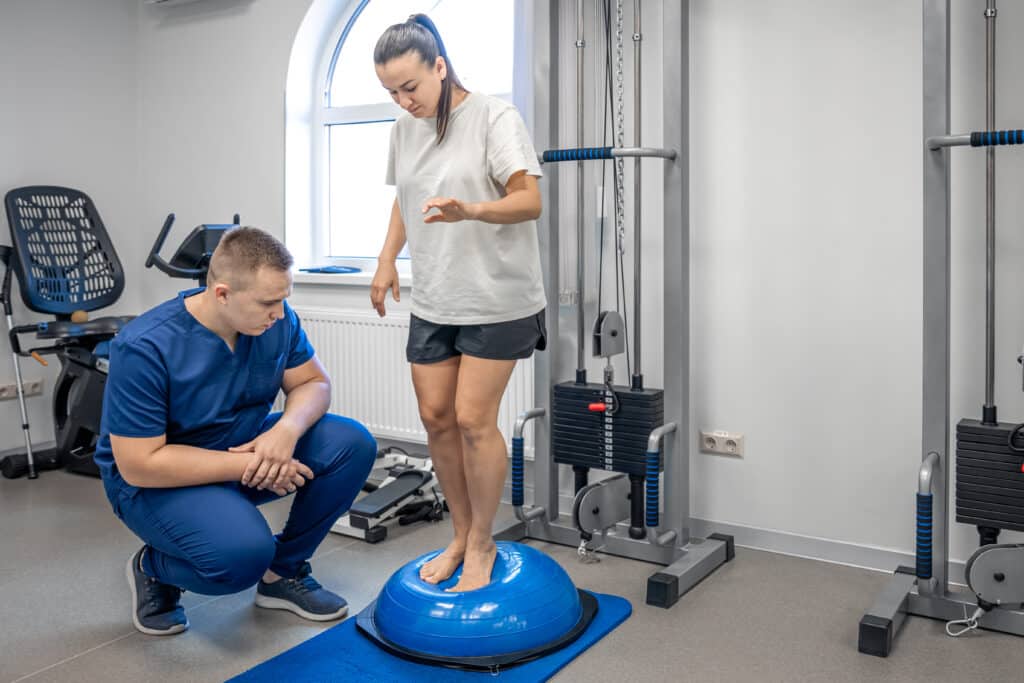
Most mild sprains improve over days to weeks, while moderate to severe injuries may take weeks to months. A staged return—progressing from rest to gentle movement, strengthening, and balance—reduces re-injury risk. Returning to sport or heavy work too early is a common cause of recurrence.
Preventing Sprains and Strains
In workplaces and sport, prevention focuses on:
- Warm-ups and conditioning
- Appropriate footwear and surfaces
- Manual handling training
- Early reporting and modified duties
Equip your team with practical injury response skills—book First Aid Pro’s nationally recognised first aid training for workplaces and community groups.
Knowledge Test: Sprain vs Strain First Aid
1. Which tissue is injured in a sprain?
2. Which injury most commonly affects muscles or tendons?
3. What is an appropriate early first aid step for a sprain?
4. When should DRSABCD be prioritised?
5. When should medical assessment be sought for a sprain?
Be ready to respond with confidence—enrol in a nationally recognised first aid course with First Aid Pro and support safer workplaces and communities across Australia.
References
- Sports Medicine Australia – Soft tissue injury guidance
- Better Health Channel: Sprains and Strains
- healthdirect: Sprains and strains
Frequently Asked Questions
How long does a sprain take to heal?
Mild sprains may settle within 1–2 weeks; moderate to severe sprains can take several weeks or longer, depending on ligament damage and rehabilitation.
Is ice always required for sprains & strains?
Cold therapy can help with pain and swelling early on. Use short applications with a cloth barrier.
Can I walk on a sprained ankle?
If pain allows, gentle weight bearing may be possible, but severe pain or instability needs assessment.
When should I call 000?
Call 000 for severe pain, deformity, collapse, head injury, or if the casualty deteriorates.
Do sprains need physiotherapy?
Moderate to severe sprains often benefit from guided rehabilitation to restore strength and stability.