



Applicable to:
Construction
Warehousing

Top First Aid Techniques for Cleaning a Wound Safely

cleaning a wound safely

Table of Contents

The process of cleaning a wound is one of the most important first aid skills you can master. Whether it’s a small cut from cooking, a child’s scraped knee, or a more serious injury, knowing how to clean a wound correctly can prevent infection and speed up healing.

Many of us make simple mistakes when treating wounds—using the wrong cleaning solution, forgetting crucial steps, or not knowing when professional medical help is needed. These errors can turn minor injuries into more serious health problems.

When to Clean vs. When to Seek Medical Help

Before attempting to clean any wound at home, it’s crucial to determine whether it requires professional medical attention.

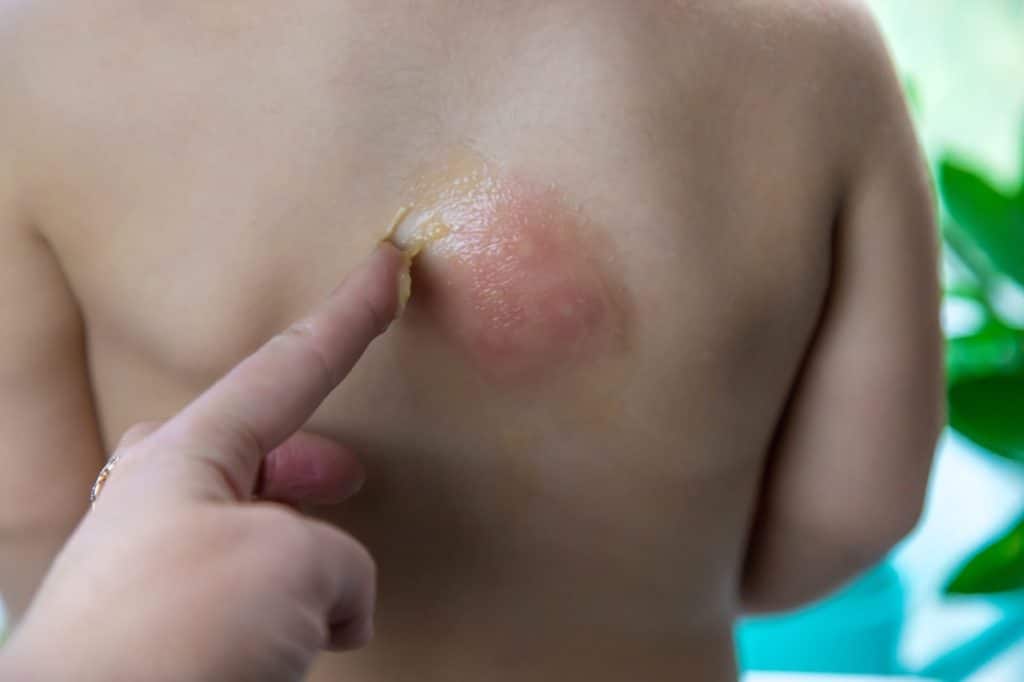
When cleaning a wound at home is appropriate, you’ll typically be dealing with minor cuts and scratches, small puncture wounds from clean objects, minor burns that are red and painful but have no blisters or broken skin, or small scrapes with minimal bleeding. These injuries can generally be safely managed with proper home care techniques.

Seek immediate medical help for:

  • Deep wounds where you can see fat, muscle, or bone
  • Wounds with jagged edges that gape open
  • Puncture wounds from dirty objects or animal bites
  • Wounds with embedded objects (glass, metal, wood)
  • Wounds with excessive or pulsing bleeding
  • Wounds on the face or genitals
  • Any wound longer than 2.5cm
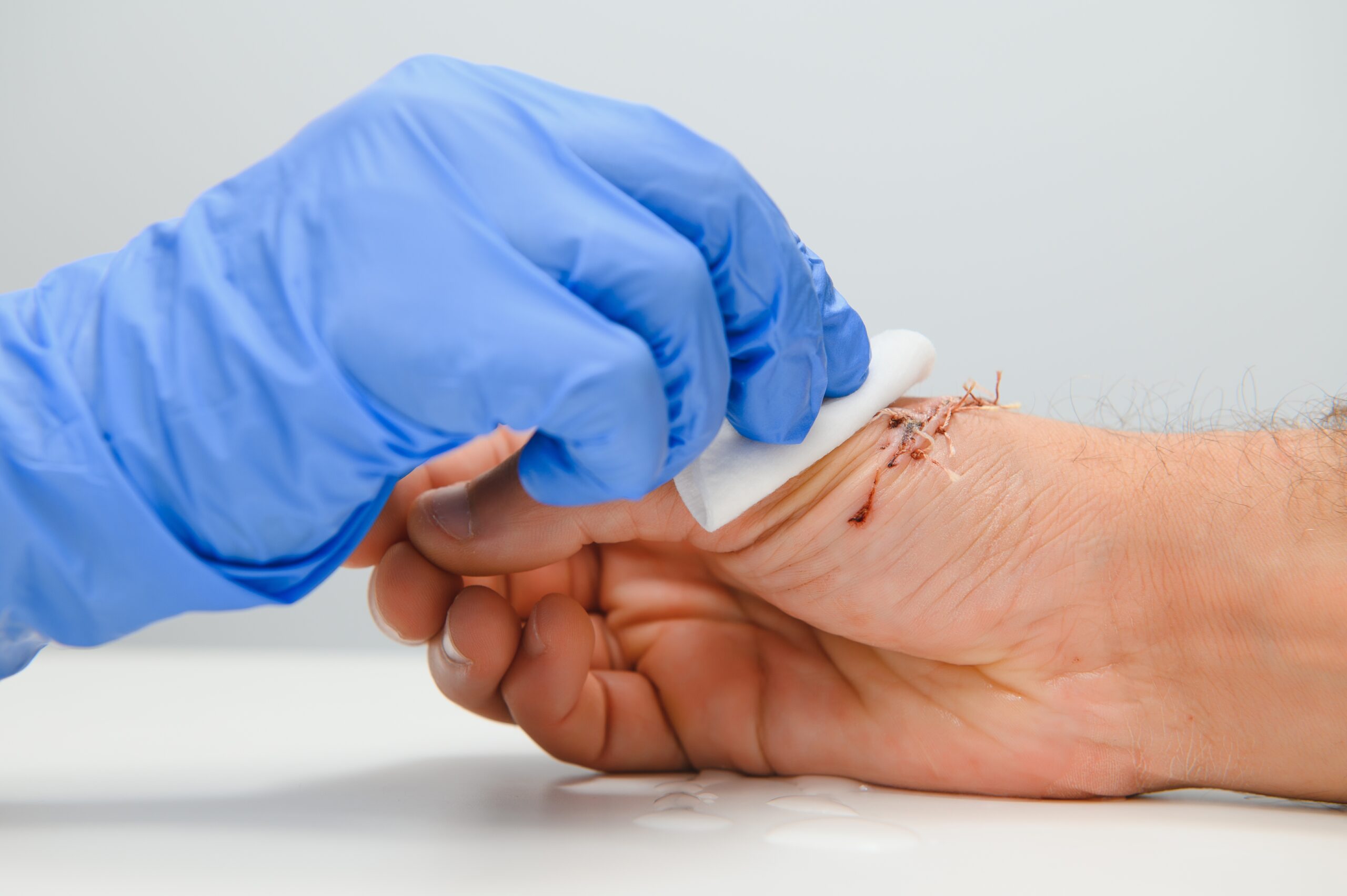
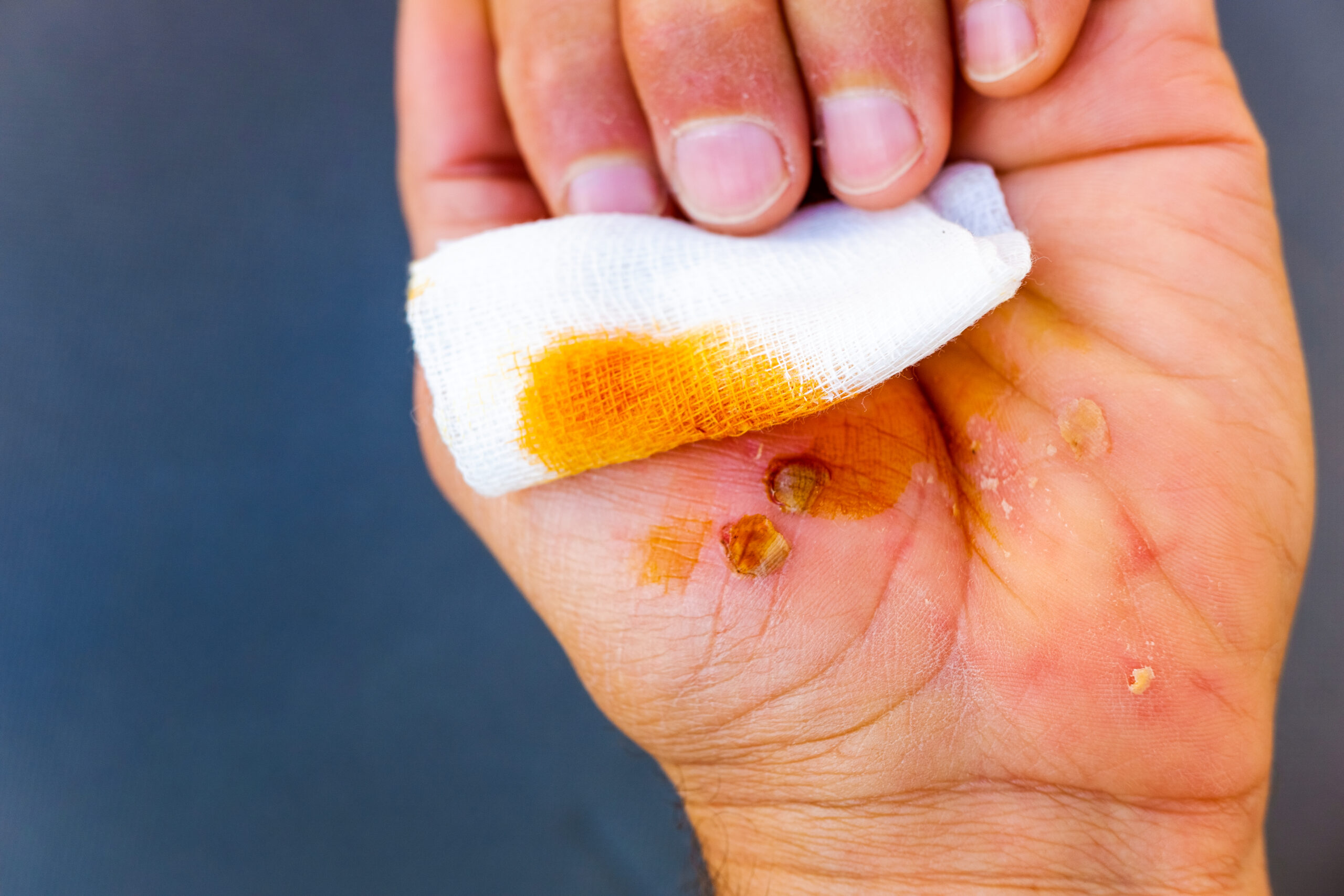
Suture wound on hand,Pain of accident concept

Preparing to Clean a Wound

Proper preparation is essential for effective wound cleaning and preventing infection.

Hand washing:

  • Wash your hands thoroughly with soap and warm water for at least 20 seconds
  • Clean under fingernails and between fingers
  • Dry with a clean towel
  • If soap and water aren’t available, use hand sanitiser with at least 60% alcohol

Step-by-Step Wound Cleaning Process

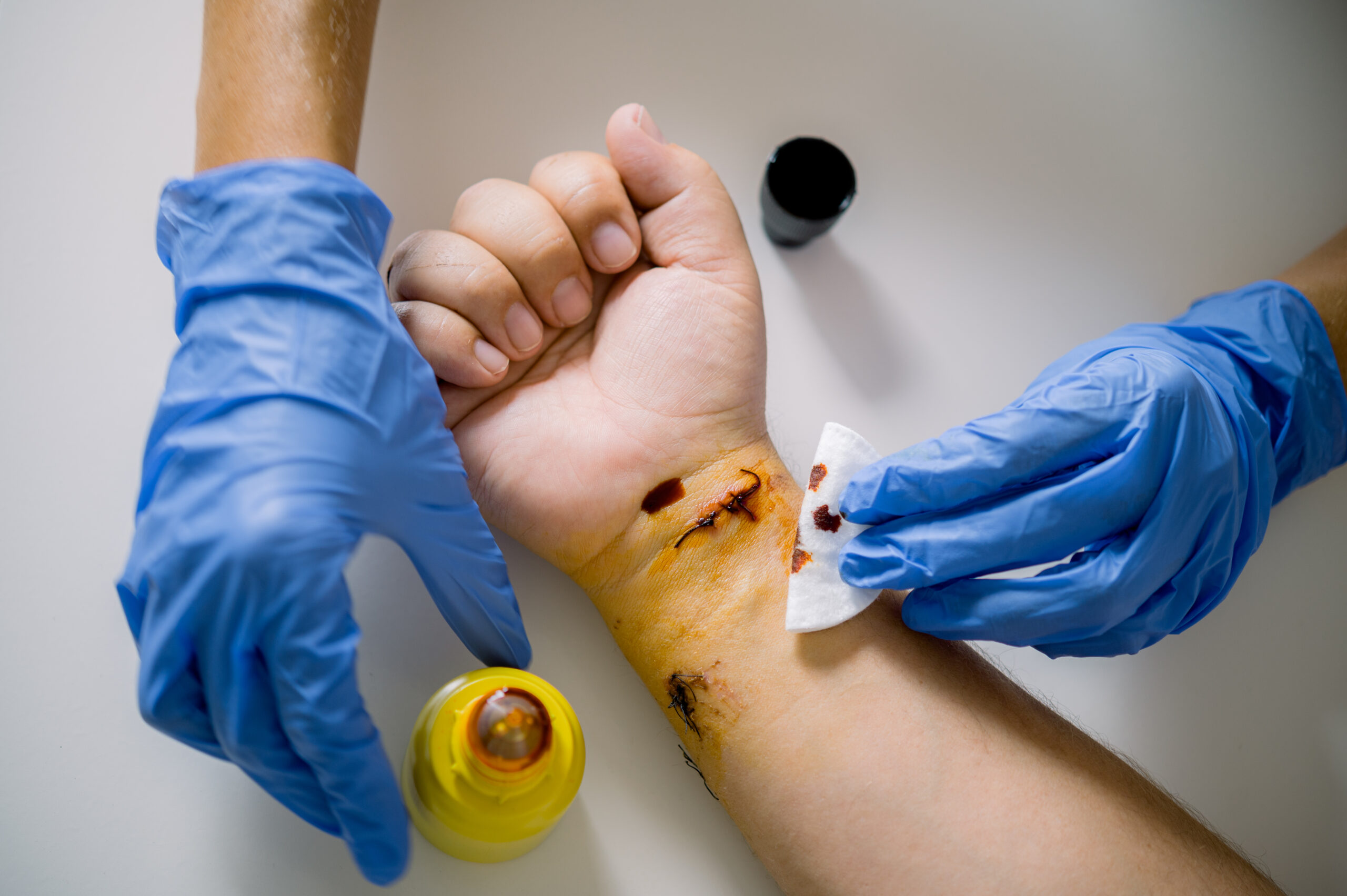
clean a small wound, Clean and Dress Minor Wounds

When controlling bleeding during the wound cleaning process, apply gentle, steady pressure with a clean cloth or gauze. Elevate the injured area above heart level if possible to reduce blood flow to the wound. Continue applying pressure for 15 minutes without peeking, as disturbing a forming clot can restart bleeding. If blood soaks through the first layer, add another layer without removing the original gauze or cloth.

Rinsing the wound properly:

  • Use running tap water (lukewarm, not hot)
  • Hold the wound under the stream for 5-10 minutes
  • For areas that can’t go under a tap, use a clean container to pour water over the wound
  • Sterile saline solution is ideal but clean tap water is usually sufficient
  • Never use hydrogen peroxide, alcohol, or iodine directly on the wound as these can damage healing tissues

Removing visible debris requires care and precision. Use sterilised tweezers for splinters or small particles, working gently from the centre outwards. Never dig into the wound as this can cause further damage. If debris is embedded deeply or difficult to remove, seek medical help rather than causing additional trauma. After removing any debris, rinse the area again to wash away any loose particles that may have been dislodged.

After Cleaning: Next Steps

Once the wound is clean, follow these steps to protect it and promote healing:

After properly cleaning a wound, you may want to consider using antibiotic ointment for cuts and scrapes, though this isn’t necessary for deep wounds. Always apply a thin layer only after the wound is completely clean and dry. Use a clean cotton swab or freshly washed finger to apply the ointment. Avoid petroleum-based products on deep puncture wounds as they can trap bacteria. If you notice a rash or irritation developing, discontinue use of the ointment immediately.

Choosing the right bandage or dressing depends on the wound type and location. For minor cuts, adhesive bandages (plasters) work well. Larger wounds require sterile gauze pads, while wounds in high-movement areas benefit from flexible fabric bandages. Consider butterfly closure strips for awkward locations and non-stick pads for scrapes. Most wounds heal better with some air circulation, so avoid completely airtight coverings that can trap moisture and bacteria.

How to secure dressings properly:

  • Cover the entire wound plus 2-3cm of surrounding skin
  • Secure with medical tape, avoiding too much tension
  • For joints or flexible areas, ensure the bandage allows movement
  • For fingers or toes, leave the tips exposed to check circulation
  • Ensure the dressing stays clean and dry

A properly applied dressing creates a barrier against infection while allowing the wound to heal.

FAQs

Can I use hydrogen peroxide to clean wounds?

While hydrogen peroxide was once commonly recommended for cleaning a wound, medical advice has changed. It can damage healthy tissues and slow healing. Use clean running water instead, followed by saline solution or appropriate antiseptics around (not in) the wound.

Clean it again following the same procedure, and apply a new dressing. If it repeatedly reopens or shows signs of infection, seek medical attention.

It’s best to avoid swimming until the wound has formed a waterproof seal (usually 1-2 days for minor wounds, longer for more serious ones). Swimming pools have chemicals that can irritate wounds, and natural bodies of water can contain bacteria that may cause infection.

The content on this website offers general insights regarding health conditions and potential treatments. It is not intended as, and should not be construed as, medical advice. If you are facing a medical emergency, dial 000 immediately and follow the guidance provided.

Recent Posts
North Hobart