



Sharon has 21+ years of experience as a qualified Emergency Care Nurse registered with the Australian Health Practitioner Regulation Agency (APHRA) and 12+ years as a First Aid Trainer.
She takes pride in FirstAidPro making first aid training available, comprehensive and affordable to everybody.
Knowing infant CPR and how to respond during an emergency can make the difference between positive and negative outcomes for the most vulnerable in our society. Infant cardiopulmonary resuscitation (CPR), especially when combined with rescue breathing, is an essential skill that every parent, carer, and educator should master. This life-saving technique is designed to address the unique needs of infants under 12 months, whose anatomy and physiology differ significantly from older children and adults.
In Australia, accidents such as choking, drowning, or sudden illness are among the leading causes of infant emergencies. Being prepared to perform CPR correctly can save precious time before professional help arrives. This life-saving technique is designed to address the unique needs of infants under 12 months, whose anatomy and physiology differ significantly from older children and adults.
In Australia, accidents such as choking, drowning, or sudden illness are among the leading causes of infant emergencies. Being prepared to perform CPR correctly can save precious time before professional help arrives.
What is Infant CPR and Why is it Different from Adult CPR?
Performing CPR on an infant differs significantly from CPR on adults or older children due to their smaller, more fragile anatomy. Infants have smaller airways that are easily obstructed, making rescue breathing a crucial component of their resuscitation. Additionally, their ribcage is more flexible, requiring careful attention to avoid causing injury during compressions.
Key Differences Between Infant, Child, and Adult CPR
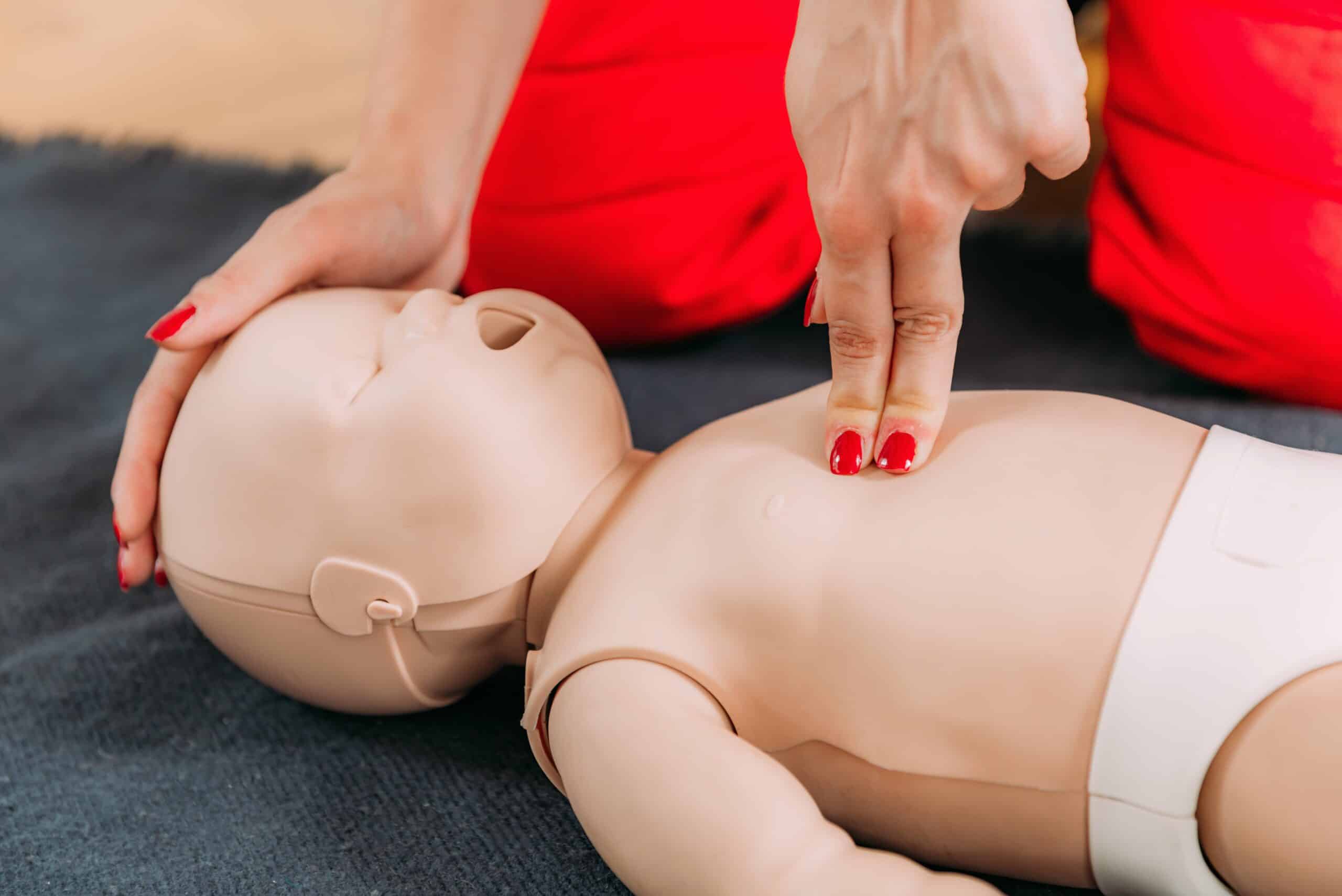
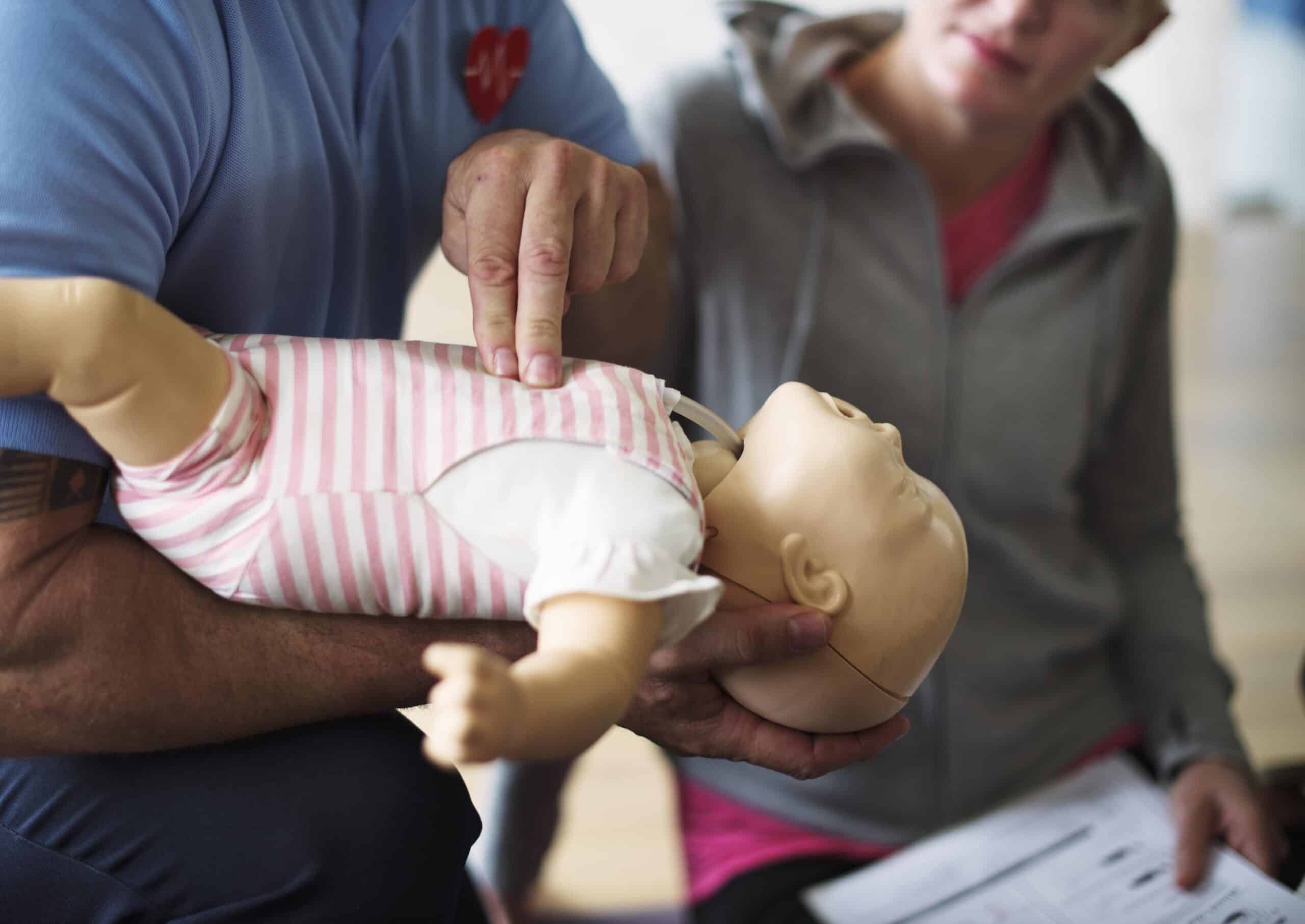
- Hand Positioning: For infants, use two fingers for chest compressions, compared to using both hands for adults.
- Compression Depth: Compressions on an infant should be about one-third the depth of their chest (approximately 4 cm).
- Rescue Breathing: For infants, the rescuer must cover both the nose and mouth with their own mouth to ensure proper airflow.
These adaptations are necessary to cater to the infant’s delicate structure and their reliance on oxygen through effective rescue breathing.
Step-by-Step Guide to Basic Life Support For An Infant
Before starting infant CPR, assess the infant’s responsiveness. Gently tap their foot and call their name. If there is no response and the infant isn’t breathing normally, start CPR immediately.
It’s crucial to act quickly while ensuring that emergency services are contacted (dial 000 in Australia).
Place the infant on a firm, flat surface. Place two fingers in the centre of their chest, just below the nipple line. Be careful not to apply pressure to the tip of the sternum to avoid injuries.
- Open the infant’s airway by gently tilting their head back and lifting their chin.
- Seal your mouth over both the infant’s nose and mouth.
- Give two gentle puffs of air, each lasting about one second. Watch for the chest to rise.
For a single rescuer, perform 30 compressions followed by 2 breaths. If a second rescuer is available, the ratio changes to 15 chest compressions and two breaths per rescuer. Maintain a rhythm of 100–120 compressions per minute.
Essential Tips for Effective Infant CPR With Rescue Breathing
Tip 1: Stay Calm and Focused
Remaining calm can help you think clearly and perform CPR effectively. Take deep breaths and focus on each step of the process.
Tip 2: Know the DRSABCD Action Plan
Follow the Australian Resuscitation Council’s DRSABCD action plan:
- D: Check for Danger.
- R: Check for Response.
- S: Send for help (call 000).
- A: Open the Airway.
- B: Check for Breathing.
- C: Start CPR.
- D: Attach a Defibrillator (if available).
Tip 3: Use Appropriate Pressure During Compressions
Infant ribs are fragile, so apply only enough pressure to compress the chest by one-third of its depth. Avoid using excessive force, which could cause injuries.
Tip 4: Check the Airway for Obstructions
If the infant isn’t breathing, carefully check their airway for visible obstructions like food or small objects. If an obstruction is present, remove it gently.
Tip 5: Ensure Proper Seal for Rescue Breathing
Ensure your mouth forms a complete seal over the infant’s nose and mouth. This ensures effective airflow during rescue breaths.
Tip 6: Adjust Techniques Based on Infant’s Size
For premature or small infants, use even gentler compressions and smaller puffs of air to match their size.
Common Mistakes to Avoid When Performing Infant CPR
- Over-compressing the Chest: Pressing too hard can cause rib fractures or other injuries.
- Improper Breathing Seal: A poor seal can result in ineffective rescue breaths.
- Skipping Rescue Breaths: Infants rely heavily on oxygen, making rescue breathing a critical component.
- Delaying CPR to Check for a Pulse: Spend no more than 10 seconds checking for signs of life before starting compressions.
When to Stop CPR and Seek Medical Help
When performing infant CPR, stop only when:
- The infant shows signs of life, such as breathing or movement.
- Emergency medical personnel take over.
- You are physically unable to continue.
Always ensure emergency services have been contacted as soon as possible by dialling 000 in Australia.
FAQs
How long should I continue infant CPR if emergency services haven't arrived?
Continue infant CPR until emergency services arrive or the infant shows signs of life. If you become physically exhausted, seek help from another person if available. CPR is physically demanding, but continuous resuscitation efforts provide the best chance of survival.
Can I perform infant CPR if I haven't been formally trained?
Yes. While formal training is ideal, untrained CPR is better than no CPR in an emergency. Focus on providing chest compressions at an appropriate rate and depth, and attempt rescue breaths if you feel comfortable doing so. Follow emergency dispatcher instructions if you call 000.
How do I know if I'm giving the right amount of air during rescue breathing for infant CPR?
When performing rescue breathing on an infant, use only enough air to make their chest visibly rise. Infants have small lungs, so gentle puffs—not full breaths—are sufficient. If the chest doesn’t rise during rescue breaths, reposition the infant’s head slightly and try again.