




Sharon has 21+ years of experience as a qualified Emergency Care Nurse registered with the Australian Health Practitioner Regulation Agency (APHRA) and 12+ years as a First Aid Trainer.
She takes pride in FirstAidPro making first aid training available, comprehensive and affordable to everybody.
When faced with a choking emergency, knowing first aid for choking can mean the difference between life and death. Modern first aid guidelines have evolved to provide a more comprehensive approach to helping choking victims.
Understanding the full range of responses is essential. From recognising the signs of choking to knowing when to call for help, there’s more to this life-saving knowledge than you might think.
Let’s explore the five vital steps you need to know to respond effectively to a choking emergency.
Key Takeaways
- Recognise signs of choking, including clutching the throat, inability to speak, and difficulty breathing
- Encourage forceful coughing as an initial response if the person can breathe
- Perform back blows by delivering five sharp blows between the shoulder blades
- Execute abdominal thrusts if back blows are ineffective
- Call emergency services or have someone else call while you continue first aid for choking efforts

Recognise Signs of Choking
To quickly identify a choking victim, look for these telltale signs: The person may be clutching their throat with one or both hands, making the universal choking signal. They’ll likely be unable to speak, cough, or breathe effectively. You might notice their face turning red or blue due to lack of oxygen. In severe cases, they may lose consciousness.
Be aware of choking risks to aid in choking prevention. Common hazards include eating too quickly, talking while eating, or consuming large pieces of food. Children are particularly susceptible to choking on small objects or foods like grapes and sausages. Understanding these risks is essential for effective first aid for choking situations.
If you suspect someone’s choking, act immediately. Ask them, ‘Are you choking?’ If they can’t respond verbally, assume they are. Look for signs of partial airway obstruction, such as laboured breathing or a weak cough. In cases of complete obstruction, there’s no air exchange, resulting in silent struggles and rapid deterioration.
Encourage Coughing

Encouraging a choking person to cough is the first step you should take before attempting any physical interventions in your first aid for choking response. Coughing is the body’s natural mechanism for clearing the airway, and it’s often more effective than external assistance. When you notice someone choking, immediately urge them to cough forcefully.
Guide the person to use proper coughing techniques. Instruct them to take a deep breath before coughing, as this helps build pressure in the lungs. Encourage them to cough from deep within their chest, not just from their throat. This powerful cough can often dislodge the obstruction.
While the person is attempting to cough, stay close and monitor their condition. If their coughing is productive and they’re able to breathe between coughs, continue to encourage this natural airway clearance method.
However, if the coughing becomes weak, ineffective, or the person can’t breathe, be prepared to move on to more active interventions like back blows or abdominal thrusts. Remember, encouraging coughing should only last for a short time. If it’s not effective within a minute or two, you’ll need to take more decisive action.
Administer Back Blows
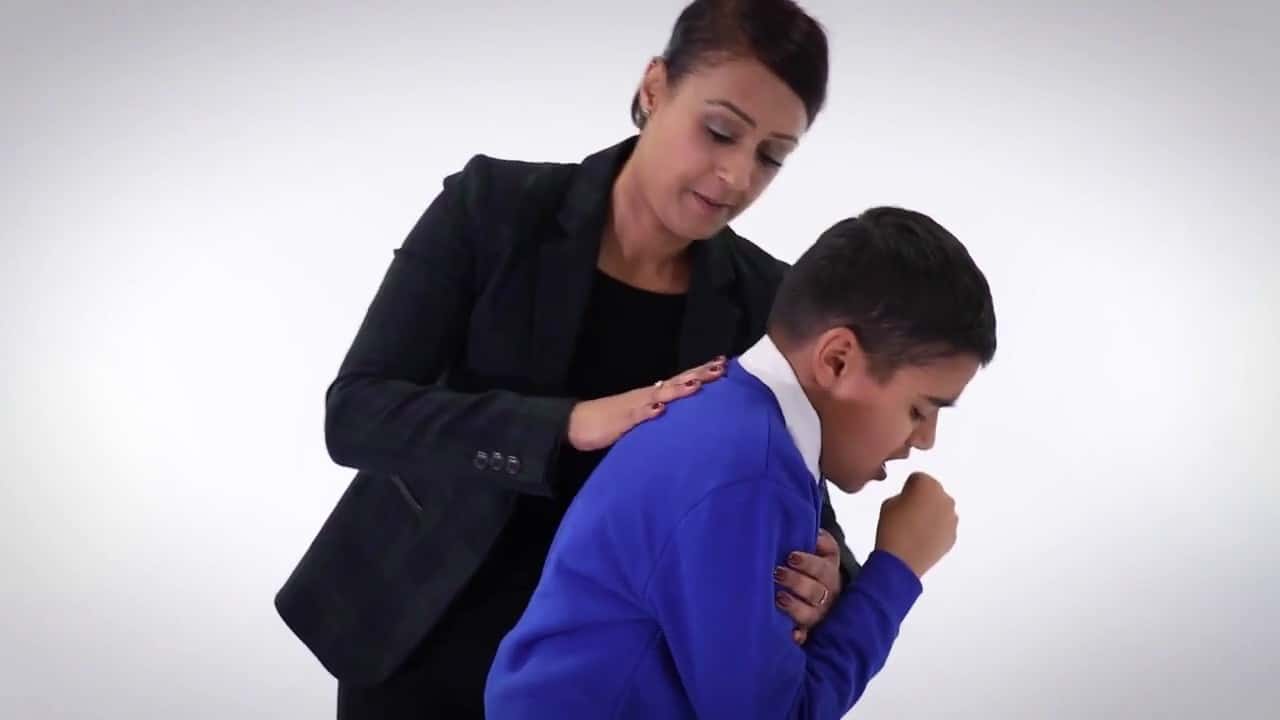
If coughing doesn’t dislodge the obstruction, you’ll need to administer back blows as the next step in helping a choking person. The back blow technique is a vital manoeuvre in first aid for choking that can help force the object out of the airway.
To perform back blows effectively, position yourself slightly behind and to the side of the choking individual. Support their chest with one hand and lean them forward at about a 45-degree angle. This positioning helps gravity assist in dislodging the object.
Using the heel of your other hand, deliver five sharp blows between the person’s shoulder blades. Each blow should be separate and forceful, aiming to create a strong vibration in the chest. It’s important to strike with sufficient force to dislodge the obstruction, but be careful not to cause injury.
After each set of five back blows, check if the object has been expelled. If not, proceed to abdominal thrusts.
Perform Abdominal Thrusts

If back blows haven’t cleared the obstruction, abdominal thrusts are the next critical intervention in your first aid for choking sequence. This life-saving technique can effectively dislodge airway obstructions through upward pressure on the diaphragm.
To perform abdominal thrusts, stand behind the person and wrap your arms around their waist. Make a fist with one hand and place it just above their navel, well below the breastbone. Grab your fist with your other hand. Then, quickly thrust inward and upward into their abdomen with sharp, forceful movements. Deliver up to five thrusts, checking between each one to see if the obstruction has cleared.
If the person is pregnant or too large for you to reach around, perform chest thrusts instead. Place your hands at the base of their breastbone and push inward and upward forcefully.
For a conscious choking infant, support their head and neck with one hand while placing them face-down on your forearm. Deliver five back blows between the shoulder blades, then turn them over and deliver five chest thrusts using two fingers on the centre of the chest. Alternate between these actions until the object is dislodged or help arrives.
Continue alternating between back blows and abdominal thrusts until the obstruction is cleared, the person becomes unconscious, or emergency services arrive.
Call Emergency Services
While performing first aid, it’s vital to have someone else call emergency services immediately. This dual action approach is crucial for effective choking prevention and emergency preparedness. Professional medical assistance is an essential component of comprehensive first aid for choking situations.
If you’re alone with the choking person, perform back blows and abdominal thrusts first, then call for help if the obstruction isn’t cleared quickly.
When calling emergency services, provide clear, concise information. State your location, explain that someone is choking, and describe the victim’s condition. Mention any relevant medical history if known.
Stay on the line and follow the dispatcher’s instructions, as they may provide additional guidance tailored to your situation.
If the person becomes unconscious, inform the dispatcher immediately. They’ll likely instruct you to begin CPR. Place the person on their back, check their mouth for visible objects (removing only what you can see), and begin chest compressions and rescue breaths.
Frequently Asked Questions
Can You Perform Abdominal Thrusts on Yourself?
Yes, you can perform self-rescue techniques for choking. You can use abdominal thrusts against a chair back or table edge, or use your own fist against your upper abdomen. These first aid for choking techniques can be life-saving when you’re alone. Always prioritise choking prevention methods to avoid such situations.
Is It Safe to Perform Abdominal Thrusts on Pregnant Women?
You shouldn’t perform abdominal thrusts on pregnant women due to increased choking risks. Instead, use chest thrusts. Stand behind her, place your hands on the centre of her chest, and deliver quick, forceful thrusts inward and upward.
What Should You Do if the Choking Person Becomes Unconscious?
If they become unconscious, lay them flat and call emergency services immediately. Check their mouth for visible objects and remove only what you can see. Begin CPR with chest compressions and rescue breaths, checking the mouth between cycles.