




Every day, choking incidents strike without warning across Australia—at family dinners, workplace lunches, or community gatherings. One moment someone is enjoying a meal, and the next, they’re fighting for breath with terror in their eyes. In these critical situations, you could be the difference between life and death.
Choking incidents don’t wait for convenient moments or trained professionals to arrive. They demand immediate action from whoever happens to be nearby. While emergency services are on their way, those first crucial minutes rest in your hands. With the right knowledge and confidence, you can clear blocked airways using techniques recommended by the Australian Resuscitation Council.
This isn’t just theoretical knowledge—these are practical, life-saving skills that every Australian should possess. From recognising the warning signs to performing correct back blows and chest thrusts, you’ll learn everything needed to respond effectively when seconds count and lives hang in the balance.
Key Takeaways
- Swift action prevents oxygen deprivation, reducing the risk of brain damage and cardiac complications.
- Immediate intervention increases the chances of successful airway clearance and victim survival.
- Prompt response minimises the risk of tissue damage and potential long-term health complications.
- Quick action can prevent the progression from partial to complete airway obstruction.
- Timely intervention in choking incidents reduces the likelihood of the victim losing consciousness, which complicates rescue efforts.
Recognising Choking Signs
Rapid recognition of warning signs is essential for effective response in choking incidents. When someone is choking, they’ll typically display universal signs of distress. Look for individuals clutching their throat, which is an instinctive response to airway obstruction. You’ll often notice they can’t speak or produce sound, as air can’t pass through their vocal cords.
Other visible signs include panicked facial expressions, bulging eyes, and skin that quickly turns pale or bluish due to lack of oxygen. In severe cases, the person may lose consciousness and collapse.
Initiating Back Blows and Chest Thrusts
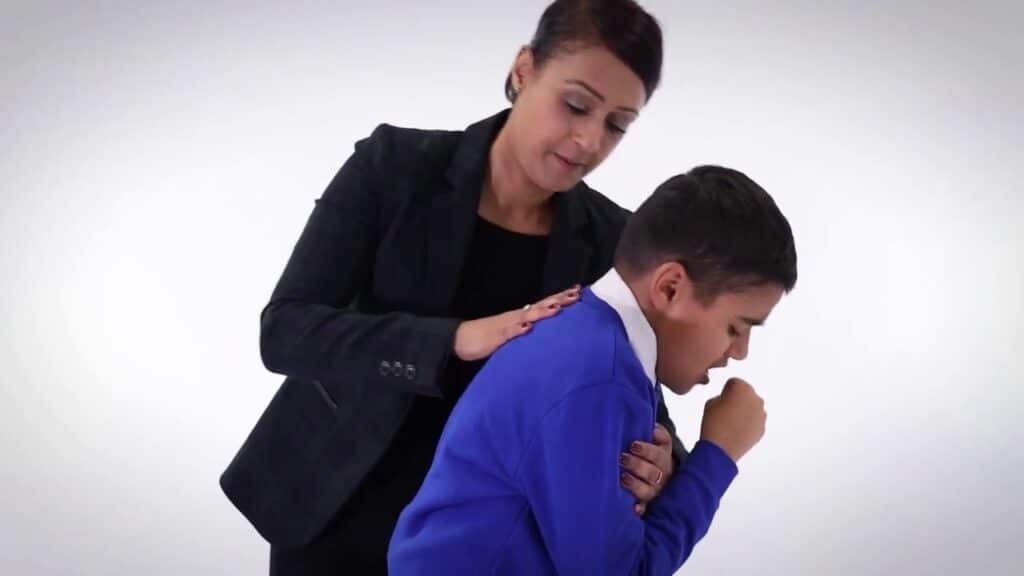
The Australian Resuscitation Council recommends a specific approach for choking incidents that differs from international guidelines. To initiate the technique, begin with back blows. Stand slightly behind and to the side of the victim, supporting their chest with one hand. With the heel of your other hand, deliver up to five sharp blows between the shoulder blades. Check after each blow to see if the obstruction has been cleared.
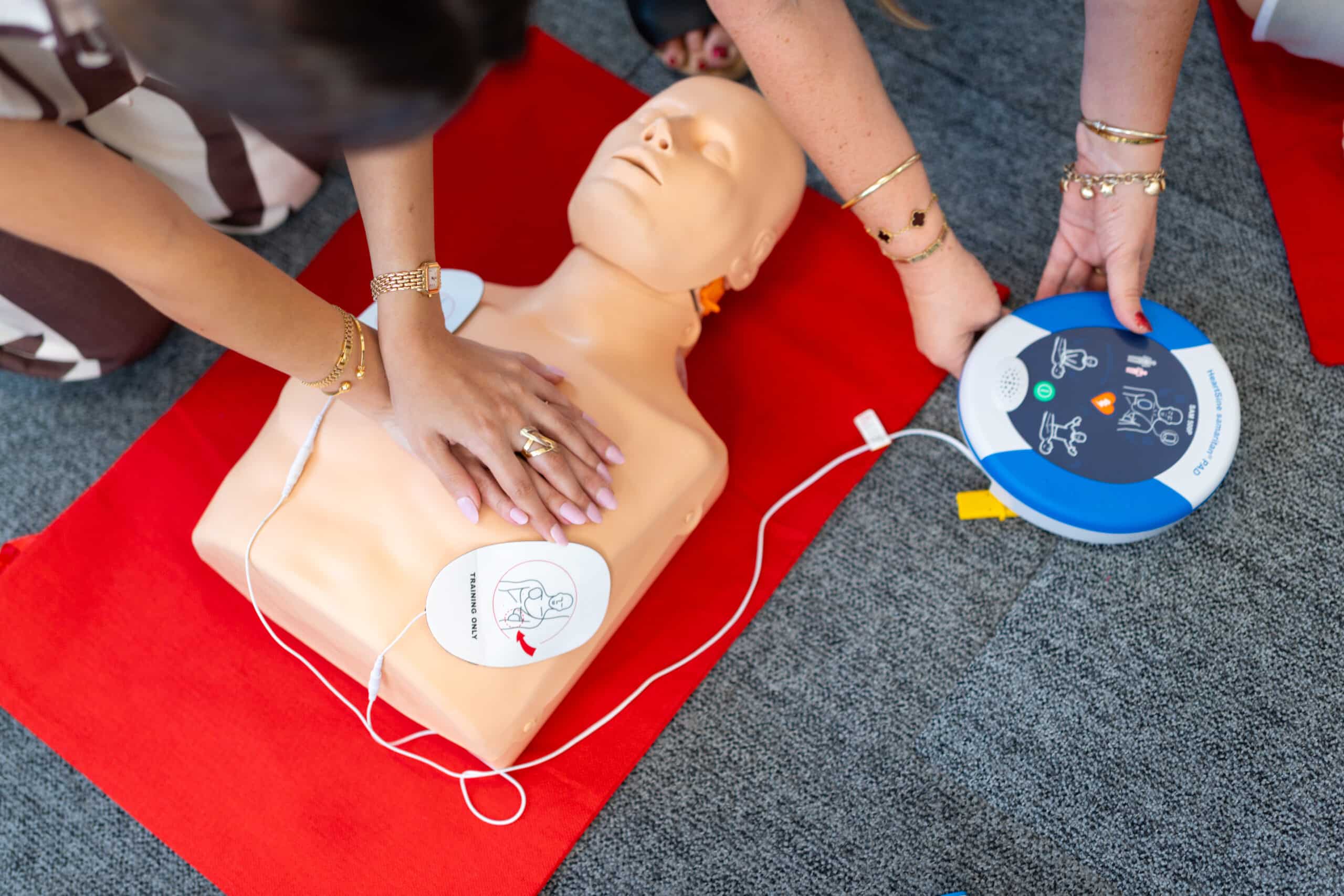
If back blows are unsuccessful, immediately move to chest thrusts. For adults and children, position yourself as if performing CPR compressions. Place the heel of your hand on the lower part of the breastbone and deliver up to five sharp thrusts. These should be delivered more slowly than CPR compressions but with greater force.
Modifying Your Approach for Special Populations
When assisting special populations during choking incidents, you’ll need to adapt your techniques. For the elderly, you’ll need to consider their potentially fragile bones and limited mobility. When performing chest thrusts, use appropriate force and be mindful of their balance. It’s vital to implement choking prevention strategies tailored to their needs, such as proper food preparation and encouraging slower eating.
For children, you’ll need to adjust your approach based on their size and age. For infants under one year, use back blows and chest thrusts with modified positioning and gentler force. For older children, you’ll perform the same techniques as adults, but with less force. Emergency response training should include specific techniques for these age groups.
For pregnant women, you’ll need to modify the standard choking response techniques to secure both mother and baby’s safety. When assisting a pregnant woman who’s choking, focus primarily on back blows and chest thrusts rather than any technique that applies pressure to the abdomen.
Maintaining a Clear Airway
Proper follow-up care is crucial after successfully managing choking incidents. After the initial obstruction is cleared, you should encourage the person to cough forcefully to expel any remaining particles. Watch for signs of partial obstruction, such as wheezing or laboured breathing. If these persist, you may need to repeat back blows or chest thrusts. Don’t hesitate to call emergency services if you’re unsure about the person’s condition.
Preventing Complications
Post-incident care is essential for preventing secondary issues in choking incidents. After clearing an airway obstruction, you’ll need to address potential aspiration complications to guarantee the victim’s full recovery. Aspiration prevention is essential, as inhaled foreign material can lead to serious respiratory issues. Implement proper airway management techniques to minimise risks. Monitor the victim closely for signs of aspiration pneumonia, such as coughing, wheezing, or fever.
To prevent aspiration complications:
- Position the victim upright or slightly reclined to reduce the risk of regurgitation.
- Encourage controlled coughing to expel any remaining particles.
- Administer oxygen if available and necessary.
- Avoid giving fluids until the airway is completely clear and the victim is fully alert.
Frequently Asked Questions
How Long Does a Choking Person Have Before Brain Damage Occurs?
Time is extremely limited during choking incidents. Brain damage can begin within 4-6 minutes of oxygen deprivation. After 10 minutes, severe brain damage is likely. Permanent damage or death may occur if oxygen isn’t restored quickly.
Can You Perform Back Blows and Chest Thrusts on Yourself if Alone?
Self-rescue is possible in solo choking incidents. Yes, you can perform self-rescue techniques for choking. For back blows, lean over the back of a chair or against a firm surface and thrust yourself against it. For chest thrusts, press your chest against a firm object like a chair back or bench. Emergency preparedness is essential.
Are There Long-Term Effects of Surviving a Severe Choking Incident?
Recovery can involve ongoing challenges following serious choking incidents. You may experience long-term effects after surviving a severe choking incident. These can include psychological impact, such as anxiety or PTSD, and physical recovery issues like throat soreness, difficulty swallowing, or respiratory complications.