



Sharon has 21+ years of experience as a qualified Emergency Care Nurse registered with the Australian Health Practitioner Regulation Agency (APHRA) and 12+ years as a First Aid Trainer.
She takes pride in FirstAidPro making first aid training available, comprehensive and affordable to everybody.
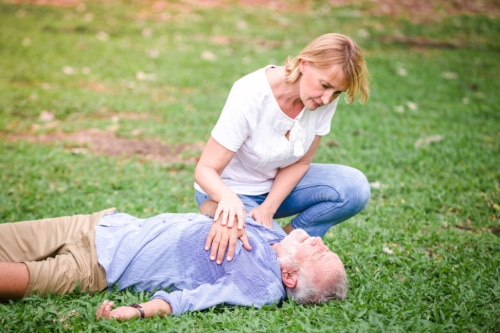
Cardiac arrest is the sudden loss of heart function when the heart stops beating effectively, causing the person to become unconscious and not breathing normally. This life-threatening medical emergency requires immediate action through the chain of survival: early recognition, early CPR, early defibrillation with an AED, and early advanced life support. Quick bystander response with cardiopulmonary resuscitation (CPR) and use of an automated external defibrillator can double or triple survival chances according to leading health authorities worldwide.

Key Takeaways
- Cardiac arrest occurs when the heart suddenly stops beating effectively
- Recognise the signs: unresponsive and not breathing normally
- Immediate action saves lives: call Triple Zero (000), start CPR, use an AED
- Follow DRSABCD and the chain of survival for best outcomes
- High-quality CPR with chest compressions at 100-120 per minute improves survival rates
Ready to learn lifesaving skills? Enrol in a nationally recognised first aid course with First Aid Pro today. Our expert-led training will give you the confidence to save a life in cardiac emergencies. Book your course now.

What Is Cardiac Arrest and How Do You Recognise It?
Sudden cardiac arrest (SCA) is a critical cardiac emergency that occurs when the heart’s electrical system malfunctions, causing the heart to suddenly stop beating. This leads to loss of circulation and deprives the brain and other organs of oxygen, making it a life-threatening emergency that often happens abruptly and without warning. Unlike a heart attack, which is due to a blocked artery, cardiac arrest is primarily an electrical problem in the heart.
Signs of Cardiac Arrest
The primary signs of cardiac arrest are clear and require immediate emergency response:
Immediate Recognition Signs:
- Person is unconscious and unresponsive to voice or touch
- Not breathing normally or only making occasional gasping sounds (agonal breathing)
- Loss of consciousness occurs suddenly
- No detectable pulse (though bystanders shouldn’t waste time checking)
Understanding Agonal Breathing: Agonal respirations or gasping is not normal breathing. These irregular, gasping breaths may occur in the first few minutes of cardiac arrest and can confuse bystanders. If someone is unconscious and not breathing normally, suspect cardiac arrest and begin the emergency response immediately.
Sudden Cardiac Arrest vs Heart Attack
Cardiac Arrest | Heart Attack |
Heart stops beating effectively | Blood flow blocked to heart muscle |
Person becomes unconscious immediately | Person usually remains conscious |
No normal breathing | Breathing typically continues |
Requires immediate CPR and AED use | Requires urgent medical care |
Often no warning signs | May have chest pain, shortness of breath |
Survival depends on immediate bystander action | Treatment can often wait for emergency services |
What to Do in a Cardiac Arrest – DRSABCD Action Plan
The DRSABCD protocol is Australia’s nationally recognised first aid action plan that can help save a life during cardiac emergencies.
Step 1 – Call Triple Zero (000) Immediately
When you suspect cardiac arrest:
- Call Triple Zero (000) without delay
- State clearly: “I need an ambulance – someone is in cardiac arrest”
- Provide your exact location
- Follow dispatcher instructions
- Don’t hang up unless told to do so
In some Australian states, the GoodSAM app can alert nearby trained responders and locate the nearest AED, helping to improve outcomes through early access to lifesaving resources.
Follow the DRSABCD Protocol
Essential first aid steps to guide emergency response in Australia.
| Letter | Action | Purpose |
|---|---|---|
| D | Danger | Ensure the area is safe for you and the patient |
| R | Response | Check if the person is conscious and responsive |
| S | Send for help | Call Triple Zero (000) and get an AED if available |
| A | Airways | Tilt head back, lift chin to open airway |
| B | Breathing | Look, listen, feel for normal breathing |
| C | CPR | Start chest compressions if no normal breathing |
| D | Defibrillation | Use an AED as soon as one is available |
CPR Steps – How to Perform Life-Saving Chest Compressions
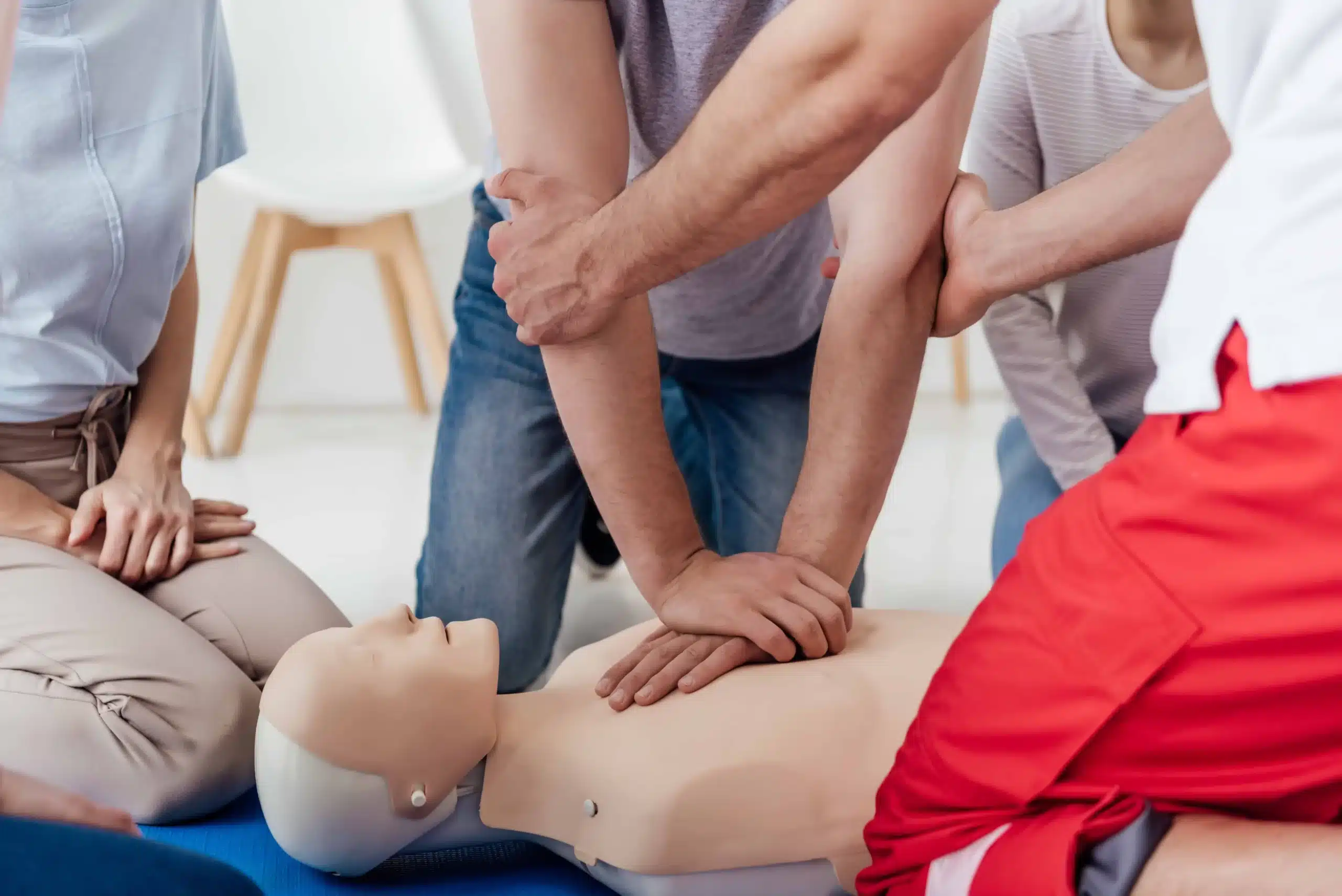
High-quality CPR with proper chest compression technique is crucial for maintaining blood flow to the heart and brain during cardiac arrest. The Australian Resuscitation Council guidelines for cardiopulmonary resuscitation emphasise that early CPR can significantly improve survival from sudden cardiac arrest.
Hands-Only CPR for Bystanders
For untrained bystanders, hands-only CPR is often recommended. Trained responders may add rescue breaths (30:2).
Steps for Hands-Only CPR
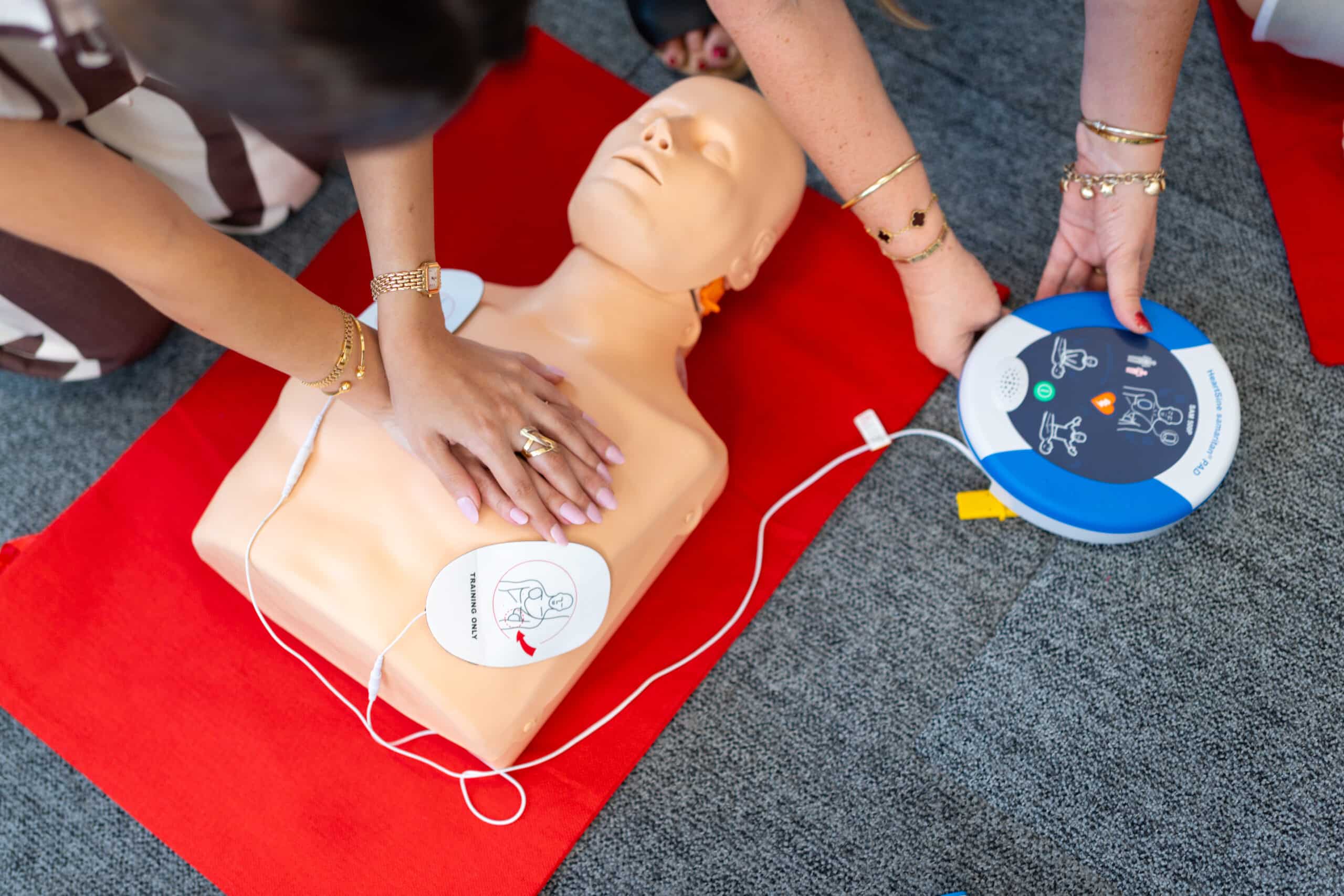
- Place the heel of one hand in the centre of the chest, between the nipples.
- Place your other hand on top, interlocking fingers.
- Keep your arms straight and use your body weight to push hard and fast, at least 5 cm deep.
- Allow complete chest recoil between compressions.
- Compress at a rate of 100–120 per minute.
- Continue CPR until emergency services arrive or the person shows signs of life.
CPR with Rescue Breaths (for trained responders)
- Chest Compressions: 30 compressions using the technique above.
- Open Airway: Tilt the head back, lift the chin.
- Rescue Breaths: Pinch the nose (adults & older children) and cover the mouth with yours; give 2 breaths, each lasting about 1 second, watching for chest rise.
- Continue Cycle: Repeat 30 compressions followed by 2 breaths.
CPR Specifications (ANZCOR Guidelines)
Component | Specification |
Compression Rate | 100-120 per minute |
Compression Depth | At least 5cm, no more than 6cm |
Compression-Breath Ratio | 30 compressions to 2 breaths |
Hand Placement | Centre of chest, lower half of breastbone |
Chest Recoil | Allow complete recoil between compressions |
How to Use an AED (Automated External Defibrillator)
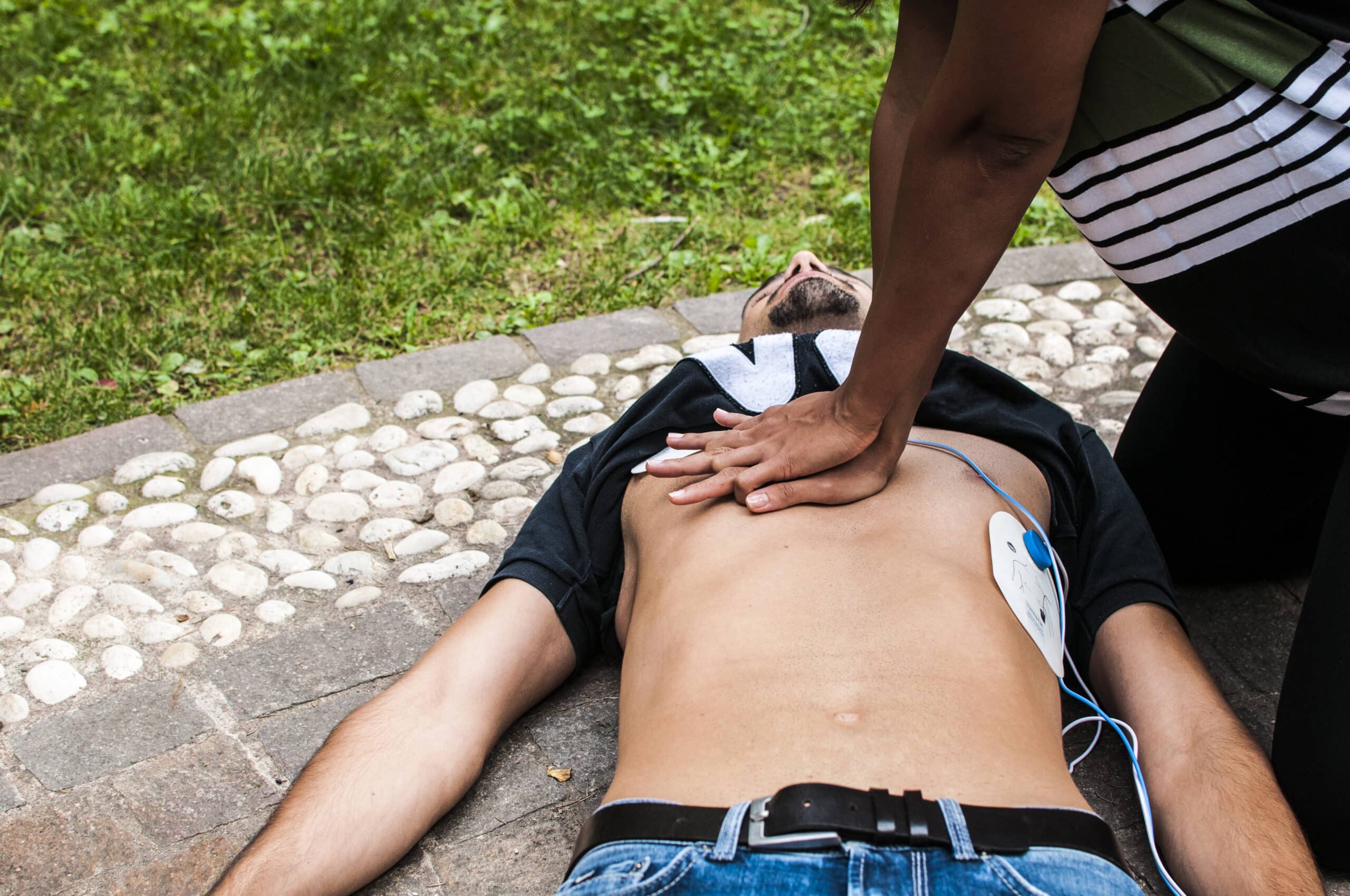
AEDs are designed to be used by anyone, even without medical training. These devices can significantly improve survival rates when used quickly after cardiac arrest occurs. Many public places now have AEDs available, and their use is a critical link in the chain of survival.
Why Early Defibrillation Saves Lives:
- Treats life-threatening heart rhythms that cause cardiac arrest
- Most effective when used within the first few minutes
- Can restore normal heart rhythm before permanent damage occurs
- Greatly increases chance of survival when combined with high-quality CPR
AED Steps – Simple Instructions for Everyone
Modern AEDs provide clear voice prompts, but here are the basic steps:
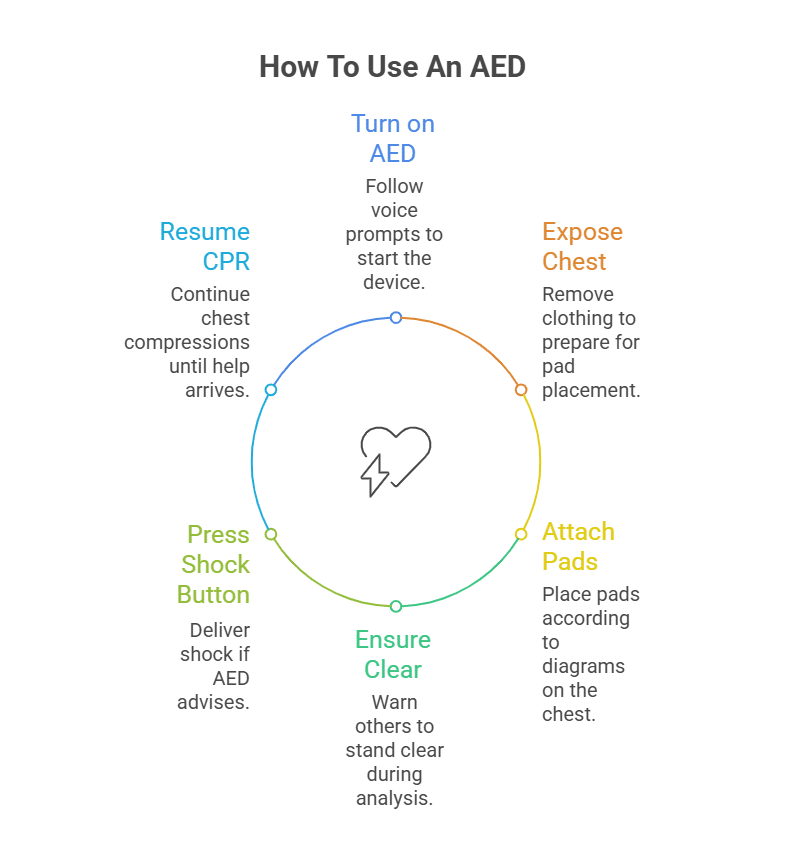
AED Pad Placement by Patient Type
Correct pad positioning ensures safe and effective defibrillation.
| Patient Type | Pad Placement |
|---|---|
| Adults | Right upper chest (below collarbone), left lower chest (side of ribcage) – anterior-lateral placement. |
| Children (1–8 years) | Anterior-lateral as for adults. If pads risk touching, use front and back (anterior-posterior). If child pads are unavailable, use adult pads as above and ensure they do not touch. |
| Infants (under 1 year) | Use a manual defibrillator if available. If not, use an AED with paediatric pads in anterior-posterior position (one pad centre of chest, one pad centre of back). If only adult pads are available, use them with care to avoid overlap. |
Want to learn proper AED use? Join thousands of Australians who have gained confidence in emergency response. First Aid Pro’s nationally recognised first aid courses include hands-on AED training. Enrol today
Chain of Survival – Why Every Link Matters
The chain of survival represents the critical steps that improve outcomes for people experiencing cardiac arrest. Each link must be strong for the best chance of survival.
The Four Links of Survival
Rapid action across each link improves outcomes in sudden cardiac arrest.
Early Recognition & Call for Help
- Recognise cardiac arrest quickly.
- Call Triple Zero (000) immediately.
- Activate the emergency response system.
Early CPR
- Begin high-quality chest compressions.
- Maintain blood flow to vital organs.
- Bystander CPR can double or triple survival rates.
Early Defibrillation
- Use an AED as soon as available.
- Restore normal heart rhythm.
- Most effective within the first 3–5 minutes.
Early Advanced Life Support
- Professional emergency medical care.
- Advanced cardiac life support.
- Post-cardiac arrest care and targeted temperature management.
Knowledge Test: Cardiac Arrest Recognition & Response
Select one answer per question, then choose “Check answers”.
1) What are the two main signs that indicate someone is in cardiac arrest?
2) What is the correct rate for chest compressions during CPR?
3) In the DRSABCD protocol, what does the second ‘D’ stand for?
4) How deep should chest compressions be for an adult?
5) What should you do immediately after an AED delivers a shock?
Bystander CPR – The Critical Difference
Research consistently shows that bystander intervention makes the difference between life and death:
- Survival rates: Out-of-hospital cardiac arrest survival can, in some cases, improve from 10% to 30% with immediate bystander CPR
- Brain protection: CPR maintains blood flow, preventing brain damage
- Time is critical: Every minute without CPR reduces survival by 7-10%
Case Study:
From ‘Survivor Stories‘ at NSW Ambulance website:
At Sydney Airport, Ferdinand Diocales survived a cardiac arrest thanks to cafe staff, a GoodSAM volunteer, police, and emergency responders all providing immediate CPR and defibrillation. Emergency crews credited the early bystander CPR and defibrillation for Ferdinand’s survival without major disability.
Ready to become a lifesaver? Don’t wait for an emergency to learn these crucial skills. First Aid Pro offers comprehensive, nationally recognised first aid training across Australia. Our courses cover CPR, AED use, and complete emergency response. Book your course today and join the thousands of Australians prepared to help save a life.
References
- Australian Resuscitation Council (ARC). Australian Resuscitation Council Guidelines.
- Heart Foundation: What Is A Cardiac Arrest?
- Queensland Ambulance Service. Community First Aid and CPR Guidelines. Available: https://www.ambulance.qld.gov.au
- Healthdirect Australia. Cardiac Arrest Information.
- Ambulance Victoria. Cardiac Arrest Survival
- NSW Ambulance. Save a Life Initiative.
Frequently Asked Questions
Continue CPR until one of the following occurs: the person shows signs of life (normal breathing, movement, responsiveness), an AED becomes available, qualified emergency medical personnel arrive and take over, or you become physically exhausted and cannot continue. Don’t stop CPR to check for pulse – this wastes valuable time.
Agonal breathing appears as irregular, gasping breaths that may occur in the first few minutes of cardiac arrest. It’s not normal breathing and shouldn’t be mistaken for signs of life. If someone is unconscious and showing only agonal breathing, begin CPR immediately. This gasping is a reflex action and indicates the brain is severely oxygen-deprived.
Untrained bystanders should use hands-only CPR, focusing on continuous, high-quality chest compressions. This is simpler and more likely to be performed correctly. Trained individuals should provide 30 compressions followed by 2 rescue breaths. For drowning or drug overdose cases, rescue breaths are particularly important.
If someone is conscious and breathing normally, they don’t need CPR. However, if you’re unsure and the person appears unconscious and not breathing normally, it’s better to start CPR. Broken ribs heal, but brain damage from lack of oxygen is permanent. Good Samaritan laws in Australia protect people who provide emergency assistance in good faith.
Many public places display AED signage – look for red and white signs with a heart symbol. Common locations include shopping centres, airports, schools, gyms, and office buildings. Some are in unlocked cabinets, others may require breaking glass or entering a code (often 000). The GoodSAM app can help locate nearby AEDs in participating areas.
The GoodSAM Initiative is a life-saving program in Australia that uses a smartphone app to connect trained volunteers with people experiencing out-of-hospital cardiac arrest (OHCA) in their vicinity, providing help before emergency services arrive.