


Sharon has 21+ years of experience as a qualified Emergency Care Nurse registered with the Australian Health Practitioner Regulation Agency (APHRA) and 12+ years as a First Aid Trainer.
She takes pride in FirstAidPro making first aid training available, comprehensive and affordable to everybody.
CPR and AED are life-saving first aid techniques used during cardiac arrest to help save lives before an ambulance arrives. When a person’s heart stops beating in a sudden cardiac arrest, immediate CPR (cardiopulmonary resuscitation) and early use of an AED (automated external defibrillator) can dramatically increase the chance of survival. In Australia, thousands of cardiac emergencies occur each year outside of a hospital. Knowing how to perform CPR and use an AED means you could help save a life when every second counts.
If you want to be prepared to respond confidently in a real emergency, enrol in a nationally recognised first aid course with First Aid Pro today and gain practical CPR and AED training that meets Australian standards.
Key Takeaways: Why CPR and AED Skills Save Lives
- Cardiac arrest happens suddenly and without warning.
- Immediate CPR helps to keep blood flowing to the brain and vital organs.
- AEDs are safe, portable devices that restore a normal heart rhythm.
- Bystander CPR greatly increases survival from sudden cardiac arrest.
- Every workplace should have trained responders and access to AEDs.
- Learning CPR means you could help save a life before the ambulance arrives.
What Is CPR and How Does It Help During Cardiac Arrest?
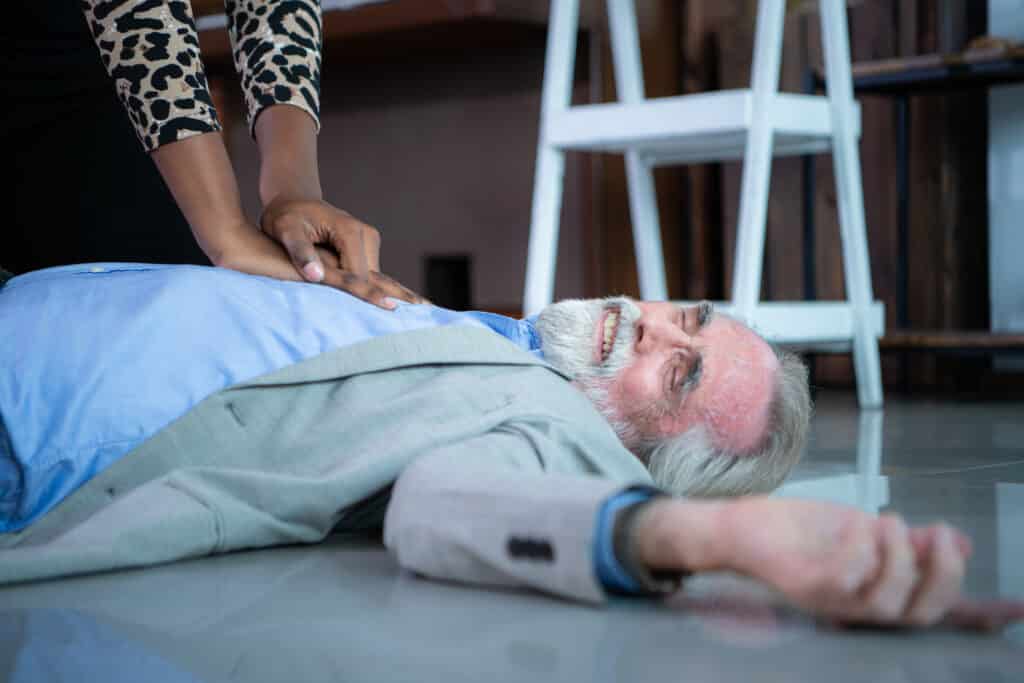
CPR, or cardiopulmonary resuscitation, is an emergency procedure performed when a person is unresponsive and not breathing normally. It combines chest compressions and rescue breaths to keep blood flowing to the brain and other vital organs when the heart has stopped beating.
What Happens During Sudden Cardiac Arrest?
Generally, sudden cardiac arrest occurs when the heart’s electrical system malfunctions and the heart rhythm becomes chaotic or stops altogether. This is different from a heart attack. A heart attack is caused by a blockage in blood flow to the heart muscle. Cardiac arrest happens when the person’s heart stops beating effectively.
When cardiac arrest happens:
- The heart stops pumping blood.
- Oxygen supply to the brain stops.
- Brain injury can begin within 4–6 minutes.
- Without CPR and defibrillation, survival chances drop rapidly.
Cardiac arrests in Australia often occur outside of a hospital. According to national data, survival from sudden cardiac arrest depends heavily on bystander CPR and early defibrillation.
How CPR Helps to Keep Blood Flowing
CPR helps to keep blood moving to the brain and vital organs. When you push hard and fast in the centre of the chest, you manually compress the heart between the breastbone and spine.
Effective CPR involves:
- 30 chest compressions
- Followed by 2 breaths
- Repeated continuously
If you are unsure about giving breaths, hands-only CPR (continuous chest compressions) is still far better than doing nothing. Immediate CPR increases the victim’s chance of survival until paramedics arrive.
What Is an AED and How Does a Defibrillator Save Lives?
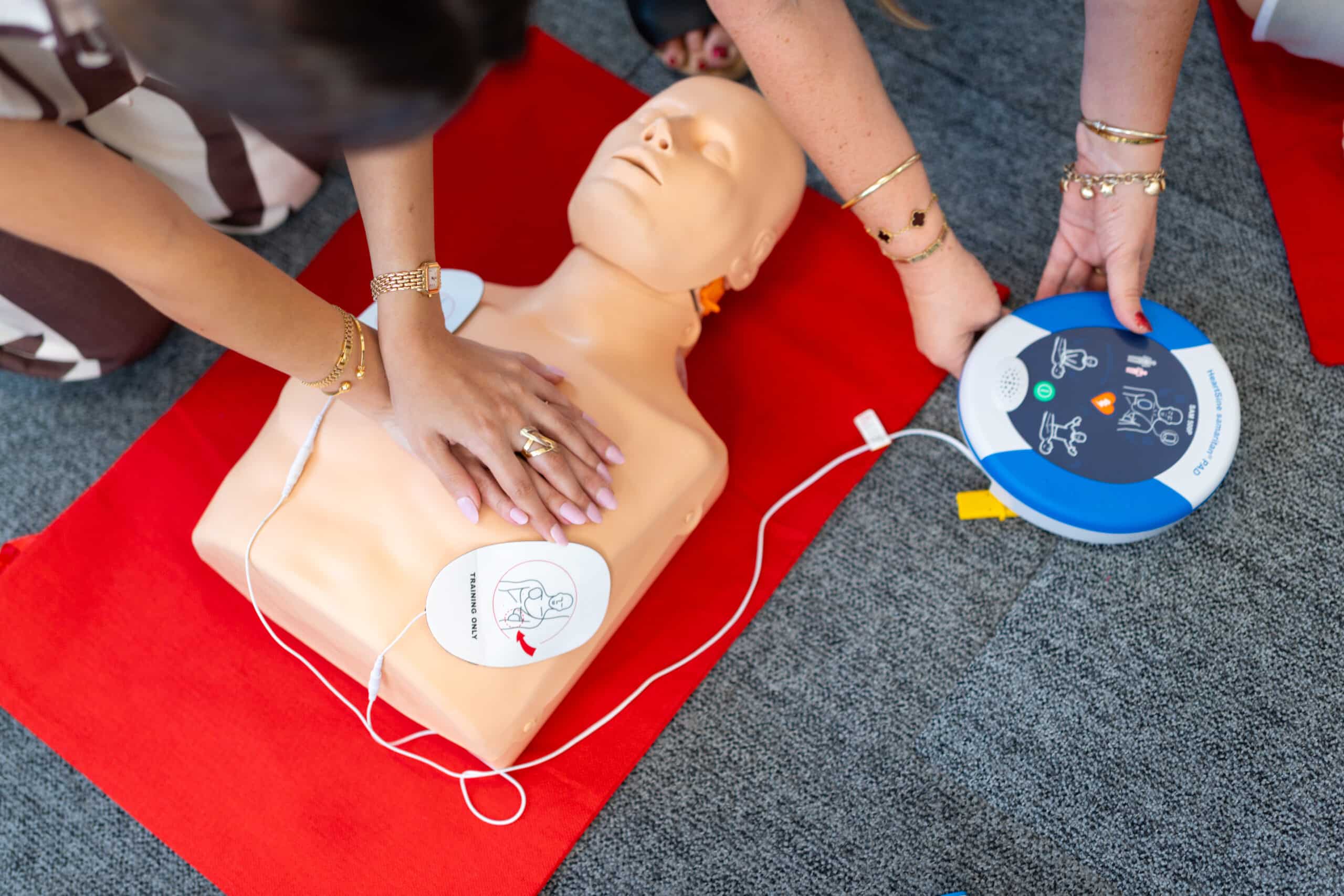
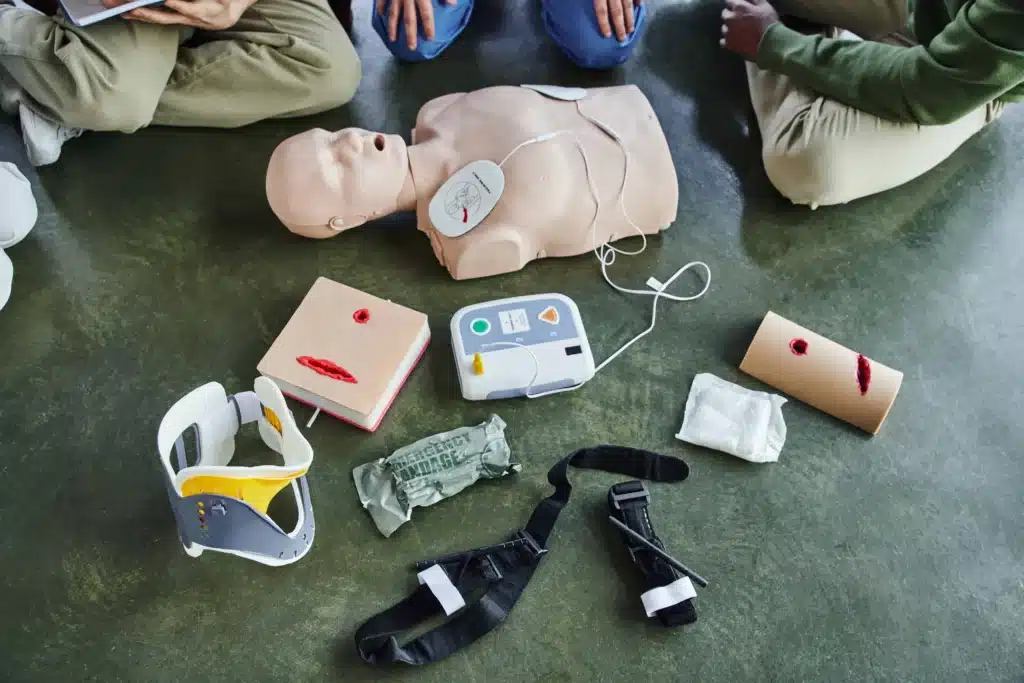
An AED, or automated external defibrillator, is a portable device used during cardiac emergencies to restore a normal heart rhythm through defibrillation. Modern AEDs are designed so that anyone can use an AED safely.
How an AED Works
An AED is used when a person is unresponsive and not breathing normally. The device:
- Analyses the heart rhythm.
- Determines if a shock is required.
- Delivers a controlled electrical shock if needed.
The shock can help restart the heart or restore a normal heart rhythm in cases such as ventricular fibrillation. Importantly, an AED will not deliver a shock unless it detects a shockable rhythm.
Why Early Defibrillation Is Critical
For every minute without CPR and defibrillation, survival rates decrease significantly. When an AED is used within the first few minutes of a cardiac arrest, survival chances improve dramatically.
Time Without CPR or AED | Effect on Survival |
0–2 minutes | High survival chance |
3–5 minutes | Rapid decline begins |
6–10 minutes | Severe brain injury risk |
Over 10 minutes | Very low survival without intervention |
Used within the first few minutes, external defibrillators can double or even triple survival rates in some cases.
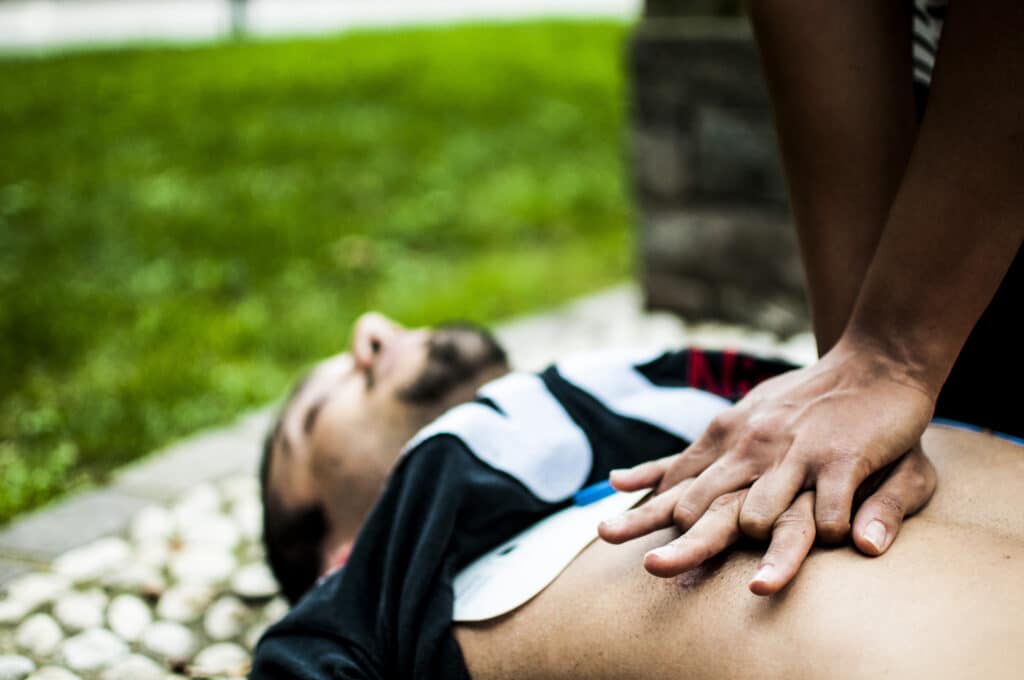
How CPR and AED Work Together to Improve Survival Rates
CPR and AED are not separate skills — they are part of the same life-saving response. The chain of survival highlights the steps needed to increase the chance of survival from sudden cardiac arrest:
- Early recognition and call triple zero (000)
- Immediate CPR
- Early defibrillation with an AED
- Advanced care by ambulance service and hospital teams
CPR keeps oxygenated blood circulating. Defibrillation aims to restart the heart or restore a normal rhythm. Together, CPR and AED use provide the best possible outcome for cardiac arrest victims.
The Impact of Bystander CPR
Bystander CPR is crucial in out-of-hospital cardiac arrest. Without CPR, the heart has stopped beating and vital organs are deprived of oxygen. Giving CPR buys time until a defibrillator becomes available or paramedics arrive.
Research shows that bystander CPR can double a victim’s chance of survival. Without CPR, survival from sudden cardiac arrest is significantly lower.
If you’re wondering whether we are emphasisng CPR and AED training just a little too much, we invite you to listen to former Yellow ‘Wiggle’, Greg Page’s remarkably story of survival … !
When Should You Perform CPR and Use an AED?
Recognise the signs fast, follow DRSABCD, and keep going until help arrives.
Start Now Begin CPR if a person is:
- 1Unresponsive
- 2Not breathing normally
- 3Gasping or taking irregular breaths
This situation is a medical emergency. Act immediately.
DRSABCD Step-by-step emergency response
- DDangerEnsure the area is safe.
- RResponseCheck if the person responds.
- SSend for helpCall triple zero and request an ambulance.
- AAirwayOpen the airway.
- BBreathingCheck for normal breathing.
- CCPRBegin CPR immediately.
- DDefibrillationUse an AED as soon as it becomes available.
When an AED becomes available, turn it on straight away and follow the voice prompts. Keep CPR going whenever instructed.
Keep Going Continue CPR until:
- ✓The person starts breathing normally
- ✓Paramedics take over
- ✓You are physically unable to continue
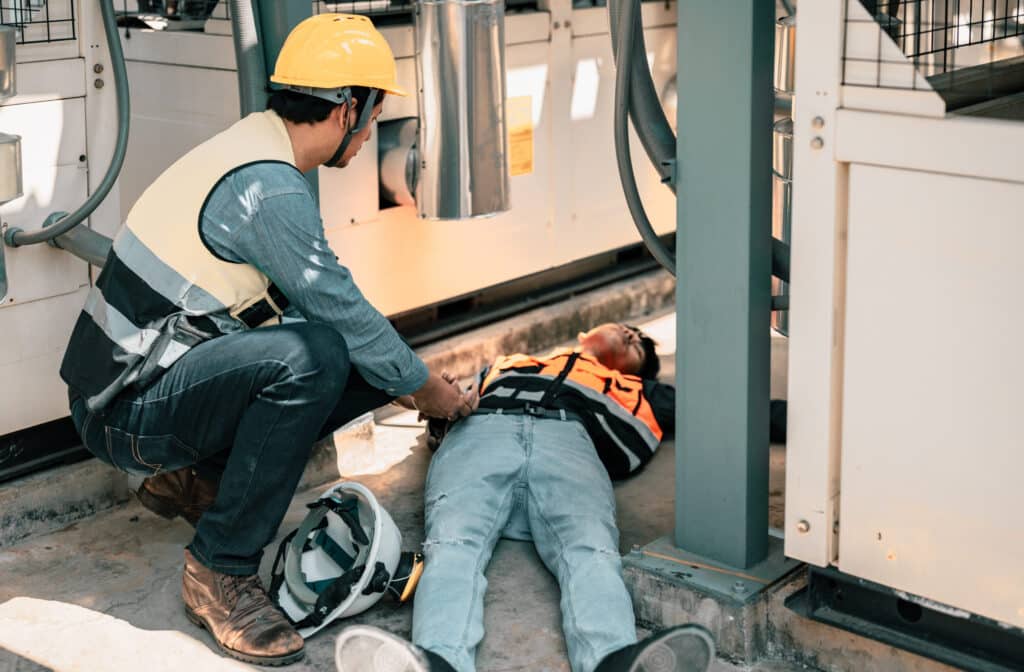
Why CPR and AED Training Are Essential in Every Workplace
Cardiac arrests in the workplace do occur, particularly in physically demanding or high-stress industries. Under Australian WHS laws, every workplace must provide adequate first aid arrangements based on risk assessment.
Workplace Responsibilities
Employers should consider:
- Access to trained first aiders
- Availability of AEDs
- Risk of cardiac emergencies
- Response procedures
In higher-risk environments, having external defibrillators on-site is strongly recommended. AED training ensures staff are prepared to respond confidently.
If your organisation wants to increase safety and reduce risk, enrol your team in CPR and AED training with First Aid Pro and ensure your workplace is prepared for cardiac emergencies.
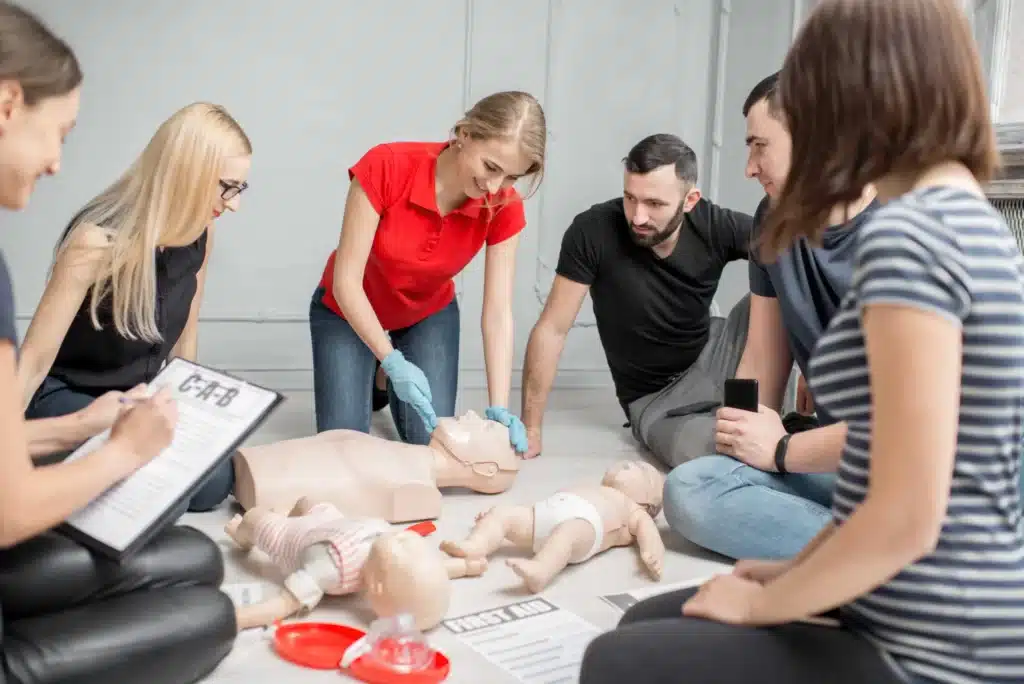
How to Learn CPR and AED Skills in Australia
Learning CPR is straightforward and accessible. Accredited first aid training courses include both CPR and AED components.
Course Options
Course | Covers | Renewal |
CPR and use an AED | Annually | |
CPR, AED, and broader emergency response | Every 3 years (CPR yearly) |
First aid training teaches you how to:
- Begin CPR confidently
- Use an AED correctly
- Provide first aid during cardiac emergencies
- Increase the chance of survival in out-of-hospital cardiac arrest
Being trained means you are prepared to respond when someone’s heart stops beating unexpectedly.
CPR and AED Response Timeline
What to do in the first minutes of a cardiac emergency.
-
Minutes 0–1Recognise the emergency and call triple zero (000).
-
Minute 1Start CPR immediately.
-
Minutes 2–3AED arrives (or is brought to you).
-
Minute 3+Continue CPR and follow the AED prompts.
-
Until help arrivesContinue life-saving care until the ambulance arrives and paramedics take over.
Every second counts. Early CPR and AED use can significantly improve survival chances.
Common Myths About CPR and AED Use
Confidence saves lives. Acting quickly with CPR and AED can dramatically improve survival chances.
Knowledge Quiz
Select an answer for each question — you’ll see instant feedback.
Show answer key
- 1) B
- 2) C
- 3) C
- 4) D
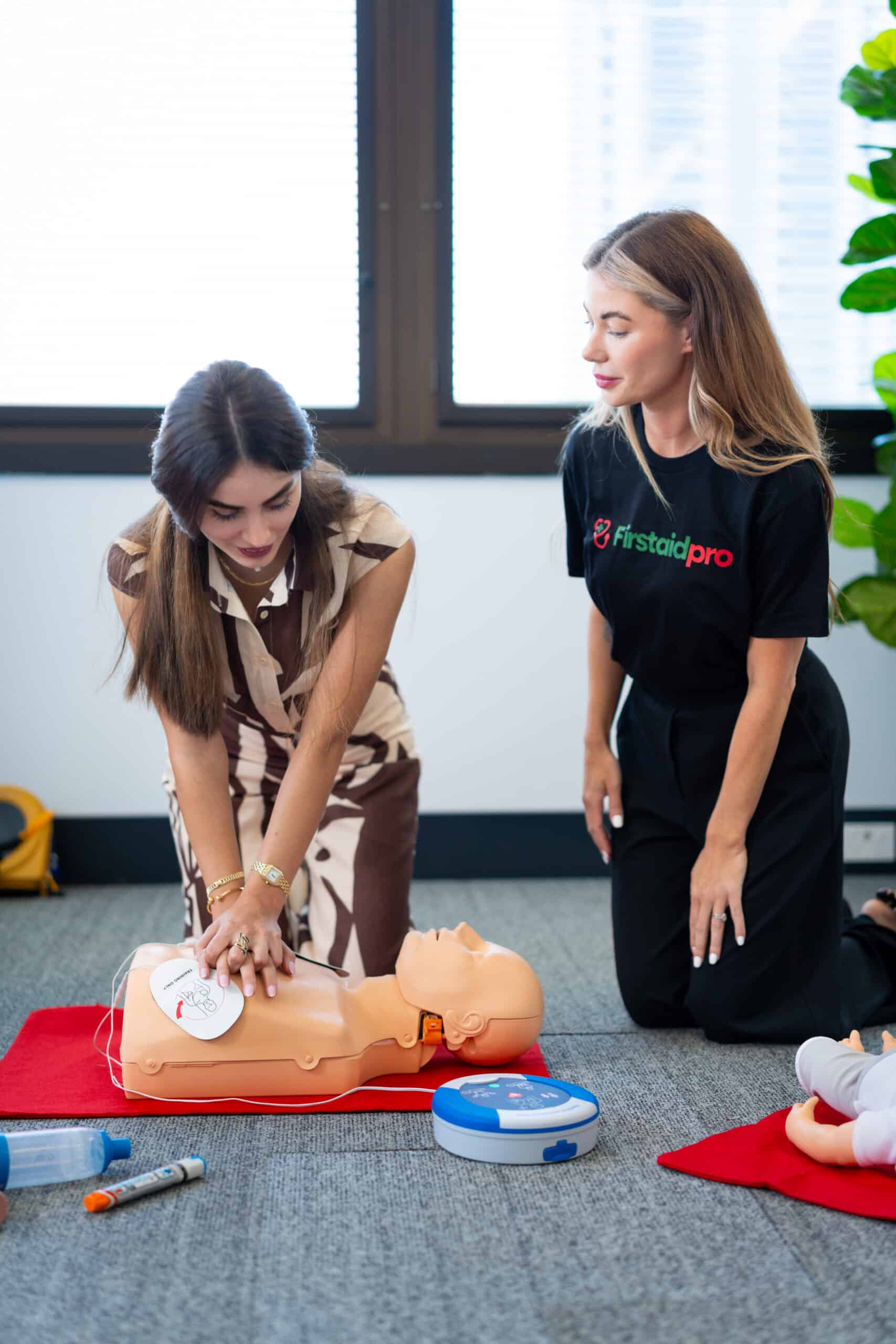
CPR and AED Training - Be Prepared to Help Save a Life
Cardiac emergencies can happen anywhere — at home, at work, or in public. When the heart has stopped beating, immediate CPR and early use of a defibrillator can significantly increase survival chances. Without CPR, brain damage can begin within minutes. With CPR and AED intervention, survival from sudden cardiac arrest improves dramatically.
If you want the skills and confidence to respond in real emergencies, enrol in a nationally recognised CPR and first aid training course with First Aid Pro today. Learn CPR, gain hands-on AED training, and be prepared to respond when every second counts.
References
- Australian Resuscitation Council – ANZCOR: Guideline 8 – Cardiopulmonary Resuscitation (CPR)
- Australian Resuscitation Council – ANZCOR Guideline 7 – Automated External Defibrillation in Basic Life Support
- Heart Foundation: Resources
- NIH National Library of Medicine:
Frequently Asked Questions
How long does CPR certification last?
CPR certification (HLTAID009) must be renewed every 12 months. First aid certificates are typically renewed every three years, with CPR refreshed annually.
Do all workplaces need an AED?
Not all workplaces are legally required to have AEDs, but risk assessments may strongly recommend them, particularly in higher-risk settings or large public areas.
Can I perform CPR without formal training?
Yes. In an emergency, immediate CPR is better than no action. However, accredited CPR training builds confidence and correct technique.
How long does a CPR and AED course take?
A standalone CPR course usually only takes 1 – 2 hours. A full first aid course takes around 5.5 hours with FirstAidPro when in an entirely face-to-face format.
What number should I call in a cardiac emergency?
Call triple zero (000) immediately and ask for an ambulance.