



Sharon has 21+ years of experience as a qualified Emergency Care Nurse registered with the Australian Health Practitioner Regulation Agency (APHRA) and 12+ years as a First Aid Trainer.
She takes pride in FirstAidPro making first aid training available, comprehensive and affordable to everybody.
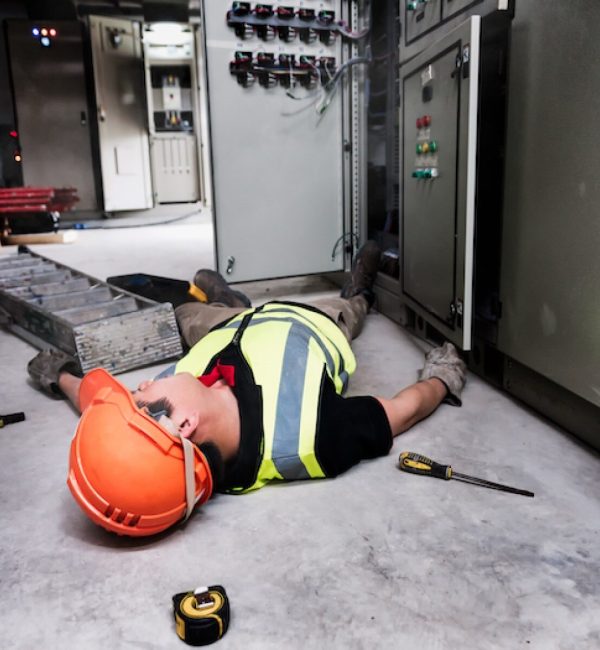
Low voltage rescue (LVR) is the process of safely removing a person from contact with a live low voltage electrical panel and providing emergency care — including cardiopulmonary resuscitation (CPR) — until professional help arrives. In Australia, working around live electrical equipment carries significant risk of electrocution such as cardiac arrest and severe burns. For workers in the electrical, construction and energy industries, having the skills and knowledge to respond quickly and correctly is not just a professional obligation — it can mean the difference between life and death.
The UETDRMP018 Perform Rescue From a Live Low Voltage Panel course, paired with CPR – HLTAID009 Provide Cardiopulmonary Resuscitation, is Australia’s nationally recognised training standard for low voltage rescue and CPR.
This article explains what the UETDRMP018 course covers, who needs it, how it is delivered and why enrolling in a quality LVR CPR training course should be a priority for any worker in a high-risk electrical environment.
Key Takeaways
- Low voltage rescue (LVR) training equips electrical workers to safely perform a rescue from a live low voltage panel and administer CPR in emergencies.
- The UETDRMP018 Perform Rescue From a Live Low Voltage Panel course is nationally recognised and supersedes the previous UETDRMP007 and UETDRRF004 units.
- The course combines HLTAID009 Provide Cardiopulmonary Resuscitation, giving participants two certifications in one four-hour session.
- LVR CPR training is essential for anyone working in or around live electrical environments, including the electricity supply industry (ESI), construction and industrial sectors.
- First Aid Pro delivers UETDRMP018 training in Adelaide, Brisbane and Hobart, as well as onsite workplace training.
- Same-day certificates are issued upon successful completion of the competency assessment.
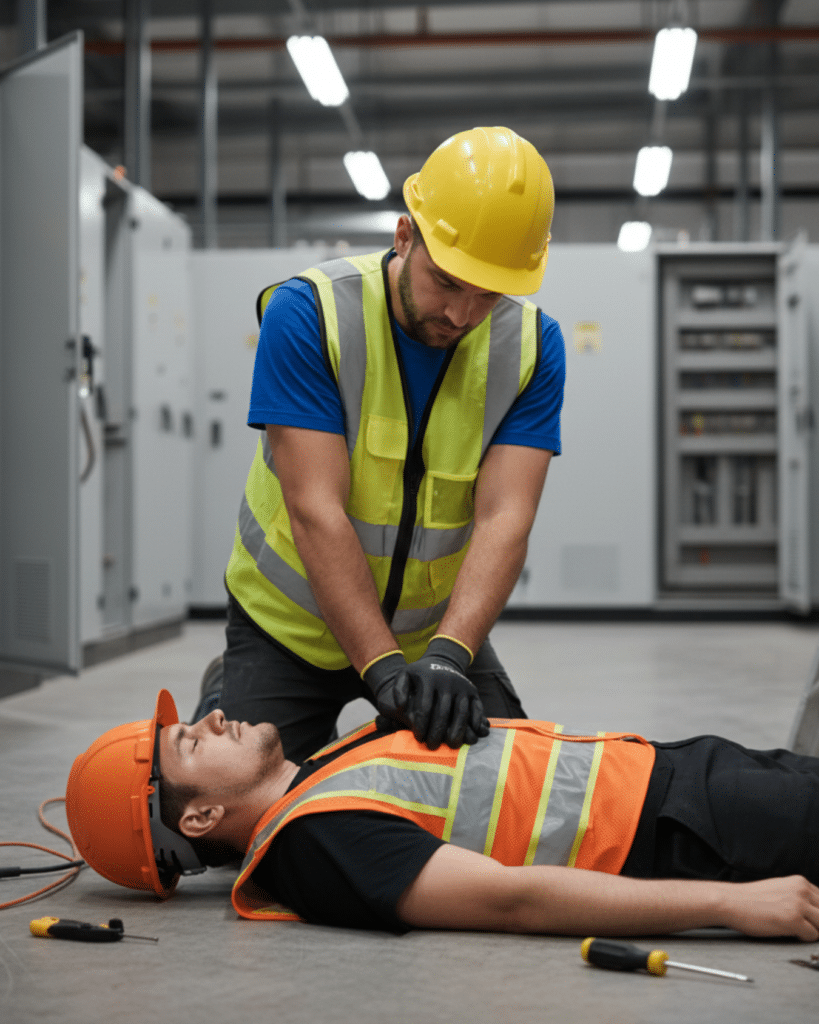
What Is Low Voltage Rescue (LVR)?
Low voltage rescue refers to the emergency procedures used to free a person who has come into contact with a live low voltage (LV) electrical apparatus — typically a switchboard, distribution panel or similar equipment operating at voltages up to 1,000 volts AC or 1,500 volts DC. In Australia, this definition aligns with the standards set by the electricity supply industry (ESI) and relevant work health and safety (WHS) legislation.
It is important to note that LVR training specifically covers fixed low voltage panel equipment and excludes overhead lines and underground cables, which fall under separate training requirements. The focus of UETDRMP018 is on the inspection and use of live LV panel rescue equipment in workplace settings.
Why LVR Is a Critical Skill in Electrical Work Environments
Electrical contact injuries can cause ventricular fibrillation — an irregular and potentially fatal heart rhythm — within milliseconds. Without an immediate, trained response, survival rates drop sharply with every passing minute. A worker who can perform a rescue from a live LV panel and administer CPR with AED support dramatically improves a colleague’s chance of survival while emergency services are in transit.
Australian WHS regulations require employers to ensure workers are competent to respond to foreseeable emergencies. For businesses operating in environments with live low voltage electrical apparatus, this means having trained personnel who hold current LVR and CPR certifications on site.
The Safety Observer Role in Live LV Panel Work
During any task involving a live LV panel, a trained Safety Observer must be present. This person is responsible for monitoring the task, identifying hazards and activating the emergency response if something goes wrong. The UETDRMP018 course is specifically designed to prepare workers for this Safety Observer role, ensuring they understand the responsibilities, rescue procedures and reporting requirements involved.
A step-by-step quick guide for workplace responders using approved procedures, rescue equipment, and CPR/AED readiness.
Assess the Situation
Identify hazards, confirm voltage and activate emergency response
Obtain Rescue Equipment
Inspect LV rescue kit and fit appropriate PPE
Identify the Isolation Point
Locate and label the electricity isolation point
Perform the Rescue
Remove casualty from live LV panel per workplace procedures
Assess the Casualty
Check responsiveness, breathing and pulse — begin CPR if required
Use AED and Secure the Site
Apply AED, control incident site entry and report the incident
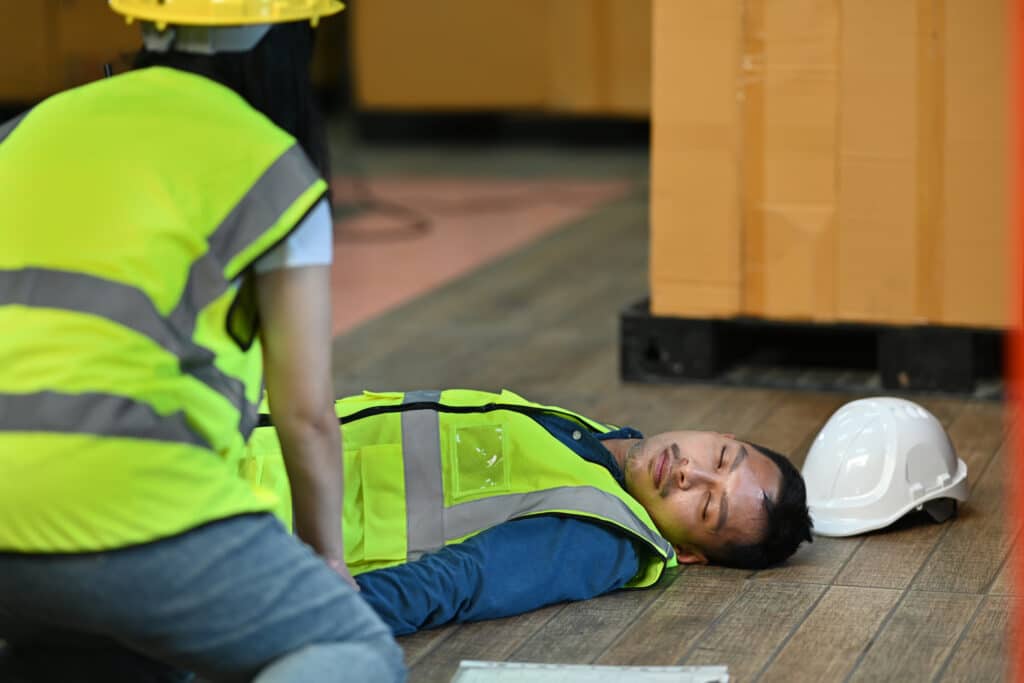
Understanding the UETDRMP018 LVR CPR Training Course — Australia's Nationally Recognised LVR Certification
What Is the UETDRMP018 Unit of Competency?
UETDRMP018 is a nationally recognised unit of competency under the Australian Skills Quality Authority (ASQA) framework. Its full title is Perform Rescue From a Live Low Voltage Panel, and it is delivered by registered training organisations (RTOs) approved to offer this unit as part of a nationally recognised training program.
The course is designed to equip participants with the skills and knowledge required to perform rescue procedures from live LV apparatus in the workplace, act as a Safety Observer, manage hazards and report incidents in accordance with organisational and legislative requirements.
How UETDRMP018 Supersedes UETDRMP007 and UETDRRF004
UETDRMP018 supersedes and is equivalent to both UETDRMP007 and the earlier UETDRRF004 units. Workers who hold certificates for either of these older qualifications should check their renewal dates and consider updating to UETDRMP018 to remain compliant with current industry standards. Many employers and regulatory bodies now specifically require the current unit code for compliance purposes.
The UETDRMP018 LVR CPR course is aimed at workers in industries where live electrical equipment is regularly encountered. The training is particularly relevant for the following groups:
Electricians and electrical apprentices
Regularly work near live LV panels and switchboards
Electricity supply industry (ESI) workers
Primary workforce covered by UETDRMP018 scope
Construction site workers
High exposure to temporary electrical installations
Warehouse and industrial facility staff
Work around distribution panels and electrical switchrooms
Maintenance technicians
Undertake inspection and repair tasks near live apparatus
Safety officers and site supervisors
Required to act as Safety Observers during live panel work
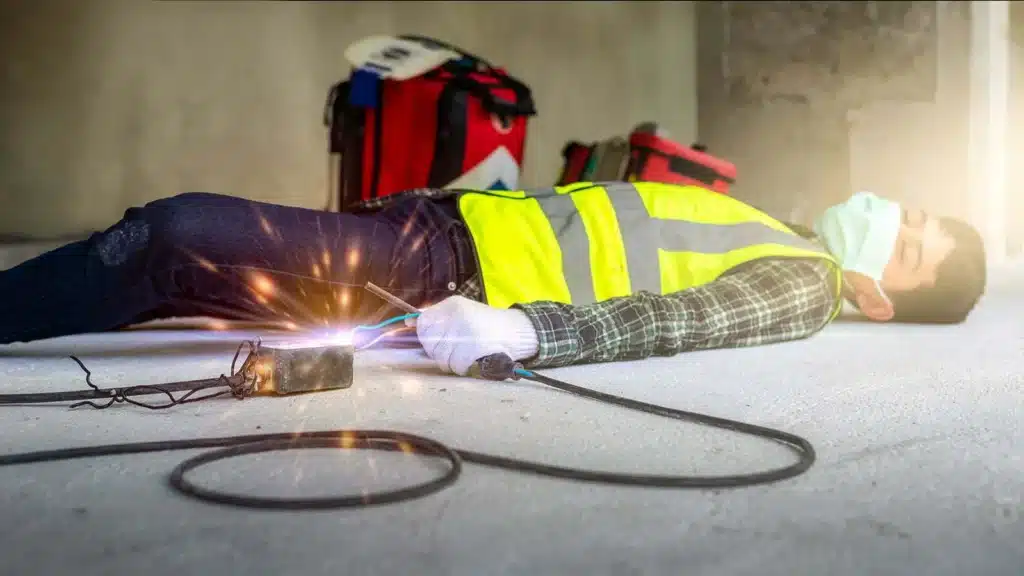
What You Will Learn in the UETDRMP018 LVR CPR Course
The UETDRMP018 course is structured around three core elements, each of which develops a specific set of practical skills and knowledge. The course also incorporates HLTAID009 Provide Cardiopulmonary Resuscitation, meaning participants receive two nationally recognised certifications upon successful completion.
Element 1 — Preparing to Perform Rescue Procedures
Participants learn to identify workplace requirements for the rescue, locate and confirm the electricity isolation point, and obtain, inspect and correctly fit rescue equipment and personal protective equipment (PPE). This stage emphasises risk assessment and hazard identification before any action is taken — a critical principle in electrical safety.
Element 2 — Carrying Out the Rescue From a Live LV Panel
This element covers the practical execution of a rescue from a live LV panel. Participants learn to assess the situation, activate the appropriate emergency response and remove the casualty from the live LV panel in accordance with workplace requirements and safe approach distances. This is a hands-on practical component conducted using simulation equipment.
Element 3 — Completing the Rescue and Securing the Incident Site
Once the casualty has been removed to a safe location, participants learn to assess the casualty’s condition, secure and control entry to the incident site, and report the incident in accordance with workplace and regulatory requirements. This element reinforces the importance of post-rescue procedures and documentation.
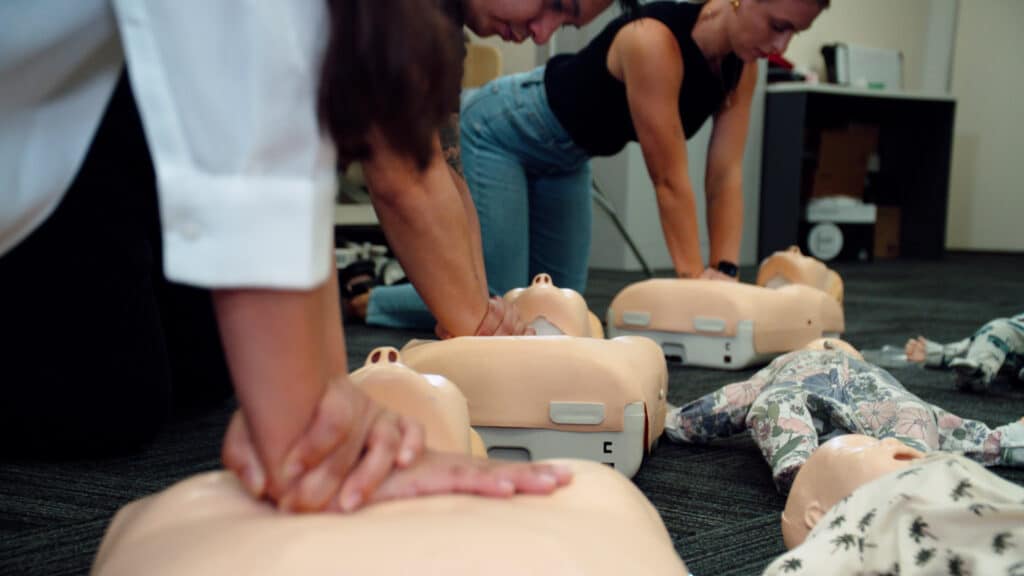
CPR and AED Skills — HLTAID009 Provide Cardiopulmonary Resuscitation
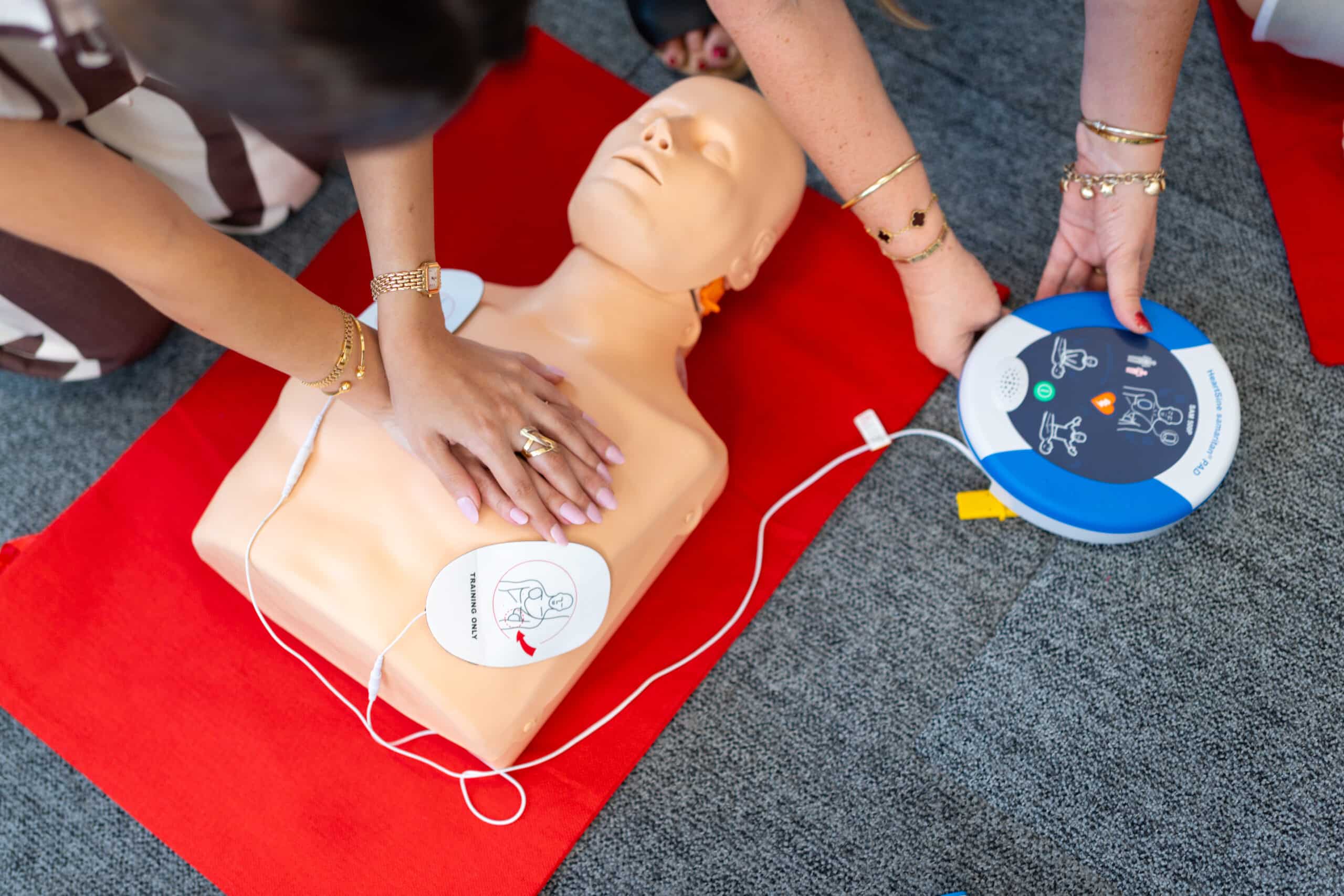
The HLTAID009 component of the course ensures participants can administer effective CPR on adult and infant manikins and operate an automated external defibrillator (AED). Training follows the guidelines of the Australian Resuscitation Council (ARC), which sets the benchmark for resuscitation practice across Australia. Participants learn to manage unconscious casualties, perform chest compressions at the correct rate and depth, deliver rescue breaths and attach and operate an AED during a cardiac emergency.
Ready to Get Certified in Low Voltage Rescue and CPR?
Enrol in First Aid Pro’s UETDRMP018 LVR CPR training course and walk away with two nationally recognised certifications — all in just four hours. Available in Adelaide, Brisbane and Hobart. Secure Your Spot — Enrol With First Aid Pro
UETDRMP018 Course Eligibility and Entry Requirements
Before enrolling in the UETDRMP018 LVR CPR course, applicants must meet the following eligibility criteria.
Pre-Requisite Units and General Enrolment Criteria
HLTAID009 Provide Cardiopulmonary Resuscitation is completed as part of this course, so no prior CPR certification is required for enrolment. Students must be 14 years or older — those under 18 must submit a completed Parental Consent Form — and must hold a Unique Student Identifier (USI) number as required by the Australian Government.
Physical and Language, Literacy and Numeracy (LLN) Requirements
Participants must be physically capable of performing 2 minutes of CPR on adult and infant manikins positioned on the floor, and of placing a patient into the recovery position. Basic reading, writing and listening skills in English are required, along with basic numeracy for understanding timing and compression ratios. Students should also wear enclosed footwear and comfortable clothing suitable for practical activities.
The UETDRMP018 course is delivered through face-to-face practical training at one of First Aid Pro's training centres, or onsite at your workplace by arrangement. The four-hour session combines hands-on low voltage rescue simulations with practical CPR and AED training.
Session overview
Face-to-face practical delivery with low voltage rescue simulations, plus CPR and AED training — completed in a focused 4-hour format.
Duration
4 hours (face-to-face, practical)
Delivery method
In-person at training centre or onsite at your workplace
Training locations
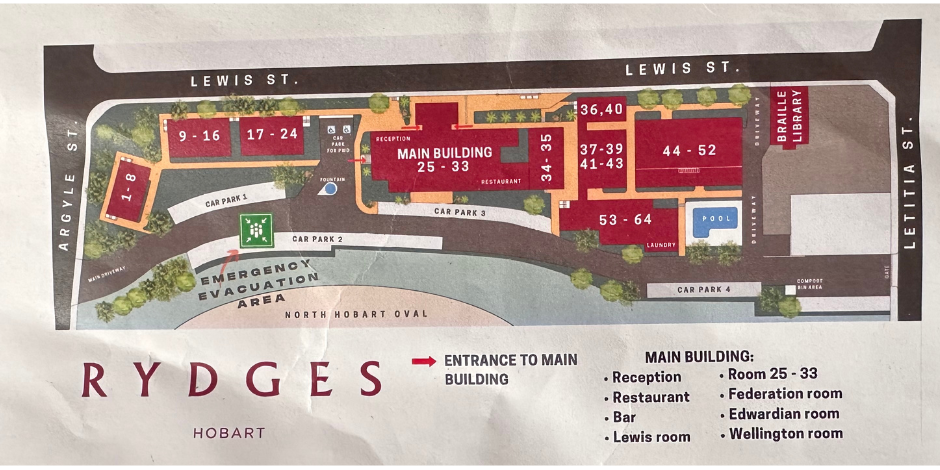
Adelaide, Brisbane (including Cannon Hill and Logan), Hobart- more coming soon!
Course fee
Approx. $99 — domestic students
Payment
Visa and Mastercard (debit and credit) via secure online booking
Certifications issued
UETDRMP018 + HLTAID009 — same-day certificates
Availability
7 days a week
LVR Rescue Equipment — What Electrical Workers Need to Know
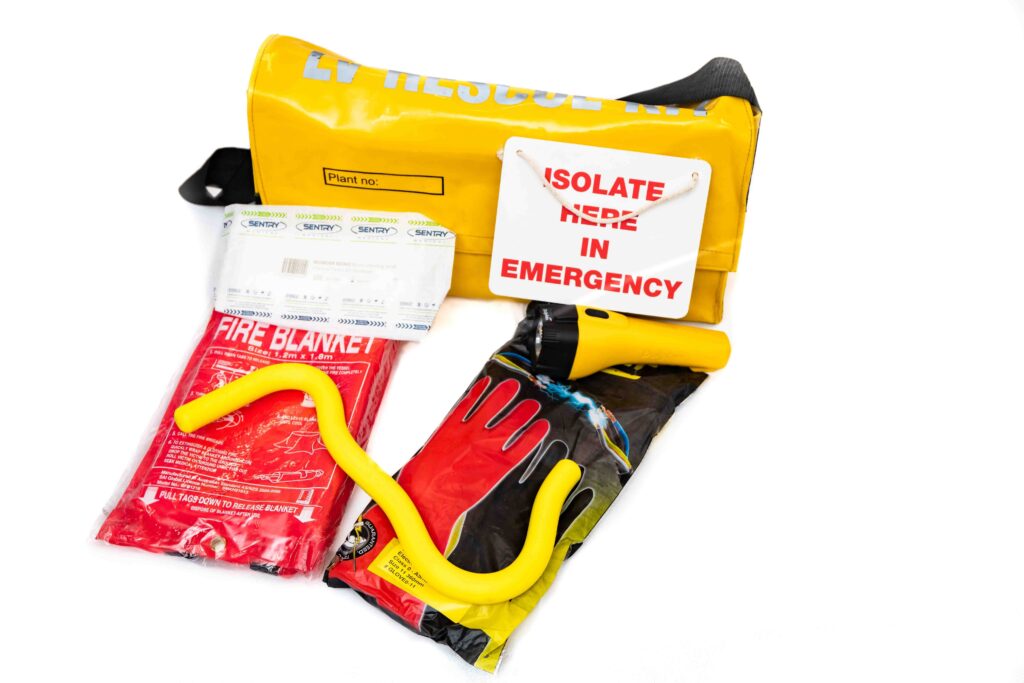
A key component of the UETDRMP018 training course is understanding, inspecting and using the correct rescue equipment. Participants learn the components of a standard low voltage rescue kit, the types and application of rescue PPE, and the procedures for identifying safe approach distances relative to the voltage present.
Components of a Low Voltage Rescue Kit
A typical LV rescue kit includes insulated rescue hooks or ropes for separating the casualty from the electrical source, insulating mats, gloves rated for low voltage use, and equipment for securing the incident site. Participants learn to inspect each component prior to use, ensuring items are in serviceable condition and appropriate for the voltage levels encountered on site.
Rescue PPE — Types, Fitting and Inspection
Appropriate PPE is essential when performing a rescue from a live low voltage panel. The UETDRMP018 course covers the correct selection, fitting and inspection of rescue PPE, including insulating gloves, face protection and arc-rated clothing where required. Participants are assessed on their ability to correctly fit PPE before approaching any simulated live panel scenario.
Essential equipment required to safely perform a low voltage rescue and manage risks associated with live electrical apparatus.
Insulating gloves
Rated for LV use; inspected before every task
Rescue hook / rope
Separates casualty from electrical source without direct contact
Insulating mat
Provides a safe standing surface near live apparatus
Arc-rated face shield
Protection against arc flash and electrical burns
Arc-rated clothing
Limits burns in the event of arc flash
Isolation point labels
Identifies and communicates the location of the isolation switch

CPR in Electrical Emergencies — Why HLTAID009 Is Included in LVR Training
Electrical shock frequently causes cardiac arrest by disrupting the heart’s electrical conduction system. When current passes through the body, it can trigger ventricular fibrillation — a chaotic, ineffective heart rhythm that will not resolve without intervention. Without CPR and defibrillation, brain damage can begin within four to six minutes of cardiac arrest. This is why the ability to perform cardiopulmonary resuscitation is considered an inseparable companion skill to low voltage rescue.
ARC Guidelines for CPR in Electrical Emergency Scenarios
The Australian Resuscitation Council (ARC) sets the clinical guidelines that underpin HLTAID009 training across Australia. The UETDRMP018 LVR CPR course aligns with these guidelines, ensuring participants learn the most current, evidence-based resuscitation techniques. Key principles include continuous chest compressions at a rate of 100 to 120 per minute, early AED use and minimal interruption to compressions while the AED analyses heart rhythm.
Using an AED Following Electrical Contact
Automated external defibrillators are designed for use by non-medical responders. In the UETDRMP018 course, participants practise attaching AED pads, following audio prompts and delivering a shock when indicated. Early defibrillation — ideally within three to five minutes of collapse — significantly increases survival rates for ventricular fibrillation caused by electrical contact.
UETDRMP018 Certification — Career and Compliance Benefits
Completing the UETDRMP018 LVR CPR training course provides tangible professional benefits beyond individual safety preparedness. The certification is valued by employers across the electrical, construction, mining and energy sectors and is recognised by industry bodies as evidence of competency in managing electrical emergencies.
Benefit | Detail |
Nationally recognised certification | UETDRMP018 and HLTAID009 issued under the Australian Qualifications Framework (AQF) |
WHS compliance | Helps employers meet duty-of-care obligations under WHS legislation |
Career advancement | Required or preferred for roles in ESI, construction, warehousing and industrial facilities |
Same-day certificates | Issued on the day of training — no waiting for results |
Affordable pricing | One-time fee of $99 covers both certifications |
Group and onsite training | Available for organisations needing to train multiple staff at their workplace |
Renewal of the UETDRMP018 and HLTAID009 certifications is generally recommended every 12 months for CPR and every three years for the LVR unit, though individual employers and regulatory bodies may specify different renewal intervals. Always check with your employer or relevant state authority for the requirements applicable to your role.
Test your understanding of LVR CPR principles with this short quiz. Select one answer per question, then click Check Answers.
Take the Next Step Towards Workplace Safety
Don’t wait for an emergency to discover you’re not prepared. Enrol in First Aid Pro’s nationally recognised UETDRMP018 LVR CPR training course today. Courses available 7 days a week across Adelaide, Brisbane and Hobart — or bring the training to your workplace. Book Your UETDRMP018 CPR LVR Course With First Aid Pro →
References
- Australian Skills Quality Authority (ASQA). UETDRMP018 Perform Rescue From a Live Low Voltage Panel.
- Australian Resuscitation Council (ARC). Guideline 8 — Cardiopulmonary Resuscitation. .
- Australian Resuscitation Council (ARC): Guideline 7 – Automated External Defibrillation in Basic Life Support
- Safe Work Australia. Model Work Health and Safety Act (2023 edition).
- Australian Skills Quality Authority (ASQA). HLTAID009 Provide Cardiopulmonary Resuscitation.
- First Aid Pro. UETDRMP018 CPR LVR Course.
Frequently Asked Questions
What is the difference between UETDRMP018 and the older UETDRMP007 and UETDRRF004 units?
UETDRMP018 supersedes and is equivalent to both UETDRMP007 and UETDRRF004. The newer unit reflects updated workplace requirements, rescue procedures and training standards aligned with current industry practice. If you hold a certificate for either of the older units, it is worth checking whether your employer or regulatory body now requires you to hold the current UETDRMP018 qualification for compliance purposes.
Do I need prior electrical qualifications or CPR training to enrol in the UETDRMP018 LVR course?
No prior electrical trade qualifications are required to enrol. The HLTAID009 Provide Cardiopulmonary Resuscitation component is delivered as part of the UETDRMP018 course, so you do not need to hold a current CPR certificate before attending. You do need to be at least 14 years of age, hold a Unique Student Identifier (USI) number, and be physically capable of performing the practical components of the training.
How long is the UETDRMP018 LVR CPR certification valid, and when should I renew it?
The HLTAID009 CPR component is generally recommended for annual renewal, as this aligns with Australian Resuscitation Council guidance and is a common employer and industry requirement. The UETDRMP018 LVR unit is typically renewed every three years, though some employers and regulatory bodies — particularly in the electricity supply industry — may require more frequent renewal. Always confirm renewal requirements with your employer or the relevant state workplace authority.
Can my employer arrange onsite LVR CPR training for our team?
Yes. First Aid Pro offers onsite workplace training for organisations that need to train groups of staff at their own facility. This can be a practical and cost-effective option for businesses with a number of workers who require UETDRMP018 certification, as it reduces travel time and allows training to be conducted in a familiar environment. Contact First Aid Pro’s support team to discuss scheduling and group pricing options.