



Sharon has 21+ years of experience as a qualified Emergency Care Nurse registered with the Australian Health Practitioner Regulation Agency (APHRA) and 12+ years as a First Aid Trainer.
She takes pride in FirstAidPro making first aid training available, comprehensive and affordable to everybody.
Imagine that you are walking along a lovely beach and decide to take a quick swim. The ocean isn’t that clear today, but heck, the weather is too hot not to. You hop in and go pretty deep. All of a sudden, you feel a slight sting on your foot. There’s jellyfish all around you, and you are right in the thick of it. You’re pretty sure the zap was from the surrounding jellyfish. You rush back to shore and call Triple 000. Upon arrival at the hospital, the doctor asks, “Do you know what type of jellyfish stung you?”
Around the Australian coast, there are generally three main types of jellyfish. These jellyfish vary in specific features. The shape, size and tentacles are all different from each other. Remembering the particular details can be difficult, but learning and understanding the difference can save your or a mate’s life.
What Makes Jellyfish Venomous?
A jellyfish’s two main visible parts are the hood and the tentacles. The venomous part of the jellyfish is their tentacles, which have stinging cells on them called Nematocysts. They shoot poison into what comes into contact with them, like tiny harpoons. Usually, they use this to eat their prey, but humans are also heavily susceptible to being stung by a jellyfish’s tentacles.
Since these tentacles can be up to 3-10m in length, there can sometimes be numerous sites in which you are stung. The more contact made with the tentacles, the more poison injected, so it is essential to be very cautious when swimming near jellyfish.
Jellyfish do not actively hunt for humans. Humans will usually actively swim into the path of jellyfish tentacles, causing the sting. It is important to be aware of your surroundings and make sure there are no jellyfish around you to avoid an unfortunate event where you are stung by a jellyfish.
What Are The Different Types Of Jellyfish, And How Do You Treat Their Stings?
Bluebottle Jellyfish
The Bluebottle Jellyfish is the most common cause of jellyfish stings in Australia. Also named the Portuguese Man O’ War, they are responsible for around 10,000 to 30,0000 stings each year! These jellyfish are also relatively small in size ranging from 2 to 15 cm, and their tentacles can reach 10 metres in length. These jellyfish are also common all over Australia and can be spotted in South Australia and all the way along the East Coast.
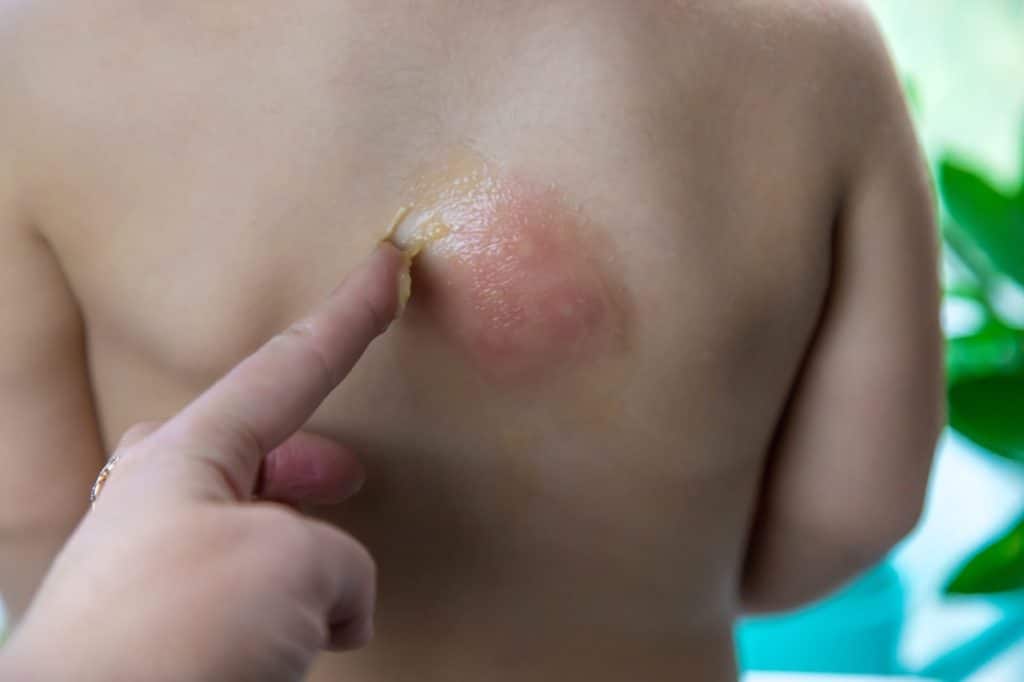
If you are stung by a bluebottle Jellyfish, the pain can be intense. It can feel like whiplash and can last up to 1 to 2 hours. It also creates sores on the skin, which will fade after a couple of days. There will also be redness and a rash at the site of the sting.
How To Treat A Sting From A Bluebottle?
- Wash the sting with seawater and remove any tentacles
- Run hot water on the skin for 20 minutes. Make sure the water will not cause burns but make it as hot as they can tolerate.
- If hot water isn’t available, an ice pack will help with pain relief
Vinegar will not help with a sting from a bluebottle jellyfish, as it might increase the stinging pain! However, vinegar will help with most other jellyfish stings.
Stings from these jellyfish do not always require a doctor’s visit. However, if you are unsure what has stung you or if you are having a bad reaction to the sting, a doctor’s visit won’t hurt.
Major Box Jellyfish
A major box jellyfish is unique in its cube-like shape, and there are not many cases of stings from these jellyfish. It is one of the most venomous jellyfish and can cause death within 5 minutes of delivering a sting. Luckily cases of this jellyfish stinging are rare, with roughly 40 cases each year and with a total of 80 known cases since 1883, which resulted in death.
The major box jellyfish is called a box jellyfish for its unique box-like appearance. It can have up to 15 tentacles that hang from the four corners of its body. These tentacles can be up to 3m in length. Since there are so many tentacles, it can be easy to have multiple sting sites!
A sting from one of these jellyfish can cause severe pain and a red/purple whip-like lesion on the body at the site of the sting. In sporadic cases, the heart can even stop beating!
How To Treat A Major Box Jellyfish Sting?
If you are stung by a Major Box jellyfish. Call triple zero (000) for an ambulance. The following first aid will help while waiting for the ambulance.
- Put lots of vinegar on a Major Box jellyfish sting. Vinegar stops any nematocysts which haven’t fired venom from doing so. If vinegar is not available, then wash with seawater
- Carefully remove the tentacles from the skin
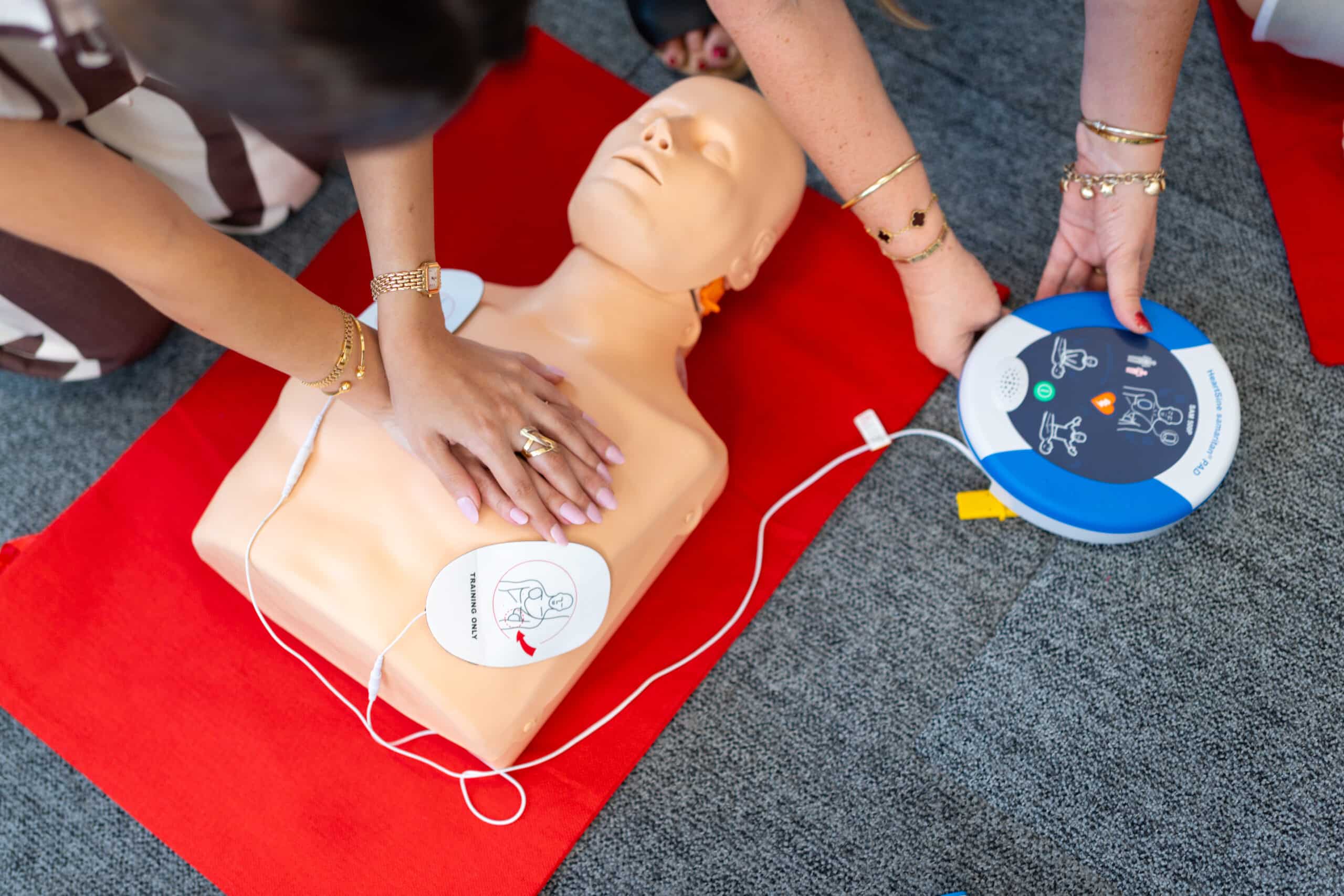
- Check for a pulse. If the person is unconscious, start CPR
Other Types Of Box Jellyfish
There is a multitude of different species of box jellyfish—all very venomous. Certain box jellyfish cause the Irukandji Syndrome.
If stung, symptoms can occur 20 to 30 minutes after.
It can cause:
- Anxiety and sweating
- Nausea and vomiting
- Severe pain in the body (back, tummy, chest and muscles)
- Increased heart rate (tachycardia)
- In rare cases, fluid in the lungs (pulmonary oedema)
- In rare cases, damage to the heart
These symptoms are dangerous and require immediate medical attention. If you are stung by any box jellyfish. Calling an ambulance can save a life!
To treat a sting from another Box Jellyfish. Use the same treatment as you would for a Major Box jellyfish. Pour lots of vinegar over the affected skin and carefully remove the tentacles from the skin while waiting for an ambulance.
What To Do If You Don’t Know What Stung You?
It can be challenging to determine which jellyfish may have stung you as they are relatively transparent and small. Since Box jellyfish are the most deadly you can encounter, it is vital to treat any sting like it is a major box jellyfish sting.
Especially if:
- It is in the tropics in Australia
- There are multiple sting sites
- The person stung seems unwell
Jellyfish Sting Prevention
Some things you can do that will help reduce the chance of being stung by a jellyfish include:
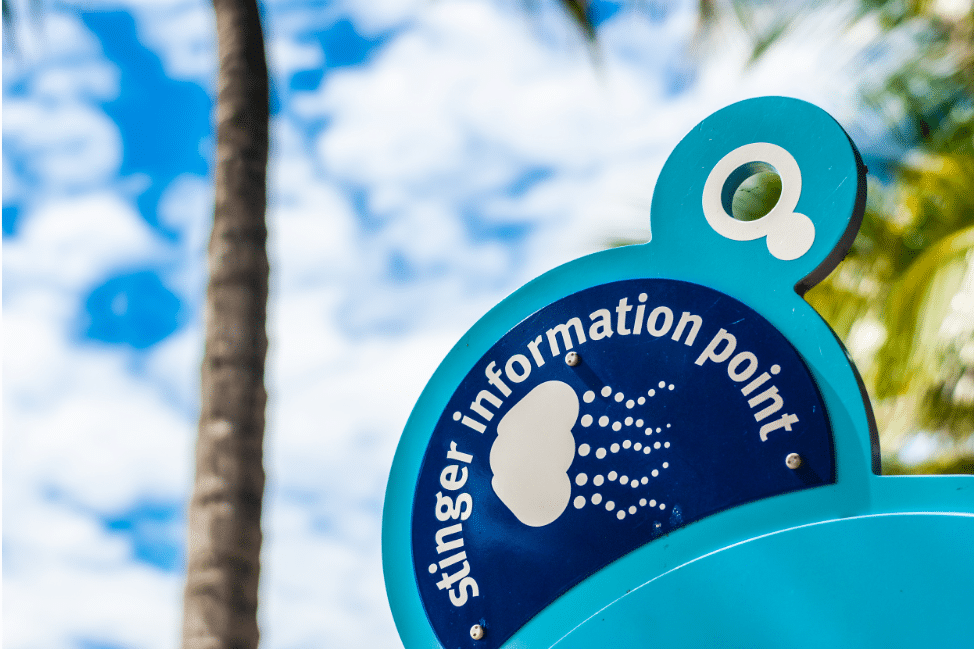
- Avoiding swimming in areas that actively have jellyfish in them. These areas can be signed with warnings
- Don’t touch any jellyfish. Even if they are washed up on the beach as their tentacles still contain venom
- Wearing a full-body lycra wetsuit and waterproof footwear will protect you from contact with jellyfish
- Swim near lifeguards or people with first aid training. These people can help save your life and administer first aid while an ambulance is on the way!
First Aid Course
In the worst-case scenario, a Box Jellyfish sting can cause the heart to stop! CPR can give you those life-saving skills to restart the heart.
A first aid course with FirstAidPro is a quick and convenient course. Our courses will even credit you with a certificate which you can use for the workplace as well. Why not book one today and save a life.