



Sharon has 21+ years of experience as a qualified Emergency Care Nurse registered with the Australian Health Practitioner Regulation Agency (APHRA) and 12+ years as a First Aid Trainer.
She takes pride in FirstAidPro making first aid training available, comprehensive and affordable to everybody.
There are two aspects to providing first aid and medical assistance. The first is having the skills and knowledge to know how to help in an emergency. The other is having the resources you need to put those skills into effect. While being properly trained in first aid is a valuable skill that can potentially save lives, there are limits to what you can do without medical equipment and supplies. You don’t need any special equipment to perform CPR on an unconscious person. But you can’t clean and dress a wound without bandages.
Thankfully first aid kits are now a common sight in almost all workplaces, schools, and public facilities, and most households have at least basic medical supplies. Some kits will be well maintained, while others will be rarely used and largely left untouched – possibly minus a few items that got used and not replaced.
Unfortunately, many of these first aid kits will be left mostly undisturbed for years. Some workplaces might make sure that any supplies used by staff are replenished, but a question very few people ask is “are any of our first aid supplies out of date?”
How Can First Aid Supplies Expire?
If you have a quick look through your medical kit, you might be shocked to find many items with a tiny expiry date printed on the packaging. We often think of food items and perishables having use-by dates (with the possible exception of honey), but generally, we assume things like bandages, tape, and scissors have no limit on shelf life. But the reality is a little more complex than this.
Many things can limit how long the supplies in a first aid kit stay good for.
- Sterility – Any first aid supplies that must be sterile when used will almost always have a use-by date. It’s assumed that the packaging will lose its integrity over time, and bacteria can get into sterile dressings and tools. Infection can be a big risk with severe wounds, often doing far more damage than the original injury. You want your materials to be as sterile as possible, so you don’t want to use stuff where the sealed packaging might not be 100% sealed anymore.
- Adhesives – Things like adhesive bandages don’t have an unlimited shelf life. Quite apart from the sterility issue, the adhesive on the dressing (the stuff that sticks to your skin) can lose its stickiness over time. This means it won’t do much of a job keeping cuts and other wounds protected.
- Materials Degrading – Many materials used in first aid supplies don’t stay good forever. If you’ve ever tried to use old latex gloves or aged rubber bands, you’ll probably already know that rubber can degrade over time – to the point where it simply tears. You really don’t want that to happen to the rubber gloves from your first aid kit when you’re handling something infectious.
- Mixtures / Medicines – Things like saline or analgesic creams can lose their effectiveness over time. Some can even “go bad” in the traditional sense – especially if contaminated. Oral medication can also have a limited shelf life, with its active ingredients breaking down over time. You want the medications you use to be fully effective and safe, so don’t mess around with out-of-date medicine (it’s famously known as one of the Dumb Ways to Die).
What Is In A First Aid Kit?
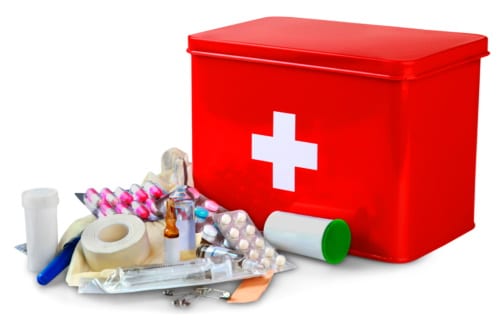
First aid kits vary a lot, and the supplies they hold will differ. A lightweight survival first aid kit and a car first aid kit will have different supplies. Specialised kits (such as a snake bite first aid kit) will be different again, with items that other kits won’t have – most kits don’t require a snake bite bandage. And it often makes a difference whether you got your kit from a dedicated first aid company or just grabbed a first aid kit bunnings had on sale.
Despite this, first aid kits often have similar types or categories of items – and this is useful to look at when thinking about what first aid supplies can go out of date. Things you’ll commonly see in many first aid kits include:
- Adhesive dressings (Band-Aids / Elastoplast)
- Alcohol wipes
- Bandages & wound dressings
- Cold Packs
- First aid booklets
- Fluids for cleaning or irrigating (saline, antiseptic, distilled water)
- Gels, creams & sprays (antiseptic, analgesics, sting/bite treatments, rash creams)
- Notepads & pencils or pens
- PPE (rubber gloves, face masks, resuscitation masks, disposable aprons)
- Plastic Containers & Bags
- Safety Pins
- Scissors & Tweezers
- Tablets (painkillers, antihistamine)
- Tape
- Thermal Blankets
- Thermometers
- Tissues
What Supplies Go Out Of Date?
Once we have a rough list of what sort of things we can expect in a first aid kit, we can start to look at what things do and don’t have a limited shelf life.
The first thing to watch out for is things that are supposed to be sterile when opened. This includes most bandages, wound dressings, and adhesive bandages – such as band-aids. It also includes a lot of specialised single-use items – such as sterile splinter removers. In general, you can’t count on sterile items to remain sterile forever – even in their packaging. And, of course, if the packaging is opened for some reason, you should be replacing it ASAP.
Many items which have some adhesive surface or items that contain rubber also frequently have a use-by date. This includes personal protective equipment (PPE) such as gloves, masks, and disposable aprons. It also includes things like tape and elastic bandage fasteners.
Most medicines also have an expiry date, whether it’s a pill, a cream or ointment, or a liquid solution. These medicines often have active ingredients that can lose their potency over time, becoming less and less effective.
Alcohol wipes are another item that can stop being effective over time – in this case, generally because they’ve dried out or become contaminated. And lastly, although it might seem odd, first aid information booklets can get out of date as research on first aid and CPR advances and standards change.
On the other hand, there are many items in a first aid kit that don’t go out of date. This means it’s often worth replacing out-of-date supplies rather than trying to buy a whole new first aid kit. Some of the items that generally don’t out of date are:
- Cold Packs
- Distilled Water
- Notepads
- Plastic Containers & Bags (non-sterile)
- Saftey Pins
- Scissors & Tweezers
- Thermal Blankets
- Thermometers
- Tissues
Ultimately, the best way to know supplies in your first aid kit are in and out of date is to open it up and check – you may be surprised how many things need replacing. As a general rule, first aid supplies with a shelf life will generally have an expiry date 3-5 years after they were produced. So checking your kit every three years is about right.
Where To Buy First Aid Kit Refills?
Many places sell supplies you can use to restock a first aid kit that’s been depleted or has supplies out of date. If you’re looking for delivery and you’re keen to get a good deal, you can shop around for one of the multitude of first aid suppliers on the net. But if you’re just looking for quick and easy, then your local chemist or pharmacy will generally have all the supplies you need.
Officeworks also has a reasonably wide range of first aid supplies. This means you can easily make replenishing the first aid kit part of the task of restocking the stationery supplies.
Can You Use Out Of Date First Aid Supplies?
That’s a slightly tricky question, and it depends on what you mean. If you mean “can’t I just ignore the expiry dates?” then no. If you want to be genuinely prepared for a medical emergency (which is the point of a first aid kit), then you want to make sure that the supplies inside are fully effective. You don’t want to be working with dressings that don’t stick and gloves that tear as you try to put them on.
If instead, you’re asking “can I use old first aid supplies if there’s no other alternative” then the answer is probably yes. An out-of-date bandage will usually still do the job. You’d want to carefully check anything sterile (don’t use anything that’s obviously discoloured as it’s probably come unsealed and become mouldy or contaminated).
Adhesive dressings and tape are generally still good as long as it’s sterile and it is actually sticking. Alcohol wipes are similar – if you open the pack and they’re still fresh and moist, they’re probably fine. And although outdated first aid booklets might not have the most current information, they’re probably better than nothing. Especially if you’ve actually taken the time to get first aid trained yourself, in which case such information would normally just be a reminder.
PPE is a little tricky, as they can become less effective at protecting you as they degrade. So you might not want to depend on old gloves if you’re treating a significant injury with a high infection risk – not unless there’s no better option.
You should steer clear of out of date medication, though – it’s entirely possible to do more harm than good, especially if it’s very old.
Of course, as long as you’re not using your old first aid supplies for actual first aid, there’s nothing to stop you from using them for other purposes. An old bandage is just right for binding up a teddy bear when you’re teaching first aid to your kids.