



Sharon has 21+ years of experience as a qualified Emergency Care Nurse registered with the Australian Health Practitioner Regulation Agency (APHRA) and 12+ years as a First Aid Trainer.
She takes pride in FirstAidPro making first aid training available, comprehensive and affordable to everybody.
CPR, or Cardiopulmonary Resuscitation if you’re fond of long medical terms, is a life-saving form of first-aid designed to prolong the life of a casualty and allow them to revive safely. It’s been a critical first aid tool for more than half a century and has literally saved millions of lives. It’s also, on many levels, not entirely understood. Movies and TV dramas have mixed up fact and fiction for us here, meaning people have a lot of misconceptions about what CPR does and how it works.
So let’s get a better understanding of this essential, life-saving technique.
When Was CPR Invented?
The idea of artificial ventilation (in the form of mouth-to-mouth resuscitation) has been around for a long time. It was first used back in the 1700s as a way to save drowning victims and was popularised by doctors such as William Hawes and Thomas Cogan – who set up the Royal Humane Society. However, this was mouth-to-mouth resuscitation only – the “breaths” component of CPR, without the chest compressions.
CPR, as we know it today, really started in the 1960’s – particularly, it first appeared in a 1962 training video called “The Pulse of Life”. It was put together by a number of doctors who’d been researching resuscitation. This was when the idea of chest compressions was introduced.
The idea was so effective that it was very quickly picked up across the world by the medical community as a life-saving medical technique. Then, in the 1970s, medical experts started to promote it for use by the general public. Nowadays, it’s a critical first aid skill taught in virtually every first aid training course.
How CPR Works?
To be genuinely prepared to use CPR to save the lives of friends and family, you should seriously consider investing a couple of hours in getting proper training in CPR. FirstAidPro’s HLTAID009 Provide cardiopulmonary resuscitation (CPR) is affordable, only takes two hours, and can be done on a weekend. Alternatively, doing a full first aid course will give you the same CPR training and also prepare you for a wide variety of other medical emergencies.
Let’s start by clarifying a couple of things that people often misunderstand. First, CPR isn’t intended to restart the heart.
Now, this doesn’t mean people don’t revive after receiving CPR (that does happen). But in those cases, the heart has almost always restarted spontaneously. Or in other words, the person’s heart just reset itself.
If a person suffers Cardiac Arrest and stops breathing, the thing that kills them is a lack of oxygenated blood to the brain. Our brains can only survive without fresh oxygen from the bloodstream for a couple of minutes before suffering severe brain damage – and death soon after. So when someone drops to the floor without breathing or a pulse, that’s what’s going to kill them.
CPR is a desperate, emergency solution to this problem. By pushing down on the chest cavity, you’re manually pumping the heart and driving blood around the body. By breathing into the person’s lungs, you’re forcing fresh oxygen into the lungs (the air you breathe out still has a decent amount of oxygen in it). Basically, when the person’s heart and lungs have stopped working, you’re getting out and pushing.
What this does is supply some oxygen-rich blood to the brain. This, in turn, prolongs the person’s life and gives the body longer to get its act together and naturally restart the heart and lungs. If that doesn’t happen, it also helps the person survive long enough to get other assistance – such as a team of paramedics or someone with an AED (Automated External Defibrillator).
When CPR Should Be Performed?
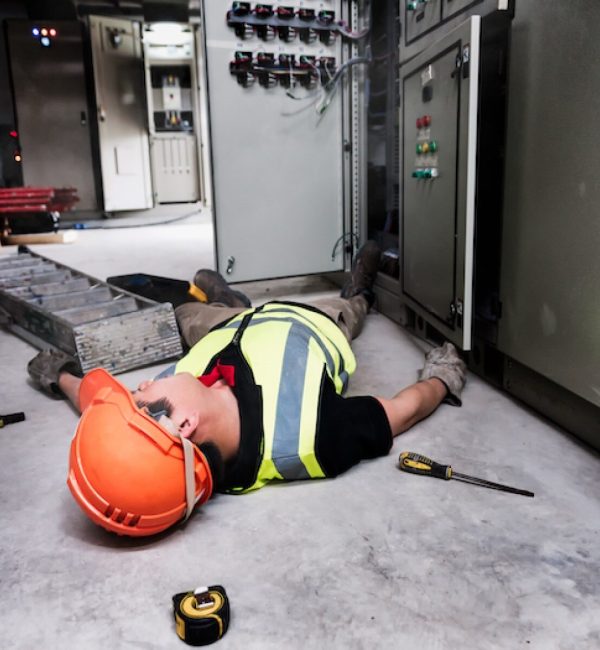
Generally speaking, CPR comes into play when a person is unresponsive, isn’t breathing, and possibly doesn’t have a pulse (although it can be hard to tell if someone has a pulse in the heat of an emergency).
There’s actually a whole process for determining when CPR is needed, which is usually remembered by the acronym DRSABCD (generally pronounced as “Doctors ABCD”). This stands for “Danger, Response, Send, Airway, Breathing, CPR, Defibrillation”. This process is taught as part of CPR and first aid training and has evolved quite a bit over the years – having started out just as “ABC”.
How To Do CPR?
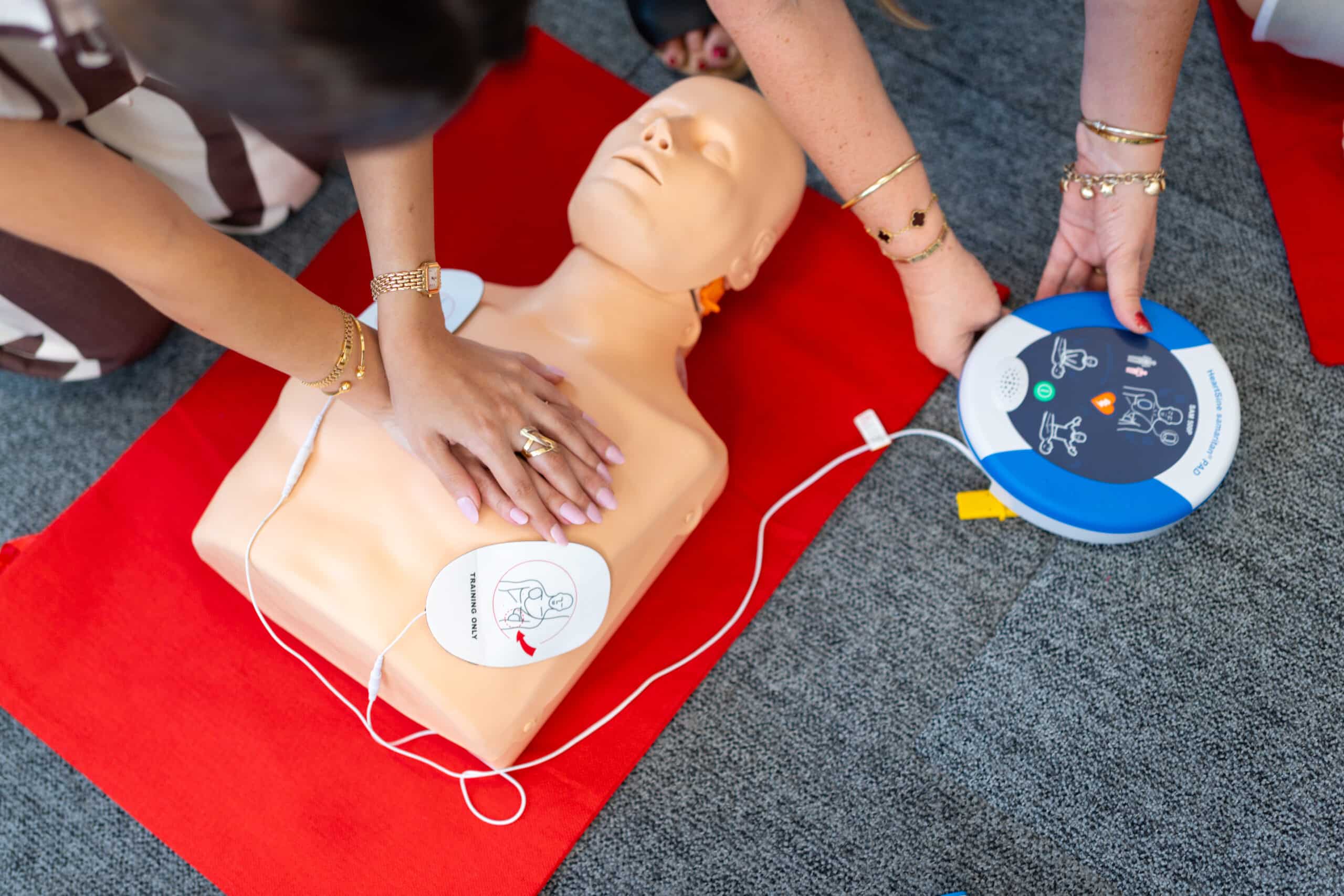
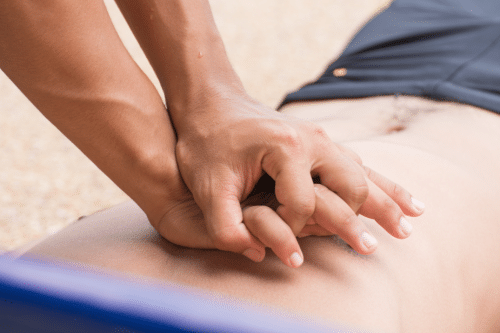
The process of doing CPR is relatively straightforward – which is part of what makes it suitable for members of the general public. It involves having the casualty lying on the ground on their back. Place one hand on the chest at around armpit height, with the heel of your palm on their sternum (the bone down the centre of their chest). Place the other hand on top of the first, with fingers interlocked. And make sure you’re in a comfortable position because CPR can be hard work.
Use the weight of your upper body to push down on their chest – you’re aiming to compress their chest around 5-6cm – and then release. This should be done in a series of rapid pulses. The American Heart Association very famously recommended humming the song “Stayin’ Alive” by the Bee Gees and doing chest compressions in time with that – the song’s rhythm (104 beats per minute) is regarded as the perfect pace. Of course, there’s nothing to stop you from choosing another song with the same rhythm – “Walk Like an Egyptian” by the Bangles, “Something Just Like This” by Coldplay & the Chainsmokers, or even the Sesame Street theme music are all decent options.
You shouldn’t be afraid to use your full upper body weight. Medical experts generally agree that too much force is better than too little – on the grounds that a broken rib is far better than dying.
Once you’ve done 30 pulses on the chest (you’ll need to count), it’s time to hold the person’s nose closed and blow two breaths into the person’s mouth before switching back to chest compressions. Repeat that pattern for as long as necessary.
When To Stop CPR?
People often mistakenly believe that CPR is trying to restart the heart. This means that when they see no results after the first few minutes, they assume it’s not working and abandon the attempt. But because the goal is not to restart the heart, but rather to provide an emergency supply of oxygenated blood to the brain, the longer you can continue CPR, the longer they can theoretically survive. There are stories of people surviving for more than an hour through continuous CPR. Hence we say – make sure you’re in a comfortable position when you start.
Realistically though, you’re probably waiting for one of the following things to happen:
- The person revives, normal heart rate and breathing resumes
- Medical assistance (such as Paramedics) arrive and tell you to stop
“Medical Assistance” may also include someone with an Automated External Defibrillator, as defibrillation might actually revive the person (as opposed to just keeping them alive in the short term). However, you should only cease CPR when the device is connected and ready to use.
Three other conditions can potentially mean it’s time to stop – although none of them should be done lightly, given someone’s life can often hang in the balance. The first is when you’re too physically exhausted to continue. This can happen when CPR continues for a long time. It’s not unusual for several people to “tag-team” CPR on a casualty (taking turns) – you just need to make sure that the changeover is as quick and smooth as possible. If you’re alone, you should continue as long as you can – but obviously, everyone has their limits.
The second scenario is when someone is very obviously dead. This should also be approached with caution, as some signs can be misleading. For example, a person pulled out of water might be cold to the touch. And sometimes, humans can survive surprising injuries. But some signs – such as rigour mortis (the technical name for a corpse going stiff a few hours after death) – can leave very little room for doubt.
The last scenario is if the environment has become increasingly unsafe. For example, if you’re doing CPR on a dirt track that’s starting to see car traffic as the day goes on, you might need to relocate – you can’t help anyone if you become a casualty yourself!
CPR First Aid
An article like this one can teach you the basics of how CPR works, but the reality is that it’s no substitute for proper first aid training. CPR is a skill that takes practice, not just an idea you read about.
How Long Is CPR Valid For?
Official CPR training certificates do come with quite a short expiry date – the Australian Resuscitation Council sets very tight guidelines on that sort of thing. It requires working professionals (that need CPR training) to get a refresher every 12 months.
Of course, if you don’t need the certificate for any professional reason, the skills and understanding of CPR and how to use it remain valuable long after the certificate “expires”. But if you find yourself forgetting getting rusty on how to apply DRSABCD or how much force to use on the chest, you can always come back for a refresher.