




Sharon has 21+ years of experience as a qualified Emergency Care Nurse registered with the Australian Health Practitioner Regulation Agency (APHRA) and 12+ years as a First Aid Trainer.
She takes pride in FirstAidPro making first aid training available, comprehensive and affordable to everybody.
There you are, minding your own business, you turn a corner, and suddenly you see a person clutching a wound on their torso. There’s a lot of blood, both on their hands and soaked into their clothes. They tell you they have been stabbed, and ask you for help.
Although it’s not a situation you expect to find yourself in, providing first aid to someone with a stab wound is surprisingly straightforward, even if you haven’t completed first aid training like a HLTAID011 course. By following the steps below, you will be providing emergency first aid that could save someone’s life.
Steps To Help Someone With A Stab Wound
If you encounter someone with a penetrating wound from being stabbed, it’s important to check for danger and signal for help, and then do what you can to stabilise the victim. Follow the following steps.
- Assess the situation for danger to yourself and others.
- Call 000 for an ambulance.
- Assess the wound. If the wound site does not have anything protruding from the area, apply firm pressure directly over the wound site. Keep the pressure on the wound until an ambulance arrives. Don’t be tempted to release the pressure to peek at the wound.
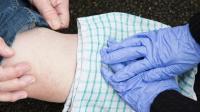
Keep pressure on the wound
to slow the flow of bloodIf the wound site has anything projecting, apply pressure around the protruding object by forming a ring shape with the thumbs and index fingers of both hands, closing it down until you have a tight seal around the protrusion, and then applying firm pressure.
- Reassure the person, try to keep them calm, conscious and talking. Get as much information about them and the situation and what they were stabbed with to pass on to medical personnel and potentially law enforcement.
- Watch for signs of shock setting in (and treat them for shock if needed) until help arrives.
- If they stop breathing, immediately begin CPR either with rescue breaths, or using hands-only CPR if necessary.
- Remember that pressure on the wound is important, even if it causes them some pain or discomfort. Unless you’re pushing hard enough to cause further injury (or pushing something further into the wound), they’re better off with pain that with uncontrolled bleeding. Common sense prevails.
What If There Is An Object In The Wound?
If there is an object in the wound, don’t remove it – no matter how tempting. Depending on where the stab wound is located, vital organs might have been punctured, and the object could be acting as a plug in the wound. By removing the object, you could open the wound and cause the bleeding to become far worse. Apply firm pressure around the site using your hands (initially), some gauze or bandage, or a clean cloth.
What Does It Mean When The Person Looks Pale, Feels Cold, And Becomes Dizzy?
If that happens, it’s quite possible they’re going into shock. Shock is a medical condition where the blood pressure drops dangerously low (often due to severe blood-loss), and the body responds by constricting blood vessels in the extremities (hands and feet). This is called vasoconstriction, and it helps maintain the flow of blood to the vital organs. People in shock will often say it feels like their blood has turned to ice. If your person tells you they feel cold, it’s quite possible this means the person has entered a state of shock.
Shock can range from mild, to severe, but should always be taken seriously – extremely low blood pressure can prevent the brain getting the oxygen it needs, and often be life threatening. Blood loss is one of the factors that make stab wounds potentially fatal.
What Do You Do If You Suspect Someone Is Going Into Shock?
- Continue to apply firm pressure to the wound to prevent them from bleeding out.
- Call 000 or send someone else to call emergency services if you have not already done so.

Elevate the person’s feet to
provide blood to the brainLie them down and lift their feet higher than their torso. This keeps their legs higher than their heart, which helps increase blood flow to their brain and vital organs.
Do not give them anything to drink even if they say they are thirsty.
- Reassure them and wrap them in coats or blankets to keep them warm. It is important to keep a person in shock reassured by telling them they will be fine. If you have a great sense of humour, then use that to address the situation in a light-hearted manner. Even if you suspect the person will die from their injury, NEVER admit that aloud to them. If they tell you of their impending sense of doom, ask them if there is anything you can do for them in case the worst happens, but reassure them that help is on the way and they will survive.
- Provide CPR if they stop breathing.
Is There Anything Else I Can Do For Them?
The best thing you can do for someone with a stab wound is keep applying pressure to the wound to slow or stop the blood flow, and stay with them until an ambulance arrives. Please remember in Australia, 000 is the emergency number (not 911 or 999). Try to keep them reassured and distracted from the wound and attempt to get as much information as possible about who they are and what transpired prior to them being stabbed. What caused the injury? Was it a mugging, or a stabbing by a stranger, was it inflicted by someone they know or perhaps something they accidentally did to themselves (or even did intentionally). Hopefully it’ll take their mind off the wound itself, and give you details to pass on to authorities should they pass out before help arrives.
Update Your First Aid Skills
Although being called on to help a stab wound victim is not something anyone expects, it happens. It’s one of many types of medical emergency that strike without warning – such as having someone near you struck by a car, bitten by a snake, or simply collapse. The only way to prepare for those moments is to always be ready to help in an emergency.
This month, make it a priority to sign up for a first aid course – or a refresher, if it’s something you’ve done in the past. Our understanding of first aid and the medicines and technology available to help are always improving, so it’s worth staying current. Taking a certified and nationally accredited first aid course will bring your skills up to date – as well as strengthening your resume. And it costs less than an average tank of petrol, nowadays.
In Australia, first aid certification through an RTO will last three years, and the CPR component only one year before requiring renewal. Don’t let your skills lapse – be ready of that unexpected emergency!