



Sharon has 21+ years of experience as a qualified Emergency Care Nurse registered with the Australian Health Practitioner Regulation Agency (APHRA) and 12+ years as a First Aid Trainer.
She takes pride in FirstAidPro making first aid training available, comprehensive and affordable to everybody.
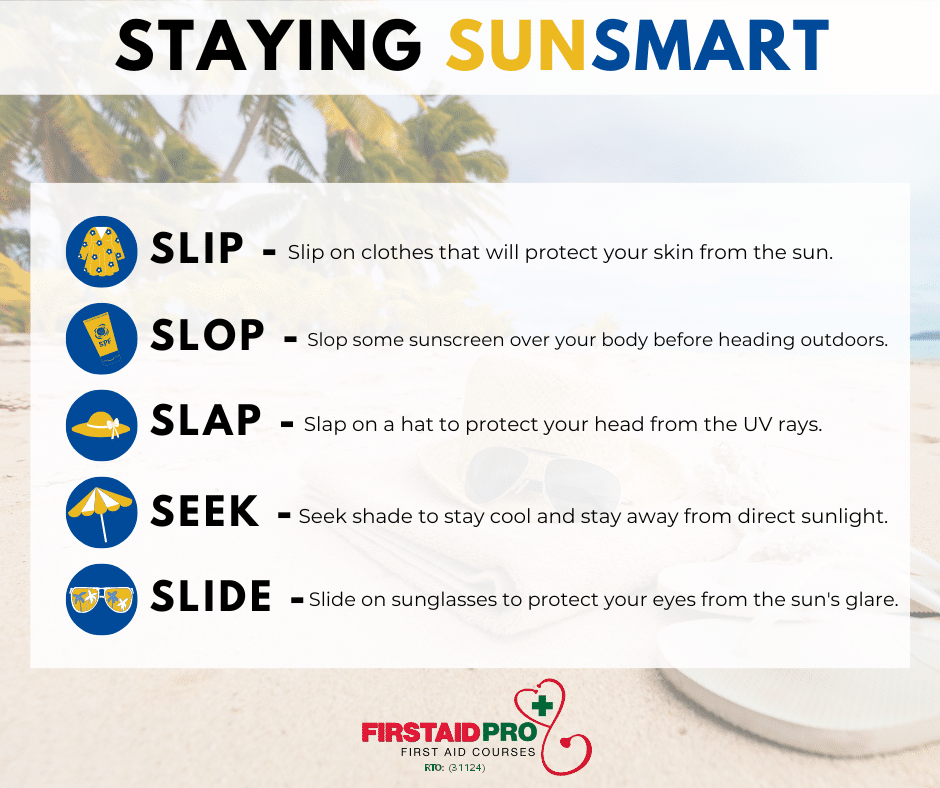
Australia is a culture that strongly associates with the sun. The globally accepted stereotype of the fit bronzed Aussie has so worked its way into Australian thinking that we can sometimes think of ourselves as less Australian if we’re a little on the pale side. In fact, the idea of spending time in the sun until we’re nice and tanned is so entrenched in our culture that it’s actually a serious problem. That’s where Slip Slop Slap Seek and Slide comes in!
Australia has one of the worst skin cancer rates in the world. Around 2000 Australians die of skin cancer each year – which actually puts it in the top 20 causes of death in Australia. Slip Slop Slap Seek and Slide is a campaign designed to combat that statistic. It helps Australians think more about sun exposure, and encourages us to protect ourselves when we’re out in the heat.
So exactly what does it mean? How exactly do we go about being “SunSmart”, and what can we do when we get it wrong?
What Is Slip Slop Slap Seek And Slide?
If you lived in Australia in the 80’s, you’ll already be well familiar with the slogan “Slip slop slap”. This was a large scale media campaign in the eighties to combat skin cancer rates by encouraging Australians to protect themselves from the sun – Sliping on a shirt, slopping on sunscreen, and slaping on a hat. There were SunSmart posters at every swimming pool. And there was a nationwide media campaign with “Sid the Seagull” singing the “slip slop slap” SunSmart song. In fact, if you’re a child of the eighties, you probably have it echoing around your head right now…
It was one of the most successful health campaigns in Australia’s history, shifting Australian attitudes towards spending time in the sun. Now, SunSmart hats are standard equipment for any beach outing (especially with kids involved), and every school has a comprehensive SunSmart policy in place. It also affected skin cancer rates significantly – although it did show that sunscreen isn’t the be-all and end-all of sun protection, with Melanoma rates still being an issue.
Around three decades later, the campaign was revived and relaunched with a now updated slogan – slip slop slap seek and slide! This new slogan highlighted what we’d learned about sun protection in the previous three decades by adding two new goals – seek out shade, and slide on some wrap-around sunglasses.
Many of the standards you see in Australia today about being SunSmart can be traced back to this very forward-thinking campaign.
Why Is Being SunSmart Important?
As mentioned, Australia (along with New Zealand) has one of the world’s highest rates of skin cancer. This is due to various factors, including our sunny, high UV climate, a predominantly fair-skinned population, and being a very outdoors culture. But the fact is that around two-thirds of Australians will be diagnosed with some form of skin cancer by age 70. That’s a lot of people.
Being SunSmart tips those odds back in your favour – making choices that protect you from long-term sun exposure (by making good, everyday choices) and significantly lowering your odds of skin cancer.
It also protects you from some of the more immediate consequences of too much sun – such as sunburn, (which used to be par for the course in summer).
What Are the Three Stages of Sunburn?
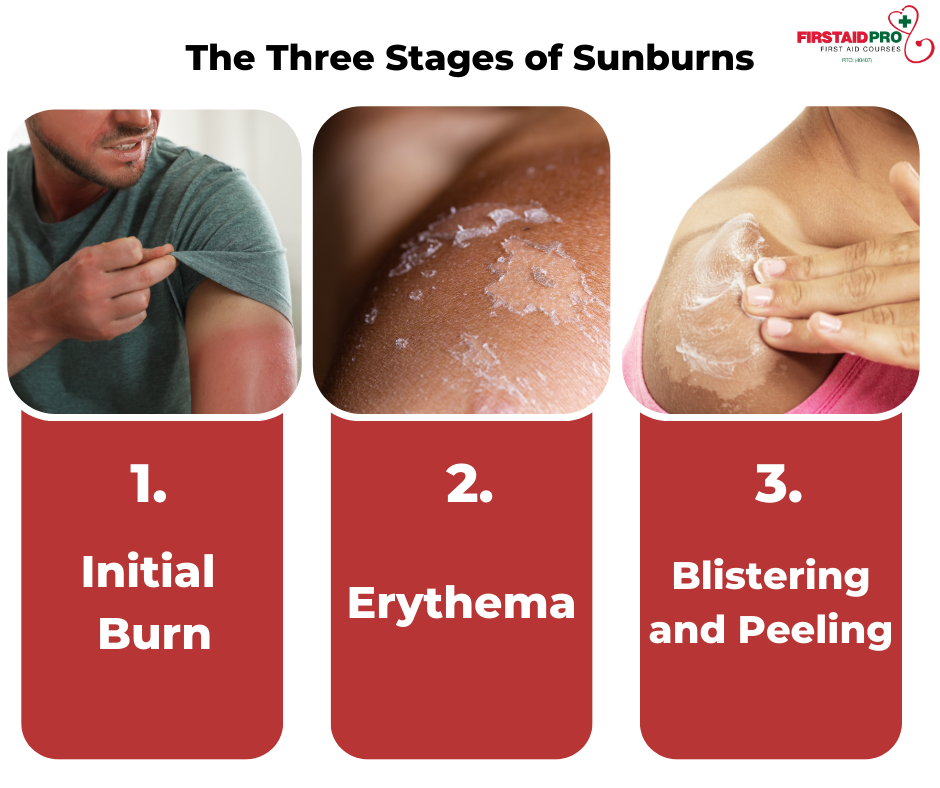
There are three common stages people experience after being sunburned;
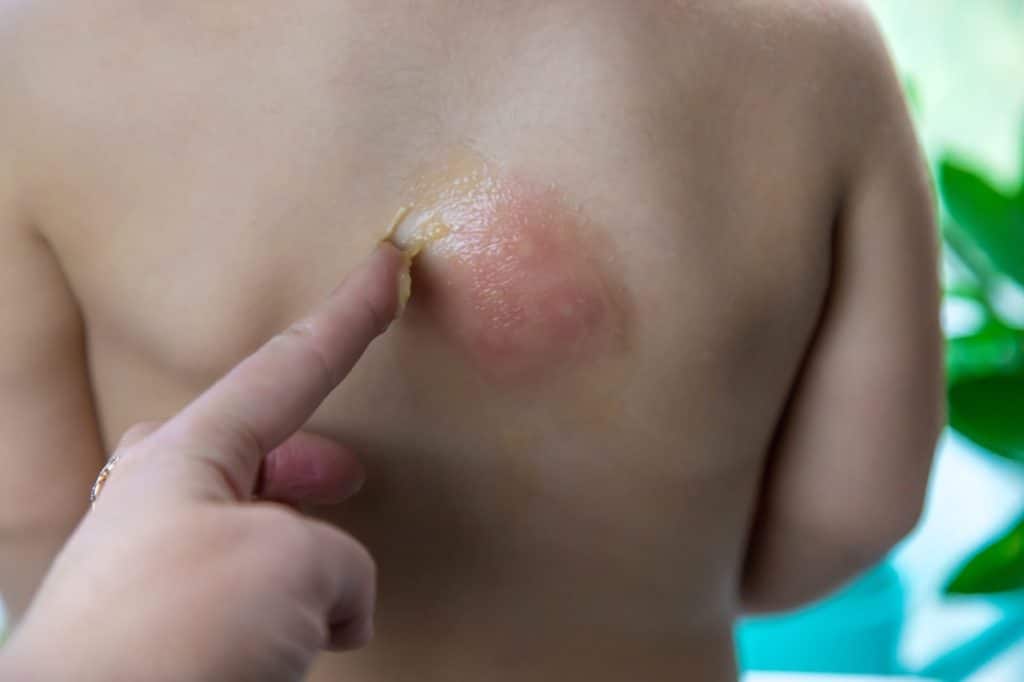
Initial Burn – In this stage, individuals will start to notice symptoms of sunburn, such as red and sensitive skin, along with pain across the affected area.
Erythema – When the outer layer of the skin, called the epidermis, is burned, it will begin to swell. This bodily response is called erythema.
Also, once the skin has been burned, people in this phase will have an increased blood flow because their body is trying to heal the wound.
Blistering & Peeling – The final stage in the process is the blistering and peeling phase.
Due to sunburns accelerating the skin’s cell regeneration process, people will lose the top layer of the skin quicker than usual, which causes peeling.
Severe sunburns often result in blisters forming, but it is important to refrain from popping them as they can become bacterially infected.
You must treat the burn with aloe vera cream and petroleum jelly throughout the process to reduce pain and swelling.
How Dangerous Is Sunburn?
The main danger that the Slip Slop Slap Seek and Slide campaign addresses is that of skin cancer. That’s very much a long-term problem, so we don’t normally think about sun exposure as an immediate risk to life and health – being SunSmart is more a matter of lengthening your potential life span. However, there are a number of scenarios where getting too much sun can require first aid and medical assistance.
Firstly, most sunburn is a simple matter of painfully tender red skin for a day or two and then peeling skin for a few days. But with enough exposure, it’s actually possible to suffer second-degree burns from the sun. At this point, the skin often begins to blister, and can take weeks to properly heal. During this phase, you’re treating the sunburn more like a conventional burn or scald.
In very rare cases, it is possible to suffer third-degree burns from the sun, meaning even the fat layers under the skin can be affected, and the nerve endings could be damaged or destroyed. This might result from someone falling asleep for several hours in intense sunlight. In this case, urgent medical attention will be required.
And although it’s a different medical issue, it’s not uncommon for intense sunburn to go hand-in-hand with heat stroke, with symptoms of heat exhaustion being some of the first signs, which is where sun exposure can become life-threatening. If someone near you shows signs of heat stroke, you need to call 000 immediately.
Preparing To Be SunSmart
The great thing about the “Slip Slop Slap Seek and Slide” slogan is that most of what you’ll need to think about to be Sunsmart is covered there. If you’re going out in the sun, you’ll obviously need sunscreen, some kind of shirt or skin-covering swimwear (like a Rashie), a hat, and some sunnies. And if you’re going somewhere without much shade, it’s worth taking some portable shelter – like a beach umbrella or portable gazebo.
Not all hats or sunnies are created equal, of course. The standard for sunscreen in Australia is now generally SPF 50+, and when choosing your sunnies, you want to go for wrap-around where possible. The style of hat is also important. A baseball cap generally won’t cut it in the sun, as it doesn’t protect the sides or back of your head. You’ll need something like a legionnaire hat, cricket hat, or even a sombrero.
If you’re keen to find the best gear for spending time in the sun, it’s worth knowing that there’s a cancer council shop in most capital cities (and online) that stocks some of the better clothes and accessories for spending time in the sun. There’s cancer council sunscreen, cancer council sunglasses, cancer council hats… you get the idea. Even if you don’t end up buying anything from there, it’ll give you a good idea of the best types of clothing and sunscreen to use.
It’s also worth planning ahead and keeping an eye on weather conditions. In Australia, the daily weather report generally gives a SunSmart UV prediction for the following day – so you have some idea of just how intense the sun will be when you’re out and about.
First Aid For Sunburn
If you’ve been out in the sun too long and gotten burned, there’s not much you can do except try to ease the symptoms and let it heal. Here are a few things that can help:
- Get out of the sun (as soon as possible)
- Drink plenty of water (time in the sun can leave you dehydrated)
- Apply cool or cold compresses, or bathe the area in cool water
- Use a soothing agent such as aloe-vera, or a specialised after-sun lotion from the chemist
- If it’s not too painful, use moisturiser to boost the moisture in your skin
- Use over-the-counter painkillers to help with the discomfort
- Avoid using soap as it can irritate the skin
- Avoid using anything oily on the skin (such as butter), as the grease can trap in heat
If the skin blisters, you may have suffered serious burns – treat the sunburn like it’s a conventional burn, and see medical attention when possible.
If a person that’s been in the sun too long starts to seem disorientated or irrational, has a rapid pulse, or stops sweating, this may be a sign they’re suffering heat stroke. Get them to shade, try and cool them down, and call 000 when possible to signal for help.
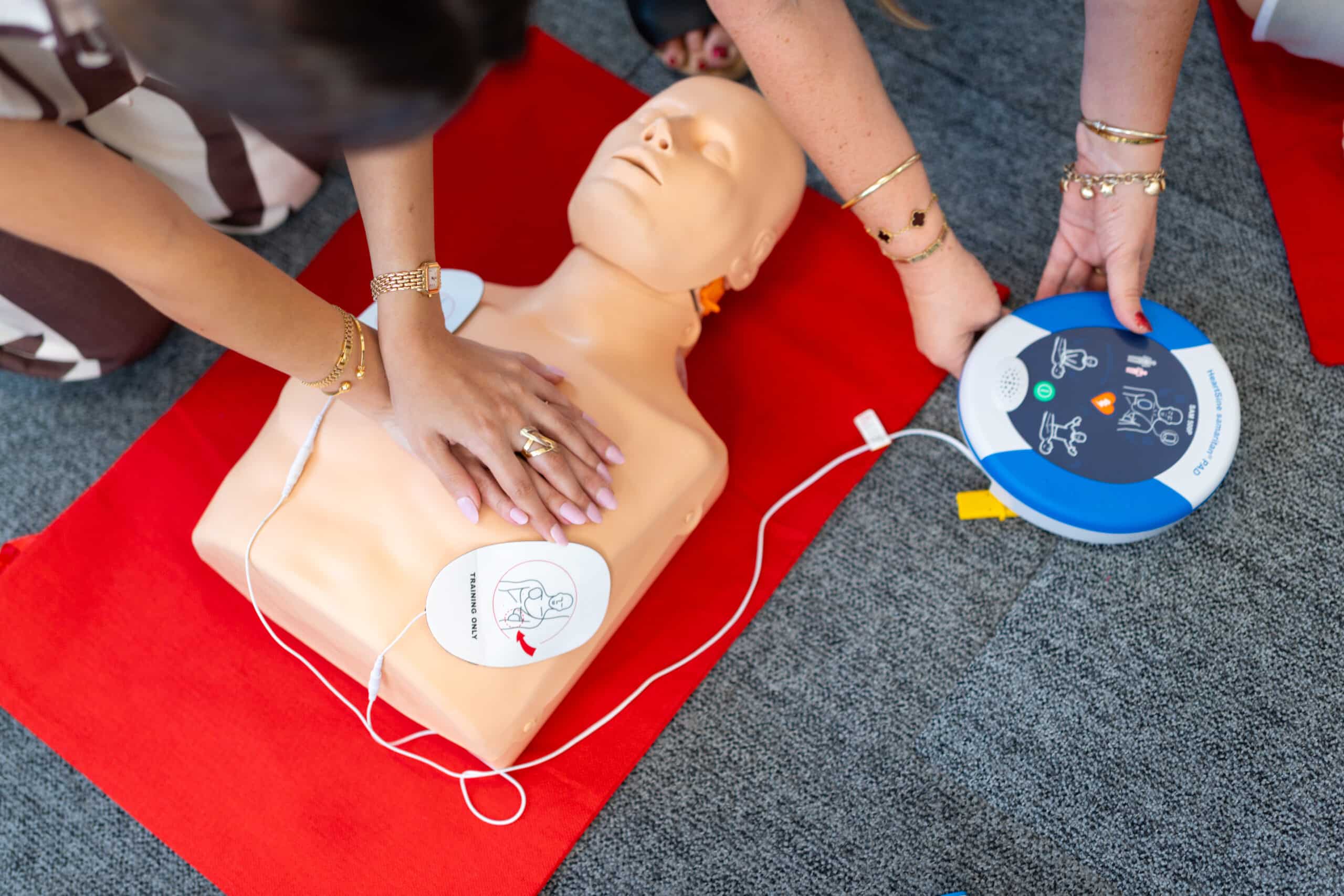
If you’re spending a lot of time out in the sun and you want to be prepared if someone comes to harm from too much time in the sun, consider doing some first aid training. This will give you a strong grounding in responding to various medical emergencies – including serious burns and heat stroke.
How Long Does Sunburn Last?
Sunburn normally lasts a few days to a week, during which time the burned skin changes from red to brown and then peels off in flakes. Don’t try and stop this, as it’s part of the healing process – the damaged skin cells are actively shedding off to try to protect the body from things like skin cancer.
If the burn lasts longer than a week, or if it begins to blister, it may mean the burn is more serious – get to a doctor to get it checked and treated.
Staying Safe In The Sun
The Australian sun has long been a central part of our culture – we’ve long been a beach-going, outdoorsy nation. This hasn’t always been done in the healthiest way – as we’ve discovered in recent years. But now, by being SunSmart and making sure we Slip Slop Slap Seek and Slide, we can all enjoy the Aussie sun without putting ourselves at risk. It’s not that hard to be smart about the sun!