




Sharon has 21+ years of experience as a qualified Emergency Care Nurse registered with the Australian Health Practitioner Regulation Agency (APHRA) and 12+ years as a First Aid Trainer.
She takes pride in FirstAidPro making first aid training available, comprehensive and affordable to everybody.
For mastering choking first aid techniques, it is crucial to be well-informed and prepared by knowing how to perform CPR. Choking can happen to anyone, whether it’s an adult, a young child or an infant, and knowing the right techniques can make all the difference in saving a life. One of the key techniques is the Heimlich manoeuvre, which involves applying pressure to the person’s abdomen to dislodge the obstruction in their airway.
This can be done by standing behind the choking person, placing your clenched fist just above their belly button, and using your other hand to provide support. By delivering a quick thrust upwards, you can help expel the object causing the blockage and restore their ability to breathe.
Besides the Heimlich, there are other techniques that can be used depending on the age of the person choking. For infants, back blows and chest thrusts are recommended. By placing the baby face down on your forearm, with their head lower than their body, you can deliver firm back blows between their shoulder blades to dislodge the obstruction. If this doesn’t work, you can turn the baby over and perform chest thrusts by using two fingers of one hand to press hard down on their breastbone. For treating a choking child or adult, abdominal thrusts are effective.
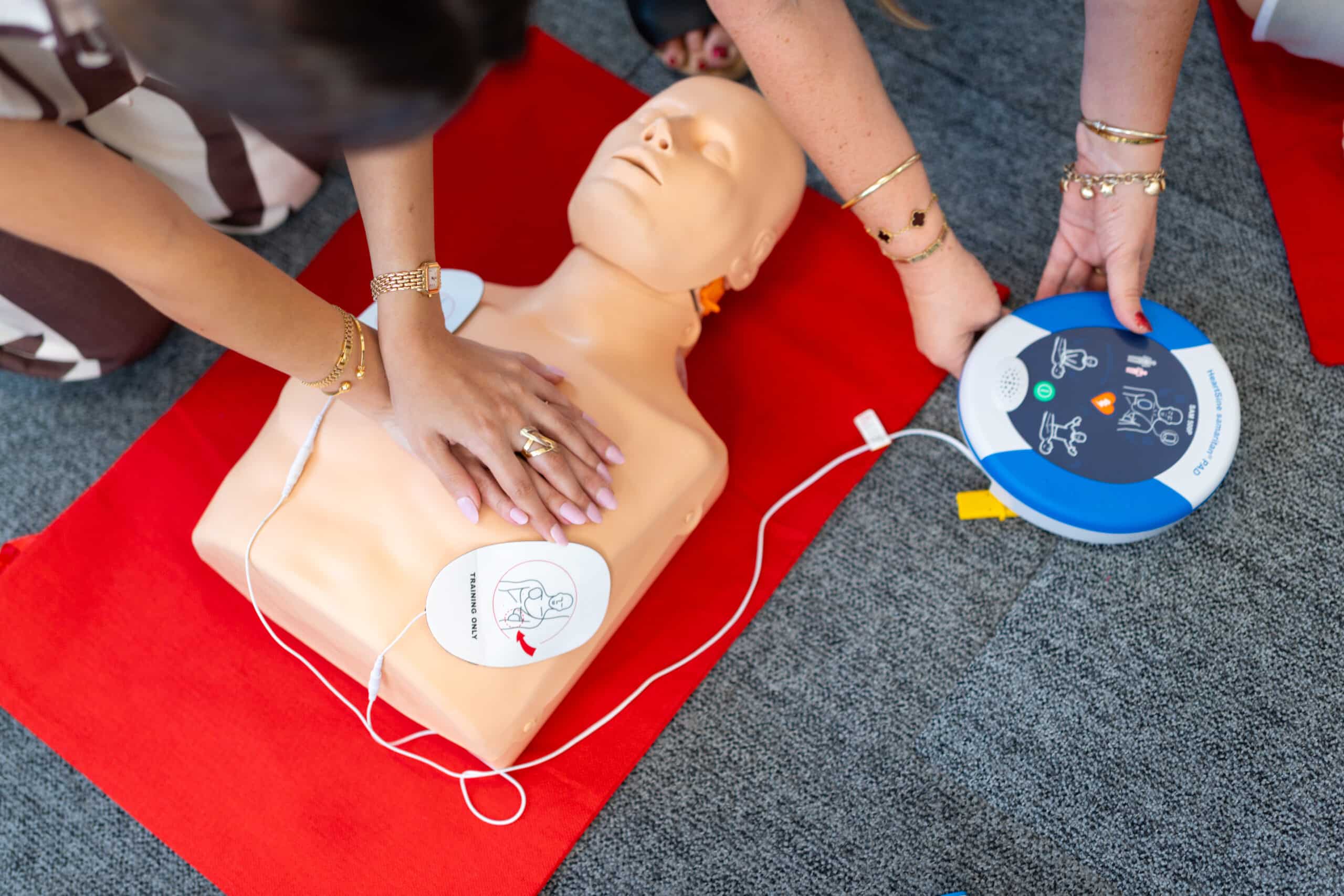
This involves standing behind the person and placing your hands in the middle of the stomach, then delivering quick inward and upward thrusts to force air out of their lungs and dislodge the object. It’s important to remember that if the person becomes unconscious, you should immediately start cardiopulmonary resuscitation (CPR) and call for medical aid.
By taking a first aid course, you can learn these techniques in detail and be better prepared to handle choking emergencies. Remember, acting quickly and confidently can save lives in these critical situations.
Understanding Choking and its Risks

Choking occurs when the airway is blocked, posing a life-threatening situation. The risks of choking vary depending on age groups. Adults can choke on large pieces of food, while young children are at greater risk of choking on small objects. Certain individuals, such as those with swallowing difficulties or neurological conditions, are more prone to the choking hazard. Elderly individuals also have a higher risk because of age-related changes in swallowing reflexes. It is important to be aware of these risks and take precautions to prevent choking incidents.
Immediate first aid is crucial when someone is choking. For adults, the Heimlich manoeuvre is commonly used. This involves standing behind the person and delivering upward thrusts to the abdomen. For young children, back blows and chest thrusts are recommended. For infants, the back blow technique is used, followed by chest compressions if needed. It is important to seek medical help if the person is unconscious or the obstruction persists.
Choking First Aid Techniques for Adults and Children

For choking first aid, it is crucial to recognise the signs of choking in both adults and children. These signs may include difficulty breathing, coughing and a visible obstruction in the person’s chest or airway. In adults, you may notice that they cough or they are clutching their throat or chest, while in young children, they may not speak or breathe properly. It is important to act quickly and efficiently in these situations to prevent further complications.
One of the key techniques in choking first aid is Heimlich or abdominal thrusts. To perform this manoeuvre, you should stand behind the choking person and place your arms around their waist. Make a fist with one hand and place it just above their belly button, then grasp your fist with your other hand. Give quick upward thrusts to the person’s abdomen, using your body weight to provide enough force to dislodge the obstruction.
It is important to remember that this technique should only be used when the airway is partly blocked, as using it when the person’s airway is completely blocked can cause further harm.
It is also important to know how to deliver chest thrusts. This technique involves standing behind the choking person and placing the heel of your hand on the centre of their chest, just below the person’s breastbone. With your other hand, grasp your fist and give quick inward thrusts to the upper abdominal cavity. This can help to dislodge the obstruction and restore normal breathing. However, it is important to be cautious when delivering chest thrusts, as excessive force can cause injury to the person’s ribs or internal organs.
Remember, in any choking emergency, it is crucial to call for medical aid immediately. If the person is unconscious, not breathing, or the obstruction cannot be removed, you should start cardiopulmonary resuscitation (CPR) while waiting for medical aid to arrive. This can help to maintain blood flow and oxygenation to the vital organs until professional help is available. Taking a first aid course can provide you with the necessary knowledge and skills to handle choking emergencies effectively and confidently.
Choking First Aid Techniques for Infants
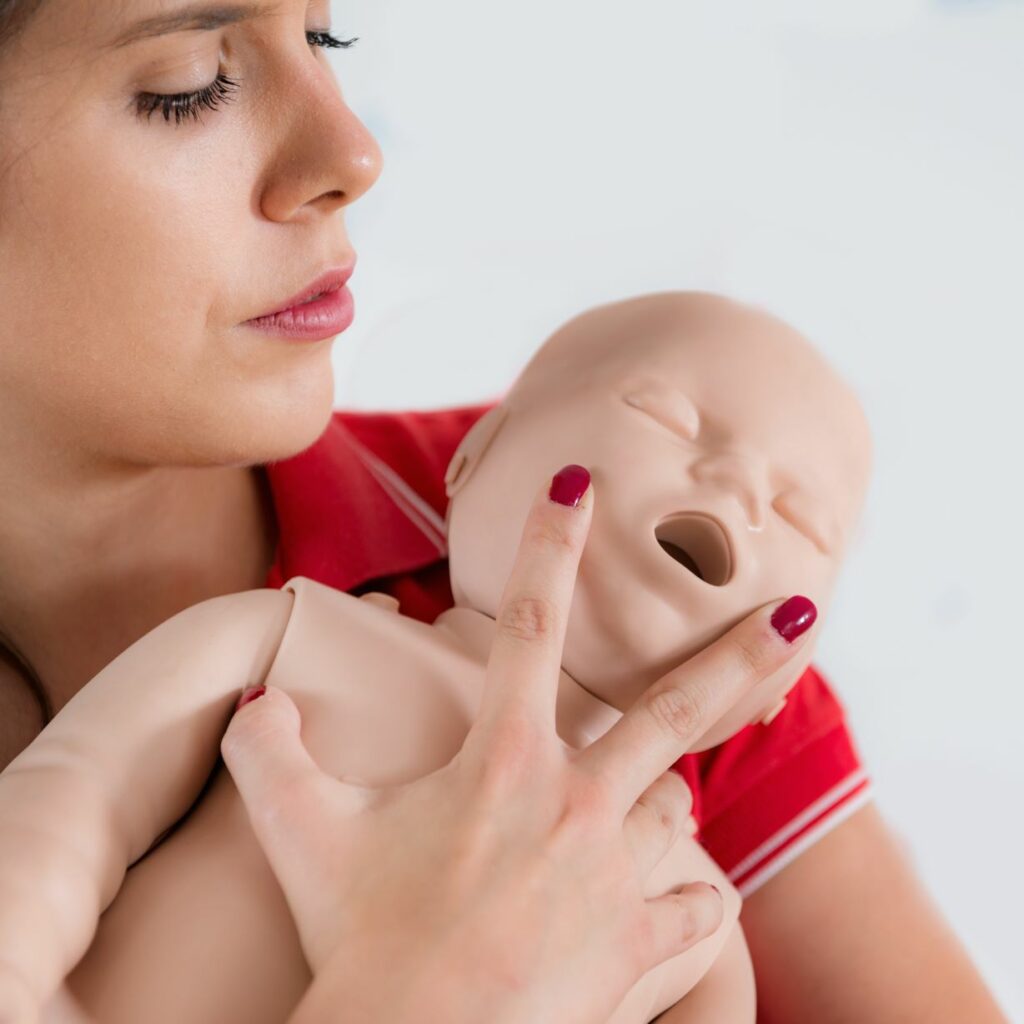
Recognising and responding to choking incidents in infants is crucial for their safety. There are several signs to look for when identifying choking in infants. These include difficulty breathing, an obstruction in the airway, and the baby’s face turning red or blue. If you notice any of these signs, it’s important to act quickly.
Specific techniques should be followed when providing first aid for a choking infant. To begin with, you should position the baby’s face down on your forearm, with their mouth and head lower than their upper body. Using the heel of your hand, deliver five back blows between the shoulder blades. This can help dislodge any partially blocked objects.
Next, if the obstruction is still present, move on to performing five chest thrusts. To do this, turn the baby over so that they are facing upwards. Place two fingers on the centre of their chest, just one little finger below the nipple line, and press down firmly. These chest and abdominal thrusts can help to clear the airway and allow the baby to start breathing again.
If the obstruction remains, it is important to seek immediate medical attention. Call emergency services or go to the nearest emergency department. Remember, time is of the essence in a choking emergency, and prompt aid can be life-saving. It is also recommended to enroll in a first aid course to learn these techniques and be prepared to handle and prevent choking during incidents in infants, as well as in adults and children.
Final Thoughts
Mastering choking first aid techniques is crucial for saving lives in choking emergencies. The Heimlich manoeuvre and other techniques like back blows and chest thrusts can be used depending on the age of the child or person choking.
It is important to act quickly, seek medical help if needed, and consider taking first aid courses to be better prepared for these situations.