




Skip to content
Online Courses​
no-Online Courses
Online Courses​
no-Online Courses
no-Online Courses
Online Courses​
Nationally Accredited First Aid Courses
(08) 7120 2570
Firstaidpro Logo
[wp_menu_megatabs id="493"]
Student login
daily deals
No-Online

OR

Online
Applicable to:
Healthcare
Aged Care & NDIS Support
Construction
Warehousing

Understanding Anaphylaxis and Its First Aid Management

Anaphylaxis First Aid

Table of Contents

  • About
  • Latest Posts
Sharon McCulloch
Sharon McCulloch
CEO, Founder and First Aid Trainer at FirstAidPro
Sharon McCulloch is the CEO and Founder of FirstAidPro, Australia's leading Registered Training Organisation (31124), delivering First Aid Courses nationwide.

Sharon has 21+ years of experience as a qualified Emergency Care Nurse registered with the Australian Health Practitioner Regulation Agency (APHRA) and 12+ years as a First Aid Trainer.

She takes pride in FirstAidPro making first aid training available, comprehensive and affordable to everybody.
Sharon McCulloch
Latest posts by Sharon McCulloch (see all)
  • Australian Spider Bite & Bite First Aid Guide – Identification, Symptoms & Treatment - 14/04/2026
  • Anti-Inflammatory Tablets – Sting & Bite Symptoms, Risks & First Aid - 10/04/2026
  • LVR CPR Training Australia: What Is the UETDRMP018 Course and Who Needs It? - 08/04/2026

Anaphylaxis, also known as anaphylactic shock, is a potentially deadly and severe allergic reaction. Nearly one in five Australians suffer from some kind of allergy, of which the most common are food (notably, dairy, nuts, wheat, and fish), pollen and animal dander (flakes of skin or fur). By understanding anaphylaxis, this life-threatening allergic reaction can be identified and swiftly responded to. Appropriate first aid response and administering an adrenaline auto-injector training device is taught in all First Aid Pro advanced first aid courses and first aid training courses.

What is Anaphylaxis?

Defining the Severe Allergic Reaction

Anaphylaxis, like any allergic reaction, occurs when one’s immune system incorrectly identifies a harmless substance as dangerous. However, unlike moderate allergic reactions, anaphylaxis involves more than just one of the body’s systems. Anaphylaxes can quickly develop into a life-threatening medical emergency if not treated immediately.

The Importance of Recognising Anaphylaxis Early

Recognising the signs of anaphylaxis early is vital for getting the victim emergency treatment as soon as needed. Untreated anaphylaxis can lead to further complications and even death. If you suspect someone is having an allergic reaction don’t hesitate to call triple zero (000) and seek advice from the emergency services.

Recognising the Signs: Anaphylaxis Chart and Symptoms

Anaphylaxis Signs and Symptoms Chart

The key to identifying anaphylaxis is recognising its symptoms. As anaphylaxis can affect multiple body systems at once, they can be categorised according to which region they affect. Signs of anaphylaxis include:

  • The Brain

    • Confusion, dizziness, light-headedness and fainting

  • Respiratory System

    • Sudden breathing difficulty or shortness of breath, rapid breathing and a persistent cough or wheeze

  • Skin Symptoms

    • Hives, swelling, blue colouration, flushing, itching and rashes

  • Gastrointestinal System

    • Nausea, vomiting, tongue swelling, difficulty swallowing, a weak or hoarse voice and abdominal pain
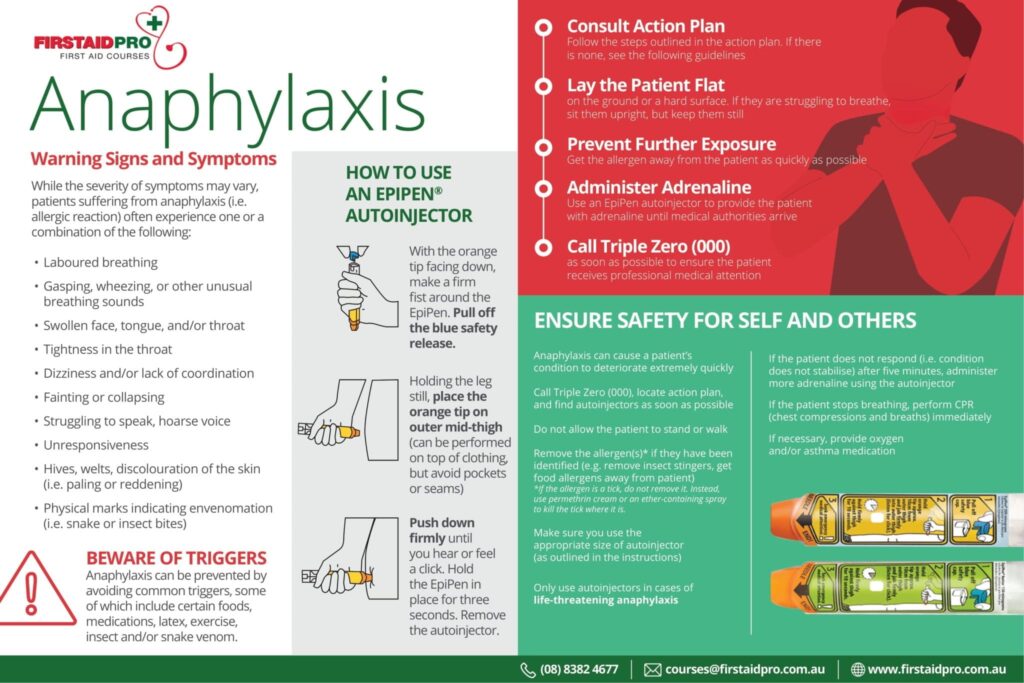
Anaphylaxis action chart

Common Triggers in Australia

Many symptoms of anaphylaxis are also common to other conditions. As such, recognising anaphylaxis is easier when one can identify both its symptoms and the presence of potential triggers. In Australia, the most common triggers are food allergy, pollen and animal dander. Insect stings can also be a common trigger.

Book Your First Aid Training​

First Aid Course (Incl CPR) $97
CPR Course $45
Child Care First Aid Course $119

  • Same-Day Certificate
  • Courses available 7 Days
  • Nationally Accredited Certification

Don’t Miss Out – Book Today!

Book Now
×
×
Currently viewing results for:
Our course selector helps you find the right course in the right place.
- Find Locations For A Course – Select a course to see where it's offered.
- Find Courses Near You – Select your location to see available courses.

First Aid Management for Anaphylactic Reactions

Crafting a First Aid Plan for Anaphylaxis

If you have a known allergy that can cause a severe reaction, talk to your doctor to create a plan. This can help your loved ones identify when you have an anaphylactic episode and help you accordingly.

As part of your plan, ensure people know the location of your EpiPen and any energy contacts you need them to call. If possible, also pass on information regarding how much adrenaline they’ll need to give you and how often they should do so.

Anaphylactic First Aid

If you recognise the severe allergic reaction of anaphylaxis, the first step is to call triple zero (000), to ensure the most immediate treatment possible.

Lay the person down flat and keep them still, do not let them attempt to stand or walk under any circumstances. If they are unconscious, immediately put them in the recovery position. Alternatively, if they are having trouble breathing or are vomiting, allow them to sit up with their legs outstretched. Inject the person with their EpiPen or adrenaline autoinjector if available.

EpiPen and its Role in Anaphylaxis First Aid

A severe allergic reaction can begin with a hoarse voice and end with difficulty breathing requiring hospitalisation

Understanding the EpiPen Mechanism

The EpiPen is a tool used to treat severe allergic reactions. It is an adrenaline auto-injector containing medication that relaxes muscles and airways making it easier to breathe, and decreases blood pressure, helping reduce the severity of one’s allergic reaction.

EpiPen: Proper Usage and Storage

To inject an EpiPen, place the orange tip against the middle of the victim’s upper leg perpendicular to their thigh. Firmly push the EpiPen until it clicks, and hold it in place for three seconds.

EpiPens and other adrenaline injectors should be stored in a cool, dark space at room temperature. Do not refrigerate as they can be damaged by cold. EpiPens should not be used beyond their use-by date.

First Aid Training For Anaphylaxis

It can be overwhelming if someone has an anaphylactic reaction. By completing a first aid course, you can learn not only how to use an EpiPen and prevent anaphylaxis, you can also keep yourself calm and ensure the person receives the help they need.

In addition to helping someone experiencing a serious reaction, you can learn skills to help in almost any medical emergency. By gaining these skills before you need them, you can potentially save someone’s life.


The content on this website offers general insights regarding health conditions and potential treatments. It is not intended as, and should not be construed as, medical advice. If you are facing a medical emergency, dial 000 immediately and follow the guidance provided.

Recent Posts
Common Australian Spiders
Australian Spider Bite & Bite First Aid Guide – Identification, Symptoms & Treatment
14/04/2026

An Australian spider bite is common, but serious injury is rare. This guide explains how to identify several Australian spiders, what a spider bite looks …

infected-insect-bite
Anti-Inflammatory Tablets – Sting & Bite Symptoms, Risks & First Aid
10/04/2026

Key Takeaways Anti-inflammatory tablets reduce pain and swelling from insect bites and stings but cannot treat serious allergic reactions or anaphylaxis.NSAIDs such as ibuprofen are …

LVR CPR Training -UETDRMP018 Perform Rescue From A Live Low Voltage Panel
LVR CPR Training Australia: What Is the UETDRMP018 Course and Who Needs It?
08/04/2026

Low voltage rescue (LVR) is the process of safely removing a person from contact with a live low voltage electrical panel and providing emergency care …

CPR and AED
CPR and AED: Why They’re Critical for Saving Lives in Emergencies
01/04/2026

CPR and AED are life-saving first aid techniques used during cardiac arrest to help save lives before an ambulance arrives. When a person’s heart stops …

sprain of the ankle
Sprain vs Strain: Key Differences, Symptoms, and First Aid Treatment
27/03/2026

A sprain is a common soft-tissue injury that occurs when a ligament is stretched or torn, usually after a fall, twist, or sudden impact. Sprains …

Information
  • About Us
  • Contact Us
  • Mental Health Pro
  • Onsite Training
  • Careers
  • Collaborations
  • Course Calendar
  • Daily Deals
  • FAQs
  • Explore Our Courses
  • Instant Price Beat
  • Partners
  • Same Day Certificates
Resources
  • Student Login
  • Blog
  • Learn First Aid
  • Create Your USI
  • Find Your USI
  • First Aid Charts
Popular Courses
  • CPR
  • First Aid
  • Childcare First Aid
  • First Aid Mental Health
  • Remote First Aid
  • Advanced First Aid
  • CPR, Asthma & Anaphylaxis
  • Asthma & Anaphylaxis
  • CPR LVR
  • Manual Handling
  • Manual Handling Refresher
  • Medication Administration
  • White Card
Online Courses
  • Zoom Online CPR
  • Zoom Online First Aid
  • Zoom Childcare First Aid
  • Zoom NDIS HISS Courses
Blended Courses
  • Blended CPR
  • Blended First Aid
  • Blended Childcare First Aid
Charity Courses
  • Free CPR
  • Free First Aid
Locations
  • South Australia
  • Queensland
  • New South Wales
  • Victoria
  • ACT
  • Tasmania
  • Northern Territory
  • Western Australia
Policies & Procedures
  • Academic Honesty
  • Complaints & Appeals
  • LLN
  • Refunds & Cancellations
  • RPL & Credit Transfers
  • Training & Assessment
Firstaidpro Logo
Facebook Instagram Youtube tiktok Pinterest Linkedin
  • Level 3, Unit 6/9 Frinton Street, Southport QLD 4215
  • (08) 7120 2570
  • Get In Touch

FirstAidPro is a leading Registered Training Organisation (RTO: 31124) delivering industry-leading standards and the latest training techniques. We provide you with Australia’s most comprehensive, officially recognised first aid qualification!

  • Same-Day Certificates
  • Courses Available 7 days
  • Nationally Accredited Certification
eway-payment.png
© 2026 Firstaidpro Australia Pty Ltd (RTO: 31124) | ABN: 70 106 788 050 | ACN: 106 788 050 | All rights reserved.
  • Privacy Policy
  • Refund Policy
  • Website Disclaimer
North Hobart