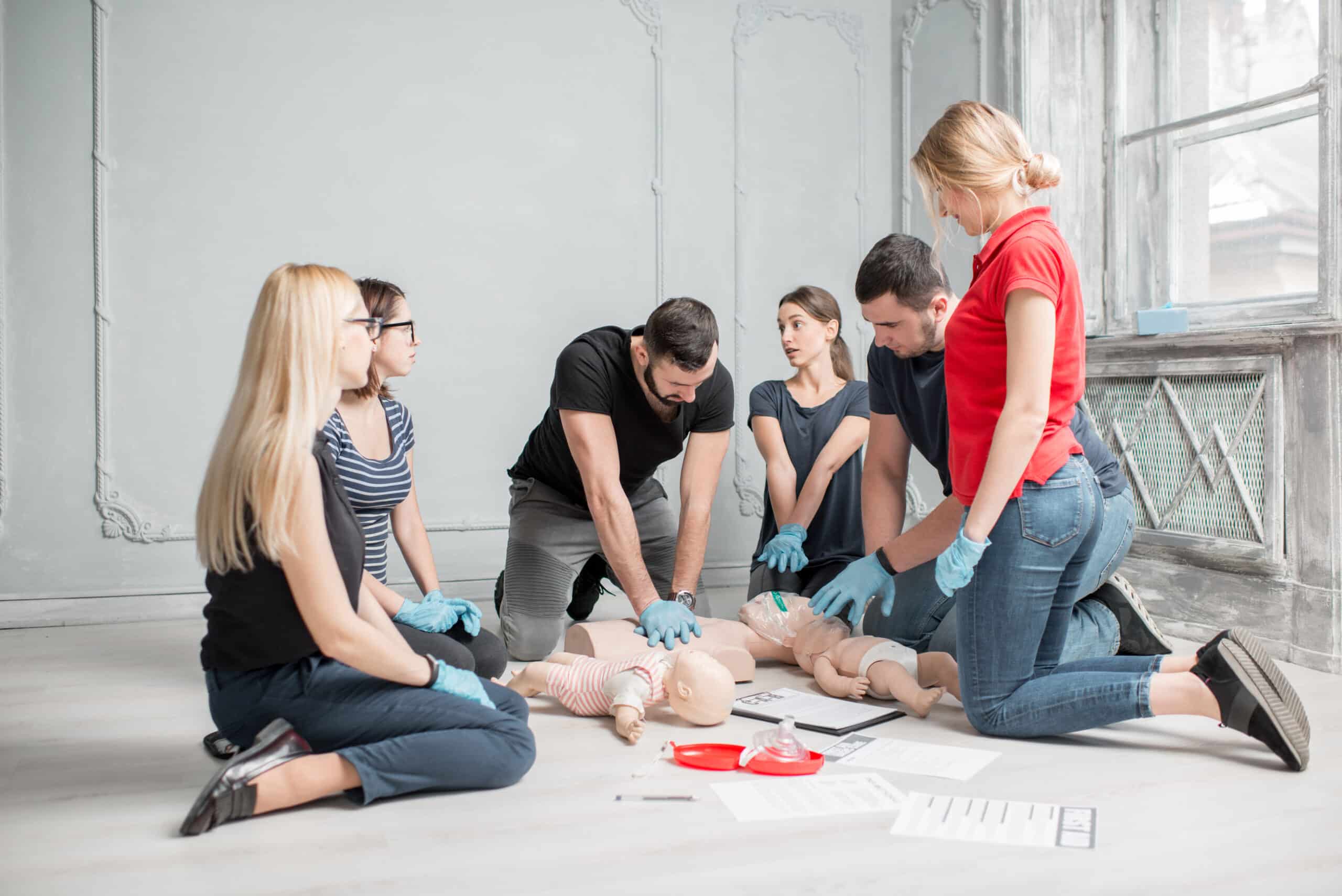



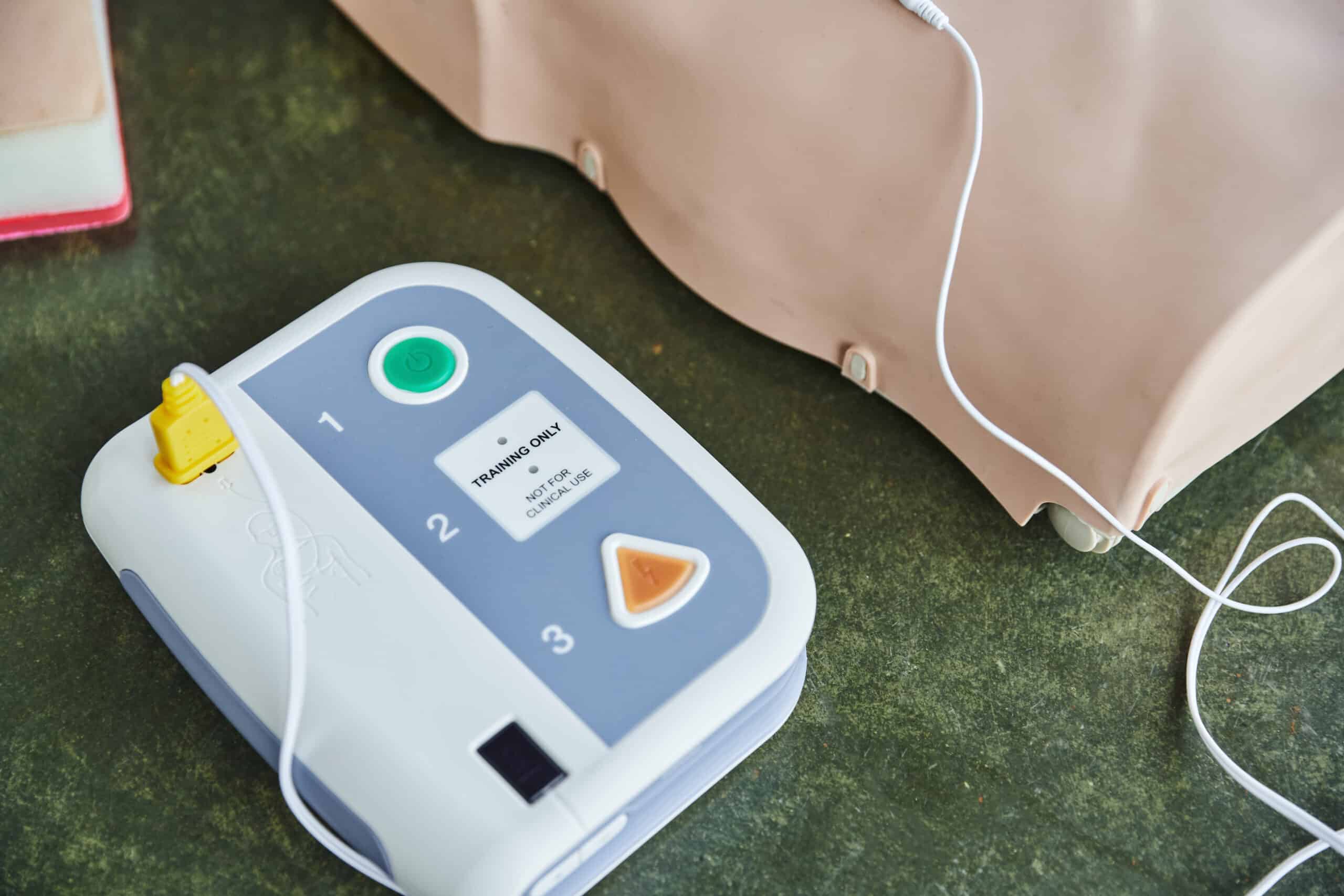
An automated external defibrillator (AED) is a portable, life-saving device that delivers an electric shock to the heart during sudden cardiac arrest, helping restore a normal heart rhythm and potentially saving lives. These user-friendly machines are designed to be used by laypersons in emergency situations and can significantly increase a person’s chance of survival when used quickly alongside CPR.
Sudden cardiac arrest affects thousands of Australians each year, with survival rates dramatically improving when an AED is used within the first few minutes. Understanding how to use an automated external defibrillator and recognising when one is needed can mean the difference between life and death in critical emergency situations.
Ready to learn life-saving skills? Enrol in a nationally recognised first aid course with First Aid Pro today and gain the confidence to respond effectively in emergency situations.
Key Takeaways
- Automatic External Defibrillators save lives: When used within the first few minutes of sudden cardiac arrest, AEDs can increase survival rates significantly
- Anyone can use an AED: These devices are designed for layperson use with clear voice prompts and automatic safety features
- Time is critical: Every minute of delay reduces survival chances by 7-10%, making immediate action essential
- Combine with CPR: An automated external defibrillator works best when combined with effective CPR and early emergency medical service activation
- Regular maintenance matters: Proper maintenance ensures AEDs function correctly when needed, including battery and electrode pad management
- Training builds confidence: While AEDs can be used without training, proper education significantly improves emergency response effectiveness
What Is an Automated External Defibrillator and How Does It Work?
Understanding AED Device Technology and Components
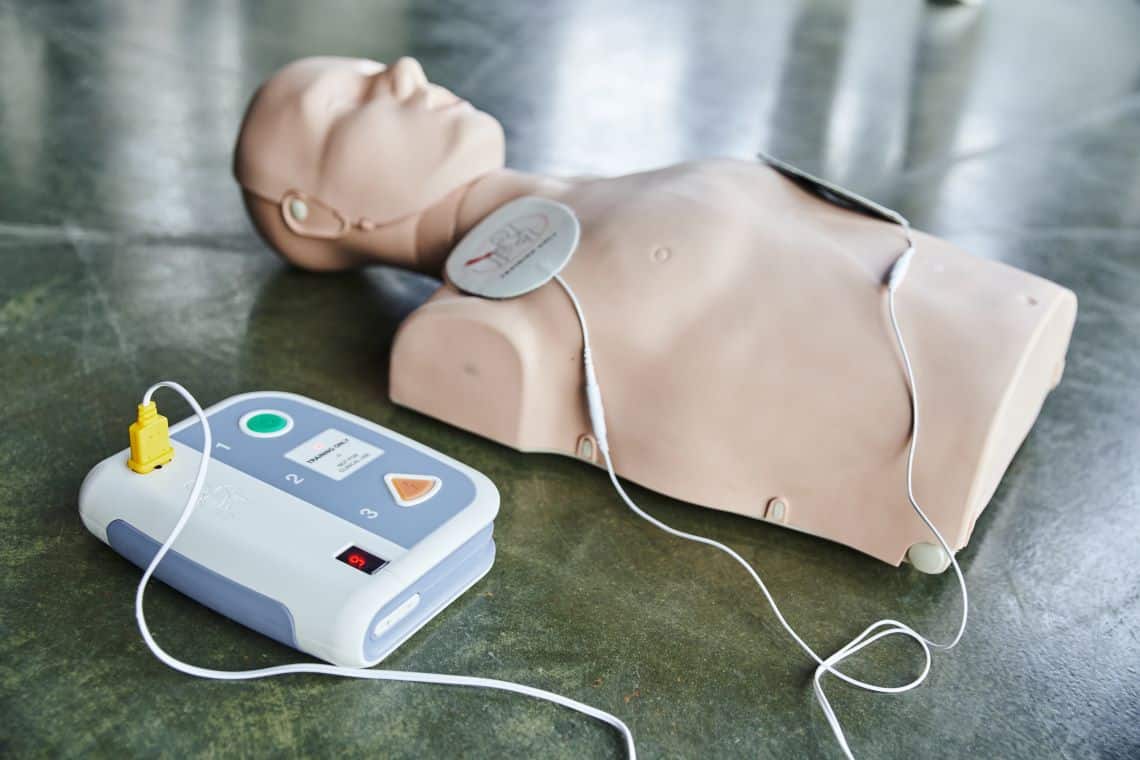
An Automated External Defibrillator machine is a sophisticated yet simple-to-use device that analyses a person’s heart rhythm and determines whether an electric shock is needed. Modern AEDs are designed to be used by anyone, regardless of medical training, thanks to clear voice prompts and visual instructions that guide users through each step of the process.
Key components of an AED include:
Component | Function |
Control unit | Houses the computer that analyses heart rhythm |
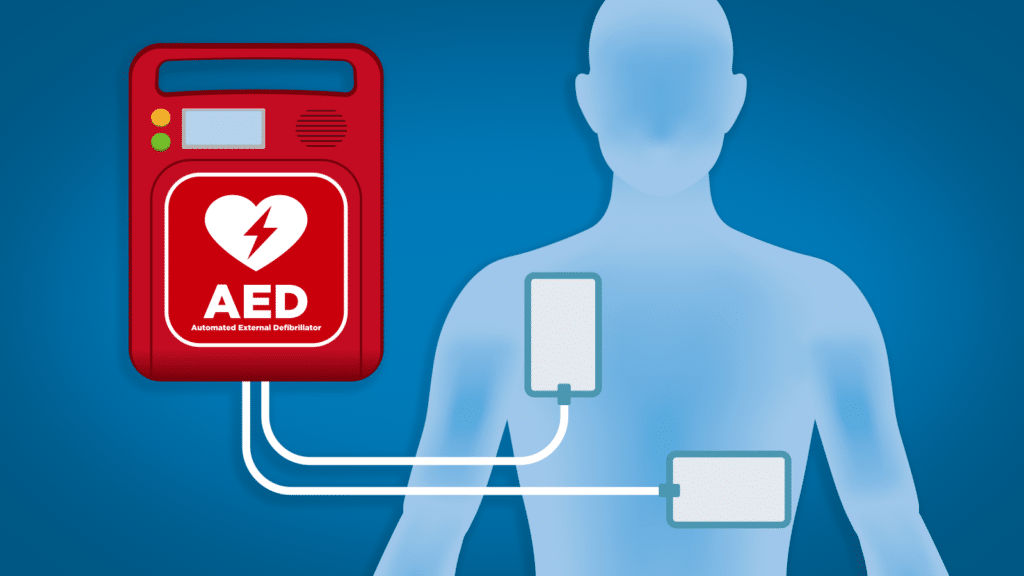
Electrode pads | Stick to the patient’s bare chest to monitor and deliver shock |
Battery | Powers the device (typically lasts 2-5 years) |
Voice prompts | Provide step-by-step instructions |
Display screen | Shows visual instructions and device status |
The Automated External Defibrillator gives clear instructions from the moment it’s turned on, making it possible for ordinary people to save a life during a cardiac emergency.
The Science Behind Treating Ventricular Fibrillation
When someone suffers a sudden cardiac arrest, their heart may enter ventricular fibrillation or ventricular tachycardia – dangerous irregular rhythms where the heart suddenly stops beating properly. During these conditions, the heart suddenly stops pumping blood effectively to the brain and other organs.
Defibrillation works by delivering a controlled electric shock to the heart, essentially “resetting” it back into its normal rhythm. The AED analyses the heart rhythm automatically and only recommends a shock if a shockable rhythm is detected. This safety feature means the device won’t deliver unnecessary shocks to someone whose heart is already beating normally.
Portable Defibrillator vs Traditional Hospital Equipment
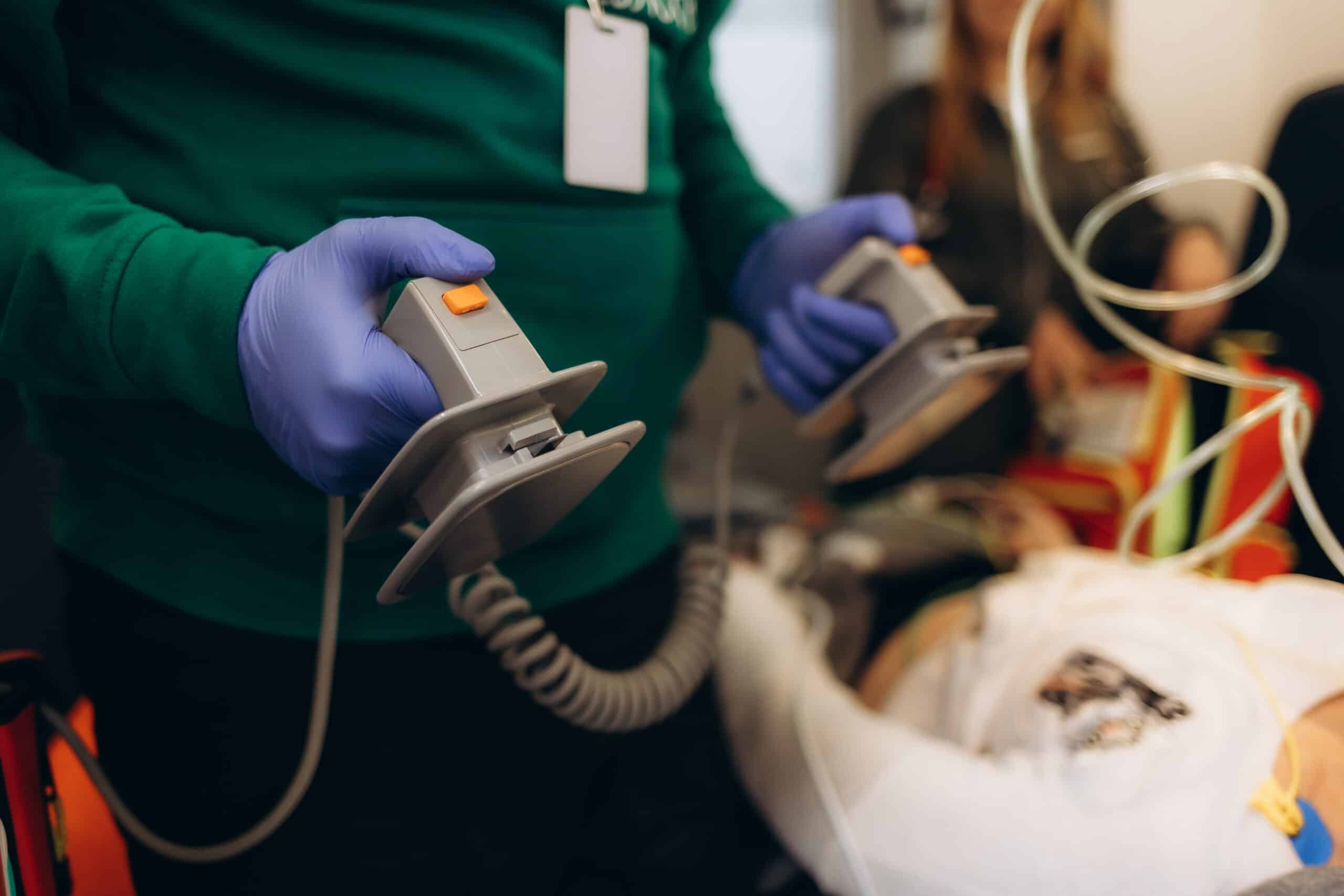
Unlike hospital defibrillators that require medical training to operate, public access AEDs are specifically designed to be used by laypersons. These portable defibrillators feature:
- Automatic rhythm analysis
- Pre-set energy levels
- Clear voice and visual prompts
- Safety mechanisms to prevent accidental shocks
- Lightweight, portable design for easy transport
Hospital defibrillators offer manual control and multiple energy settings, requiring extensive training to operate safely. In contrast, an Automated External Defibrillator is a foolproof device that guides users through the entire process.
Want to be prepared to save a life? Join a nationally recognised first aid course with First Aid Pro and build the skills and confidence you need to act swiftly in an emergency.
When to Use an Automated External Defibrillator During Sudden Cardiac Arrest
Recognising Signs of Sudden Cardiac Arrest
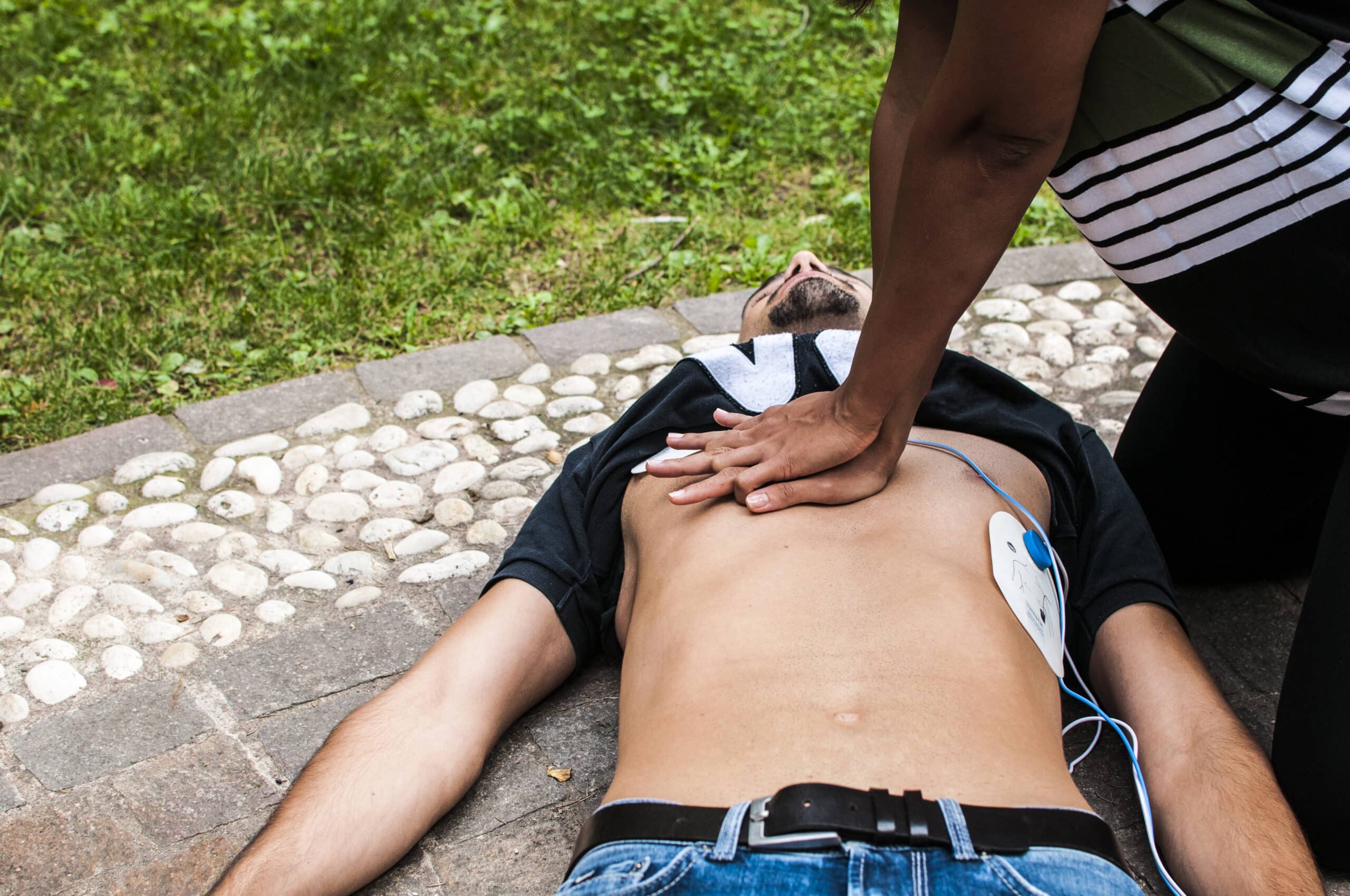
Knowing when to use an AED is crucial for effective emergency response. Use an automated external defibrillator when someone is:
- Unresponsive and not breathing normally
- Unconscious with no pulse (if you’re trained to check)
- Showing signs of cardiac arrest rather than choking or other breathing difficulties
Important: An AED should only be used on someone who is unresponsive and not breathing. Never use an AED on a conscious person or someone who is breathing normally.
Understanding Ventricular Fibrillation Emergency Situations
Sudden cardiac arrest differs from a heart attack. During cardiac arrest, the heart suddenly stops beating effectively, while a heart attack typically involves blocked blood vessels but the heart may continue beating. Signs that indicate you may need to use an AED include:
- Person collapses suddenly
- No response to verbal or physical stimulation
- No normal breathing
- No signs of circulation
Critical Time Factors in Emergency Response
Time is absolutely critical when someone experiences sudden cardiac arrest. For every minute that passes without defibrillation, the chance of survival decreases by approximately 7-10%. This is why AEDs are found in public places and why immediate action is essential.
The chain of survival includes:
- Early recognition and call for help (000)
- Early CPR
- Early defibrillation with an AED
- Early advanced medical care
How to Use an AED
Complete Guide for Public Spaces
- • Check the area is safe for you, the patient, and bystanders
- • If near water, move the person to a dry area if possible
- • Tap the person's shoulders and shout "Are you okay?"
- • If unresponsive and not breathing normally, begin the process
- • Call 000 immediately
- • Ask someone to find an AED while you start CPR
- • Place the person on their back on a firm surface
- • Tilt their head back and lift their chin
- • Expose the person's bare chest
- • Remove any jewellery or clothing from the chest area
- • Dry the chest if wet
- • Follow the manufacturer's instructions for pad placement
- • Place one pad on the upper right chest, below the collarbone
- • Place the second pad on the lower left side, below the left breast
- • Ensure pads stick firmly to the bare chest
- • The AED will analyse the heart rhythm automatically
- • Ensure everyone stands clear when prompted
- • If a shock is needed, the AED will charge and prompt you to press the shock button
- • After the shock (or if no shock is advised), immediately perform CPR
- • Continue CPR until emergency medical services arrive or the person starts breathing normally
Remember: Time is critical - act quickly and follow the AED's voice prompts
Emergency Services: 000
Every minute counts in saving a life
Following CPR Guidance Prompts from AED Devices
Modern AEDs provide comprehensive CPR guidance through voice prompts. The device will:
- Tell you when to start CPR
- Guide you through proper compression rate and depth
- Prompt you when to stop CPR for rhythm analysis
- Indicate when to continue CPR after shock delivery
Some advanced AEDs even provide real-time feedback on compression quality, helping ensure effective cardiopulmonary resuscitation.
Safety Considerations During Emergency Response
When you use the AED, safety is paramount:
- Always ensure everyone is clear from the patient before delivering a shock
- Never touch the person during shock delivery
- Keep the area around the patient clear of water or conductive materials
- Don’t use an AED on someone lying on a metal surface
- Remove any piercings, jewelry, and medication patches from the chest area before applying pads
Public Access Defibrillator Programs and Placement
Strategic AED Placement in Schools and Public Spaces
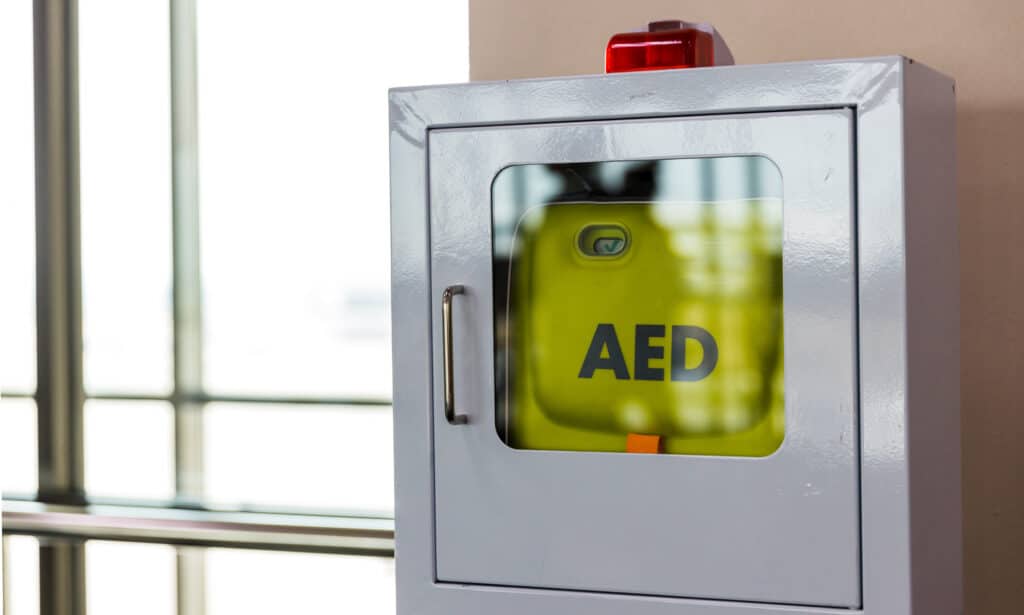
Effective Automated External Defibrillator placement in schools and public spaces follows specific guidelines to maximise accessibility during emergencies. In Australia, the Australian Resuscitation Council recommends placing AEDs in locations where:
- Large numbers of people gather
- High-risk individuals may be present
- Response time for emergency medical services may be delayed
- Physical activity occurs regularly
Common placement locations include:
Location Type | Specific Placement Areas |
Schools | Reception areas, sports facilities, staff rooms |
Shopping centres | Near main entrances, food courts, customer service |
Sports facilities | Change rooms, courts, poolside areas |
Workplaces | Reception, break rooms, high-traffic corridors |
Transport hubs | Platform areas, waiting rooms, ticket counters |
Benefits of Public-Access AED Availability
Public-access Automated External Defibrillator programs significantly improve survival rates from sudden cardiac arrest. Some studies have suggested that survival rates can increase from less than 5% to over 70% when an AED is used within the first few minutes of cardiac arrest.
Benefits include:
- Faster response times compared to waiting for paramedics
- Increased bystander confidence in emergency situations
- Greater community preparedness
- Reduced long-term disability from prolonged cardiac arrest
Legal Requirements and Community Programs in Australia
There is no federal law in Australia mandating AEDs in all public spaces. However, states are beginning to introduce their own mandatory requirements. Notably, South Australia became the first state to require AEDs in a wide range of public buildings and vehicles under the Automated External Defibrillator (Public Access) Act 2022, with deadlines from 1 January 2025 (for government) and 1 January 2026 (for private/commercial).
Other states have different approaches, and some, like New South Wales, are considering or reviewing similar legislation, but most do not have current universal public mandates Many organisations voluntarily implement AED programs as part of their duty of care.
The Australian Resuscitation Council provides guidelines for AED programs, emphasising the importance of:
- Regular maintenance and testing
- Staff training in AED use and CPR
- Clear signage indicating AED locations
- Integration with emergency response procedures
Enhance your emergency response skills with comprehensive first aid training from First Aid Pro, Australia’s leading provider of nationally recognised first aid courses.
Choosing the Best External Automated External Defibrillator for Home Use
Key Features to Consider in Home AED Devices
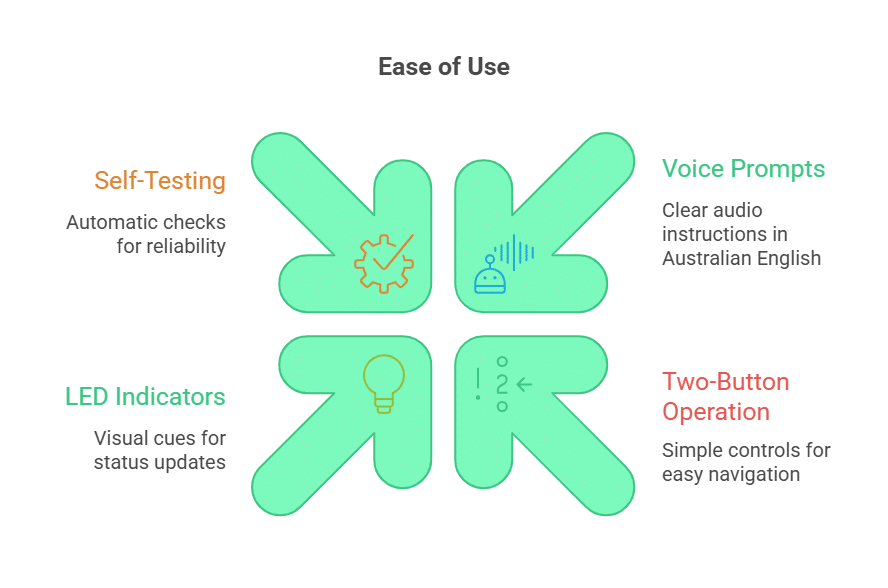
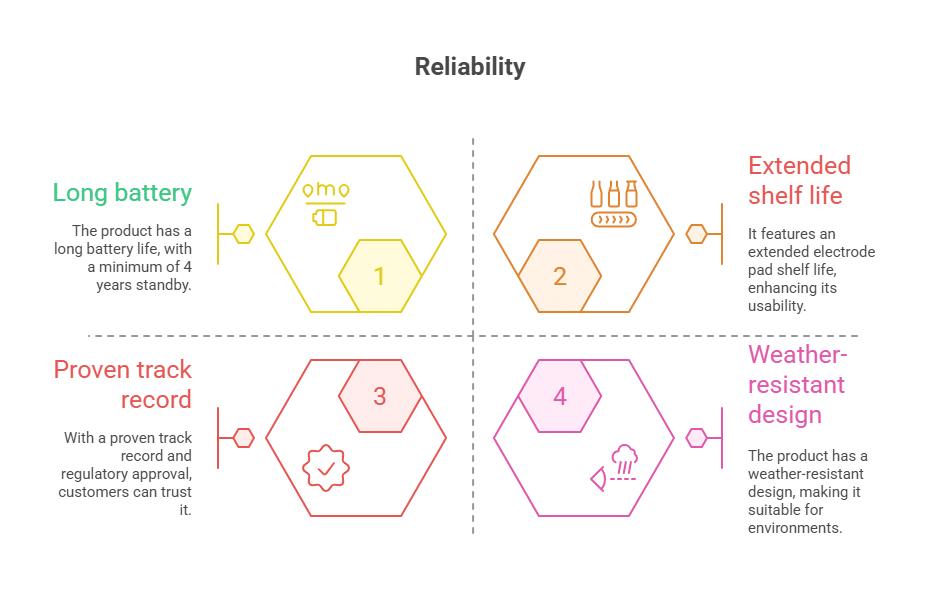
When you buy an Automated External Defibrillator for home use, consider these essential features:
Comparing Portable Defibrillator Models and Prices
AED Model | Key Features | Approximate Price Range (AUD) |
Basic Home AED | Voice prompts, automatic analysis, 5-year warranty | $1,800 – $2,500 |
Advanced Home AED | CPR coaching, colour display, connectivity features | $2,500 – $3,500 |
Professional AED | Manual override, data recording, advanced features | $3,500 – $5,000+ |
Prices are indicative and may vary based on supplier and included accessories.
AED Maintenance & Care
Essential Automated External Defibrillator Maintenance Guide
| Frequency | Maintenance Tasks | Responsible Person |
|---|---|---|
| Daily | Status indicator check, error message review | Designated staff member |
| Monthly | Electrode pad inspection, battery check, component testing | First aid officer |
| Annual | Professional inspection, software updates, functionality check | Certified technician |
Understanding Electrode Pad Expiration
Critical for AED Effectiveness
Electrode pad expiration is critical for AED effectiveness. Expired pads may:
- Lose adhesive properties and fail to stick to patient's chest
- Fail to conduct electricity properly, reducing shock effectiveness
- Compromise patient safety during emergency treatment
- Prevent effective defibrillation and reduce survival chances
Remember: Regular maintenance ensures your AED is ready to save lives
A well-maintained AED can mean the difference between life and death
Daily, Monthly, and Annual Maintenance Protocols
Maintenance Frequency | Required Actions | Responsible Person |
Daily | Visual status check, error message review | Designated staff member |
Weekly | Battery indicator check, physical inspection | Trained maintenance person |
Monthly | Electrode pad expiration check, full system review | First aid officer |
Annually | Professional service, software updates, battery replacement | Certified technician |
Training and Certification for AED Use
First Aid Courses Including AED Training
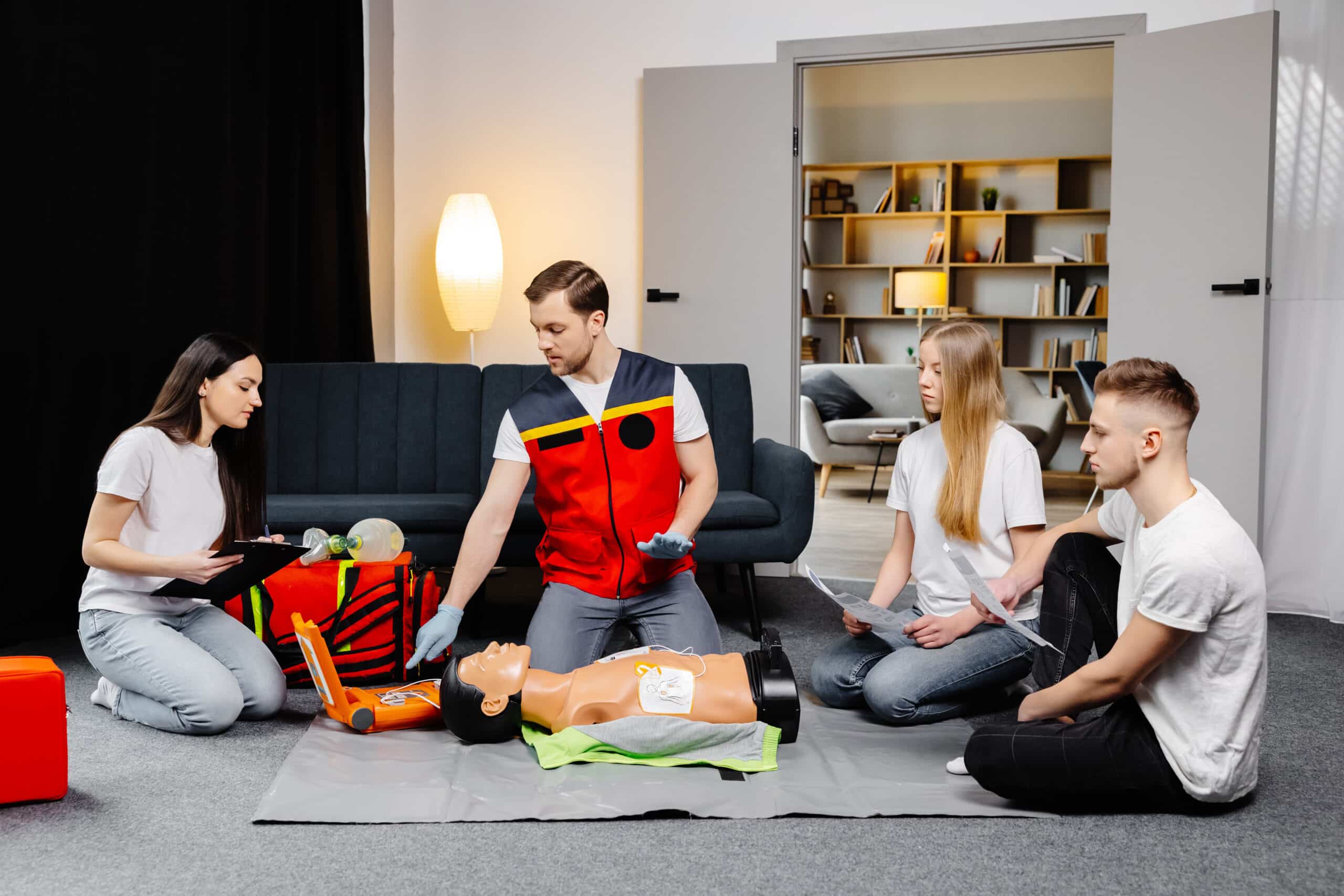
Comprehensive first aid training that includes Automated External Defibrillator use provides the best preparation for emergency situations. Nationally recognised courses cover:
- Basic life support techniques
- AED operation and safety
- Emergency response coordination
- Legal responsibilities and protection
The Australian Resuscitation Council recommends that anyone likely to use an AED receive formal training, though the devices are designed to be used by untrained individuals in emergencies.
Workplace AED Training Requirements
Many Australian workplaces implement AED training as part of their occupational health and safety programs. Training typically includes:
- Identification of cardiac arrest
- Proper AED use techniques
- Integration with workplace emergency procedures
- Regular refresher training (usually annually)
Building Confidence in Emergency Situations
Regular first aid training builds confidence and ensures effective response during high-stress situations. Key elements for building confidence include:
- Hands-on practice with training AEDs
- Scenario-based learning
- Team-based response training
- Regular skill updates and refreshers
AED Knowledge Test
Test your understanding of AED use with these questions
Want to master these life-saving skills in person? Join a First Aid Pro course and gain hands-on experience with AED training and CPR techniques.
References
Australian Resuscitation Council. (2021). Guideline 8 – Cardiopulmonary Resuscitation. Australian and New Zealand Committee on Resuscitation.
Australian Resuscitation Council: Guidelines: Guideline 7 – Automated External Defibrillation in Basic Life Support
South Australian Government: Installation of Automated External Defibrillators