




Sharon has 21+ years of experience as a qualified Emergency Care Nurse registered with the Australian Health Practitioner Regulation Agency (APHRA) and 12+ years as a First Aid Trainer.
She takes pride in FirstAidPro making first aid training available, comprehensive and affordable to everybody.
In moments of crisis, swift action can transform a potentially grave situation into a manageable one. Yet, in such high-pressure scenarios, the real question is: will your memory serve you accurately?
To address this concern, safety professionals have devised mnemonic aids—ingenious strategies designed to trigger your recall with ease. These acronyms, spanning a range of first-aid procedures and emergency responses, are your secret weapon. They empower you to remain composed, respond with agility, and effect meaningful change in a medical emergency.
In a crisis, your actions can save lives, but confidence comes with proper training. Join First Aid Pro’s nationally accredited first aid courses to transform your knowledge into real-life rescue skills. Don’t just learn; become the calm in the chaos, ready to respond when it matters most.
Enroll now, embrace your potential as a lifesaver, and be the difference in an emergency. Your journey to becoming a first aid responder starts here with First Aid Pro. Act now, enroll today!
Let’s delve into the essential first-aid acronyms that everyone should have at their fingertips.
List of First Aid Terminology
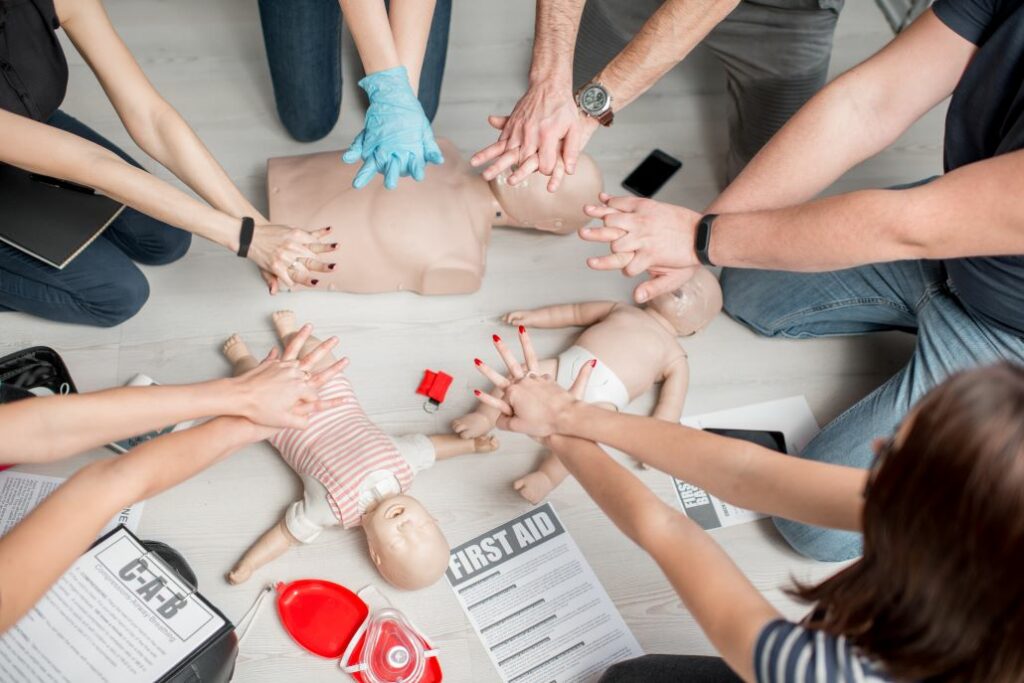
Though highly useful, navigating the world of medical terminology can be intimidating. However, as these terms crop up more frequently in first aid and healthcare environments, they become more familiar to a broader audience. Whether uttered by a paramedic, a physician, or patients describing their ailments, these terms are now more commonplace. Additionally, they often feature in various medical records, monitoring documents and even in the media and television medical dramas
Grasping these medical terms and acronyms is a crucial initial step in effectively delivering first aid treatments and medications. While they may initially seem perplexing, continuous exposure and training will demystify common first aid concepts, enabling you to confidently utilise these terms as and when required.
While it’s not imperative for daily life, having a grasp of these terms is incredibly beneficial for managing an unexpected and life threatening situation involving yourself or others. Below, you’ll find a list of prevalent first aid terms and acronyms, along with their corresponding meanings.
DRSABCD
DRSABCD is a vital mnemonic (and acronym) utilised in critical, life-threatening scenarios. It represents: Danger, Response, Send (for help), Airway, Breathing, (start) CPR, and Defibrillation. This sequence of steps is crucial for first responders to recall in handling severe accidents. In all emergency situations, it’s important to adhere to the DRSABCD Action Plan.
Cardiopulmonary Resuscitation (CPR)
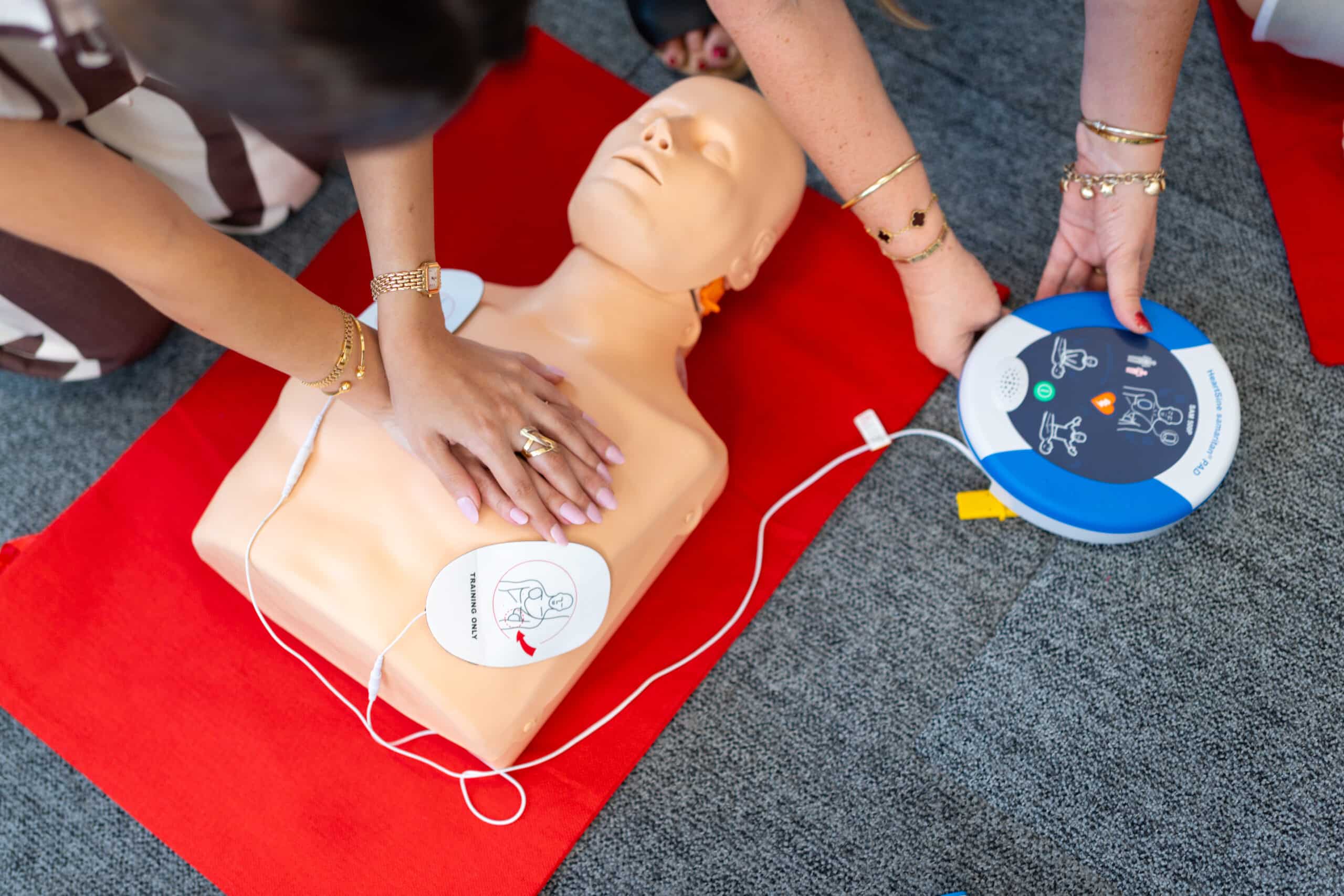
CPR, a critical life-saving method, includes chest compressions and rescue breathing. The chest compressions (given at a rate of 120 compressions per minute) help maintain blood circulation during a cardiac arrest, while rescue breaths involve exhaling air into the victim’s mouth to provide oxygen.
CAB
For effective CPR, keep in mind the CAB sequence:
- Chest compressions: Firmly press on the center of the person’s chest, aiming for 100 compressions per minute.
- Airway: After approximately 30 compressions, slightly tilt the person’s head back and lift their chin to open the airway.
- Breathe: Close the person’s nose, form a seal over their mouth with yours, and deliver two breaths into their mouth.
Additionally, hands-only CPR, which involves only chest compressions without rescue breaths, can be equally effective in situations where the person is witnessed collapsing. The American Heart Association advises full CPR, combining compressions and breaths, for infants and children, individuals who have drowned or overdosed, or those who collapse due to respiratory issues.
Automated External Defibrillator (AED)
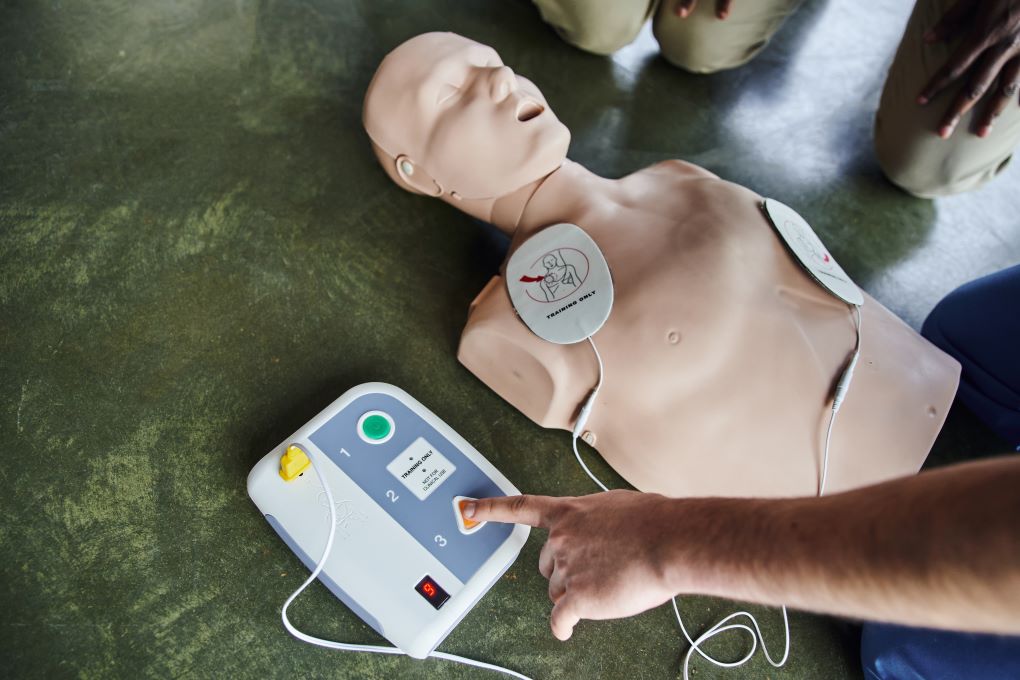
AED or a defibrillator is a portable device that delivers controlled electric shock across the heart. The delivered shock will attempt to reset the heart and get it to beat on its own again.
Primary Survey
The primary survey is a brief initial evaluation aimed at assessing the victim’s overall health, injuries, and conditions. This process is crucial for identifying and addressing immediate life-threatening issues, thereby averting further complications.
Basic Life Support (BLS)
Basic life support is a level of medical care given to victims of life-threatening injuries or illnesses until they are given full medical care. It can be administered by a trained first aider, a paramedic, or an emergency medical technician.
SAMPLE
SAMPLE is an acronym or mnemonic used by first responders during the secondary assessment. It stands for Signs & symptoms, Allergies, Medications, Past Medical History, and Events leading up to the present injury – hence the acronym SAMPLE.
RICE
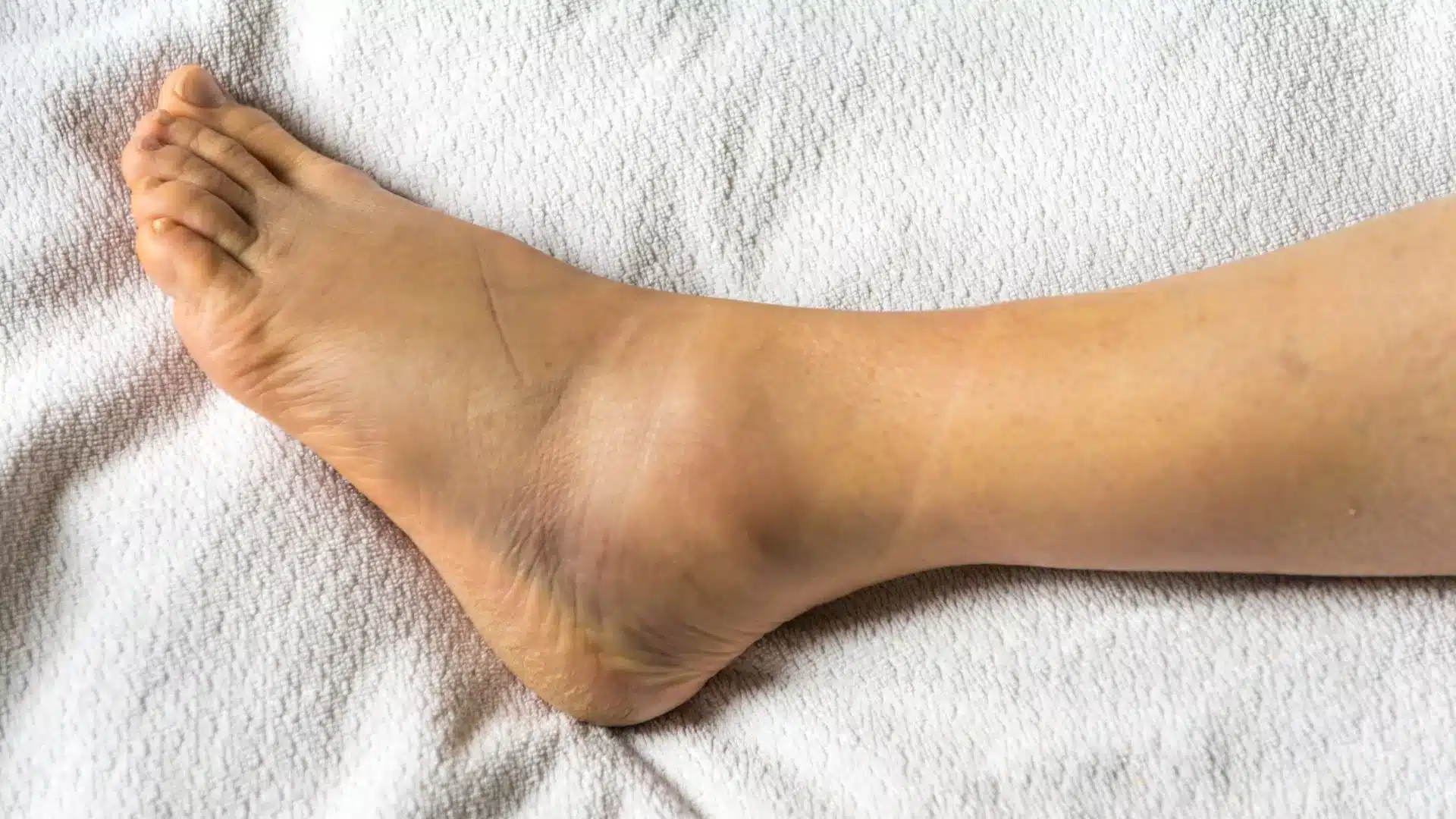
The RICE (or RICER) method is a common first aid treatment for soft tissue injuries, such as sprains, strains, and bruises. It stands for Rest, Ice, Compression, and Elevation (Recovery). The RICE method is widely recommended for treating mild to moderate soft tissue injuries and can be initiated immediately after an injury and continued for the next 24-48 hours.
Recovery Position
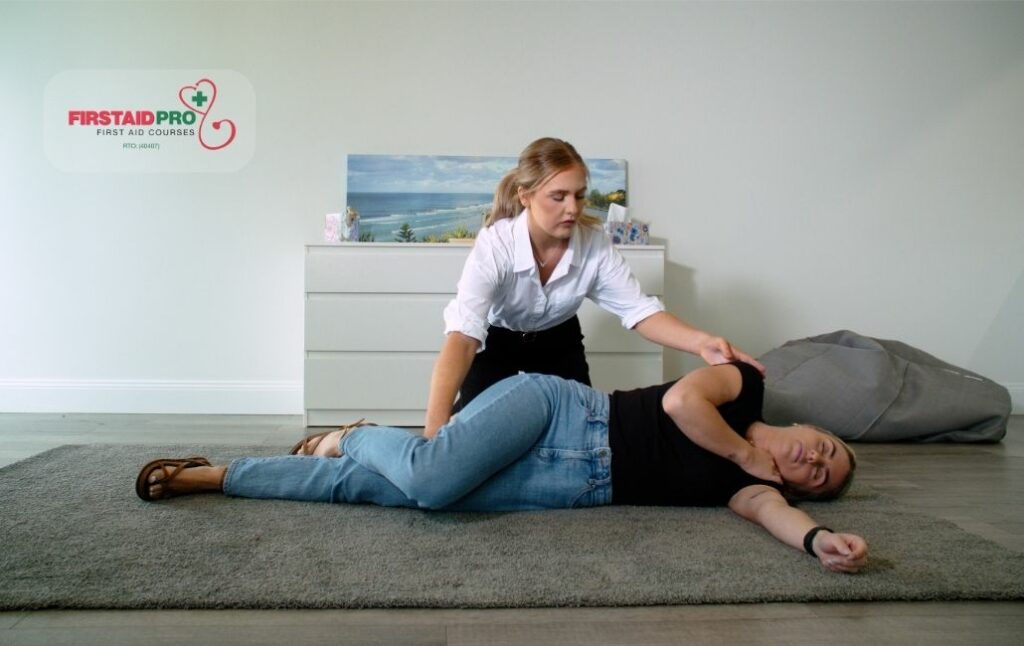
A key aspect of first aid care involves the recovery position. This involves positioning a conscious individual in a manner that guarantees their airways remain unobstructed and clear, eliminating the risk of choking from vomit or other fluids.
ABC
In cases of severe accidents and injuries that go beyond minor bruises or sprains, it’s crucial to address major bleeding with the ABC method:
- Alert: Call for medical assistance or have someone else do it.
- Bleeding: Identify where the bleeding is coming from.
- Compress: To halt the bleeding, apply pressure. Use bandages or a clean cloth over the wound, pressing down with your hands. If necessary, a tourniquet can be employed or improvised using a cloth to constrict blood flow between the wound and the heart.
BEFAST
Quick recognition of stroke symptoms is vital for prompt action and can be life-saving. Being aware of the typical signs and symptoms enables rapid response and effective intervention. The BEFAST acronym is a helpful tool to recall the critical indicators of a stroke:
- Balance: A sudden loss of balance or coordination.
- Eyes: Vision changes, including potential vision loss.
- Face: One side of the face may droop, making it challenging to smile.
- Arm: Weakness or numbness in one arm, often accompanied by an inability to raise both arms evenly.
- Speech: Slurred speech or trouble speaking or understanding.
- Time: Immediate recognition of these signs and seeking medical help quickly is essential, as timely treatment is key in reducing stroke-related damage.
MHFA
Mental Health First Aid is a course or program that teaches the skills to respond effectively to signs of mental illness. It will equip you with the skills and knowledge to identify a problem and provide initial help to someone who may have poor mental health or experiencing a crisis.
SCALD
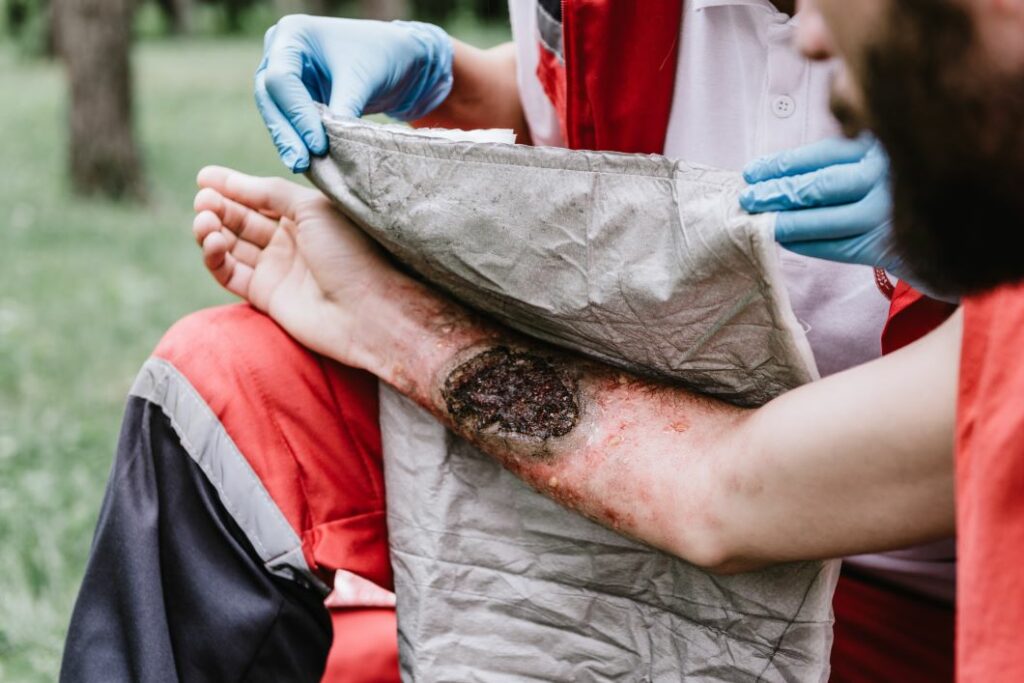
SCALD is an essential acronym to remember when evaluating the severity of a burn injury, which are common in domestic accidents. Prompt and effective first aid is crucial to halt the burning process and lessen the risk of long-term complications.
SCALD assists first aiders and responders in assessing a burn to determine the need for medical evaluation. SCALD stands for:
- Size: The extent of the burn, often gauged by its surface area or percentage, plays a significant role in determining its severity. However, other aspects of SCALD should also be considered. The size of a burn can be roughly estimated using the victim’s palm, which typically represents about 1% of their body surface area.
- Cause: The origin of the burn is key. Burns from chemicals, electricity, or radiation tend to be more severe.
- Age: The elderly, children, and infants are more vulnerable to complications from burns. These groups are particularly susceptible to infections and might need specialised medical care.
- Location: Burns on certain body parts, like the face and groin, are more prone to infections and complications and may require attention from burn specialists.
- Depth: The burn’s depth is a critical indicator of its severity. Burns are categorised as superficial (1st degree), partial thickness (2nd degree), or full thickness (3rd degree).
Summing Up
In this comprehensive guide, we’ve navigated through the essential first aid terms and acronyms, each a crucial piece in the puzzle of emergency response. From DRSABCD to SCALD, these mnemonic tools are not just words but lifelines that can make the difference in critical situations. Understanding and implementing these procedures can empower you to act decisively and effectively, potentially saving lives.
However, knowledge alone isn’t enough. Practical skills, hands-on experience, and the confidence to use them are equally vital. That’s where registered training organisation First Aid Pro steps in. Enrolling in a nationally accredited first aid course at First Aid Pro can transform this knowledge into practical skills. Their expert-led training will equip you with the proficiency to apply these critical first aid techniques in real-life scenarios.
Don’t let hesitation or uncertainty be a barrier in an emergency. Take the next step in becoming a competent first responder. Enroll in a First Aid Pro course today, and be the difference in someone’s life tomorrow.