




Sharon has 21+ years of experience as a qualified Emergency Care Nurse registered with the Australian Health Practitioner Regulation Agency (APHRA) and 12+ years as a First Aid Trainer.
She takes pride in FirstAidPro making first aid training available, comprehensive and affordable to everybody.
Many people associate the term ‘shock’ with intense emotional upset or an abrupt scare following a traumatic incident. However, in the medical field, shock refers to the dangerous condition where insufficient blood circulates throughout the body. This constitutes a life threatening condition.
Shock can be triggered by several factors, including excessive bleeding that isn’t controlled, severe burns, or injuries to the spinal cord.
When blood pressure drops, it leads to a decreased supply of oxygen and essential nutrients to key organs like the brain, heart, and lungs. Without timely restoration of enough blood flow, the individual risks death due to organ failure caused by a lack of oxygen (hypoxia). In the event that you or someone you know may have shock call triple zero (000) immediately.
Make sure you’re prepared for any emergency with essential first aid training. Enrol now in the nationally recognised HLTAID011 – Provide First Aid at First Aid Pro to become an effective first aid responder.
Read on to discover the signs, symptoms and first aid for medical shock.
Recognising Medical Shock
Shock, in a medical sense, is the body’s reaction to a rapid decrease in blood pressure. Initially, the body conserves blood for vital organs by constricting blood vessels in the hands and feet, known as vasoconstriction. However, adrenaline release can counteract this, leading to a potentially deadly drop in blood pressure.
The impact of shock varies based on factors like health, age, gender, injury location, and environment.
Confusion arises with the term ‘shock’ as it’s also used to describe a temporary adrenaline-driven response to fear or anxiety, unlike medical shock. This ‘fright-flight’ reaction is brief and subsides when the stressor is removed or the person is calmed.

Causes of Shock
Several health issues can lead to shock, such as:
- Decreased blood volume.
- Poor heart pumping efficiency.
- Excessive dilation of blood vessels.
- Medications that impair heart performance.
- Nervous system damage.
The four primary types of shock:
- Hypovolemic Shock: Caused by low blood volume from external or internal bleeding, fluid loss due to burns, pancreatitis, gastrointestinal issues, excessive diuretic use, or untreated diabetes, leading to reduced blood pumped by the heart.
- Cardiogenic Shock: Results from heart damage, impairing its ability to pump blood. Causes include heart attacks, valve malfunctions, arrhythmias, heart muscle or valve infections.
- Obstructive Shock: Arises from blockages in the heart or blood vessels or fluid buildup in the chest, caused by conditions like pulmonary embolism, tension pneumothorax, or cardiac tamponade.
- Distributive Shock: Due to excessive blood vessel dilation, leading to lowered blood pressure and inadequate organ blood flow. Types include anaphylactic shock from severe allergic reaction, septic shock from bloodstream infections, and neurogenic shock from spinal injuries. It can also be triggered by drug overdoses, brain injuries, or endocrine disorders like Addison’s disease.
Signs and Symptoms of shock
Symptoms of shock vary depending on conditions and patient health, but look for:
- Cool, clammy skin.
- Pale or ashen skin.
- A gray or bluish tinge to lips or fingernails.
- Rapid pulse.
- Rapid breathing.
- Nausea or vomiting.
- Enlarged pupils.
- Weakness or fatigue.
- Dizziness or fainting.
- Changes in mental status or behavior, such as anxiousness or agitation.
Duration of Shock
The duration of shock varies based on its type and the speed at which treatment is administered. Shock can also have lasting impacts, so please call triple zero or your local emergency medical services in the event that someone is suspected of having this condition.
Shock First Aid
In case of suspected shock, immediately call 000 or your local emergency services for urgent medical assistance.
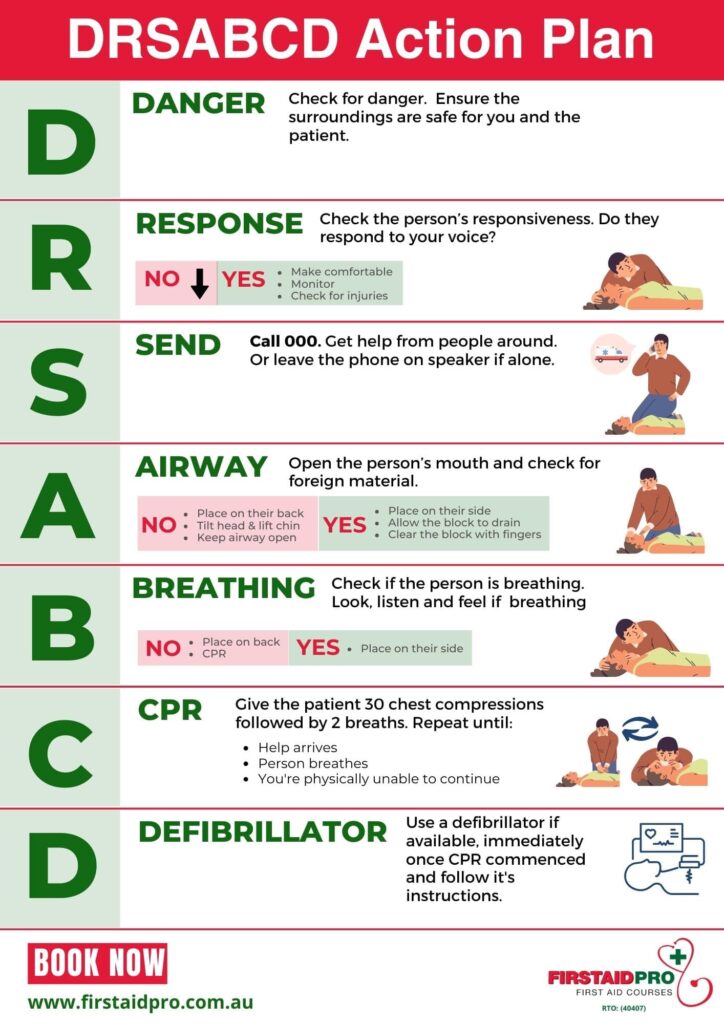
- Follow the DRSABCD Action Plan to assess the situation.
- If they are not breathing, begin rescue breathing and CPR. Monitor their breathing every five minutes if they are breathing.
- If the individual is alert, lay them down, ensuring they are warm and comfortable, and loosen any tight clothing. Elevate their legs higher than their torso and head if it’s safe to do so, as this can help increase blood flow to the person’s vital organs. However, avoid lifting their legs if there’s a potential spinal injury or if leg movement causes pain, like in suspected leg fractures.
- Address any visible external bleeding by pressing a clean cloth or pad firmly on the wound. If the cloth becomes soaked, place another one on top without removing the first. If the second cloth also gets soaked, replace it while continuing to apply pressure. If feasible, elevate the injured limb that’s bleeding.
- Refrain from giving the person any food or drink. Offer reassurance and advise them to remain calm and stationary. Stay with the person until emergency services arrive.
Remember, these guidelines do not replace formal first aid training. Learn advanced first aid techniques with First Aid Pro, and be ready to respond with confidence and competence in critical situations.
Summing Up
In conclusion, understanding the complexities of shock – a critical and often misunderstood medical emergency – is vital. This comprehensive guide has explored the various types of shock, their causes, signs, symptoms, and essential first aid responses. Recognising the early signs of shock and responding effectively can be life-saving, underscoring the importance of proper first aid training.
Equip yourself with the knowledge and skills to handle such emergencies by enrolling in recognised first aid courses like HLTAID011 – Provide First Aid at First Aid Pro. Stay prepared and confident to make a difference when it matters most. Remember, in any suspected case of shock, immediate medical attention is crucial; always call your local emergency number without delay.
Frequently Asked Questions
What are the key signs and symptoms of shock?
Symptoms of shock can vary but commonly include cool, clammy skin, paleness or a grayish tone to skin and lips, rapid pulse and breathing, nausea, vomiting, enlarged pupils, weakness, fatigue, dizziness, fainting, and changes in mental status like anxiety or agitation.
How does medical shock differ from emotional shock?
Medical shock is a life-threatening condition due to inadequate blood circulation, while emotional shock is a temporary, adrenaline-driven response to fear or anxiety, not life-threatening and typically resolves once the stressor is removed.
What are the main types of medical shock and their causes?
The four primary types are Hypovolemic Shock (caused by low blood volume), Cardiogenic Shock (due to heart damage), Obstructive Shock (arising from blockages in the heart or blood vessels), and Distributive Shock (from excessive blood vessel dilation, including anaphylactic, septic, and neurogenic shock).
What should I do if I suspect someone is in shock?
Immediately call emergency services. Employ the DRSABCD protocol, begin rescue breathing and CPR if they are not breathing. Lay the person down, keep them warm, loosen tight clothing, elevate their legs if safe, manage visible bleeding, and avoid giving food or drink. Stay with them until help arrives.
Can shock have long-term effects?
Yes, the duration and impact of shock can vary based on its type and how quickly treatment is administered. It can have lasting impacts, so it’s crucial to seek immediate medical attention in suspected cases.