



Skip to content
Online Courses​
no-Online Courses
Online Courses​
no-Online Courses
no-Online Courses
Online Courses​
Nationally Accredited First Aid Courses
(08) 7120 2570
Firstaidpro Logo
[wp_menu_megatabs id="493"]
Student login
daily deals
No-Online

OR

Online
Applicable to:
Healthcare
Aged Care & NDIS Support
Construction
Warehousing

3 Best Methods to Control Severe Bleeding

control severe bleeding

Table of Contents

  • About
  • Latest Posts
Sharon McCulloch
Sharon McCulloch
CEO, Founder and First Aid Trainer at FirstAidPro
Sharon McCulloch is the CEO and Founder of FirstAidPro, Australia's leading Registered Training Organisation (31124), delivering First Aid Courses nationwide.

Sharon has 21+ years of experience as a qualified Emergency Care Nurse registered with the Australian Health Practitioner Regulation Agency (APHRA) and 12+ years as a First Aid Trainer.

She takes pride in FirstAidPro making first aid training available, comprehensive and affordable to everybody.
Sharon McCulloch
Latest posts by Sharon McCulloch (see all)
  • Australian Spider Bite & Bite First Aid Guide – Identification, Symptoms & Treatment - 14/04/2026
  • Anti-Inflammatory Tablets – Sting & Bite Symptoms, Risks & First Aid - 10/04/2026
  • LVR CPR Training Australia: What Is the UETDRMP018 Course and Who Needs It? - 08/04/2026

When you’re faced with severe bleeding, knowing the right techniques can make the difference between life and death. You’ve probably heard about applying pressure to a wound, but did you know there are two other highly effective methods to control critical blood loss?

These three approaches—direct pressure, tourniquets, and hemostatic agents—form a powerful arsenal against severe bleeding. Each method has its own unique advantages and applications, and understanding when and how to use them can greatly improve the chances of survival in emergency situations.

But which method is best suited for different types of injuries, and what are the potential risks involved?

triage doctors hospital

Key Takeaways

• Direct pressure is the primary and most effective method to control severe bleeding.

• Elevation of the injured limb above the heart helps reduce blood flow to the wound.

• Haemostatic agents accelerate clotting and can be effective for severe bleeding in hard-to-compress areas.

• Tourniquets are a last resort for life-threatening limb bleeding when other methods fail.

• Compression bandages can provide sustained pressure when direct manual pressure isn’t possible.

First Aid Training Snake Bite

Direct Pressure Application

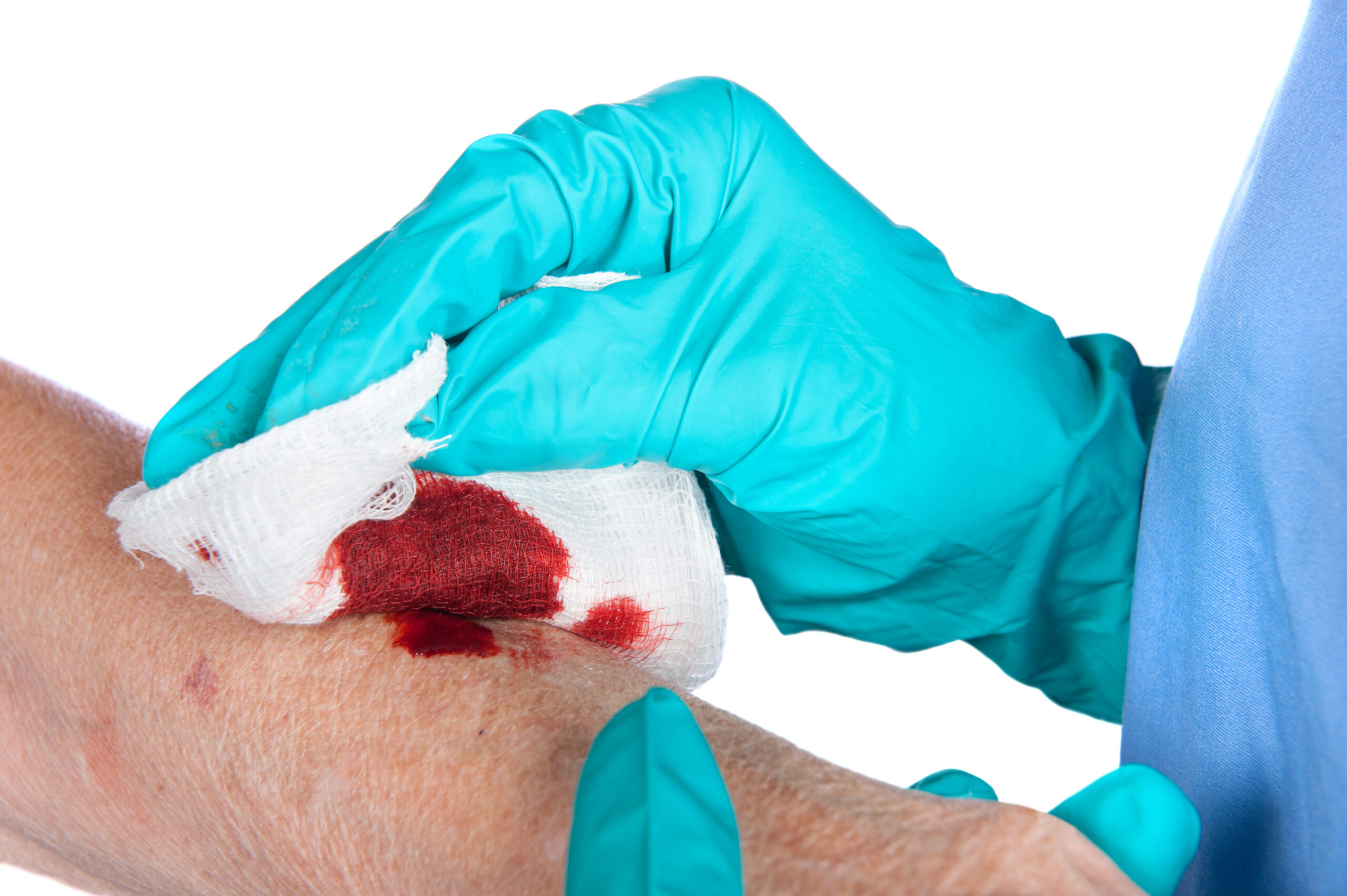
Apply firm, direct pressure to the wound using a clean cloth or sterile gauze to stem severe bleeding immediately. This method is often the most effective first-line defence against blood loss.

Maintain constant pressure for at least 15 minutes without lifting the cloth or gauze to check the wound. If blood soaks through, add more layers without removing the original dressing.

For limb injuries, elevate the affected area above the heart to reduce blood flow to the wound. This technique, combined with direct pressure, can greatly slow bleeding.

If you’re alone and need to call for help, use compression bandages to maintain pressure on the wound. Wrap these tightly around the injury, starting from the farthest point from the heart and moving towards it.

Don’t remove clots that form, as they aid in stopping the bleed. If direct pressure doesn’t control the bleeding after 30 minutes, seek immediate medical attention.

For severe arterial bleeding, you may need to apply pressure to pressure points closer to the heart. Remember, your primary goal is to stop the bleeding quickly and effectively to prevent shock and further complications.

Tourniquet Use

tourniquet

When direct pressure fails to control severe limb bleeding, you’ll need to When direct pressure fails to control severe limb bleeding, you’ll need to contemplate using a tourniquet as a last resort. Tourniquet techniques have evolved, and modern methods emphasise effectiveness and safety. You’ll find various tourniquet materials available, from commercial devices to improvised solutions.

To apply a tourniquet correctly:

  • Place it 2-3 inches above the wound, but not over a joint.
  • Tighten it until the bleeding stops.
  • Note the time of application.
  • Don’t remove it until medical help arrives.

Commercial tourniquets are preferable, but in emergencies, you can improvise using a belt, scarf, or similar wide, flat material. Avoid thin materials like wire or cord, as they can damage tissues. When applying, aim for a width of at least 1.5 inches to distribute pressure effectively.

Hemostatic Agents

Hemostatic Agents

Hemostatic agents offer a powerful tool in your arsenal for controlling severe bleeding, particularly in situations where traditional methods prove insufficient. These specialised products are designed to accelerate the body’s natural clotting process, making them invaluable in haemorrhage management.

You’ll find hemostatic agents in various forms, including powders, gauzes, and sponges. When applied directly to a wound, they rapidly promote coagulation by concentrating clotting factors at the injury site. This action can greatly reduce blood loss in minutes, potentially saving lives in critical situations.

While highly effective, hemostatic agents aren’t without risks. They can cause tissue damage if not used correctly, and some may produce exothermic reactions. Always prioritise proper training before employing these products in emergency situations.
Frequently Asked Questions

How Long Does It Take for Severe Bleeding to Become Life-Threatening?

You’re at risk within minutes to hours, depending on the severity of the bleeding. The timeframe varies based on the location and volume of blood loss. Immediate action is essential for survival.

Can Elevation of the Injured Limb Help Control Bleeding?

Yes. When you raise the injured limb above heart level, you reduce blood flow to the area. This technique, combined with direct pressure, can effectively slow or stop bleeding in extremities.

What Are the Signs of Internal Bleeding?

Watch for these signs: abdominal pain, bruising, dizziness, weakness, and pale skin. Don’t ignore unexplained swelling or vomiting blood. Seek medical help immediately if you suspect internal bleeding symptoms.

The content on this website offers general insights regarding health conditions and potential treatments. It is not intended as, and should not be construed as, medical advice. If you are facing a medical emergency, dial 000 immediately and follow the guidance provided.

Recent Posts
Common Australian Spiders
Australian Spider Bite & Bite First Aid Guide – Identification, Symptoms & Treatment
14/04/2026

An Australian spider bite is common, but serious injury is rare. This guide explains how to identify several Australian spiders, what a spider bite looks …

infected-insect-bite
Anti-Inflammatory Tablets – Sting & Bite Symptoms, Risks & First Aid
10/04/2026

Key Takeaways Anti-inflammatory tablets reduce pain and swelling from insect bites and stings but cannot treat serious allergic reactions or anaphylaxis.NSAIDs such as ibuprofen are …

LVR CPR Training -UETDRMP018 Perform Rescue From A Live Low Voltage Panel
LVR CPR Training Australia: What Is the UETDRMP018 Course and Who Needs It?
08/04/2026

Low voltage rescue (LVR) is the process of safely removing a person from contact with a live low voltage electrical panel and providing emergency care …

CPR and AED
CPR and AED: Why They’re Critical for Saving Lives in Emergencies
01/04/2026

CPR and AED are life-saving first aid techniques used during cardiac arrest to help save lives before an ambulance arrives. When a person’s heart stops …

sprain of the ankle
Sprain vs Strain: Key Differences, Symptoms, and First Aid Treatment
27/03/2026

A sprain is a common soft-tissue injury that occurs when a ligament is stretched or torn, usually after a fall, twist, or sudden impact. Sprains …

Information
  • About Us
  • Contact Us
  • Mental Health Pro
  • Onsite Training
  • Careers
  • Collaborations
  • Course Calendar
  • Daily Deals
  • FAQs
  • Explore Our Courses
  • Instant Price Beat
  • Partners
  • Same Day Certificates
Resources
  • Student Login
  • Blog
  • Learn First Aid
  • Create Your USI
  • Find Your USI
  • First Aid Charts
Popular Courses
  • CPR
  • First Aid
  • Childcare First Aid
  • First Aid Mental Health
  • Remote First Aid
  • Advanced First Aid
  • CPR, Asthma & Anaphylaxis
  • Asthma & Anaphylaxis
  • CPR LVR
  • Manual Handling
  • Manual Handling Refresher
  • Medication Administration
  • White Card
Online Courses
  • Zoom Online CPR
  • Zoom Online First Aid
  • Zoom Childcare First Aid
  • Zoom NDIS HISS Courses
Blended Courses
  • Blended CPR
  • Blended First Aid
  • Blended Childcare First Aid
Charity Courses
  • Free CPR
  • Free First Aid
Locations
  • South Australia
  • Queensland
  • New South Wales
  • Victoria
  • ACT
  • Tasmania
  • Northern Territory
  • Western Australia
Policies & Procedures
  • Academic Honesty
  • Complaints & Appeals
  • LLN
  • Refunds & Cancellations
  • RPL & Credit Transfers
  • Training & Assessment
Firstaidpro Logo
Facebook Instagram Youtube tiktok Pinterest Linkedin
  • Level 3, Unit 6/9 Frinton Street, Southport QLD 4215
  • (08) 7120 2570
  • Get In Touch

FirstAidPro is a leading Registered Training Organisation (RTO: 31124) delivering industry-leading standards and the latest training techniques. We provide you with Australia’s most comprehensive, officially recognised first aid qualification!

  • Same-Day Certificates
  • Courses Available 7 days
  • Nationally Accredited Certification
eway-payment.png
© 2026 Firstaidpro Australia Pty Ltd (RTO: 31124) | ABN: 70 106 788 050 | ACN: 106 788 050 | All rights reserved.
  • Privacy Policy
  • Refund Policy
  • Website Disclaimer
North Hobart