


While cardiac arrest can strike without warning, your preparation with CPR and rescue breathing can mean the difference between life and death. Knowing how to recognise the signs of cardiac arrest and respond swiftly with proper chest compressions and rescue breathing techniques can greatly increase a person’s chances of survival. In fact health authorities such as the Australian Resuscitation Council estimate that effective bystander CPR can double or even triple victim survival rates.
Whether you’re at home, work, or in a public space, understanding the crucial steps outlined in this guide could empower you to become an essential link in the chain of survival. What follows may just help you save a life someday.
Key Takeaways
- Recognise cardiac arrest signs: sudden collapse, no breathing, and absence of pulse.
- Call emergency services immediately upon recognising cardiac arrest symptoms.
- Perform chest compressions at 100-120 per minute, compressing at least 5 cm deep.
- Administer rescue breaths by tilting the head back, pinching the nose, and giving two one-second breaths.
- Continue cycles of 30 chest compressions and 2 rescue breaths until medical help arrives.
- Use an AED if available, following voice prompts and ensuring no one touches the patient during shock delivery.
Recognising Signs of Cardiac Arrest
When responding to a potential cardiac arrest, you’ll need to quickly identify key signs and prepare to perform CPR and rescue breathing if necessary.
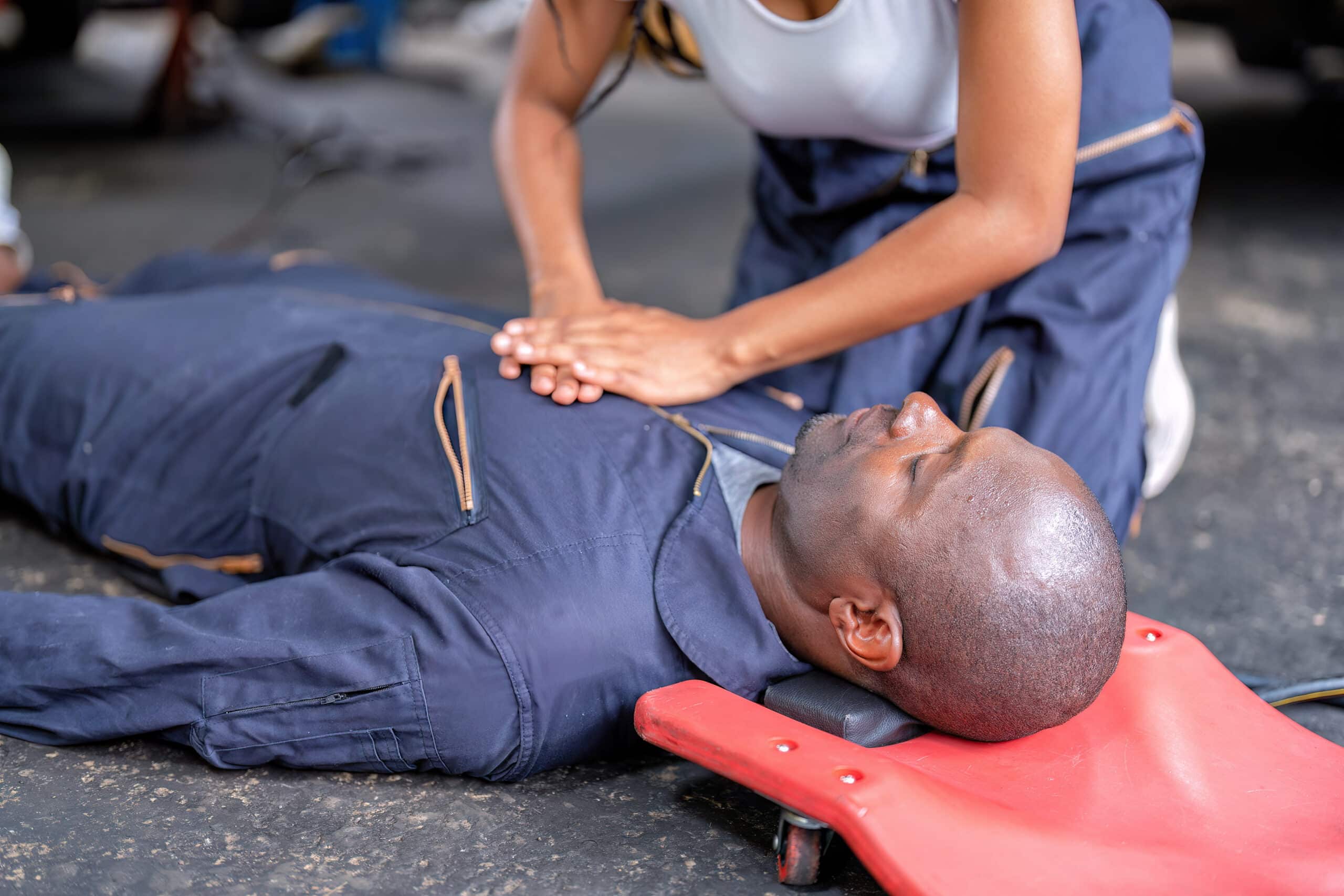
Recognising the signs of sudden cardiac arrest is essential for initiating immediate life-saving interventions. The most apparent indicator is a sudden collapse, often without warning. You’ll notice the person falling to the ground or slumping in a chair, becoming unresponsive. This abrupt loss of consciousness is an important sign that demands your immediate attention.
Absence of breathing is a vital sign of cardiac arrest that requires immediate action. Look for chest movement, listen for breath sounds, and feel for air coming from their nose or mouth. If there’s no sign of normal breathing or only occasional gasps, assume cardiac arrest and prepare to initiate rescue techniques.
Detecting the absence of a pulse is an essential step in identifying cardiac arrest and initiating life-saving interventions. To check for a pulse, locate the carotid artery on the side of the victim’s neck. Place your index and middle fingers gently on this area, feeling for 5-10 seconds. If you can’t detect a pulse, it’s important to act quickly.
Calling Emergency Services
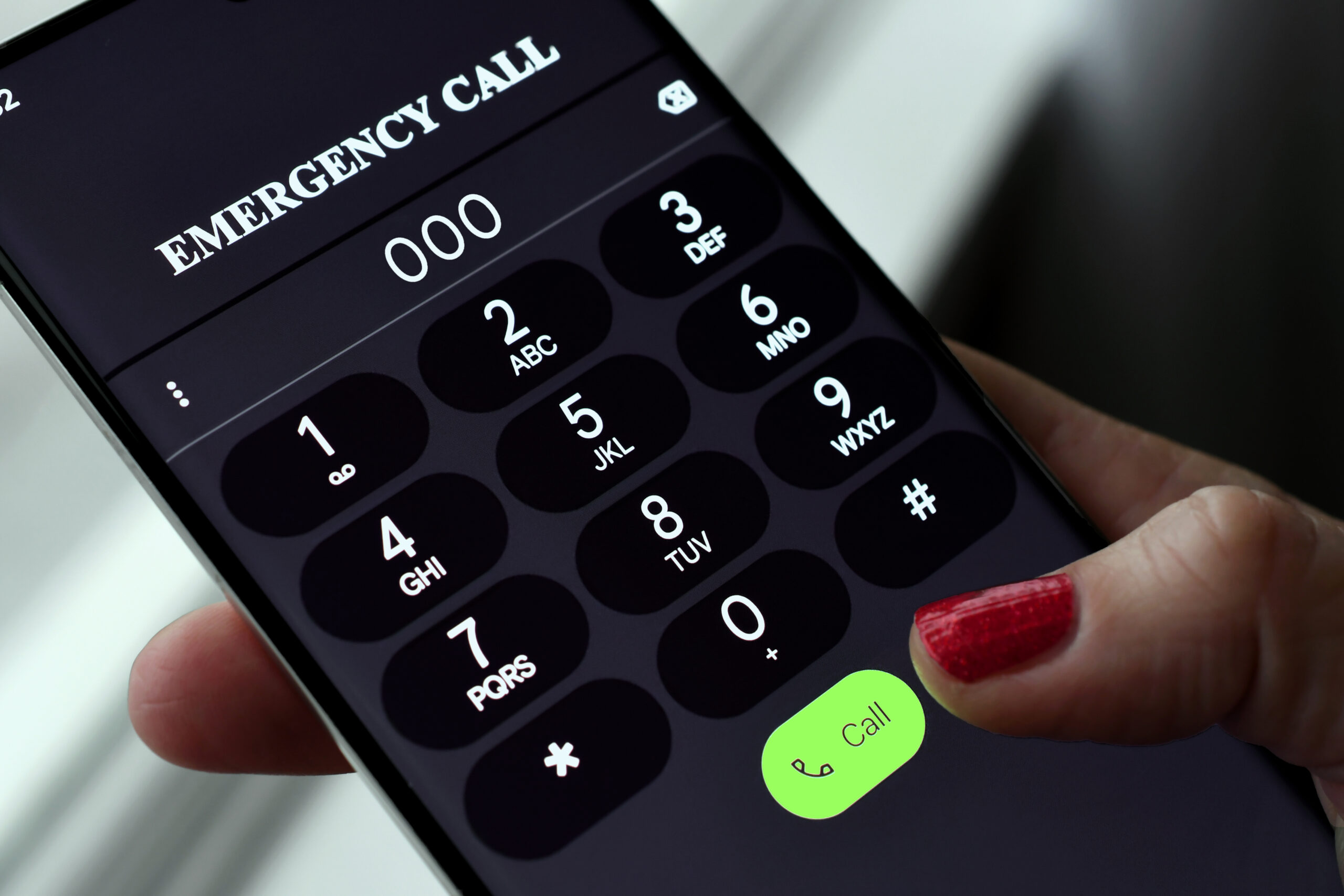
Recognising when to call 000 before starting CPR and rescue breathing is essential. Here are key situations that warrant immediate emergency services:
- Sudden loss of consciousness
- Difficulty breathing or absence of breathing
- Chest pain or pressure lasting more than a few minutes
- Signs of stroke, such as facial drooping or slurred speech
When calling 000, stay calm and provide clear information. Give your exact location, describe the emergency, and follow the dispatcher’s instructions. If you’re alone, put the phone on speaker and begin CPR if necessary. Don’t hang up until instructed to do so.
Information to Provide Dispatcher
When you reach a 000 dispatcher, you’ll need to provide specific information to secure a rapid and appropriate emergency response. Effective dispatcher communication is vital for guaranteeing the right resources are sent to your location quickly.
First, clearly state your location, including the street address, floor or apartment number, and any nearby landmarks. If you’re in a public place, describe your surroundings in detail.
Next, explain the nature of the emergency, specifically mentioning that someone is in cardiac arrest and needs immediate assistance.
Provide the dispatcher with the victim’s age, gender, and any known medical history. Describe the victim’s current condition, including whether they’re breathing or responsive. If you’ve started CPR, inform the dispatcher and be prepared to follow their instructions.
If possible, send someone to meet the first responders and guide them to the exact location. Remember, remaining calm and providing clear, concise information will help secure the fastest possible response to the emergency.
Chest Compressions
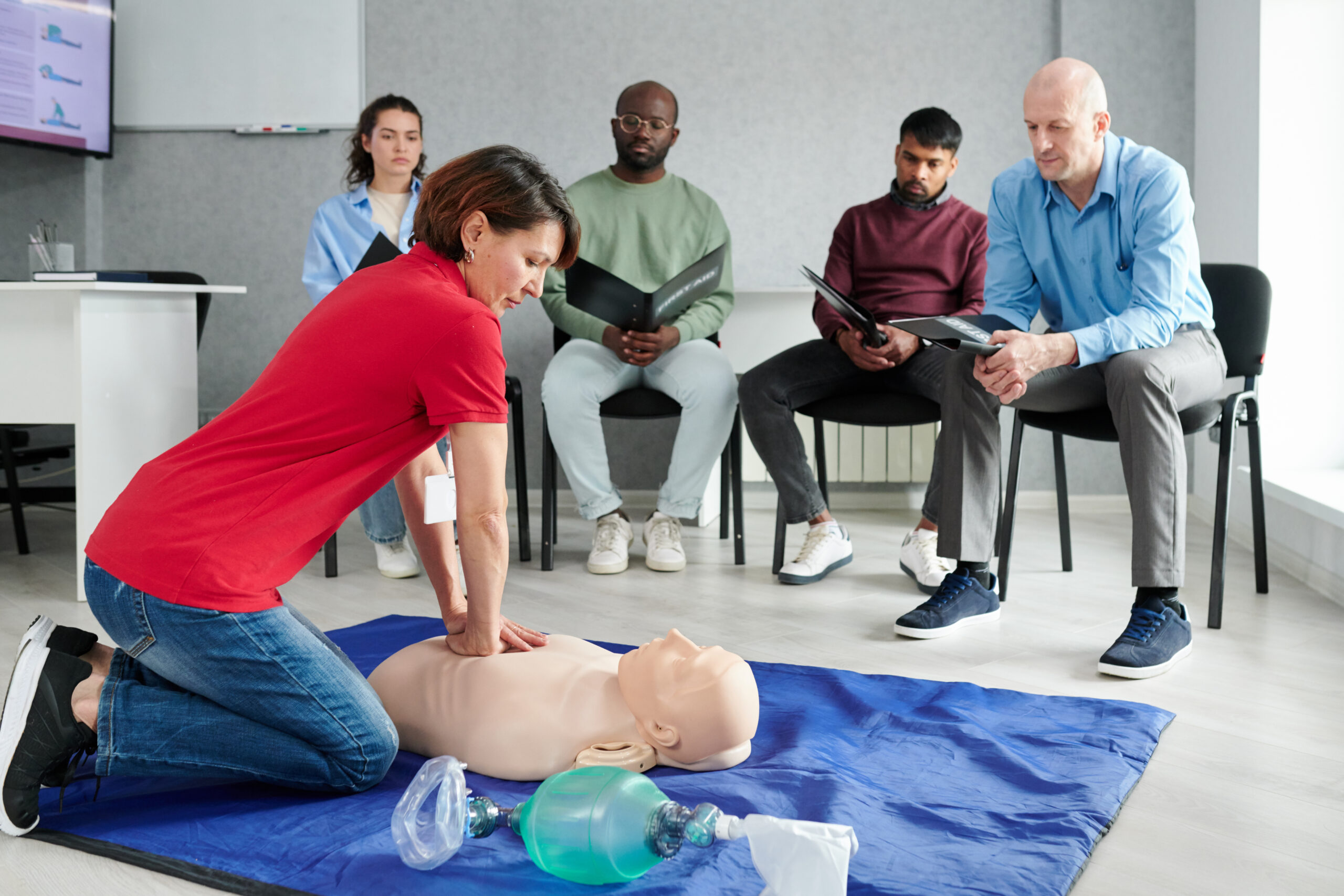
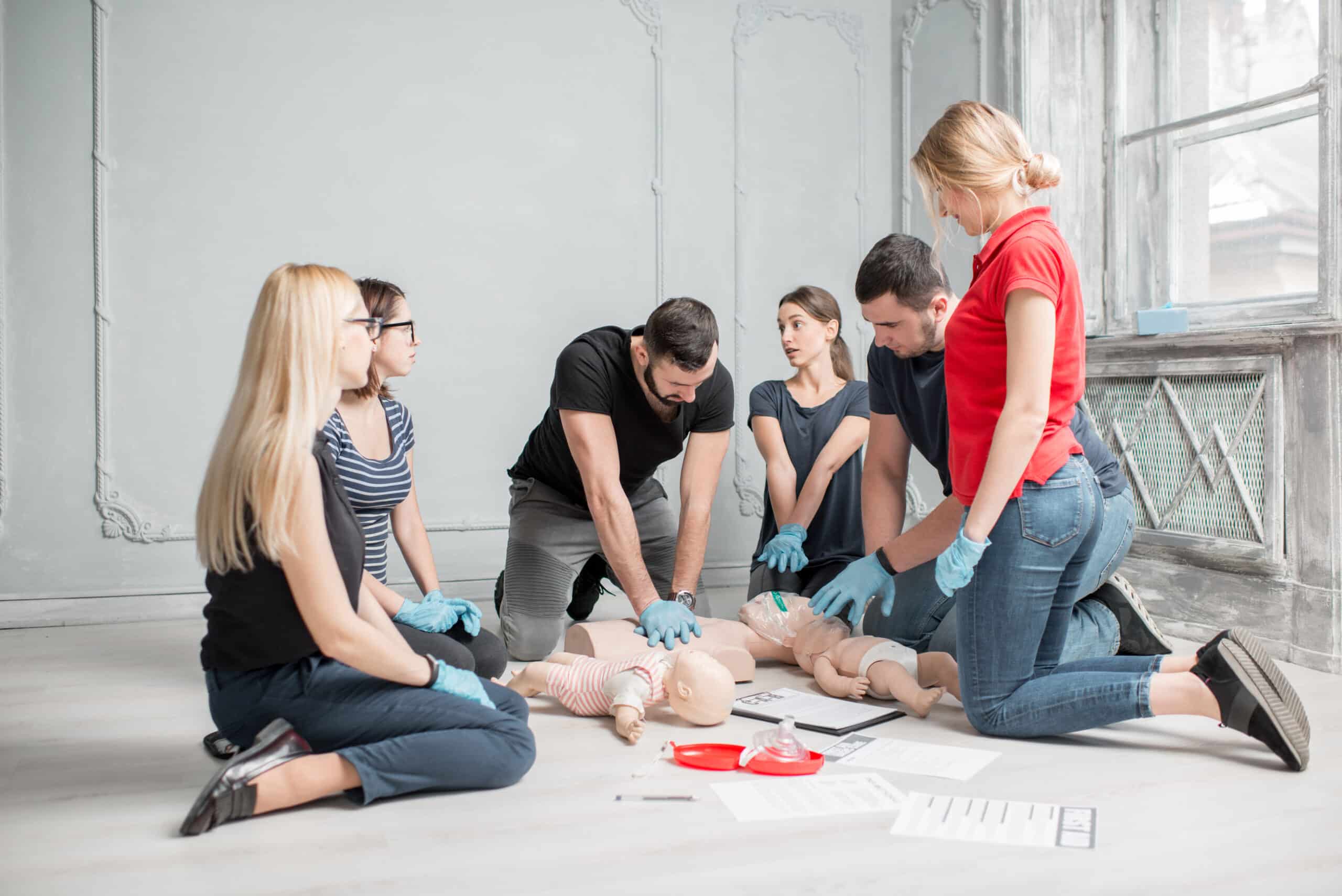
To perform effective chest compressions, place the heel of one hand on the centre of the victim’s chest, with your other hand on top. Interlock your fingers and position yourself directly over the victim’s chest. Keep your arms straight and use your body weight to compress the chest.
Push hard and fast, aiming for a depth of at least 5 cm (2 inches) for adults. Maintain a compression rhythm of 100-120 compressions per minute. Allow the chest to fully recoil between each compression. This guarantees proper blood flow and oxygenation.
Rescue Breathing
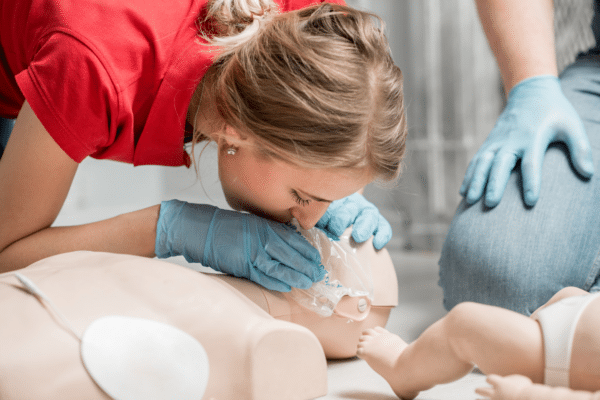
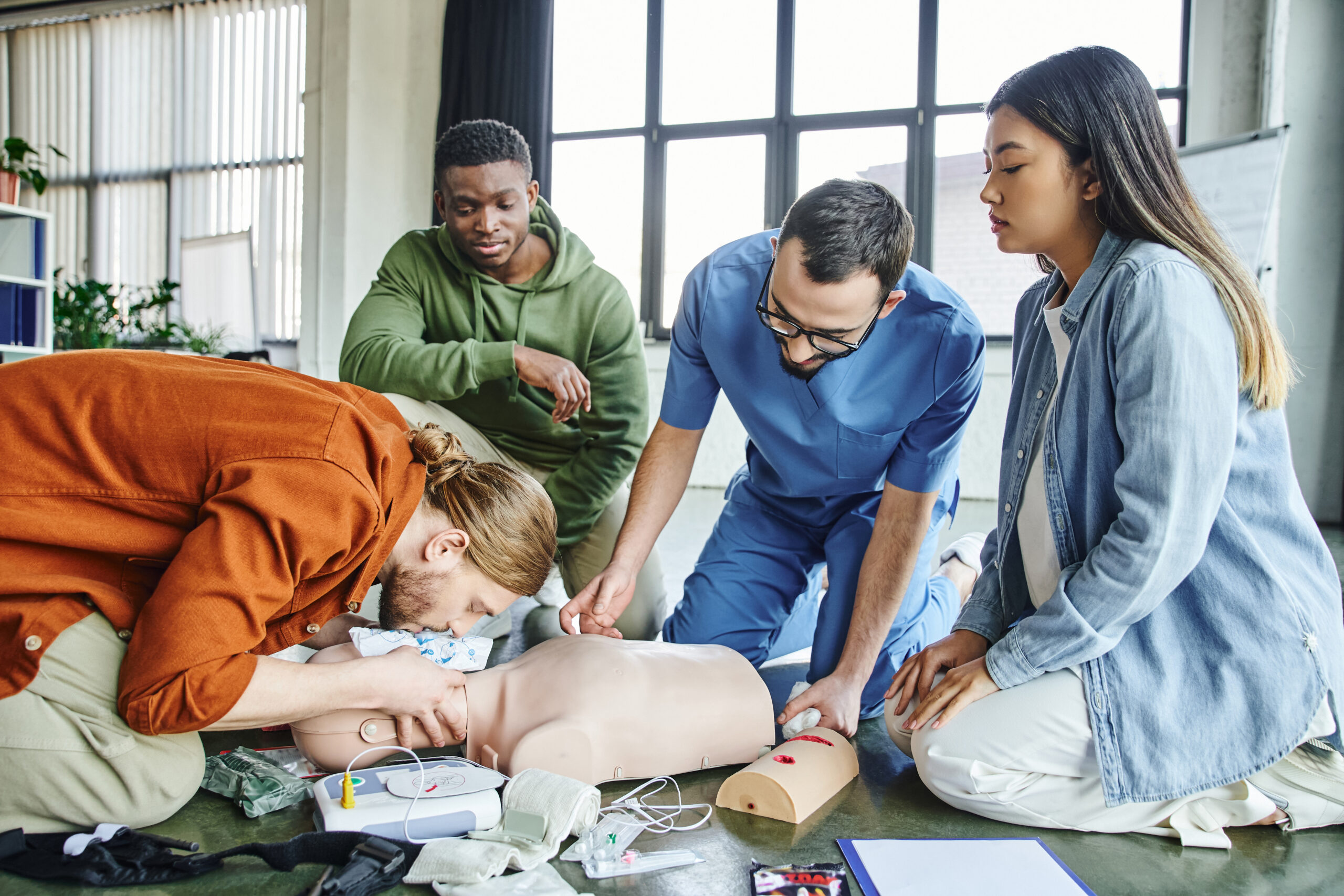
While chest compressions maintain circulation, rescue breathing provides essential oxygen to the body. To perform rescue breaths:
- Verify the airway is open by tilting the person’s head back and lifting their chin.
- Pinch the nose shut with your thumb and index finger.
- Take a normal breath, then seal your mouth completely over the person’s mouth.
- Give two rescue breaths, each lasting about one second. Watch for the chest to rise with each breath.
- If the chest doesn’t rise, reposition the head and try again.
- Resume chest compressions immediately after the two breaths.
Effective breathing methods are vital for successful resuscitation. When applying rescue breath techniques, make sure you’re not overinflating the lungs. Breathe normally, not forcefully, into the person’s mouth.
If you’re uncomfortable with mouth-to-mouth contact, use a barrier device like a face shield or pocket mask.
Using an AED
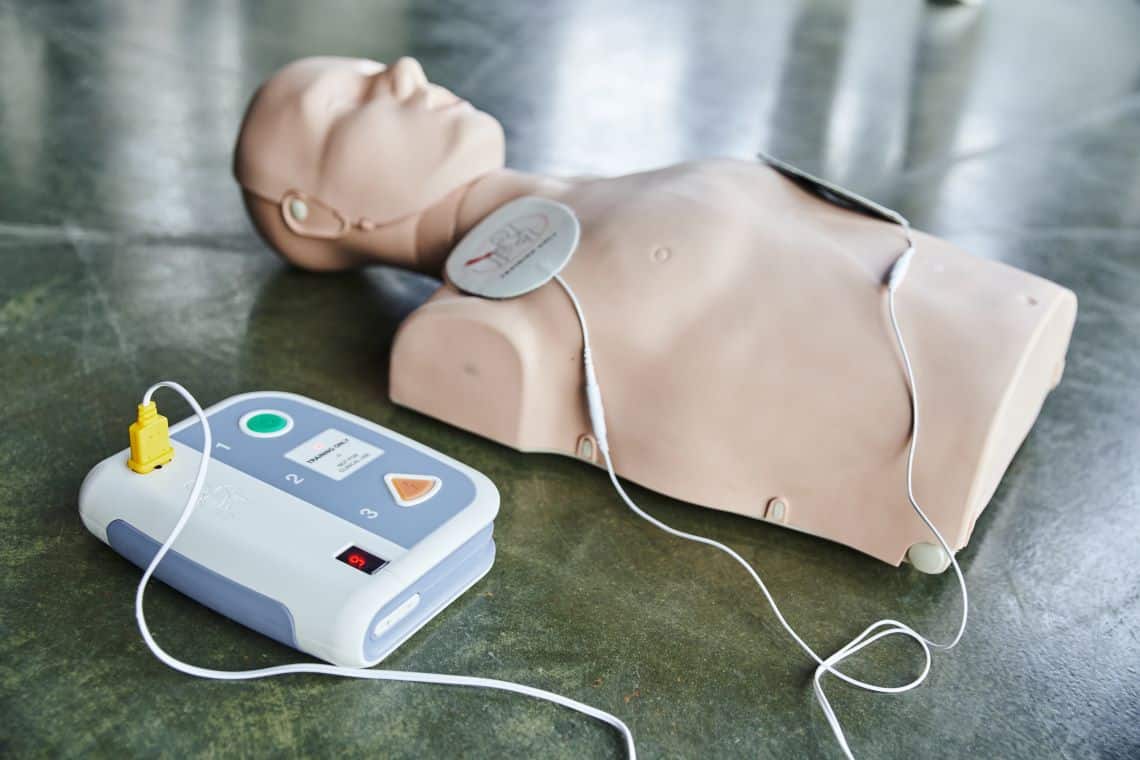
An Automated External Defibrillator (AED) can greatly increase survival rates when used promptly in cases of sudden cardiac arrest alongside CPR and rescue breathing. AEDs are designed to be user-friendly, guiding you through the process with voice prompts and visual cues.
To use an AED effectively, follow these steps:
- Turn on the AED and follow its instructions.
- Expose the patient’s chest and attach the electrode pads.
- Allow the AED to analyse the heart rhythm.
- Deliver a shock if advised, ensuring no one is touching the patient.
CPR for Different Age Groups
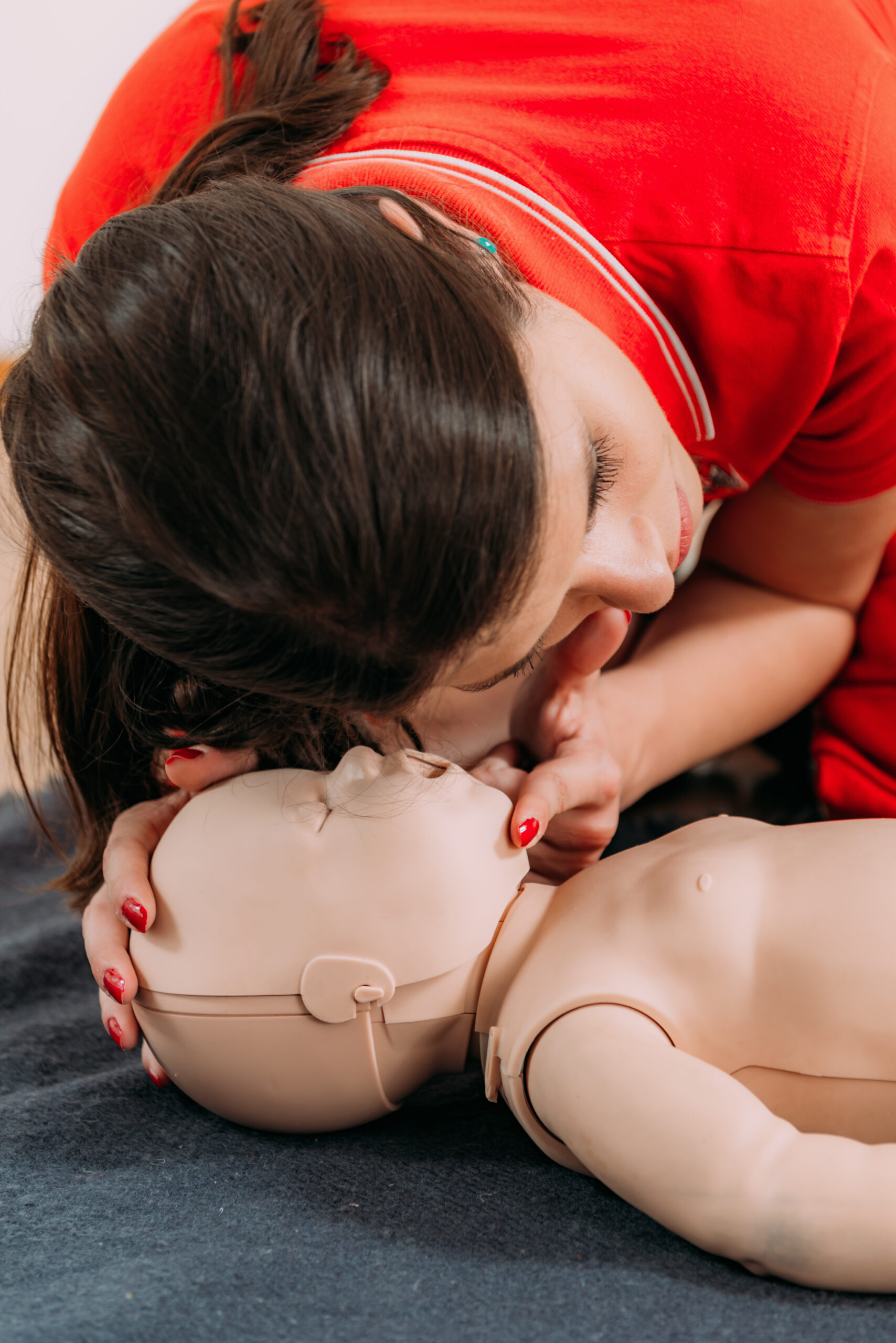
Performing CPR and rescue breathing correctly requires adjusting your technique based on the patient’s age group.
For adult CPR, use chest compressions at a rate of 100-120 per minute, pressing down at least 5 cm. Use the heel of one hand with the other hand on top, interlocking your fingers.
For child CPR (ages 1-8), use similar techniques but with less force. Use one or two hands depending on the child’s size, compressing about 5 cm deep. The compression rate remains the same as for adults.
Infant CPR (under 1 year) requires a gentler approach. Use two fingers to compress the chest about 4 cm deep, maintaining the same rate as for adults and children. Place your fingers just below the nipple line.
For all age groups, perform rescue breaths after every 30 compressions. Remember to adjust your technique and force according to the patient’s age and size to guarantee effective CPR First Aid.
Common CPR Mistakes to Avoid
To guarantee effective CPR and rescue breathing, you’ll need to avoid several common mistakes that can reduce its efficacy or potentially harm the patient. Many individuals, even those with CPR skills, may fall prey to common misconceptions during high-stress situations.
Here are four critical errors to avoid:
- Incorrect hand placement: Position your hands in the centre of the chest, not too low or too high.
- Shallow compressions: Push hard and deep, aiming for at least 5 cm (2 inches) of chest depression.
- Slow compression rate: Maintain a pace of 100-120 compressions per minute.
- Inadequate recoil: Allow the chest to fully return to its original position between compressions.
Additionally, avoid excessive ventilation, as it can decrease blood flow to the heart and brain. When performing rescue breaths, deliver them slowly over one second each.
Frequently Asked Questions
Can I perform CPR if I've never been formally trained?
Yes, untrained individuals should still attempt hands-only CPR and rescue breathing (though if uncomfortable with rescue breaths, chest compressions alone are better than nothing) while waiting for professional help. It’s better to try than to do nothing at all. Simply push hard and fast in the centre of the chest at a rate of 100-120 compressions per minute.
How long should I continue performing CPR?
Continue CPR and rescue breathing until emergency medical services arrive and take over, the person shows signs of life, another trained person takes over, or you become too exhausted to continue. High-quality CPR can maintain blood flow to vital organs for extended periods.
Is it safe to use an AED on someone with a pacemaker or in wet conditions?
Yes, AEDs are designed to be used safely on individuals with pacemakers—just avoid placing the pads directly over visible implants. In wet conditions, quickly dry the person’s chest before applying the pads. Modern AEDs have safety features to address these scenarios and will provide appropriate guidance through voice prompts. Remember to resume CPR and rescue breathing as guided by the AED.