


A European wasp sting can cause anything from sharp localised pain to a life-threatening allergic reaction such as anaphylaxis. In Australia, where the European wasp (Vespula germanica) is an invasive pest without natural predators, stings are a growing public health concern. Understanding the symptoms, risks, and correct first aid for bites and stings from this insect is vital for safety — whether at home, outdoors, or in the workplace.
Enrol your team in a nationally recognised First Aid training course with First Aid Pro today to ensure you can respond effectively to wasp stings, bee stings, ant stings, and other bites or stings.
Key Takeaways
- The European wasp (Vespula germanica) is an invasive pest in Australia, capable of stinging multiple times and posing serious health risks.
- Wasp stings can cause local pain and swelling or trigger a severe allergic reaction such as anaphylaxis.
- First aid includes moving to safety, cleaning the sting site, applying a cold pack, taking an antihistamine, and calling 000 for severe symptoms.
- Anaphylaxis requires immediate use of an adrenaline autoinjector (EpiPen) and urgent medical attention.
- Only a licensed pest control operator should remove a wasp nest to reduce the risk of multiple stings.
- Prevent stings by securing food and drink outdoors, wearing protective clothing, and checking for wasp nests regularly.
- Report European wasp nests to your state or territory biosecurity agency for safe removal.
What Is the European Wasp?
The European wasp (Vespula germanica), also called the German wasp or German yellowjacket, is a social insect native to Europe, North Africa, and parts of Asia. It has established itself in many other regions including Australia, New Zealand, South America, South Africa, and North America.
It has no natural predators in Australia, allowing its population to grow rapidly.
In summary, the European wasp is a highly successful invasive species and a significant pest in many regions worldwide due to its aggressive behavior, adaptability, and attraction to human food and environments.
Identification
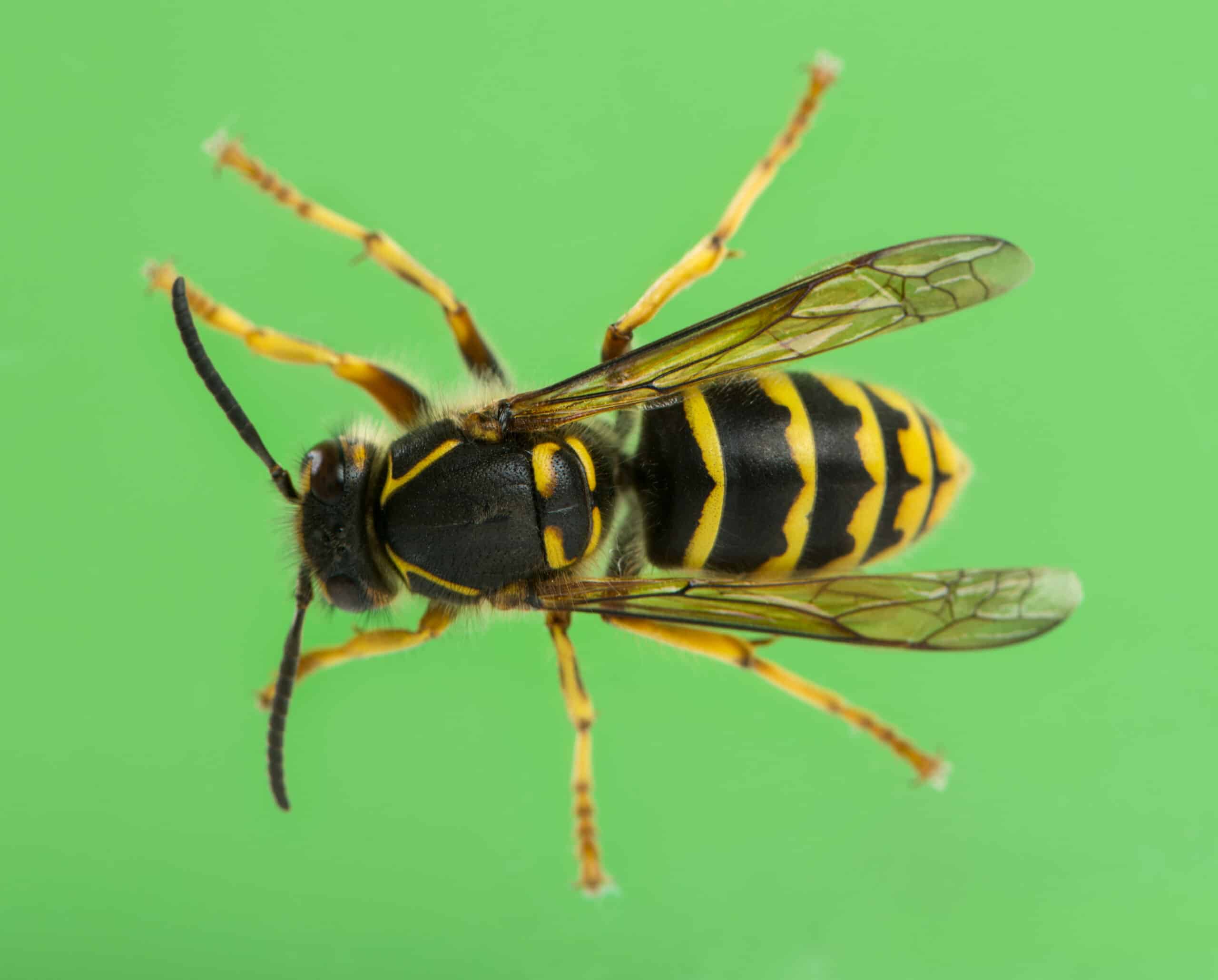
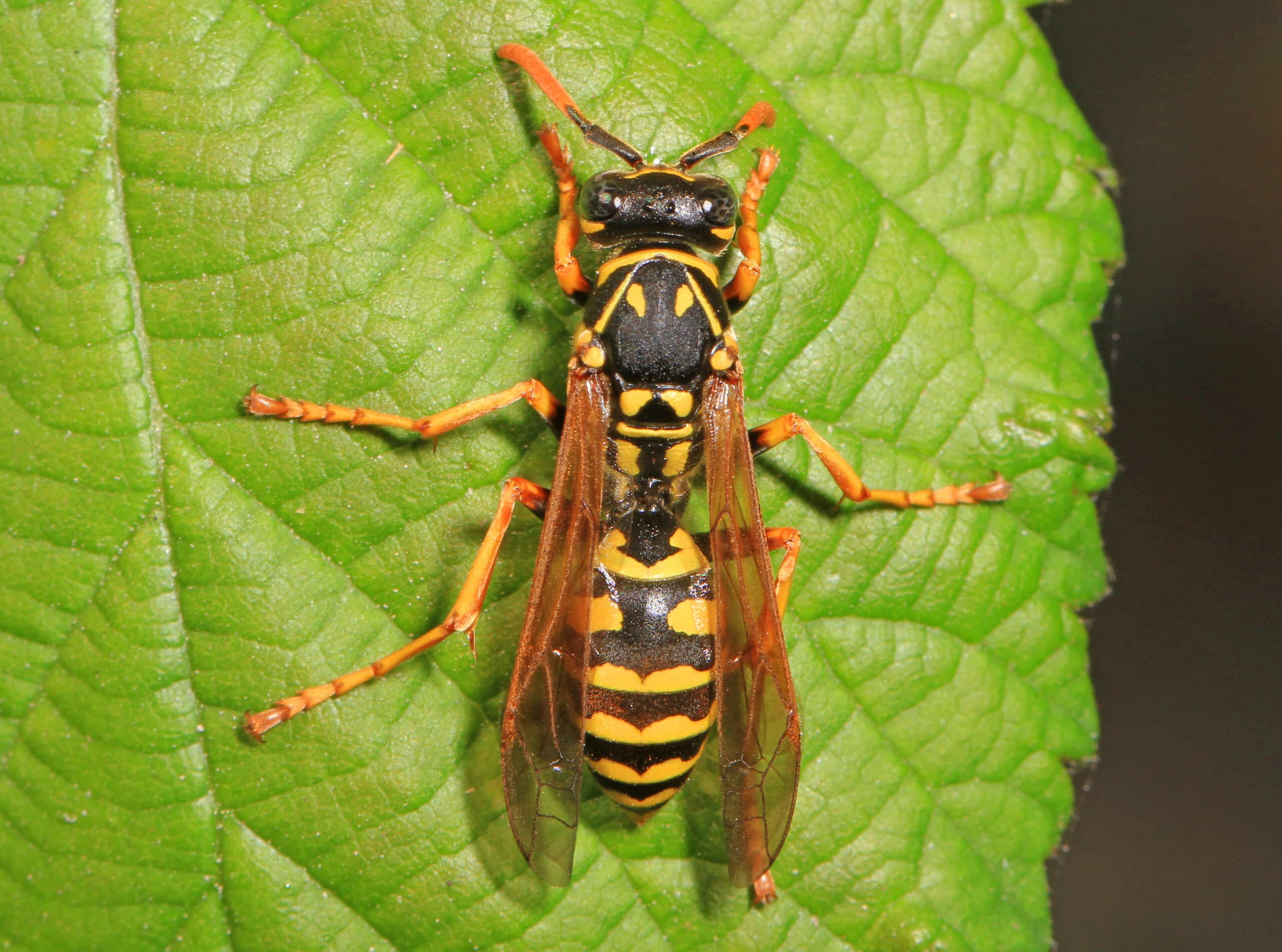
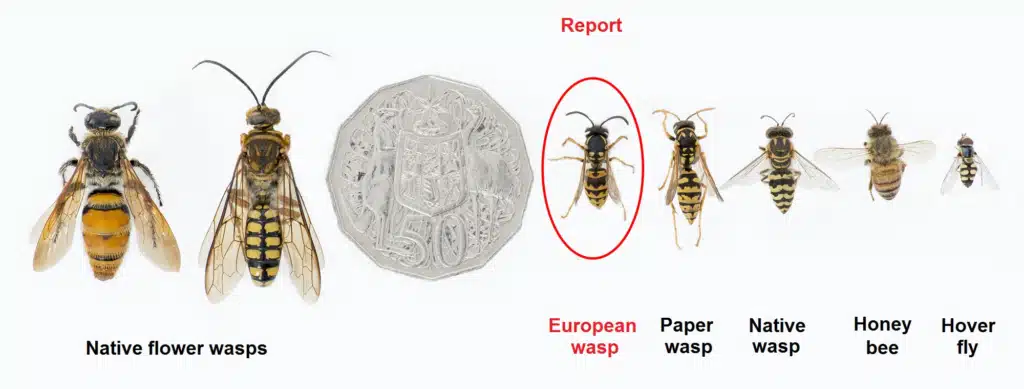
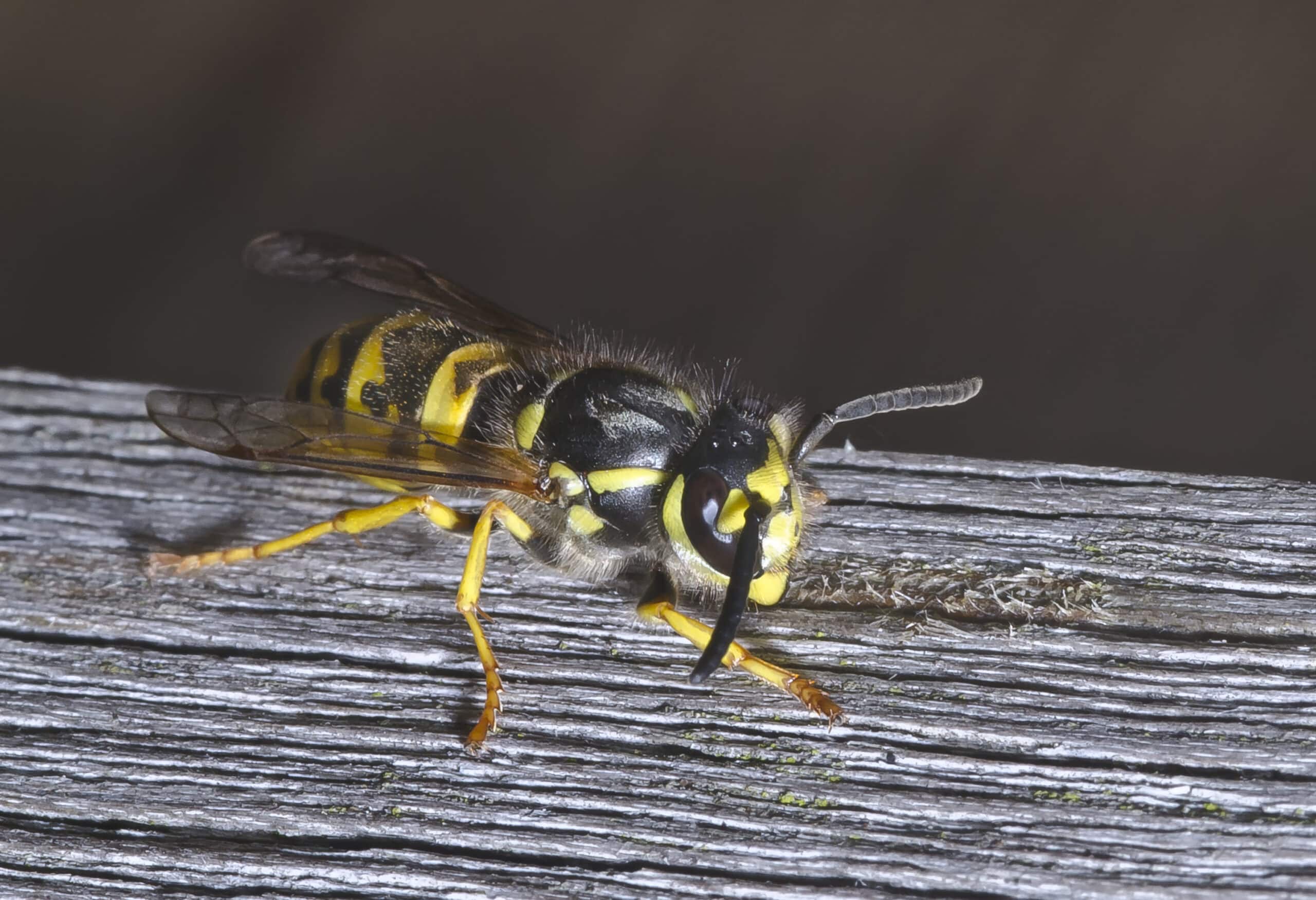
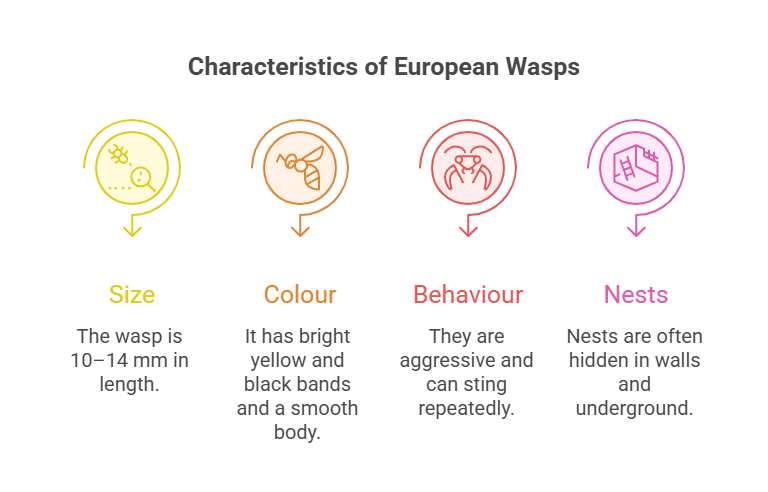
- Appearance: Similar in size to a bee (12–16mm for workers, up to 20mm for queens), bright yellow with black triangle-shaped markings on the abdomen, yellow legs, and two long black antennae.
- Wings: Clear, with the first pair larger; wings are held folded when at rest.
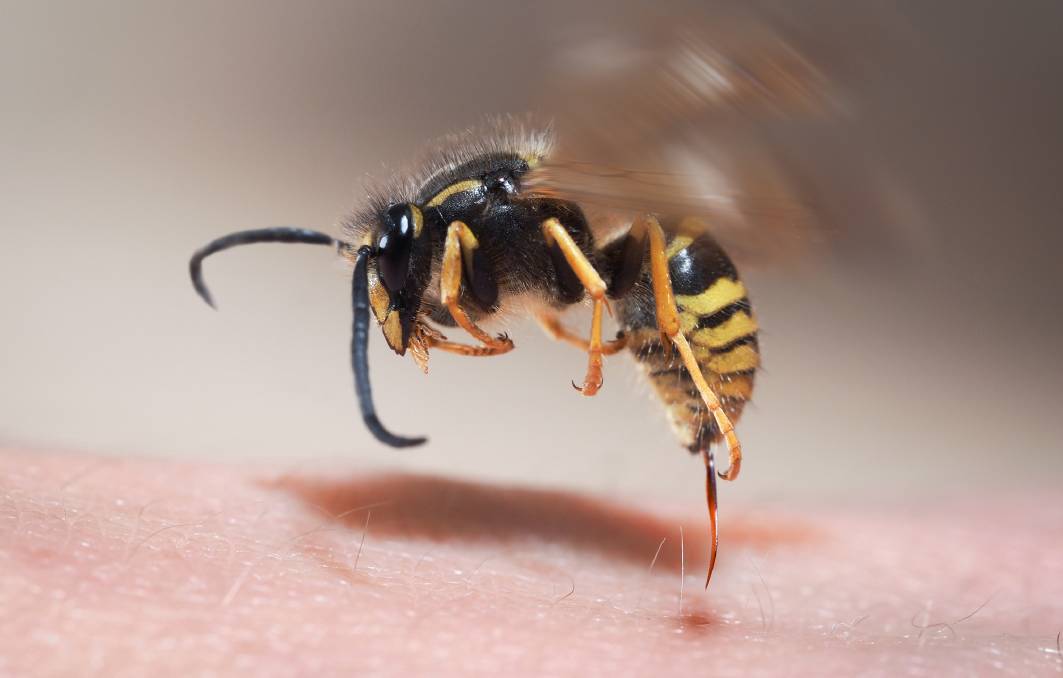
- Behaviour: Flies with its legs held close to its body (not dangling), can sting multiple times, and emits a scent to alert other wasps during an attack.
Below: A German wasp (Vespula germanica) rasping wood to build its nest
Habitat and Distribution
- Native to Europe, North Africa, and Asia Minor.
- Widely established in Australia (since 1959), particularly in southern states and metropolitan areas.
- Found in urban, suburban, and rural environments, often close to human activity.
Life Cycle
- Colony is started by a fertilised queen in spring.
- Larvae hatch from eggs and are tended by the queen until the first workers emerge.
- Workers expand the nest and collect food through spring and summer.
- In autumn, the colony produces new queens and males, which then mate and disperse to start new nests.
Diet and Behaviour
- Attracted to a variety of food sources including meats, sweet foods, sugary drinks, and fruit—making them a common nuisance at picnics, barbecues, and when eating outdoors.
- Scavengers that will also feed on insects, pet food, and carrion.
- Often enter homes or commercial venues in search of food.
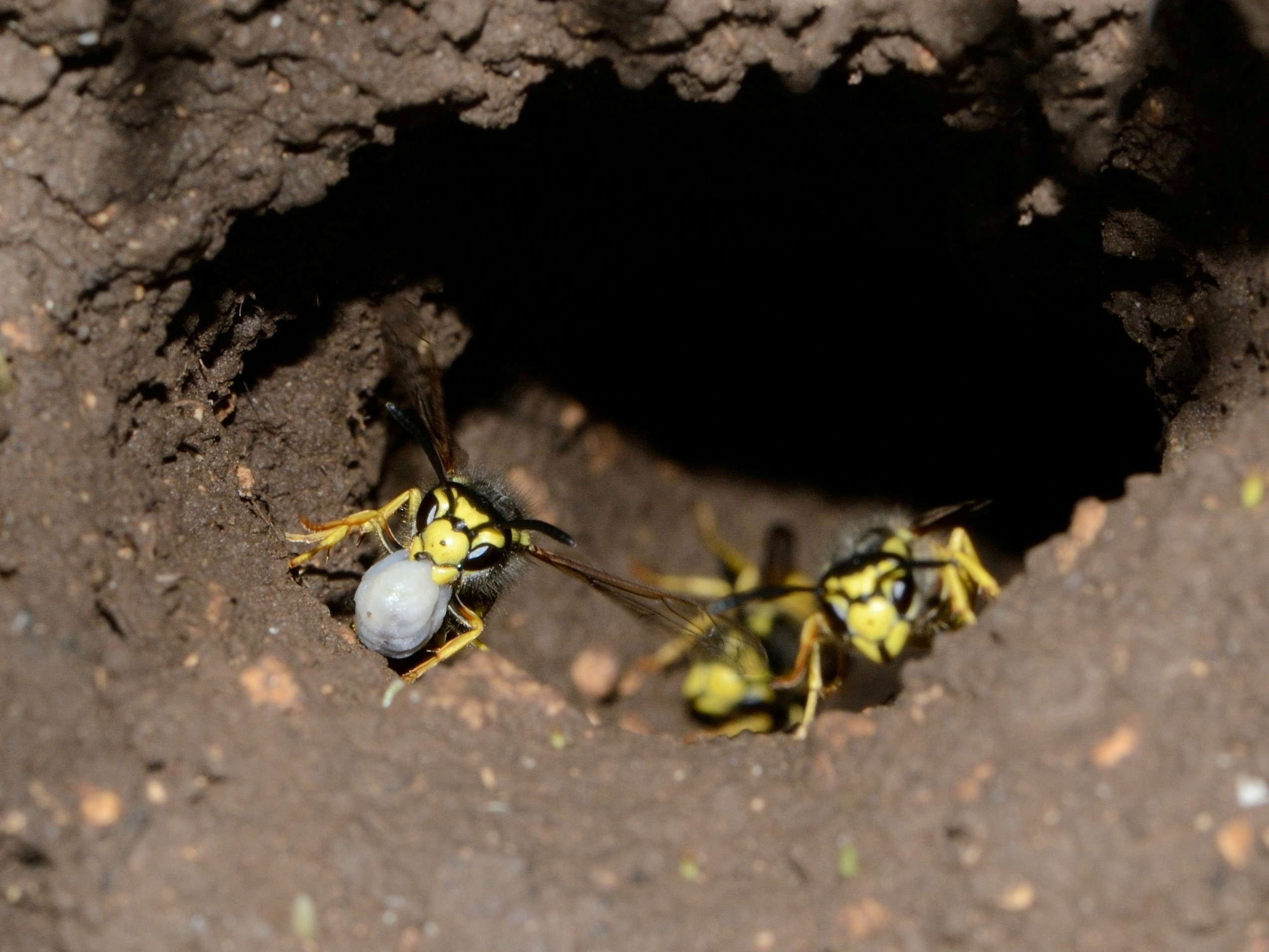
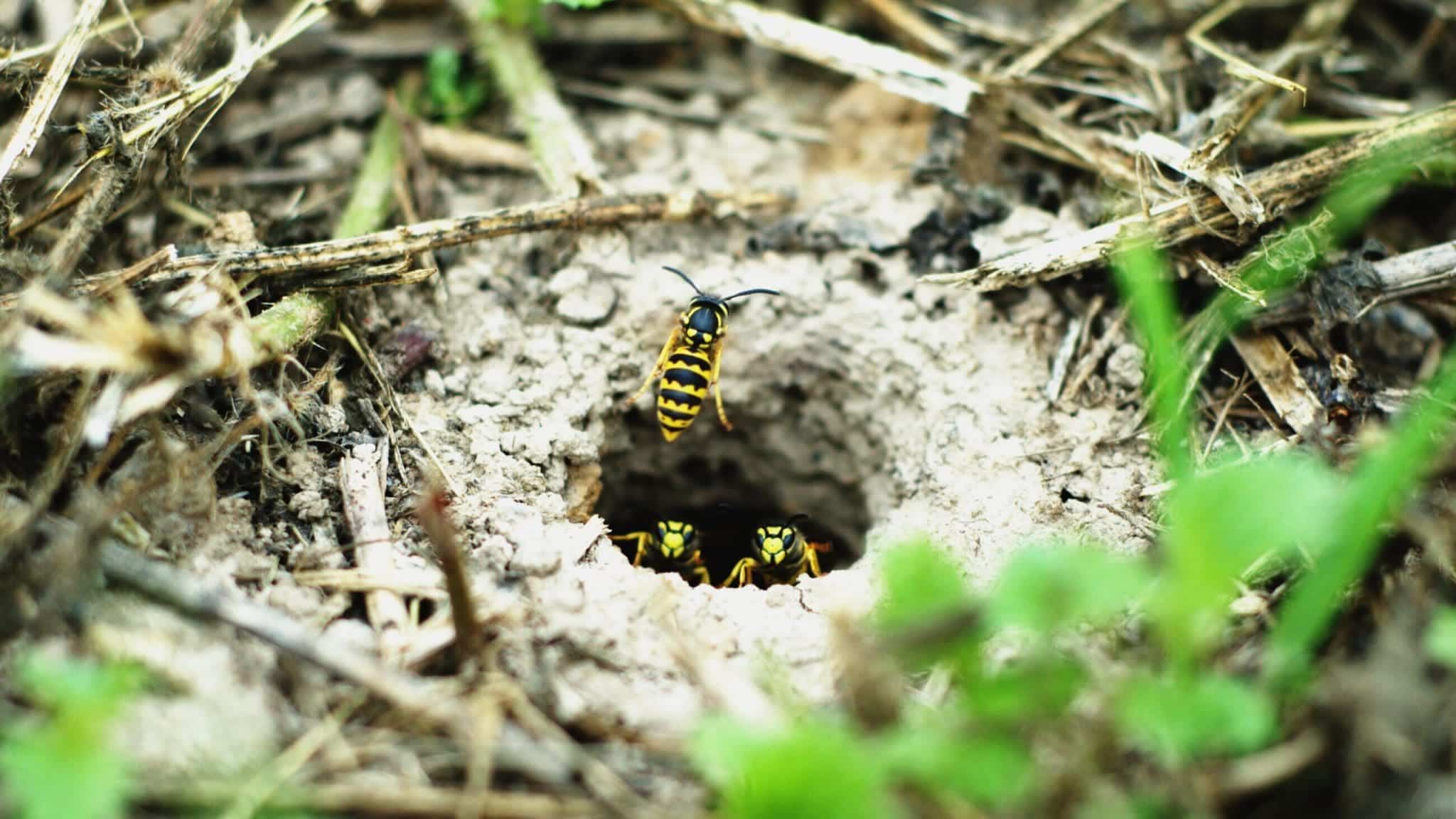
Below: Two Vespula germanica worker wasps at a ground nest entrance, one holding a white spherical object
Risks and Pest Status
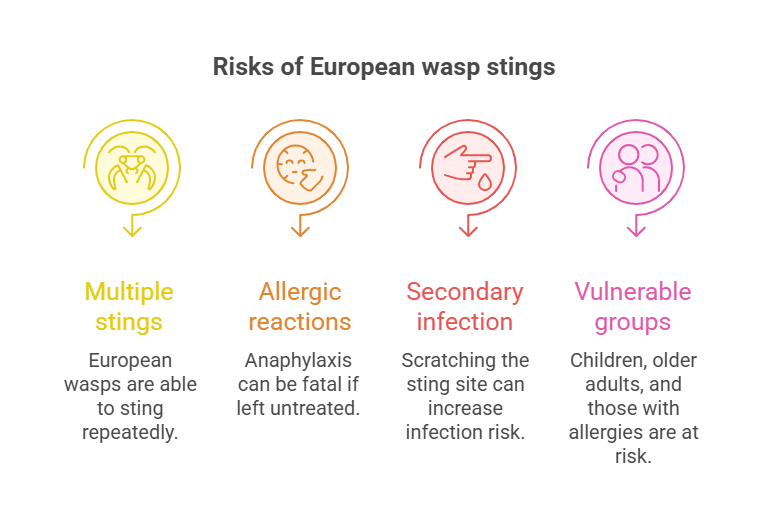
- Can deliver multiple painful stings, with stings causing burning pain, swelling, redness, and sometimes allergic reactions.
- They are considered more aggressive than native wasps, especially if their nest is threatened.
- Notably problematic in Australia due to the lack of natural predators and favorable weather conditions allowing even larger nests to persist through winter.
European Wasp vs Bee – Key Differences
Feature | European Wasp | Bee |
Sting behaviour | Can sting multiple times | Stings once; leaves stinger behind |
Body | Smooth, shiny | Hairy, pollen-carrying hairs |
Aggression | Highly aggressive when provoked | Generally defensive |
Nest location | Ground, wall cavities, roofs | Hives in trees or man-made boxes |
Diet | Insects, meat, sugary foods/drinks | Nectar, pollen |
| Reaction Type | Symptoms |
|---|---|
| Local Reactions (Less Severe Stings) |
|
| Severe Allergic Reactions (Anaphylaxis) |
A severe allergic reaction (anaphylaxis) is a medical emergency. Symptoms may include:
|
Comparing Local and Severe Symptoms
Reaction Type | Symptoms | Urgency |
Local reaction | Pain, swelling, redness at sting site | Self-care possible |
Severe allergic | Difficulty breathing, swelling of airway, collapse | Immediate 000 call |
First Aid for a European Wasp Sting
Step-by-Step Treatment
Move to safety
Away from the wasp nest or swarm.
DRSABCD
Check Danger, Response, Send for help, Airway, Breathing, CPR, Defibrillation if required.
Clean the sting site
Gently with soap and water.
Apply a cold pack
Wrapped in cloth for 10–15 minutes to reduce pain and swelling.
Take an antihistamine
To reduce swelling and itching if appropriate.
Severe allergic reaction
If the person shows signs of a severe allergic reaction, use an adrenaline autoinjector (EpiPen) and call 000.
EMERGENCY ACTION REQUIREDMonitor and wait
Keep the person still and monitor their condition until help arrives.
→ Don’t wait until an emergency happens — enrol now in a First Aid Pro course and learn hands-on first aid techniques for insect stings, bites, and anaphylaxis.
Wasp Nests and Pest Control
Control
- The best way to control European wasps is by locating and eradicating the nest using an approved insecticide.
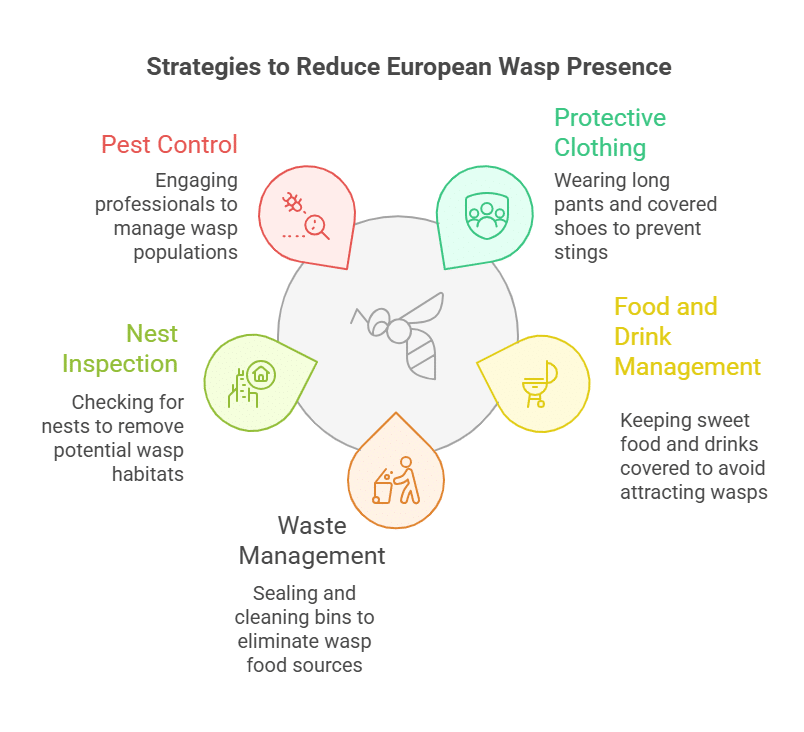
- Preventative measures include securing food sources, covering rubbish bins, and feeding pets indoors during wasp season.
Identifying European Wasp Nests
- Paper-like structure
- Often hidden underground, in roof spaces, or wall cavities
- Can contain thousands of wasps
Safe Removal
- Only a licensed pest control operator should remove nests
- Never attempt removal yourself — risk of multiple stings
Reporting European Wasp Nests by State
State/Territory | Reporting Contact |
VIC | Agriculture Victoria hotline |
WA | DPIRD Pest and Disease Information Service |
NSW | NSW Department of Primary Industries |
SA | Biosecurity SA |
QLD | Biosecurity Queensland |
Allergies to Bites and Stings
Some people develop allergies to bites and stings over time, with reactions worsening on future stings. If you’ve experienced a severe allergic reaction, always carry an EpiPen and wear medical alert identification.
The European wasp is more than a nuisance
This pest has become an increasing problem in Australia and a real health hazard. Understanding the risks of stings, recognising symptoms of allergic reaction, and knowing effective treatment techniques are essential for protecting yourself and others.
→ Enrol in a nationally recognised First Aid course with First Aid Pro and gain the skills to treat wasp stings, bee stings, ant stings, and other emergencies with confidence.
References
- Better Health Channel – Insect Bites and Stings First Aid
- Healthdirect – Anaphylaxis First Aid
- Department of Health Victoria – European Wasp Pest Management