



Sharon has 21+ years of experience as a qualified Emergency Care Nurse registered with the Australian Health Practitioner Regulation Agency (APHRA) and 12+ years as a First Aid Trainer.
She takes pride in FirstAidPro making first aid training available, comprehensive and affordable to everybody.
Fire ants are a species of insect that’s only just beginning to appear on Australian soil, but it comes with a notorious and terrifying reputation. Since their introduction in 1933, fire ants have spread aggressively in the US and now are estimated to cause billions of dollars in damage and sting around 14 million people every year.
It’s no wonder that since they were first discovered in Australia, the government has invested at least $185 in eradicating them.
But exactly what are fire ants, and why are they such a menace? Let’s find out a little about one of the world’s most invasive – and most studied – insects.
What Are Fire Ants?
The name fire ants actually applies to a number of species of stinging ant found in various parts of the world. But, when people simply refer to “fire ants”, they’re normally referring to the species normally known as the red imported fire ant or RIFA – known to scientists as Solenopsis invicta. These are a species originally from the central region of South America, that in recent years have spread (probably in cargo ships) to many other countries, including The United States, New Zealand and many Asian and Caribbean countries. These are the fire ants Australia is currently investing millions to get rid of.
Scientists regard red imported fire ants as one of the worst invasive species in the world. Although many nations have spent millions trying to eradicate red imported fire ants Australia is the only country to have had any success.
Fire Ants VS Red Ants
The name conventions for fire ants can be a little confusing. The red imported fire ant is the most notorious and significant species to use the name. But it’s worth knowing that there are many ant species are referred to as “fire ants” or “red ants” which bear little relation to the red imported fire ant. These names often vary from country to country. For example, the weaver ant and electric ant are both referred to as “fire ants”. Likewise, the term “red ant” can also refer to the red harvester ant and the common red ant. None of these species are closely related to the red imported fire ant.
However, the red imported fire ant attracts particular attention due to the damage it inflicts and how aggressively it has spread through other countries when accidentally imported. This means it gets more than its fair share of attention. It’s also why searching for “red ant” or “fire ant” on google will generally give you information on red imported fire ants.
Why Are Fire Ants Bad?
 In countries where they’ve taken root, red imported fire ants are viewed as a notorious pest that costs millions every year (billions, in some cases). They thrive in urban environments, making nests in populated areas. Fire ants sting readily and aggressively. They attack livestock and have been known to kill smaller animals – particularly sick or weak animals – and have caused many human deaths. They damage crops, equipment, and infrastructure. They’re also attracted to electrical fields and can chew through electrical insulation, causing shorts and potential fires.
RIFA are robust and hard to eradicate. They can survive major natural disasters such as floods, and scientists have observed them clumping together into large floating “rafts” made entirely of ants.
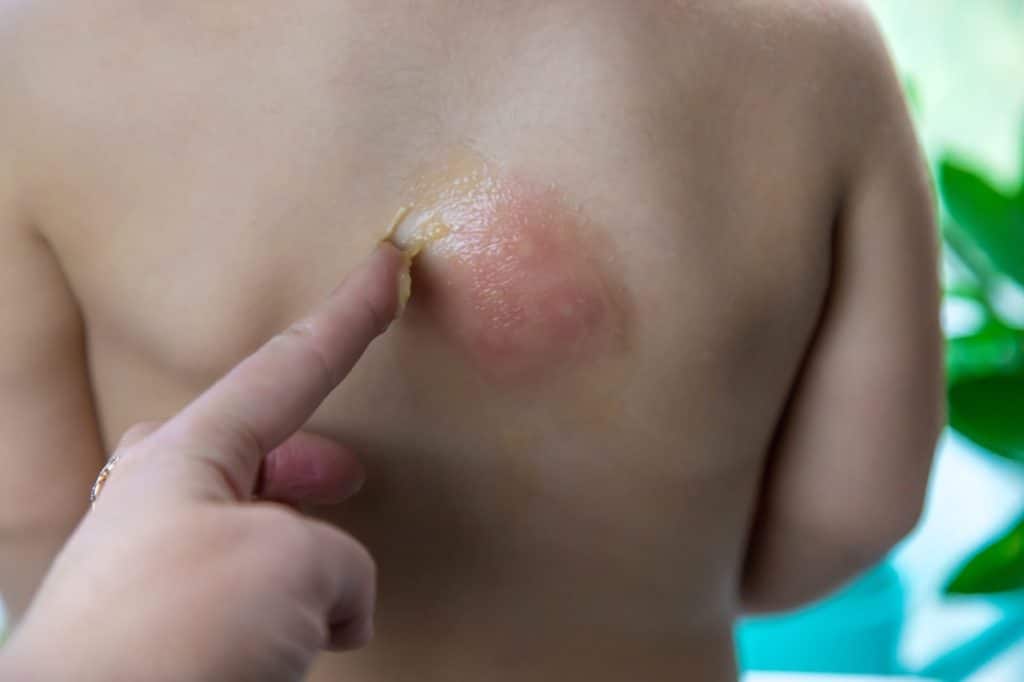
The sting of a RIFA is painful, often described as a burning sensation (hence the name). They commonly cause small sores – rather like small pimples – which are prone to infection and can cause scarring.
In areas where they’re common, it’s estimated that 30%-60% of the local human population will be stung by fire ants each year.
What Do Fire Ants Look Like?
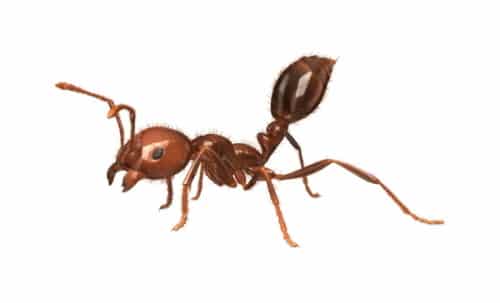
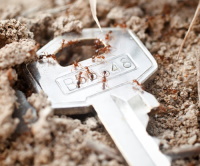 Red imported fire ants workers are similar in size and shape to common black ants (although they can be even smaller). They’re red or copper-brown in colour (often tinged with yellow) with a darker brown or black abdomen. Breeding males are considerably larger, black in colour, and winged.
Queen Fire Ants
The queens can be many times the size of a worker. They have the same reddish colour, although their abdomen is generally striped. If encountered outside the nest, the queen will generally be winged, and they are sometimes mistaken for wasps. The queen will normally (although not always) cut off her wings once she’s established herself in a nest.
Are A Fire Ant’s Bites Dangerous?
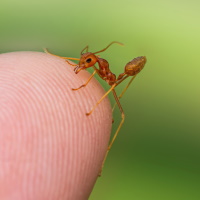 Although Fire ants do bite, it’s not the bite that’s dangerous, but their sting.
Fire ants stings can be painful, but they’re generally not life-threatening. Although they have been responsible for more than 80 deaths, these were almost always the result of an Anaphylactic reaction – the most severe form of allergic reaction. As such, the main thing to watch for when someone has been stung is signs of anaphylaxis.
The only complicating factor here is that RIFA stings can actually make someone more allergic – particularly if someone is stung many times. Take particular care if someone has been stung multiple times – it may be worth seeking medical attention just to be sure.
Fire Ants First Aid
If someone has been stung by fire ants, the first thing to do is remove the danger – in this case, that means getting well away from wherever the ants are. Don’t attempt to brush off the ants first – fire ants respond to this by biting down hard with their mandibles on their victim and will often become even more aggressive at that point. Once you’re clear of the other ants, you’ll need to pick them off one at a time.
When the ants are gone, the victim will probably be experiencing a severe burning, itching sensation around the stings. Washing the area with soap and water and applying a cold compress can help ease symptoms, as can medication such as antihistamines. Most importantly, observe the person for any signs of anaphylaxis – such as a swollen tongue or throat, or trouble breathing.
If the person is showing Anaphylactic symptoms, you should seek medical help immediately. This might mean seeking out someone with first aid training – they’ll have a firm grounding in recognising and responding to anaphylaxis. They’ll also know how and when to administer adrenaline, if it’s available. If no medical help is close to hand, you may need to call 000 – Anaphylactic shock can be life-threatening.
If you have a family member or loved one who has a history of anaphylaxis, it might be a good idea to consider investing a day in proper first aid training, so you’ll know exactly how to respond to an Anaphylactic attack.
Report Fire Ants
 Currently, fire ants are mostly restricted to a small part of Australia (around Brisbane), and are being aggressively eradicated by the government. However, there have been sightings in other regions. Given the damage they cause in other countries, no one wants them to take root here, and Australia is investing millions of dollars in getting rid of them. If you encounter fire ants, you should report them to the government immediately.
Generally, fire ants nest on open areas such as lawns, pastures, or beside roads. They can also be found near or under other large objects – such as logs, rocks, or pavers. Fire ant nests appear like a small pile of disturbed soil – as though someone has dug up dirt from elsewhere and emptied it into the ground in a small pile. They often have no obvious entrances. When investigating such nests, gently poke the mound with a long stick and see what ants come out. Don’t get near the nest, as fire ants swarm aggressively when disturbed.
It’s important to do everything we can to avoid fire ants taking root in Australia. This is one species we don’t want!
You can find more information at the website of the National Fire Ant Eradication Program.