


Sharon has 21+ years of experience as a qualified Emergency Care Nurse registered with the Australian Health Practitioner Regulation Agency (APHRA) and 12+ years as a First Aid Trainer.
She takes pride in FirstAidPro making first aid training available, comprehensive and affordable to everybody.
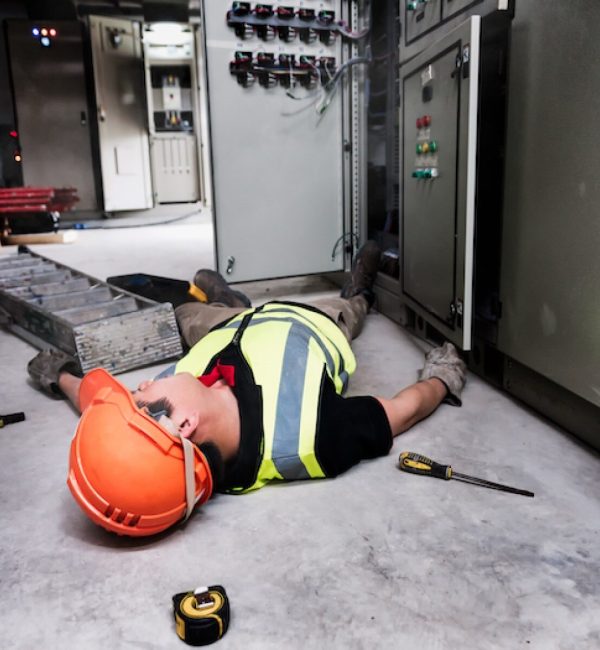
Having to attend to an unconscious person might feel a bit overwhelming, especially if you’re not familiar with first aid or how to handle medical emergencies. When someone’s unconscious, it’s like they are taking a nap in the middle of a conversation – totally unresponsive and unaware of what’s happening around them, leaving you feeling slightly left in the dark about what to do or how to handle the situation.
To top it off, you also need to understand if the person is breathing or not.
Unconscious and breathing: This generally means that the person is breathing on their own without conscious control.
Unconscious not breathing: Means that the person is not breathing on their own and requires immediate medical attention.
If you are faced with a medical emergency, dial triple zero (000) immediately and follow the guidance provided.
Recognising if a person is unconscious
Before a person suffers a loss of consciousness, you may notice that they experience excessive yawning, sweating, dizziness, changes in their vision and or their normal skin colour or they complain about being nauseas. This is because there is a lack of oxygen or blood flow to the brain.
Once a person has suffered a loss of consciousness, it is critical to evaluate if the person is breathing or not as this will determine the level of emergency medical care required.
Assess the person’s responsiveness by giving them simple commands such as, squeeze my hand or open your eyes.
A Good Practice Statement by ANZCOR Guidelines state, “A person who fails to respond or shows only a minor response, such as groaning without eye opening, should be managed as if unconscious”.
What causes a person to lose consciousness?
There are a number of common factors that may result in a person becoming unconscious:
- Heart and or circulation problem e.g. fainting, pounding or irregular heartbeat, cardiac arrest, chest pain
- Brain problems e.g. head injury, stroke, tumour, epilepsy, seizures
- Metabolic problems e.g. overdose, intoxication, low blood sugar
- Extreme exhaustion or dehydration
- Accidental drowning, and more
How to determine if you should perform CPR?
Understandably, there is often confusion from bystanders as to when CPR should be performed. This is crucial to know especially because the seconds and minutes matter most.
When a person is unconscious, not responding, not breathing, or does not have a pulse, that is when you would start CPR.
The process for determining when CPR is needed can be remembered by the acronym DRSABCD pronounced as “Doctors ABCD”, and is a series of steps that has been designed to assist someone in assessing the situation and state of the unconscious person and deciding how to proceed.
DRSABCD stands for:
- Danger – check around for danger and make sure that you and the injured person are safe
- Response – is the person responsive?
- Send – call 000, send for help
- Airway – Check the person’s airway is clear
- Breathing – Check to see if the person is breathing
- CPR – Start 30 chest compressions, followed by two rescue breaths
- Defibrillation – Use a defibrillator if one is available
What to do if a person is unconscious but breathing
Care of the airway overrides any injury, including the possibility of a spinal injury.
Gently tilt their head back and make sure nothing is obstructing their airway. Always remember that a person who has suffered a loss of consciousness must be handled carefully and you must make every effort to avoid any twisting or forward movement of the head and or the spine, to avoid further injury.
Placing someone who is unconscious but breathing and not suffering from other life-threatening illnesses or conditions in the recovery position is the safest way to keep them supported. Carefully roll the person on their side, re-position the person’s arm and knee closest to you by bending the arm diagonally across their chest, making sure that the elbow is bent, their hand is pressed down and reaching towards their opposite shoulder. The other arm should be straight out in front of them, palm facing upwards. Bend the knee closest to you in an upside-down ‘V’ shape at a 45-degree angle to their body. The bent knee will prevent the person from rolling onto their face.
You should only leave the person in the same position for approximately 30 minutes before you should roll them onto their other side, again placing them in the recovery position.
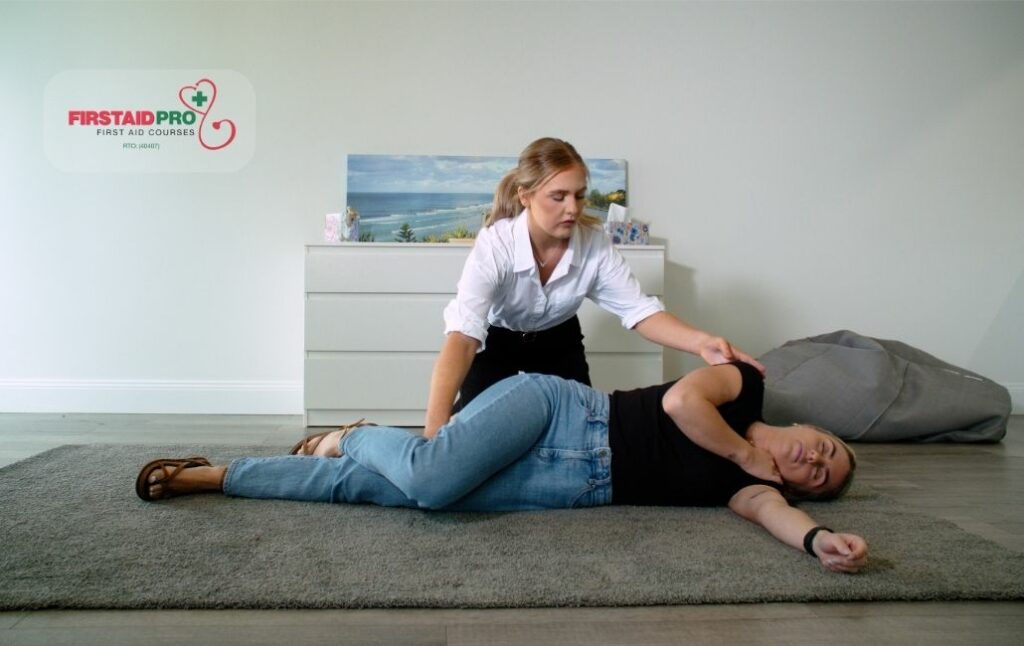
If the person is sitting in a chair, immediately assist them safely to the ground, placing them in the recovery position and checking the airway is clear. Do not leave the person sitting in a chair and do not put their head between their knees.
Gently tilt their head back to ensure that their airway remains open and respiration continues.
Remove any obstacles like glasses, or face coverings and remove anything bulky from their pockets.
Make sure that you and the person are out of harms way and are in a safe environment while you wait for emergency medical help.
If you are dealing with an injured person who unconscious and is bleeding heavily, apply direct pressure to the affected area to promptly stop the bleeding. If you do not have disposable gloves, use an item of clothing to stop the bleeding to avoid severe blood loss.
Call emergency medical services.
Constantly re-check the person’s condition for any change.
Stay with the person until emergency services arrive.
If the person regains consciousness before medical help arrives, stay with the person and explain to them what happened. Keep them calm, and let them know that medical help is on the way.
If a person is unconscious and not breathing
If you encounter a person who has suffered a loss of consciousness, is not responding, and not breathing, follow DRSABCD and begin CPR.
This is the time where the years of CPR training and refresher courses kick in and you now have an opportunity to save a life.
If you have never had CPR training before and have only seem it being done on your favorite medical T.V shows, don’t panic! You can still save a life.
To start cardiopulmonary resuscitation you must make sure that the person’s airway is open and there are no obstructions. Do this by opening their mouth and taking a look inside.
Make sure the person is lying on their back on the ground.
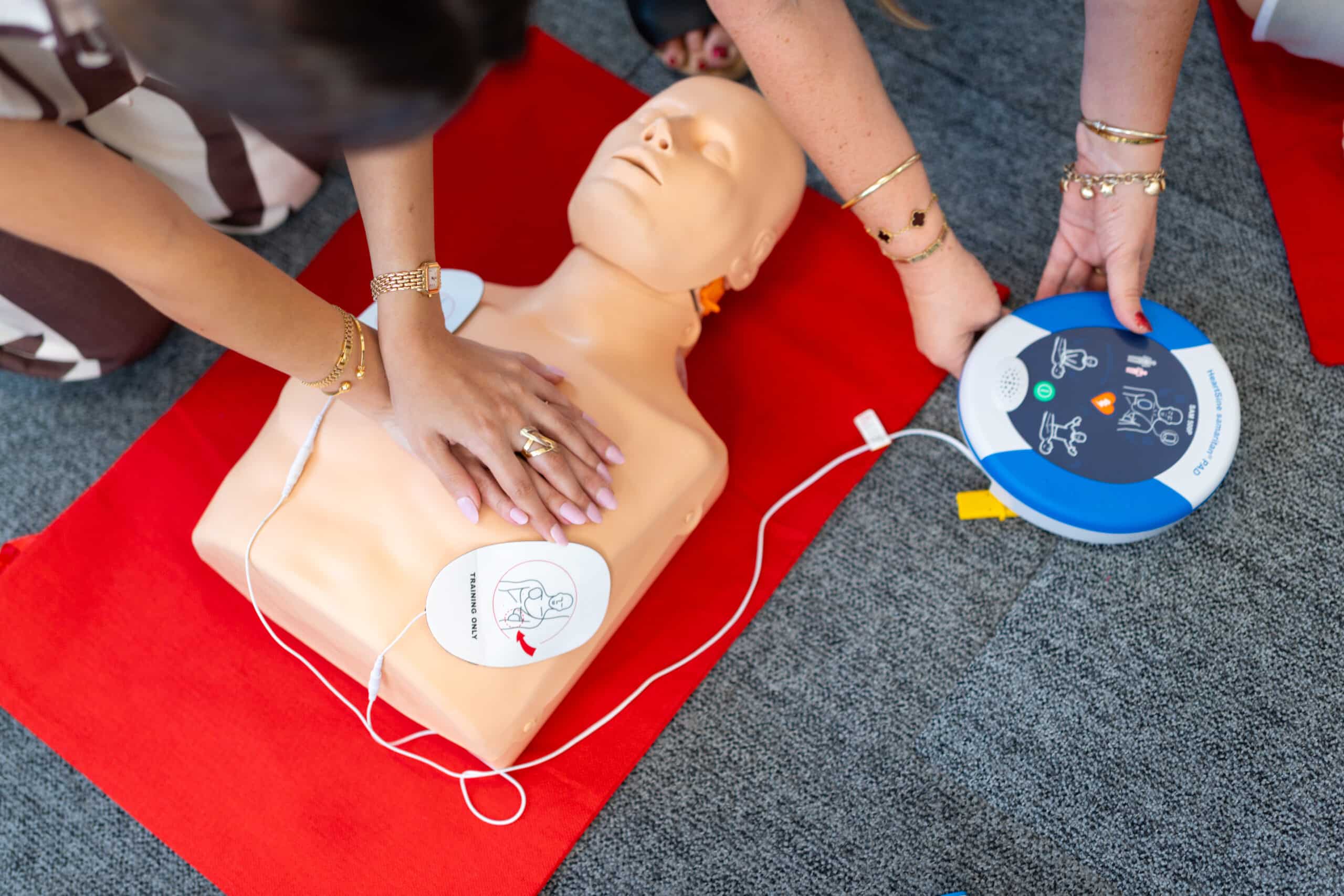
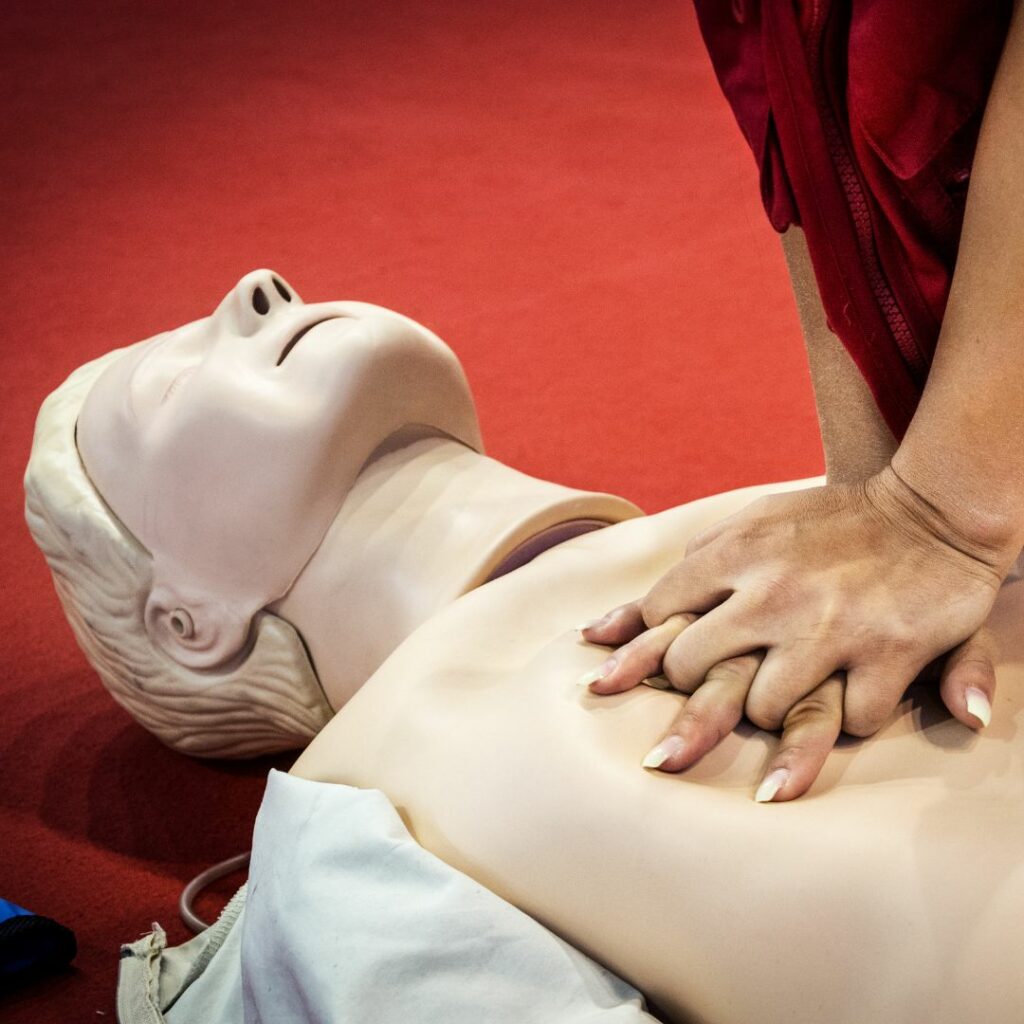
Start performing CPR. Use the weight of your upper body to start 30 chest compressions in a series of rapid pulses by placing one hand on-top of the other, interlocking the fingers and keeping the elbows straight. Following the chest compressions, you will need to give the person two rescue breaths.
You should not stop CPR until:
- The person begins to respond
- Medical emergency services arrive to take over
- When you’re too physically exhausted to continue
- The environment has become increasingly unsafe
- When someone has succumbed to their injuries and is dead
How to perform CPR if you don’t have a qualification
Rule 1 – Keep calm and Carry on.
The steps to performing CPR are relatively straightforward, just like how you see it in the movies – which is part of what makes it suitable for bystanders.
Keep in mind that to be fully prepared and equipped to use CPR to save lives, you should consider getting proper training in CPR. First Aid Pro’s HLTAID009 Provide cardiopulmonary resuscitation (CPR) is affordable, only takes two hours, and can be done on a weekend, or in your own time at your own pace.
You need to make sure that the person is lying down, head gently on the ground, on their back, and their airway open at all times.
Place one hand on the persons chest about armpit height, with the heel of your palm on their sternum (the bone down the middle of their chest), and place the other hand on top, interlocking the fingers. Get conformable because CPR can get tiring.
Use the weight of your upper body to push down on their chest. Don’t be afraid to use your full upper body weight as you are wanting to compress their chest around 5-6cm – and then release. Medical experts generally agree that using to much force and potentially breaking a rib is a lot better than dying.
This should be done in a series of steady rapid but consistent pulses. The American Heart Association notoriously suggested to do chest compressions while humming the song “Stayin’ Alive” by the Bee Gees because the song’s rhythm of 104 beats per minute is regarded as the ideal pace. Understandably not everyone knows “Stayin’ Alive” so feel free to try “Rock DJ” by Robbie Williams or “Sweet Thing” by Keith Urban.
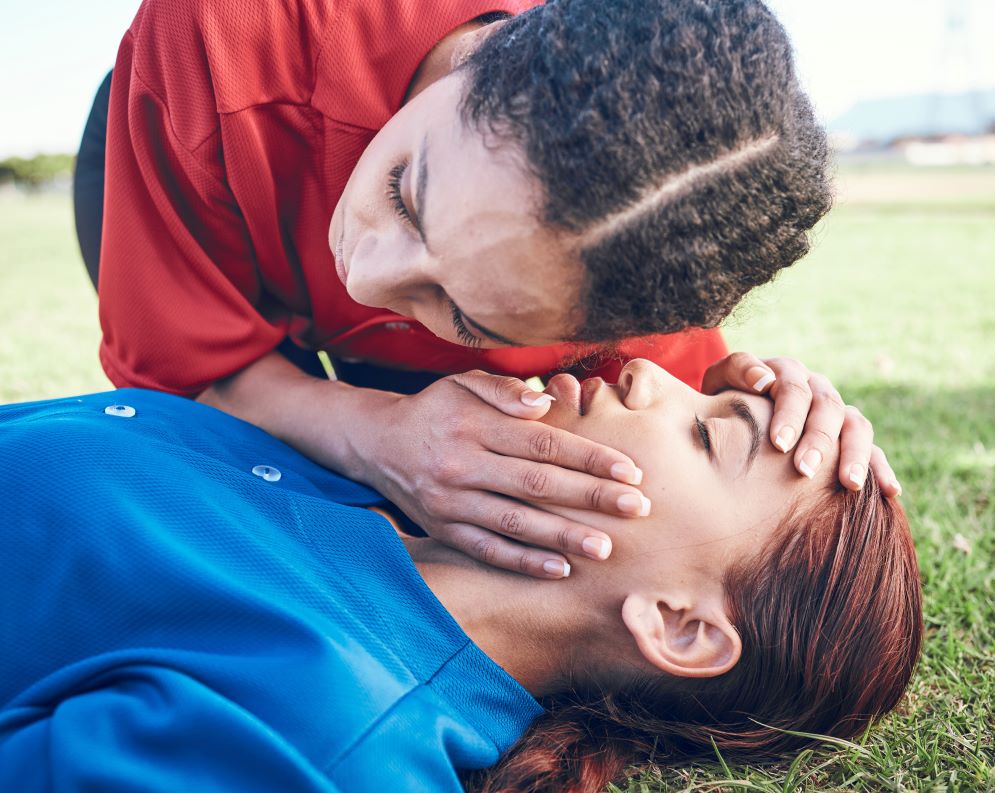
Once you have counted that you have done 30 chest compressions you will need to hold the person’s nose closed and blow two breaths, known as the “Kiss of Life” into the person’s open mouth before switching back to chest compressions. You do not have to do rescue breaths if you do not want to.
Repeat that pattern for as long as necessary and until emergency medical services arrive.
Enrolling in a First Aid Pro, CPR first aid training course
Enrol in HLTAID009 Provide cardiopulmonary resuscitation (CPR) Course with Same-Day Certificate.
First Aid Pro is a nationally registered training organisation, recognised as one of the most trusted agencies specialising in CPR and first aid training.
Offering accredited first aid course training programs and providing first aid training to thousands of parents, teachers, individuals, employees, and more, each year; The first aid trainers provide hands-on demonstrations that will teach you how to intervene in various medical emergencies. This practical training, delivered in a friendly, interactive, fun, and safe space, will empower you to step up as a first-aid responder when it matters most. This face-to-face CPR course is delivered in line with the Australian Resuscitation Council (ARC) and satisfies the Unit of Competency unit from the new HLT Health Training Package.