



Sharon has 21+ years of experience as a qualified Emergency Care Nurse registered with the Australian Health Practitioner Regulation Agency (APHRA) and 12+ years as a First Aid Trainer.
She takes pride in FirstAidPro making first aid training available, comprehensive and affordable to everybody.
Black widows are one of the most notorious species of spider. Less commonly known are false widow spiders.
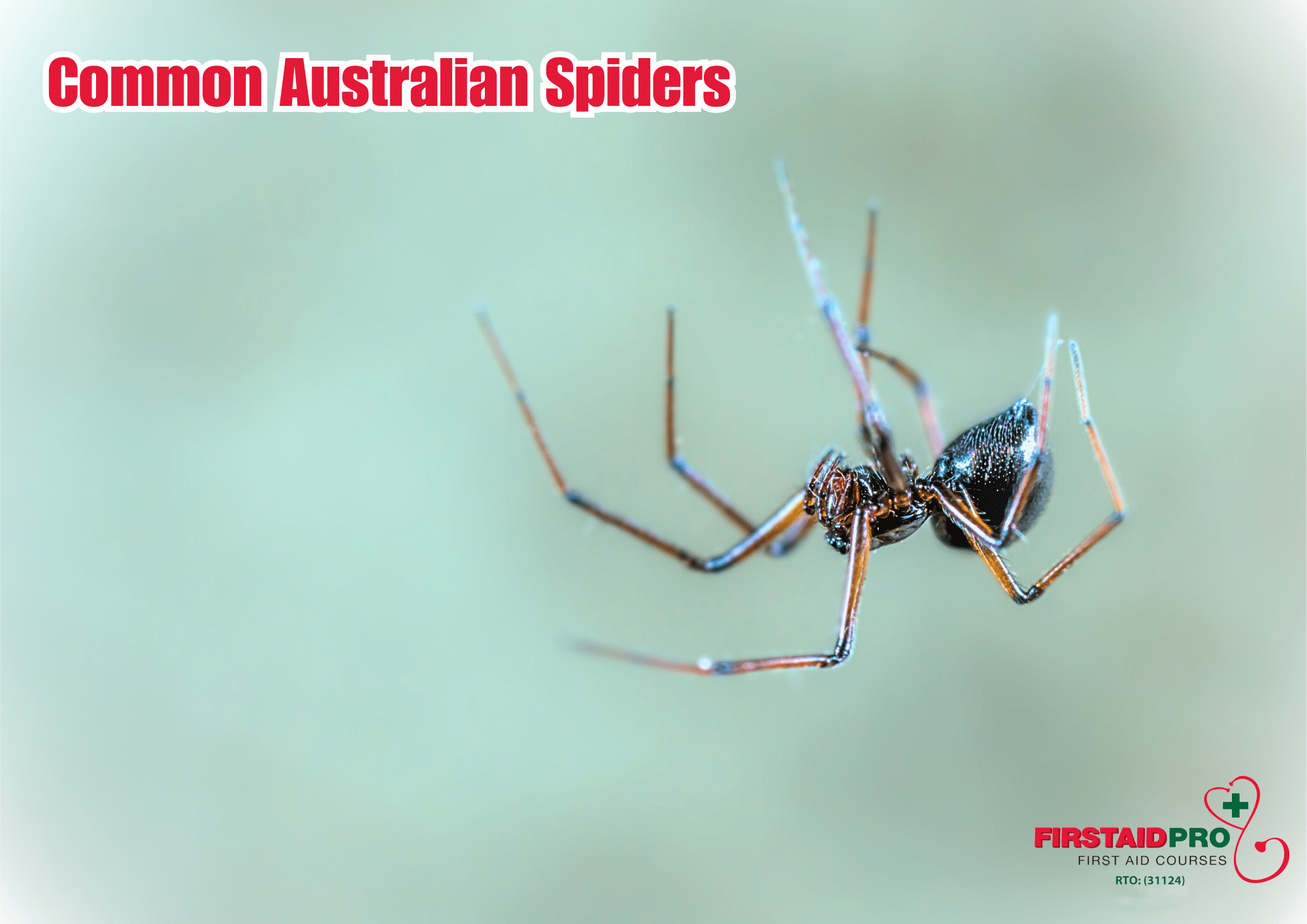
‘False widow’ isn’t the official terminology. It’s more of a nickname that applies to several spiders, all of which belong to the genus Steatoda Grossa, and all of which are frequently confused for black widows. False widows can be found all over the world in some form or another. In Australia, the most common example is the cupboard spider.
You can probably guess how these spiders earned their nickname. The false widow spider superficially resembles black widow spiders but with a few notable differences. Both are dark in colour and have a round, bulbous abdomen. However, they do not have the same distinctive markings as a widow.
If you’ve only ever heard of black widow spiders and this is your first time hearing of a false widow, then you probably have a lot of questions. Just how similar are they? Is a false widow just as dangerous as a black widow? And what other similarities and differences do they have?
How Dangerous are False Widow Spiders?
The simplest answer is: not very.
Although false widows are venomous, their venomous is not especially potent, thus they have a harmless bite when it comes to humans. When bitten, the most common and often the only symptom people will experience is pain around the area where the bite occurred. This pain normally only lasts for between one and twelve hours.
This comes in stark contrast to bites from black widows. While like a false widow’s, a black widow’s bite is often rarely more than a nuisance, however, some people will experience a severe response. The venomous bite of a black widow can lead to greater pain, something more akin to a burning sensation, and the area can turn red and swell. Bite marks may even be visible. Though rarely fatal, death is a potential occurrence from black widow bites, but this is mostly of concern to young children or the elderly.
What do Black Widows Look Like?
The term black widow applies to all spiders of the genus Latrodectus. While there are slight variations between the many species that fall into this category, a black widow spider in Australia can be distinguished by several defining features.
Female black widows are usually black and shiny, noted for the bright red hourglass pattern on their abdomens. Males are more of a brown or greyish colour, only having small red spots on their abdomen, as opposed to an hourglass.
What Does a False Widow Spider Look Like?
As their nickname suggests, a false widow spider superficially resembles a black widow. However, there are ways to distinguish between these two.
Both Steatoda Grossa and Latrodectus species of spider are dark in colour and range from purplish brown to shiny black depending on whether they’re male or female. However, false widows do not have the same distinct red hourglass shape but instead have small, spotty, light-coloured markings.
As with many spiders, male false widows are often smaller in body length than females. Both sexes are similarly coloured, but males are more likely to have light, reddish-coloured legs.
Where do Black Widows Live?
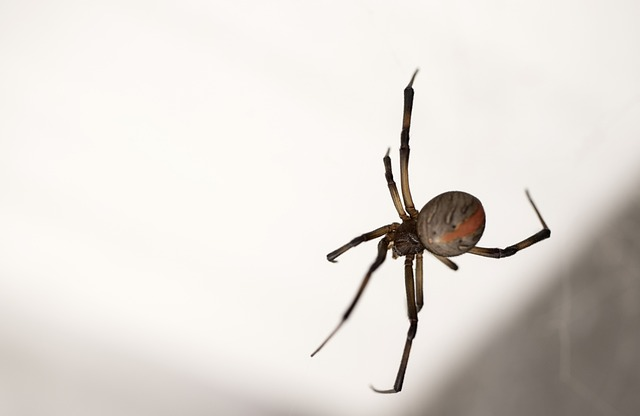
While still mostly harmless, black widows are of more concern than false widows. As such, it’s important to know where you are likely to encounter one, and this is also a way to help tell them apart from other spiders.
Black widows favour moist, outdoor areas with lots of vegetation and plenty of bugs for them to feed on. In Australia, this includes habitats ranging from dense bushland to drier regions and even suburban areas.
False Black Widow Habitat and Range
Habitat provides another stark contrast between false and black widows. Whereas widows prefer the outdoors, false widows prefer to make their homes inside human constructs like houses and other buildings. In some instances, false widows will make their homes outside and away from human habitation in places that resemble the dark indoor spaces suited to their very poor eyesight.
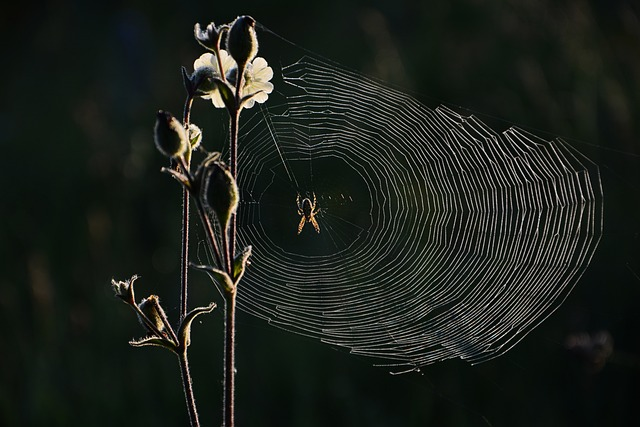
The most common examples of false widow found in Australia are the cupboard spider and the brown house spider. Both of these names give strong clues as to where they are most commonly found. Like other web weavers, they don’t like to jump, so they make their homes in places where their prey are most likely to stray into their web’s sticky silken fibers.
Spiders Commonly Mistaken for False Widows
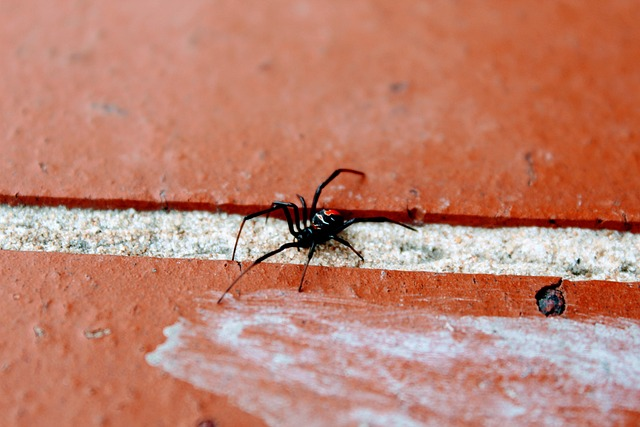
While false widow spiders are not something to be concerned about, they can be frequently confused for other species which should be. Mistaking a false widow for a black widow is fine, but getting it the other way around can lead to a more painful bite and worse consequences. There are plenty of other venomous spiders to be concerned about too, this is when it comes in handy to know the proper first aid for treating bites.
Black Widows
The most obvious spider a false widow can be confused with is a black widow and other members of the family Theridiidae. With their similar appearances and worse bite, it’s important to keep an eye out for the distinct, identifying markings.
Redback Spider
Nicknamed ‘the Australian black widow,’ Redback spiders are also members of the family Theridiidae and a related species of black widows. With their distinctive, namesake red backs, they can be mistaken for both their cousins, the black widows and the more loosely related false widows.
Brown Widow
A type of black widow and member of the genus Latrodectus Geometricus, these can be found all over the world, including in Australia. These also resemble black and false widows, however, as their name suggests, they are more brownish than black. Fortunately, brown widows are often just as harmless.
How Many Species of Black Widow Are There?
All up, there are a total of 34 different species of black widows which can be found throughout the world. Only two of these can be found in Australia, and both of these are easily identifiable; the Redback spider and the Brown Widow.
Should I Kill a False Black Widow?
Killing a false widow is not necessary. Their bites are not harmful to humans beyond the mild pain they can cause.
If spiders make you uncomfortable, they can be safely released outside. However, the best course of action is to leave it right where it is. False widows are like friendly housemates who eat bugs and other pests as their normal prey.
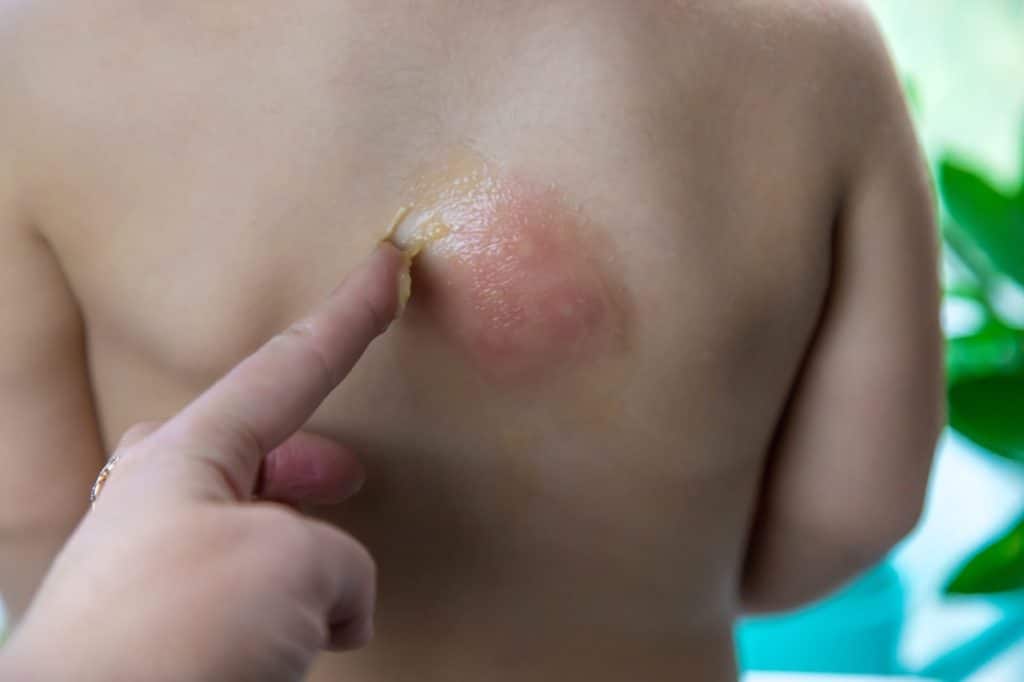
See this link for further information on spider bites and specifically “what does a spider bite look like“.