


A redback spider bite is a common concern across Australia, with the venomous Latrodectus hasseltii causing localised pain, sweating, and requiring specific first aid treatment that differs from other spider bites. These distinctive spiders, found throughout Australia, belong to the widow spider family and can cause a condition called latrodectism or envenomation. Understanding proper identification, symptoms, and first aid treatment is essential for anyone living in or visiting Australia.
Get Properly Trained: Don’t leave your family’s safety to chance. Enrol in a nationally recognised first aid course with First Aid Pro to learn life-saving skills including proper treatment for spider bites, anaphylaxis, and emergency resuscitation techniques. Book your course today.
Key Takeaways
Essential Information | Action Required |
Identify: Female redback has red or orange stripe on black body | Look for distinctive markings |
First Aid for Redback Spider Bite: Cold pack + wash with soap and water | DO NOT use pressure bandage |
Emergency Contacts: Triple Zero (000) or Poisons Information Centre 13 11 26 | Call if symptoms worsen |
High Risk: Children, elderly, pregnant women need immediate medical attention | Seek help quickly |
Pain Management: Can last hours to days, analgesia may be required | Monitor symptoms closely |
How to Identify a Redback Spider (Latrodectus hasseltii)
The redback spider is Australia’s most medically significant spider, responsible for thousands of reported bites annually. Unlike funnel-web spider bites, redback spider bites require different first aid approaches and should never be treated with pressure immobilisation bandages.
Female Redback Spider Identification Features
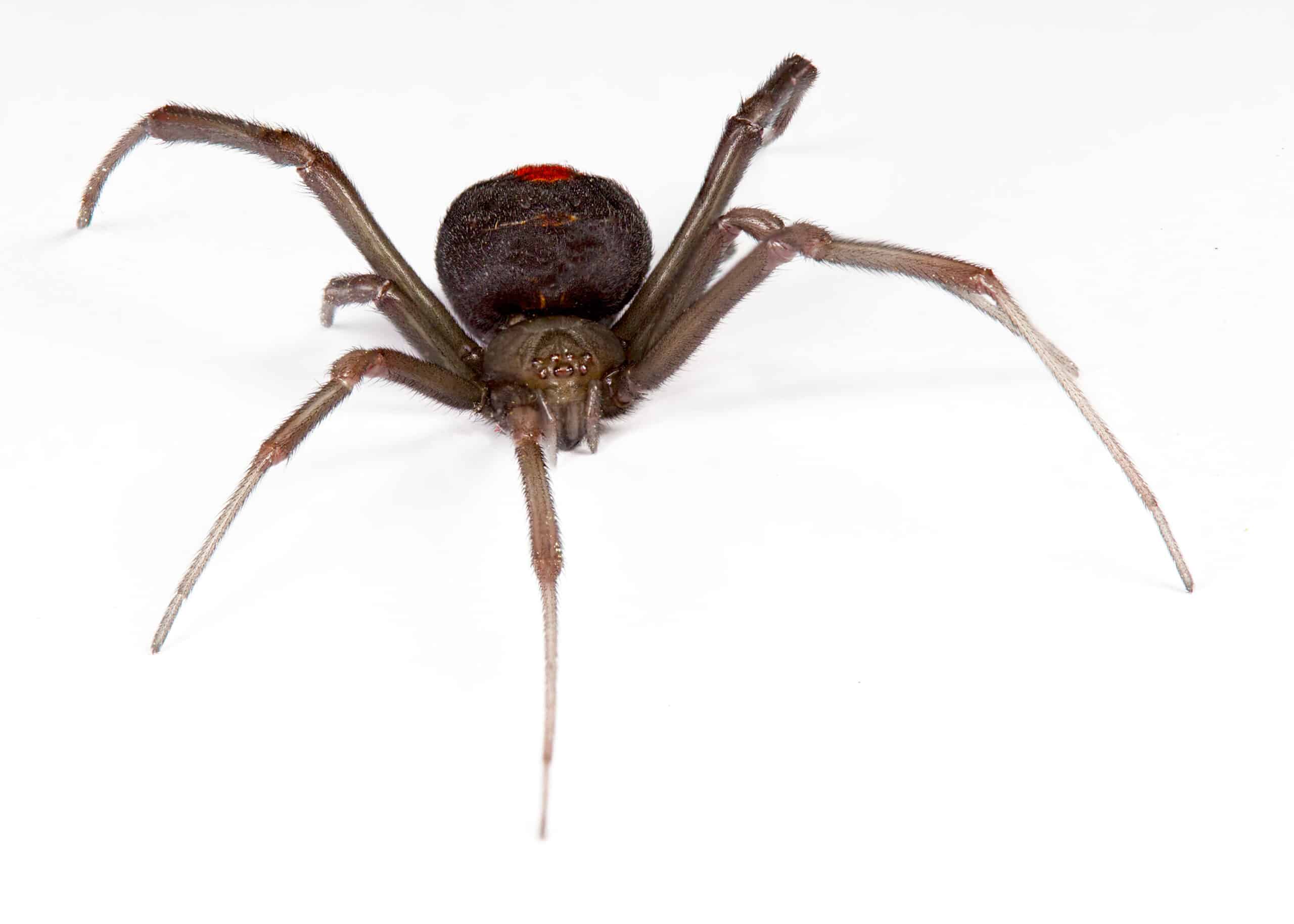
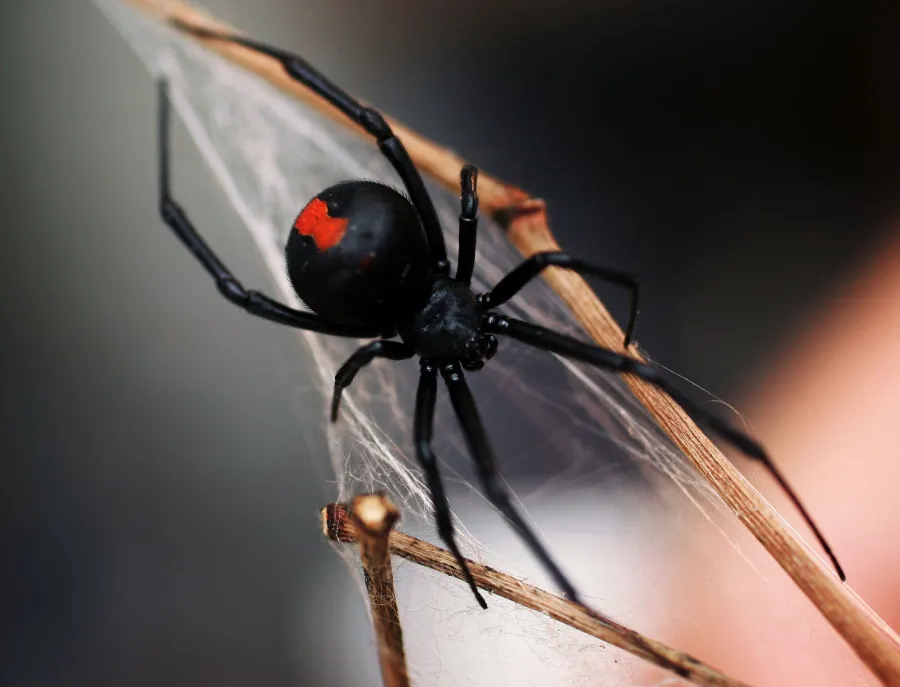
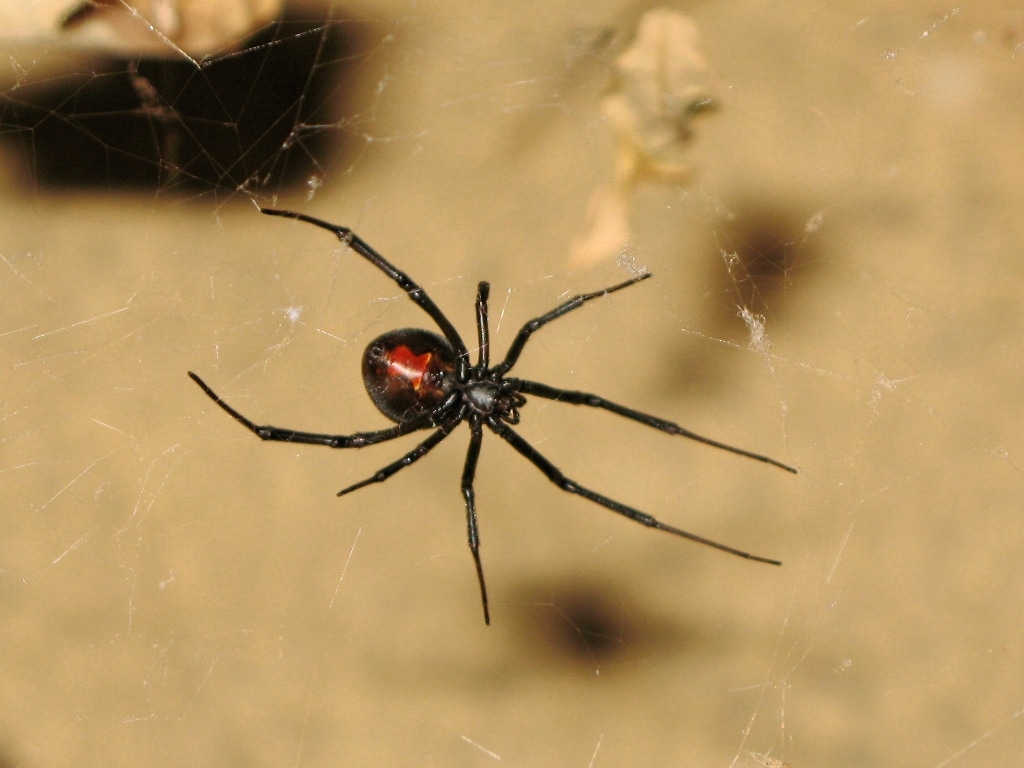
The female redback spider is easily recognisable by its distinctive markings and is the spider most likely to cause envenomation. This venomous spider has a glossy black body with a prominent red or orange stripe running down its back. The female redback can grow up to 10mm in body length, making it significantly larger than the male.
Key identification features include:
- Glossy black abdomen with red or orange stripe
- Bulbous, rounded abdomen shape
- Long, thin legs relative to body size
- Web structure that appears tangled and irregular
Male redback spiders are much smaller (2-3mm), brown in colour, and pose minimal risk to humans as their venom is much less toxic. They lack the distinctive stripe and are rarely responsible for bites.
Redback Spider Habitat and Common Locations
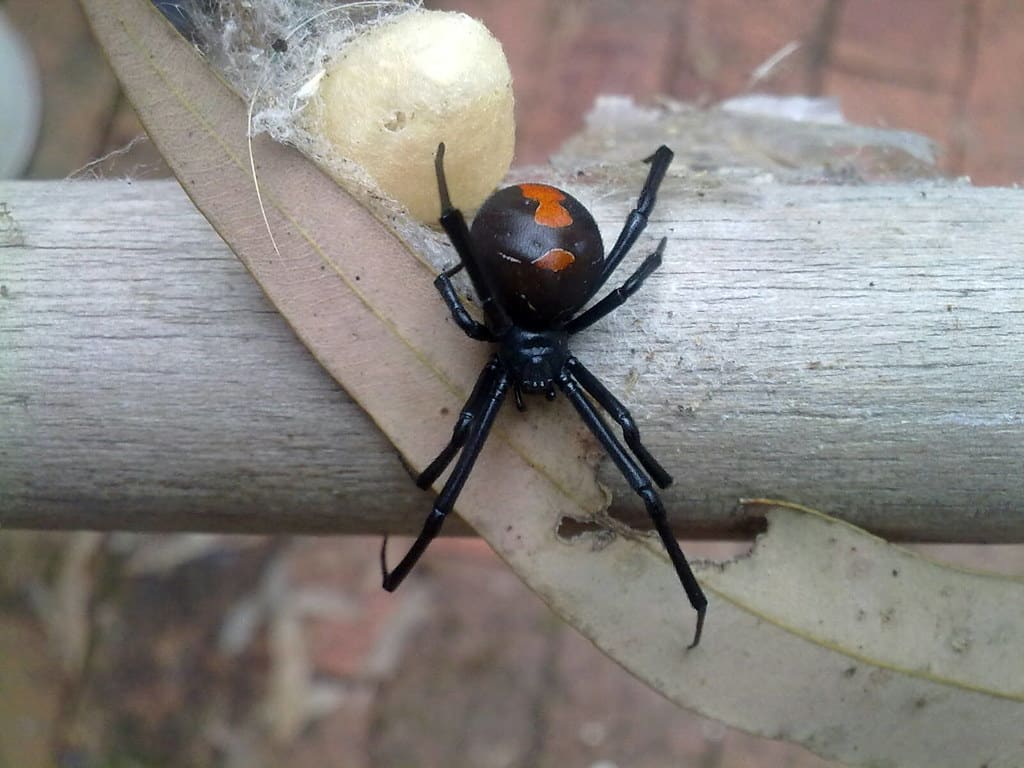
Redback spiders are found across Australia and prefer dry, sheltered locations around human habitation. Understanding where these spiders commonly build their webs helps prevent accidental encounters and spider bites.
Common redback spider locations:
- Garden sheds and storage areas
- Outdoor furniture, particularly underneath chairs and tables
- Letterboxes and fence lines
- Playground equipment and children’s toys left outside
- Garages and carports
- Around outdoor taps and water features
The spider’s web is typically built in sheltered spots and appears tangled rather than the neat, symmetrical webs of other Australian spiders. Redback spiders are most active during warmer months but can be encountered year-round in most parts of Australia.
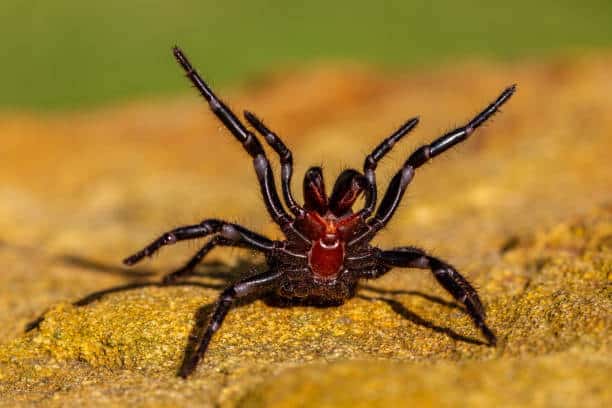
Below: Sydney Funnel Web Spider
Redback Spider vs Funnel-Web Spider Differences
Understanding the difference between redback and funnel-web spider identification is crucial, as these two venomous spiders require completely different first aid treatment approaches.
Feature | Redback Spider | Funnel-Web Spider |
Body Colour | Black with red/orange stripe | Dark brown to black, no stripe |
Size | Female: 10mm body length | 15-35mm body length |
Web Type | Tangled, irregular web | Funnel-shaped web entrance |
Habitat | Dry, sheltered areas | Moist areas, tree hollows, rockeries |
First Aid | Cold pack, NO pressure bandage | Pressure immobilisation bandage |
Distribution | Throughout Australia | Eastern Australia coastal regions |
Big black spiders without the distinctive red stripe should be treated as potentially dangerous funnel-web spiders, requiring immediate pressure immobilisation and emergency medical attention.
Redback Spider Bite Symptoms and Signs
Immediate Redback Spider Bite Symptoms
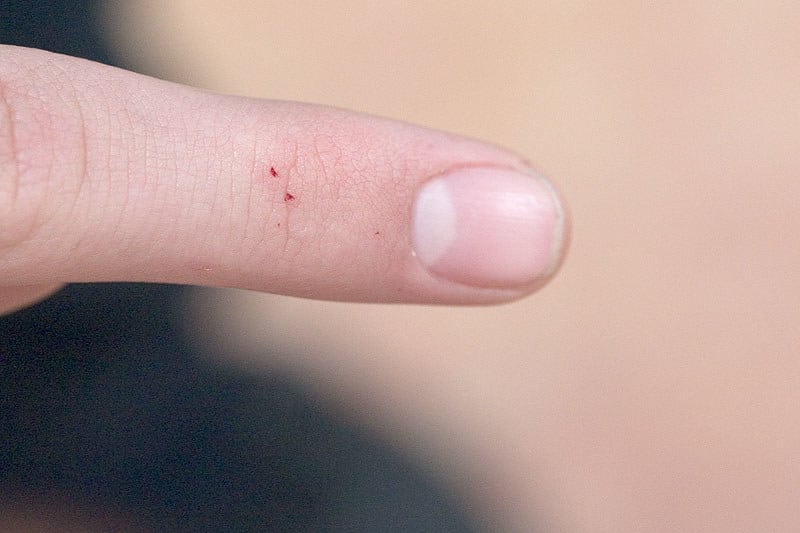
Most people who suffer a redback spider bite will experience symptoms within the first few hours, though some may notice effects immediately. The bite site itself may appear as two small puncture marks, though these are not always visible.
Initial symptoms include:
- Sharp, burning pain at the bite site
- Localised swelling around the bite area
- Redness spreading from the bite location
- Increasing pain intensity over the first hour
The bite from this spider will usually cause severe pain that radiates outward from the initial bite site. Unlike some other spider bites, the pain from a redback spider bite typically worsens rather than improves in the first few hours after the bite occurs.
Progressive Symptoms of Latrodectism (Redback Envenomation)
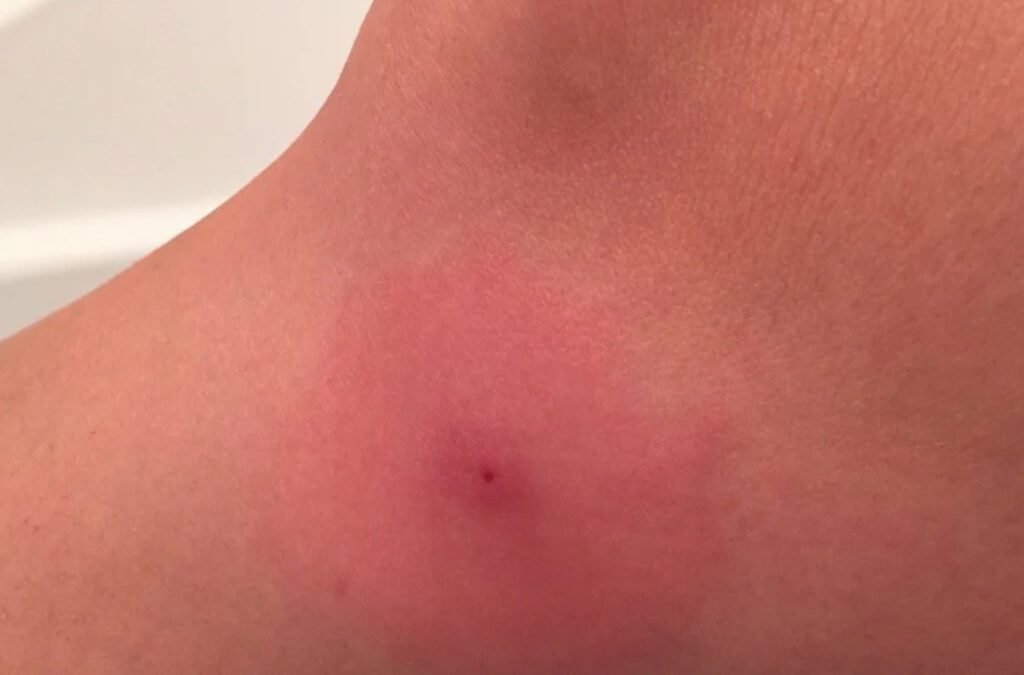
Latrodectism is the medical term for redback spider envenomation, describing the systemic effects of the spider’s neurotoxic venom. The spider venom affects the nervous system, causing characteristic symptoms that distinguish redback bites from other spider bites.
Progressive symptoms may include:
- Regional diaphoresis (localised sweating around the bite)
- Muscle pain and cramping
- Lymph node swelling in groin or armpit areas
- Nausea and vomiting
- Headache and general malaise
- Abdominal pain and muscle rigidity
These symptoms represent the body’s response to the neurotoxic venom and indicate that envenomation has occurred. The severity of symptoms varies between individuals, with children and elderly people typically experiencing more severe reactions.
How Long Do Redback Spider Bite Symptoms Last
The duration of redback spider bite symptoms varies considerably between individuals and depends on factors such as the amount of venom injected, the person’s age and health status, and how quickly treatment is initiated.
Typical symptom timeline:
- First 2-4 hours: Pain peaks and spreads from bite site
- 4-12 hours: Systemic symptoms like sweating and nausea develop
- 12-24 hours: Symptoms may plateau or begin to improve
- 1-7 days: Gradual resolution of most symptoms
- Weeks to months: Some people report ongoing minor discomfort
Children and elderly patients may experience prolonged symptoms and should receive medical assessment even if initial symptoms appear mild. The bite may result in pain lasting several days without proper pain management.
Redback Spider Bite First Aid Treatment
Immediate First Aid for Redback Spider Bites
Proper first aid treatment for a redback spider bite differs significantly from treatment for other venomous spider bites found in Australia. The key principle is pain relief and supporting the patient while avoiding treatments that may worsen the condition.
Redback Spider Bite – First Aid Steps
Follow these evidence-based steps. If in doubt, call Poisons Information (Australia) on 13 11 26.
- Stay calm and reassure the patient
- Wash the bitten area thoroughly with soap and water
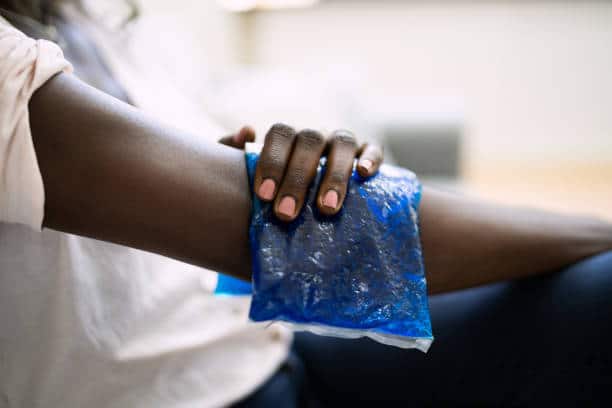
- Apply a cold pack or wrapped ice to the bite site for 20 minutes
- Remove the cold pack for 20 minutes, then reapply
- Do NOT apply a pressure immobilisation bandage
- Contact Poisons Information Centre on 13 11 26 for advice
- Monitor the patient for worsening symptoms
Need advice now? Call the Poisons Information Centre on 13 11 26. If symptoms are severe or the patient deteriorates, call Triple Zero (000).
Tip: Cold packs help relieve pain from redback bites. Pressure immobilisation bandaging is not recommended for redback spider bites.
Remember: The cold pack helps provide pain relief and may slow the spread of venom through local tissues. Apply the bandage loosely if covering the bite site, but never use pressure immobilisation techniques

Pain Management and Home Care
Pain relief is often the primary concern following a redback spider bite, as the bite will usually cause severe pain that can persist for hours to days. Appropriate analgesia and supportive care can significantly improve patient comfort.
Recommended pain management:
- Paracetamol as per packet directions
- Cold packs applied for 20 minutes every hour
- Rest and elevation of the affected limb if possible
- Gentle cleaning of the bite site twice daily
Monitor the bite site for signs of infection, including increased redness, warmth, or pus formation. While a redback spider bite rarely causes skin ulcers like white-tail spider bites, secondary bacterial infection can occur if the bite area is not kept clean.
What Not to Do After a Redback Spider Bite
Understanding what NOT to do is just as important as knowing proper first aid treatment. Some traditional treatments can worsen redback spider bite symptoms or delay appropriate medical care.
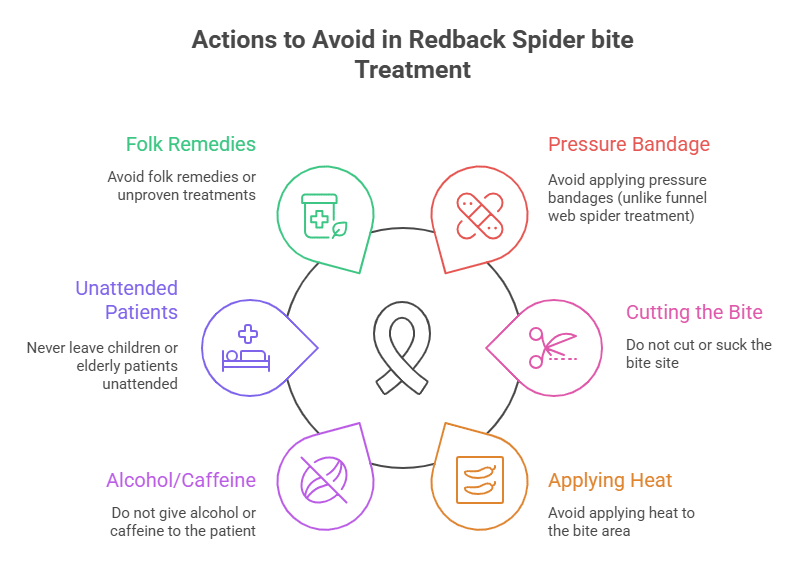
Please remember: The pressure immobilisation technique used for funnel-web spider bites can actually increase pain and tissue damage in redback spider bites, making it crucial to identify the spider type correctly.
When to Seek Medical Help for Redback Spider Bites
Emergency Signs Requiring Triple Zero (000)
While most redback spider bites can be managed with appropriate first aid and monitoring, certain symptoms indicate a medical emergency requiring immediate ambulance response.
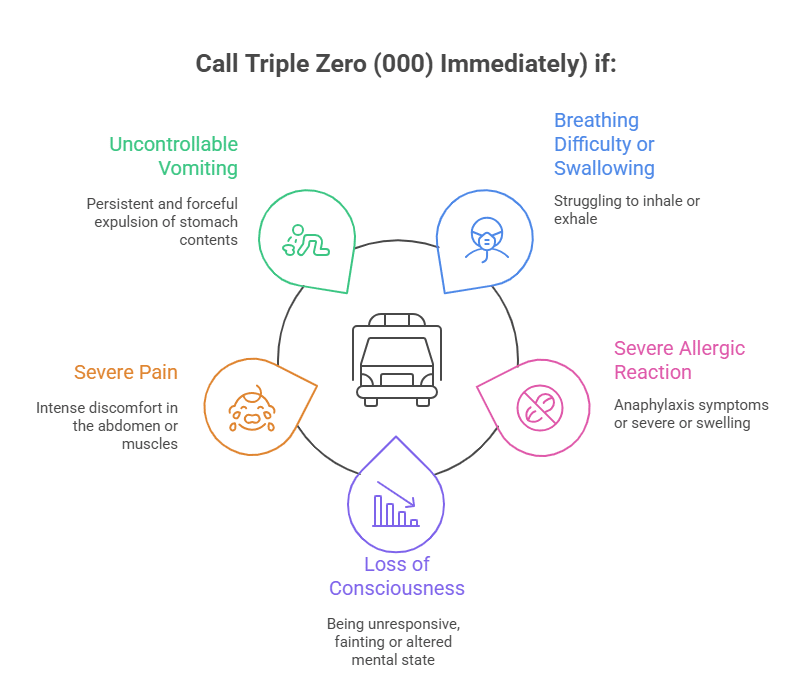
These symptoms may indicate severe envenomation or an allergic reaction requiring immediate resuscitation and medical intervention. Don’t wait to see if symptoms improve – call an ambulance immediately.
Stay Prepared for Emergencies: Learn how to recognise and respond to anaphylaxis, severe allergic reactions, and other life-threatening conditions. First Aid Pro’s nationally recognised courses cover emergency response, CPR, and critical first aid skills needed in spider bite emergencies. Enrol now
Redback Spider Bite Treatment in Children and Toddlers
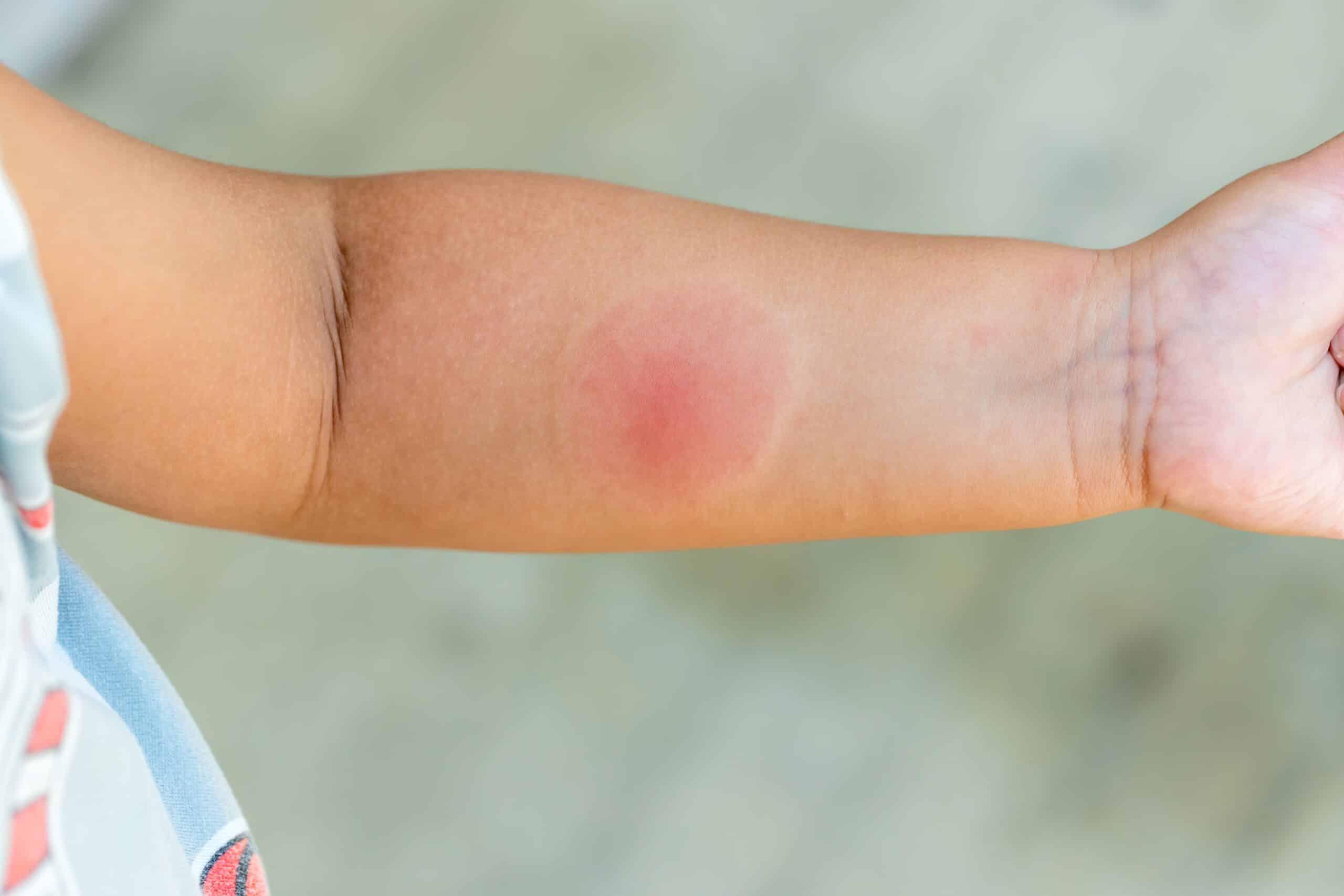
Children are at higher risk of severe symptoms from redback spider bites due to their smaller body size and developing immune systems. Any suspected redback spider bite in a child should be treated as potentially serious.
Paediatric considerations:
- All children under 12 should receive medical assessment
- Symptoms may develop more rapidly in children
- Pain may be difficult for young children to describe
- Dehydration risk from vomiting is higher
- Hospital observation may be required
Parents should seek immediate medical advice through the Poisons Information Centre (13 11 26) for any suspected spider bite in children, even if initial symptoms appear mild.
Redback Spider Bite During Pregnancy
Pregnant women bitten by redback spiders require careful medical evaluation, as both the venom and potential treatments need consideration for maternal and foetal safety.
Pregnancy-specific considerations:
- Contact doctor or midwife immediately after first aid
- Hospital assessment usually recommended
- Some pain medications may be contraindicated
- Monitoring for pregnancy complications may be required
- Antivenom use requires specialist consultation
The Poisons Information Centres and other state services can provide pregnancy-specific advice and coordinate with obstetric services when required.
Professional Medical Treatment and Antivenom
Redback Spider Antivenom Effectiveness
Redback spider antivenom has been available in Australia since 1956, though recent research has questioned its effectiveness compared to supportive care and pain management alone. The Society of Clinical Immunology and other medical bodies have updated recommendations based on current evidence.
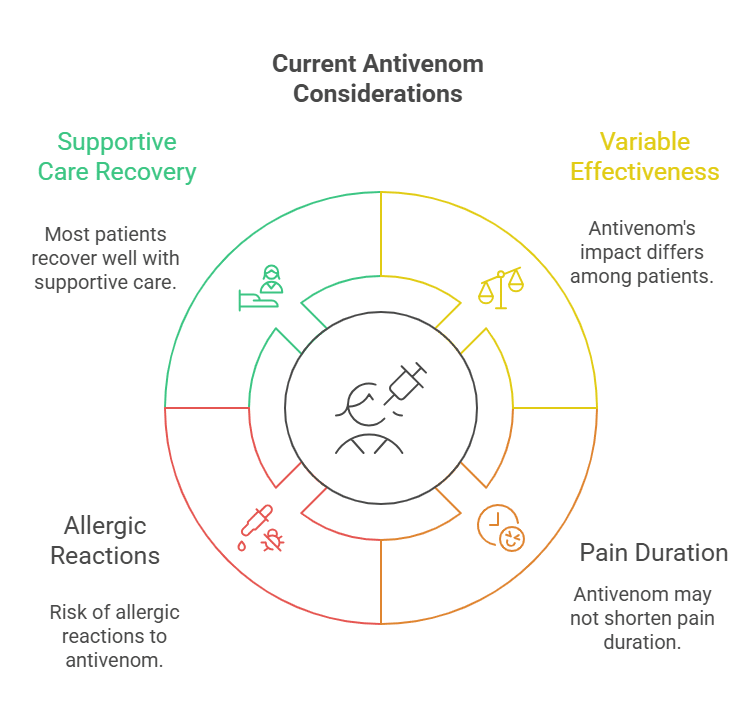
Medical professionals now take a more individualised approach to antivenom administration, weighing the potential benefits against risks for each patient.
Hospital Treatment for Severe Redback Bites
Hospital treatment focuses on pain management, symptom monitoring, and supportive care while the body processes the spider venom naturally. Most patients with redback spider bites do not require hospital admission.
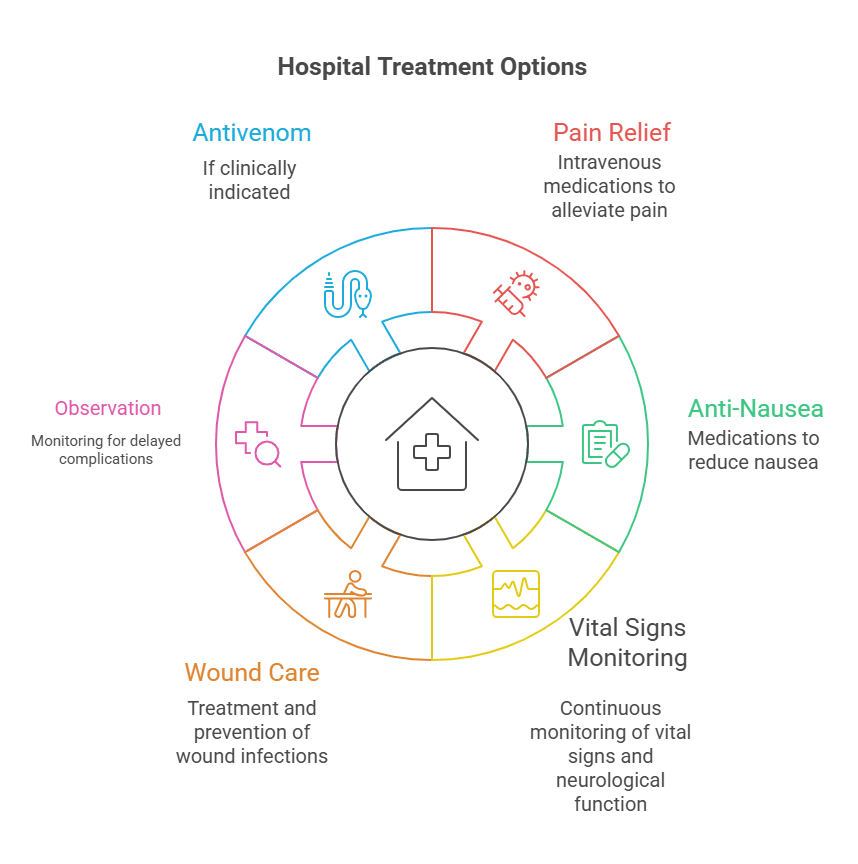
Patients typically receive several hours of observation before discharge, with clear instructions on when to return if symptoms worsen.
How to Prevent Redback Spider Bites at Home
Prevention is the most effective strategy for avoiding a redback spider bite. Understanding spider habits and modifying the environment around your home can significantly reduce encounter risks.
Home prevention strategies:
Location | Prevention Method | Frequency |
Garden Sheds | Regular cleaning, remove clutter | Monthly |
Outdoor Furniture | Check before use, store upside down | Before each use |
Letterboxes | Install smooth-sided boxes, regular checks | Weekly |
Children’s Toys | Store indoors, inspect before play | Daily |
Garage Areas | Organise storage, eliminate hiding spots | Monthly |
Wearing gloves when working in areas where redback spiders commonly live provides an additional layer of protection against accidental bites.
Creating Spider-Safe Outdoor Areas
Modifying outdoor environments to be less attractive to redback spiders helps create safer spaces for family activities while maintaining the natural balance of your garden ecosystem.
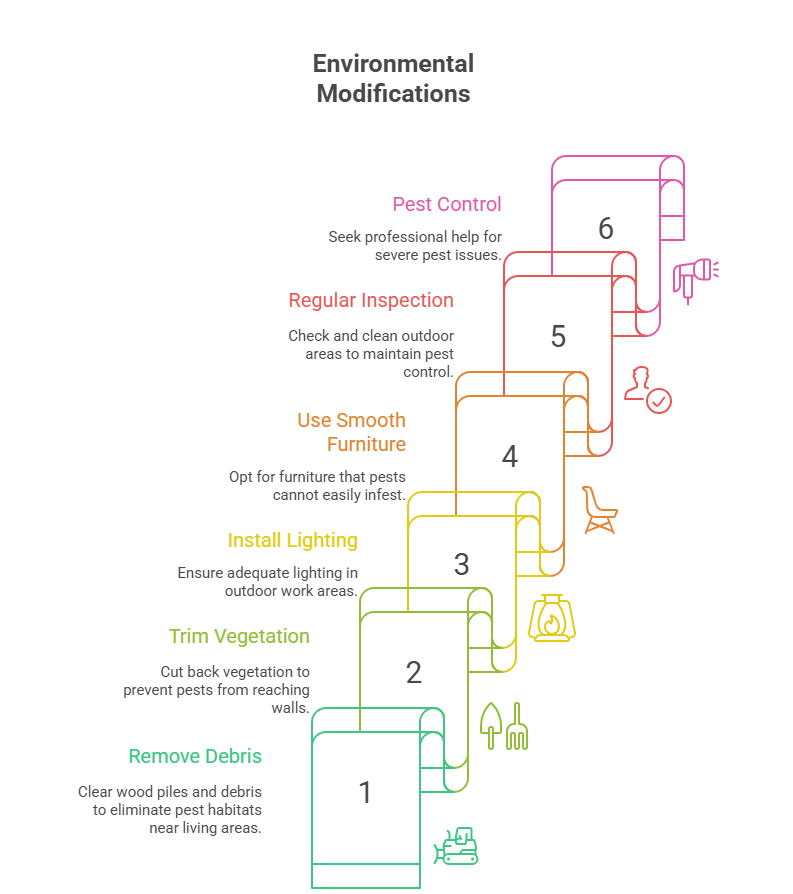
Remember that spiders play an important role in controlling other pests, so complete elimination is neither possible nor desirable – focus on reducing risks in high-use areas.
Build Confidence in Emergency Situations: From spider bites to anaphylaxis, allergic reactions to resuscitation – gain the knowledge and skills to respond effectively when seconds count. First Aid Pro offers comprehensive, nationally recognised training across Australia. Find a course near you
Knowledge Test: Redback Spider Bite Identification & Treatment
Select one answer per question, then choose “Check answers”.
What is the most distinctive feature of a female redback spider?
Which first aid treatment should NOT be used for redback spider bites?
What phone number should you call for poison and envenomation advice in Australia?
Latrodectism refers to:
Regional diaphoresis after a redback spider bite means:
References
- Charles Darwin University. (2023). Spider bite: A current approach to management. Northern Territory Medical Research.
- NSW Health. (2024). Snake and Spider Bites Clinical Management Guidelines. NSW Ministry of Health.
- Queensland Poisons Information Centre. (2024). Bites and Stings. Queensland Health.
- Perth Children’s Hospital. (2024). Emergency Department Guidelines: Spider bite. Government of Western Australia.
- Healthdirect Australia. (2024). Spider bites – Symptoms and treatment. Australian Government Department of Health.
- Austin Health. (2024). Redback Spider Bite Clinical Guidelines. Austin Hospital Emergency Department.