



Sharon has 21+ years of experience as a qualified Emergency Care Nurse registered with the Australian Health Practitioner Regulation Agency (APHRA) and 12+ years as a First Aid Trainer.
She takes pride in FirstAidPro making first aid training available, comprehensive and affordable to everybody.
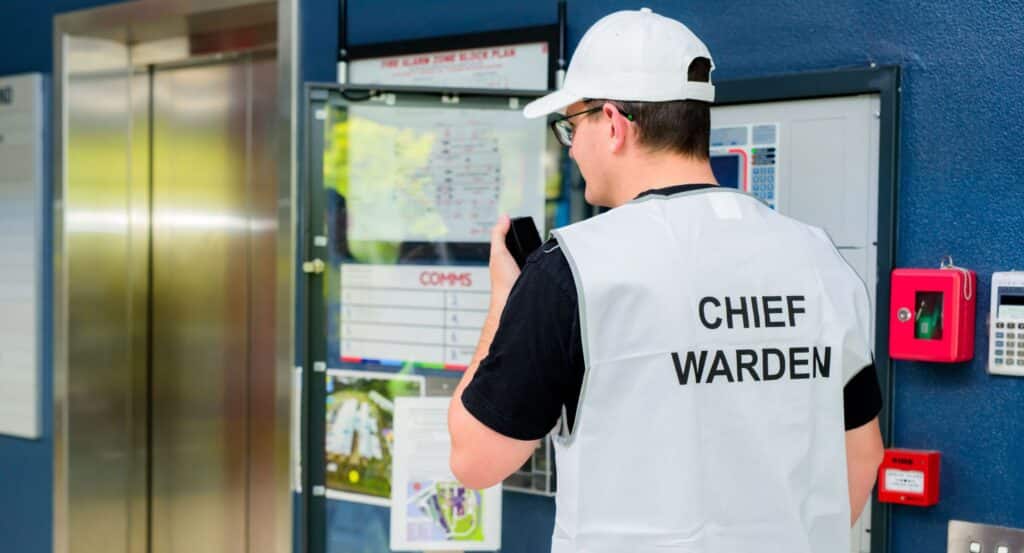
A Chief Fire Warden plays a critical role in leading a workplace response to emergencies. Whether it’s a fire, gas leak, or another serious incident, the Chief Warden is the person who coordinates evacuations, communicates with emergency services, and ensures the safety of everyone on site. In Australia, having trained fire wardens is more than just a best practice — it’s a legal requirement under workplace health and safety (WHS) regulations.
Workplace emergencies can unfold in seconds
Smoke can fill a room in minutes, electrical fires can spread quickly, and panicked crowds can easily become disorganised. Having a trained Chief Fire Warden in place ensures that your business has clear leadership when it matters most. Instead of chaos, there’s a calm and structured response that saves lives. The difference between an orderly evacuation and a dangerous stampede often comes down to the presence of a trained individual who knows how to take command of the situation.
Australian workplaces face a diverse range of emergency scenarios, from bushfire threats in regional areas to high-rise evacuations in city centres, chemical spills in industrial facilities, and gas leaks in hospitality venues. Each of these situations demands swift, confident leadership. The Chief Fire Warden serves as the cornerstone of this emergency response framework, providing the crucial link between everyday operations and crisis management.
Enrol in nationally recognised PUAFER006 Chief Warden Training with First Aid Pro to prepare your workplace before an emergency strikes.
Key Takeaways
- A Chief Fire Warden is responsible for leading emergency responses and ensuring safe evacuations in accordance with Australian workplace health and safety legislation
- Training is required under Australian WHS legislation and AS 3745: Planning for emergencies in facilities
- The national competency unit is PUAFER006 Lead an emergency control organisation
- Proper training improves safety, speeds up emergency response, and reduces business risk
- Training can be completed on-site, online, or in person through a registered training organisation
- Workplaces with trained wardens demonstrate a stronger safety culture and better compliance
The Crucial Role of a Chief Fire Warden
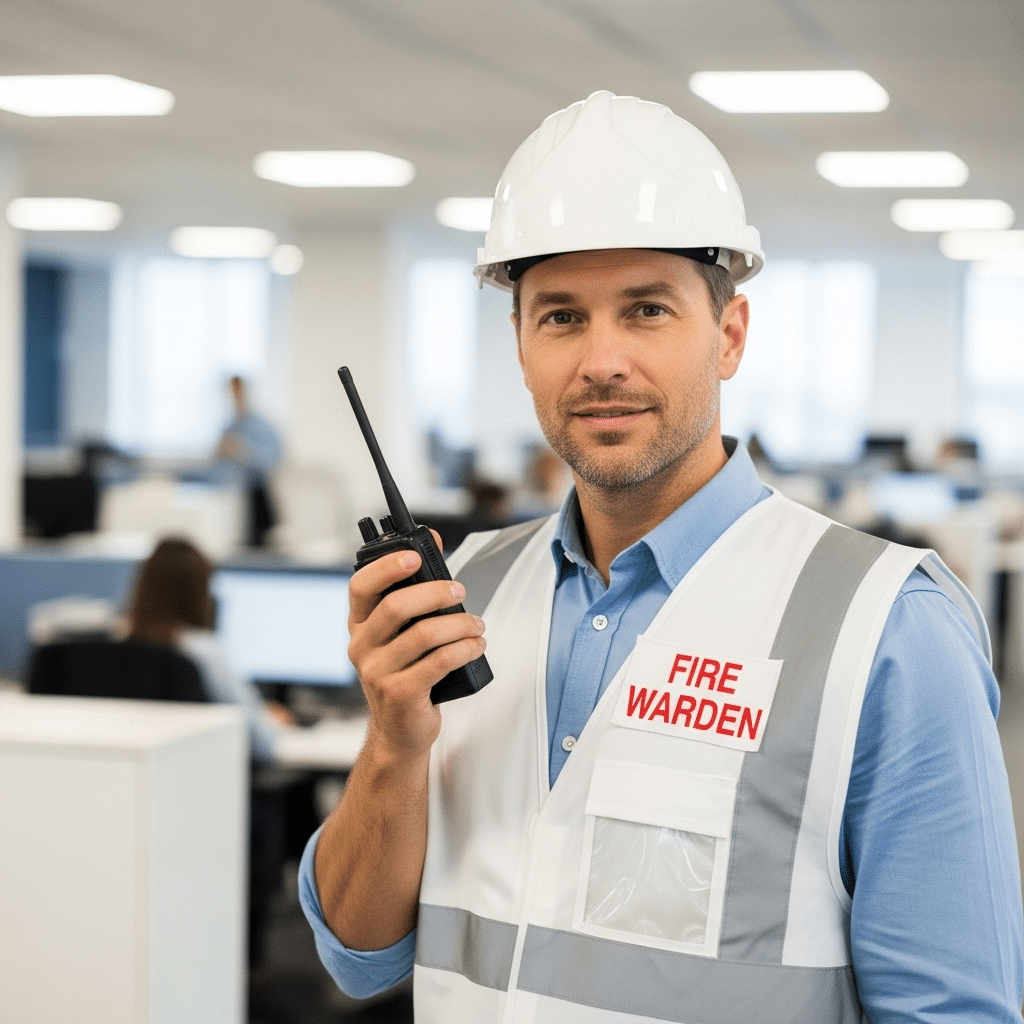
Every workplace in Australia — from small cafés and retail stores to hospitals, construction sites, and high-rise offices — is required to have an emergency plan. Within that plan, someone must take charge when things go wrong. That person is the Chief Fire Warden. The role exists not simply as a formality to satisfy paperwork requirements, but as a genuine necessity in protecting human life during the most stressful and dangerous situations a workplace can face.
The Chief Warden’s job is to coordinate the entire emergency response from the moment an incident is detected through to the arrival of emergency services and beyond. This includes raising the alarm, organising evacuation routes, making sure everyone is accounted for, and liaising directly with fire brigades or other emergency services. A well-trained Chief Warden provides leadership at a time when people may be frightened, disoriented, or unsure what to do. In these critical moments, clear direction can mean the difference between safety and tragedy.
Core Responsibilities of a Chief Fire Warden
The responsibilities undertaken by a Chief Fire Warden are substantial and require both training and composure under pressure:
- Initiating the emergency response plan as soon as an incident is identified, often within seconds of an alarm sounding or a threat being detected
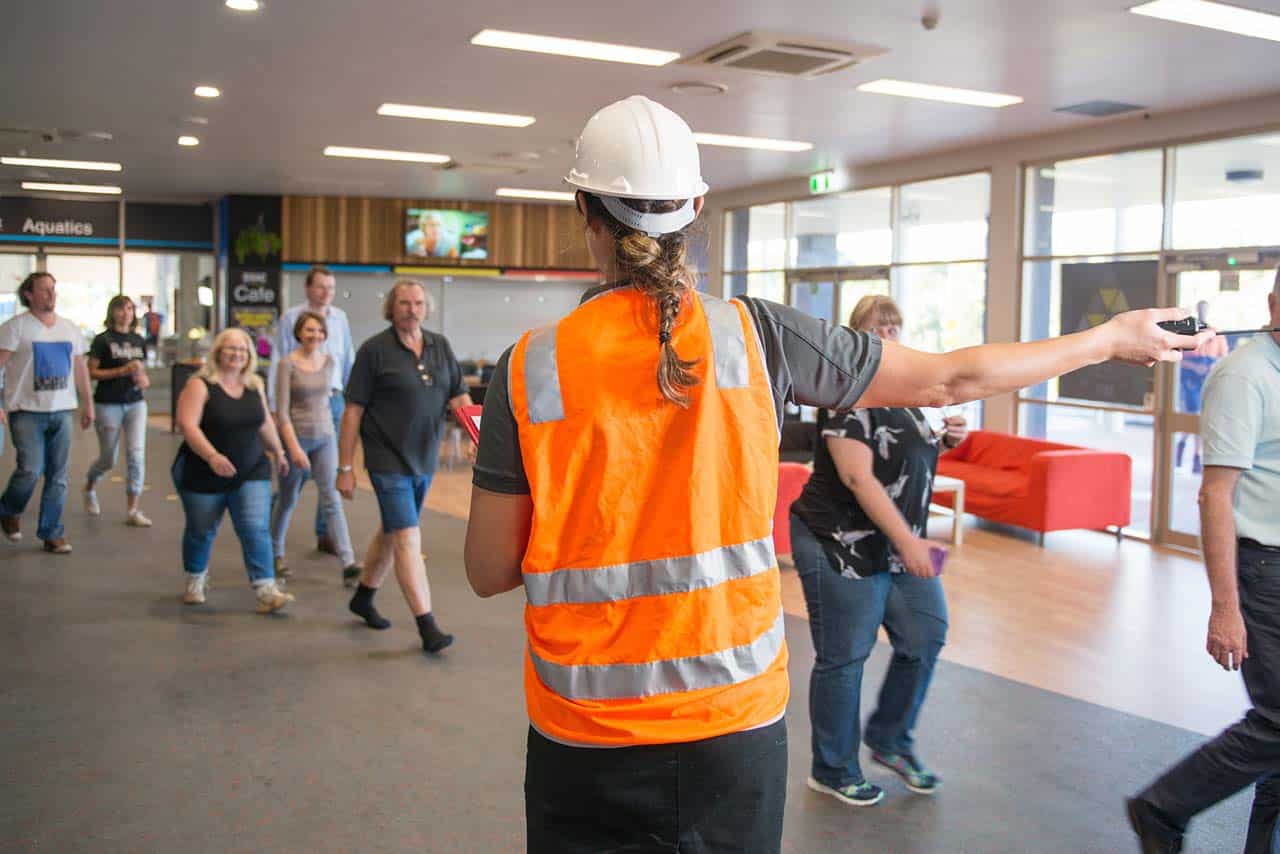
- Directing and overseeing evacuation procedures for all staff, visitors, and contractors on site, ensuring vulnerable individuals receive appropriate assistance
- Communicating with emergency services such as Fire and Rescue or the Country Fire Authority, providing accurate information about the nature of the emergency
- Verifying that all areas are cleared and that doors are secured where appropriate to prevent the spread of fire or smoke
- Maintaining records of what occurred and supporting any post-incident review
This leadership role is essential because even well-designed evacuation procedures can break down without someone experienced to coordinate them. A Chief Warden is not just an organiser — they are the command point for emergency control, responsible for making rapid decisions in high-stress situations and ensuring that the emergency response unfolds in a coordinated rather than chaotic manner.
Chief vs Floor Warden Responsibilities
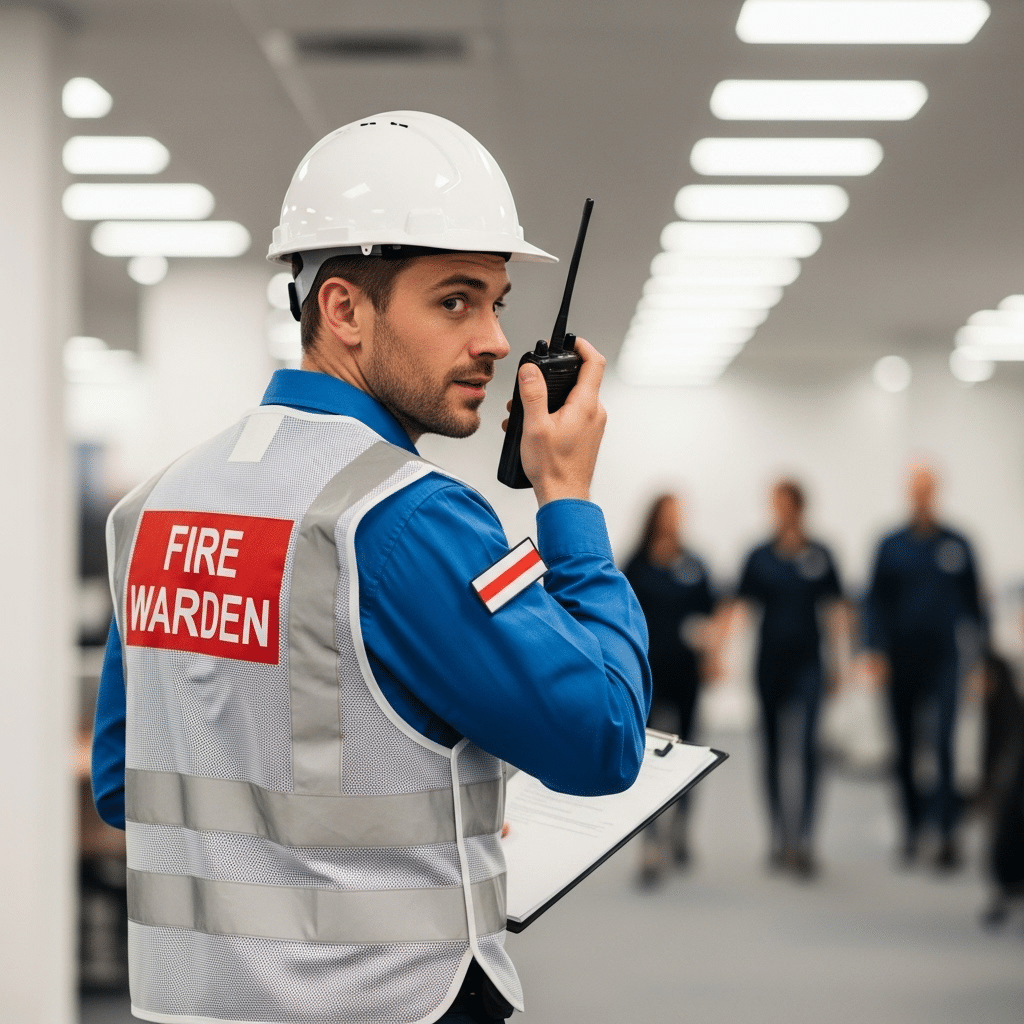
Understanding the hierarchy and division of responsibilities within an emergency control organisation helps clarify how different roles work together during an evacuation.
Role | Focus Area | Key Responsibility |
Chief Fire Warden | Entire building or site | Command, coordination, decision-making |
Floor Warden | Assigned floor or area | Area evacuation, checking rooms, reporting to Chief |
Wardens/Marshals | Immediate zones | Assisting evacuees, maintaining calm, escorting safely |
The Chief Fire Warden operates at the highest level, with responsibility for the entire building or site. Their focus encompasses command, coordination, and strategic decision-making during the emergency. They maintain the big picture view, communicate with external emergency services, and make critical judgements about when to evacuate, whether it’s safe to re-enter, and how to respond to changing circumstances.
Floor Wardens, by contrast, are assigned to specific floors or designated areas within the building. Their key responsibility is to execute the evacuation of their assigned zone, which includes checking all rooms, ensuring that no one is left behind, closing doors where appropriate, and reporting their area’s status back to the Chief Warden.
In many workplaces, particularly larger or multi-level buildings, floor wardens play a vital support role — but it’s the Chief Warden who brings all those moving parts together into a coordinated response.
Legal and Training Requirements in Australia

📘 What the Training Covers
The PUAFER006 – Lead an Emergency Control Organisation course provides comprehensive, hands-on instruction across critical areas of workplace emergency management and leadership.
-
1. Activate and Manage the Emergency Control Organisation
Learn to initiate emergency procedures, coordinate wardens, and lead the chain of command during critical incidents. -
2. Understand Roles and Responsibilities
Apply requirements under Australian Standards (AS 3745) to ensure compliance and clarity across all warden roles. -
3. Plan and Execute Evacuation Strategies
Master the use of alarms, emergency exits, communication systems, and safety equipment in real-world scenarios. -
4. Build Leadership Skills Under Pressure
Develop the confidence to lead calmly and decisively when responding to fires, gas leaks, or other emergencies. -
5. Liaise with Emergency Services
Learn effective communication protocols with fire brigades, police, and ambulance services for coordinated response. -
6. Conduct Post-Incident Debriefing and Reporting
Evaluate the effectiveness of emergency responses and document outcomes for continuous workplace safety improvement.
The training emphasises practical leadership skills under pressure, recognising that theoretical knowledge alone is insufficient when facing a real emergency where lives are at stake. Participants learn the protocols for liaising with fire brigades, police, and ambulance services, including what information to provide and how to describe situations clearly and concisely.
First Aid Pro’s Course Overview
| Feature | Details |
| Course Code | PUAFER006 Lead an emergency control organisation |
| Course Duration | 3 Hours practical |
| Delivery Mode | Face-to-face, (no online) |
| Recognition | Nationally recognised statement of attainment |
| Assessment | Knowledge + practical scenario |
| Recertification Recommendation | Every 1–2 years |
This training is essential across multiple industries, including retail, healthcare, manufacturing, hospitality, education, and construction. Even small businesses benefit from having at least one trained Chief Warden on site, as emergencies do not discriminate based on company size or turnover.
Book Chief Warden Training with First Aid Pro and strengthen your workplace safety compliance.

Why Fire Warden Training Matters for Every Workplace
Key Benefits
Benefit | Impact |
WHS Compliance | Reduces legal liability and meets regulatory standards |
Faster Emergency Response | Trained staff act quickly and effectively |
Increased Confidence | Reduces panic and confusion during emergencies |
Improved Business Continuity | Minimises damage, downtime, and insurance claims |
Strengthened Workplace Culture | Promotes trust, care, and responsibility among employees |
From a compliance perspective, training helps workplaces meet their WHS obligations, which in turn reduces legal liability and ensures regulatory standards are met. Inspectors from Safe Work Australia or state-based regulators increasingly scrutinise emergency preparedness during workplace audits, and the absence of trained wardens can result in improvement notices, fines, or prosecution in serious cases.
The operational benefits are equally significant. When evacuation procedures are executed properly under the guidance of a trained Chief Warden, the chaos that might otherwise ensue is replaced by orderly movement to safety. This increased confidence reduces panic and confusion during emergencies, helping people to think more clearly and follow directions rather than freezing or making dangerous decisions.
When staff trust that someone knows what to do, evacuations run more smoothly. This leads to fewer injuries, better outcomes, and less property damage. Workplaces with trained wardens also tend to have fewer near misses because they have stronger safety awareness built into their culture. Fire drills become more effective, emergency equipment is better maintained, and staff feel empowered to respond appropriately.
Emergency Evacuation Training: What to Expect
For Chief Fire Wardens, training is about more than memorising procedures. The most effective courses incorporate real-world scenarios that mirror what can actually happen during an emergency. This practical focus ensures that when a genuine incident occurs, trained wardens can draw on so-called ‘muscle memory’ and practised responses rather than trying to recall abstract concepts under pressure.
Skills Developed During Training
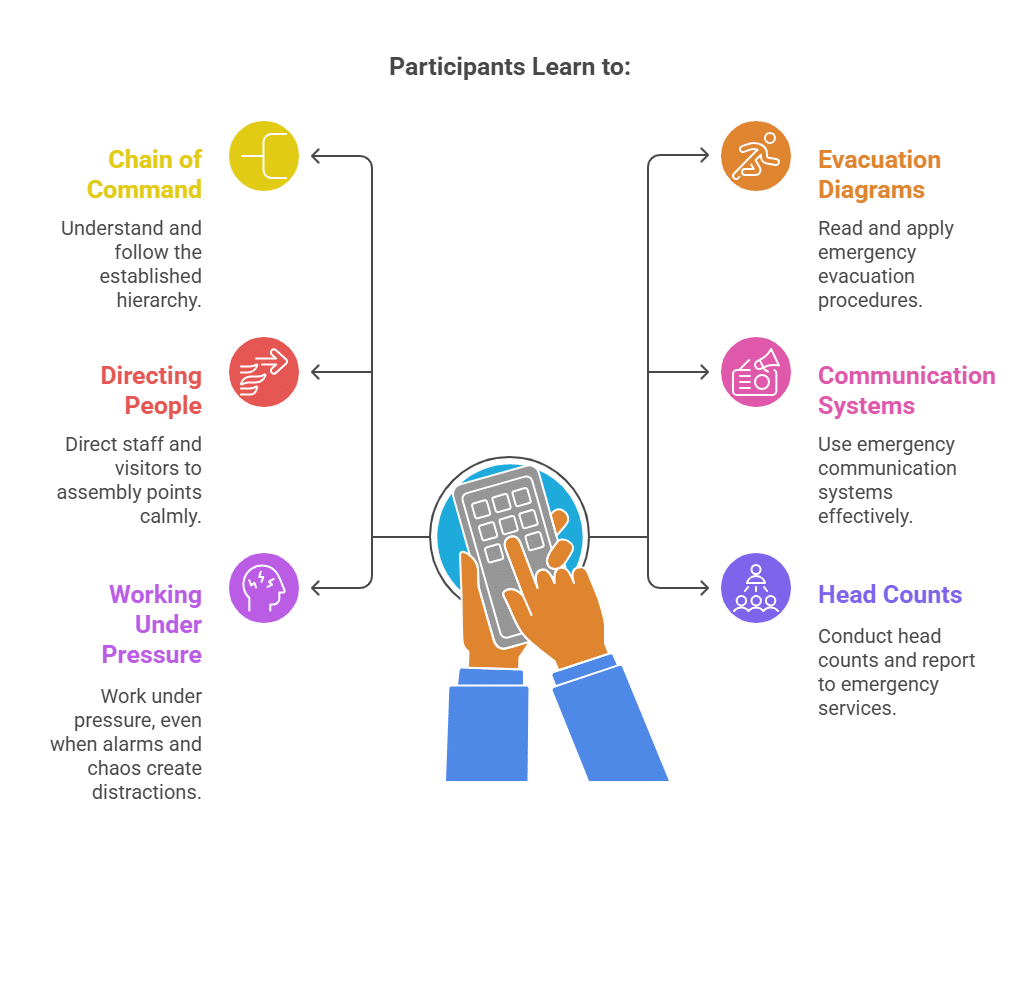
In many cases, trainers will simulate smoke alarms, power failures, or blocked exits to test decision-making and adaptability. These practical exercises give participants the confidence to step up when a real incident occurs. They learn to adapt plans on the fly when circumstances change, make difficult decisions with limited information, and maintain composure when others are panicking.
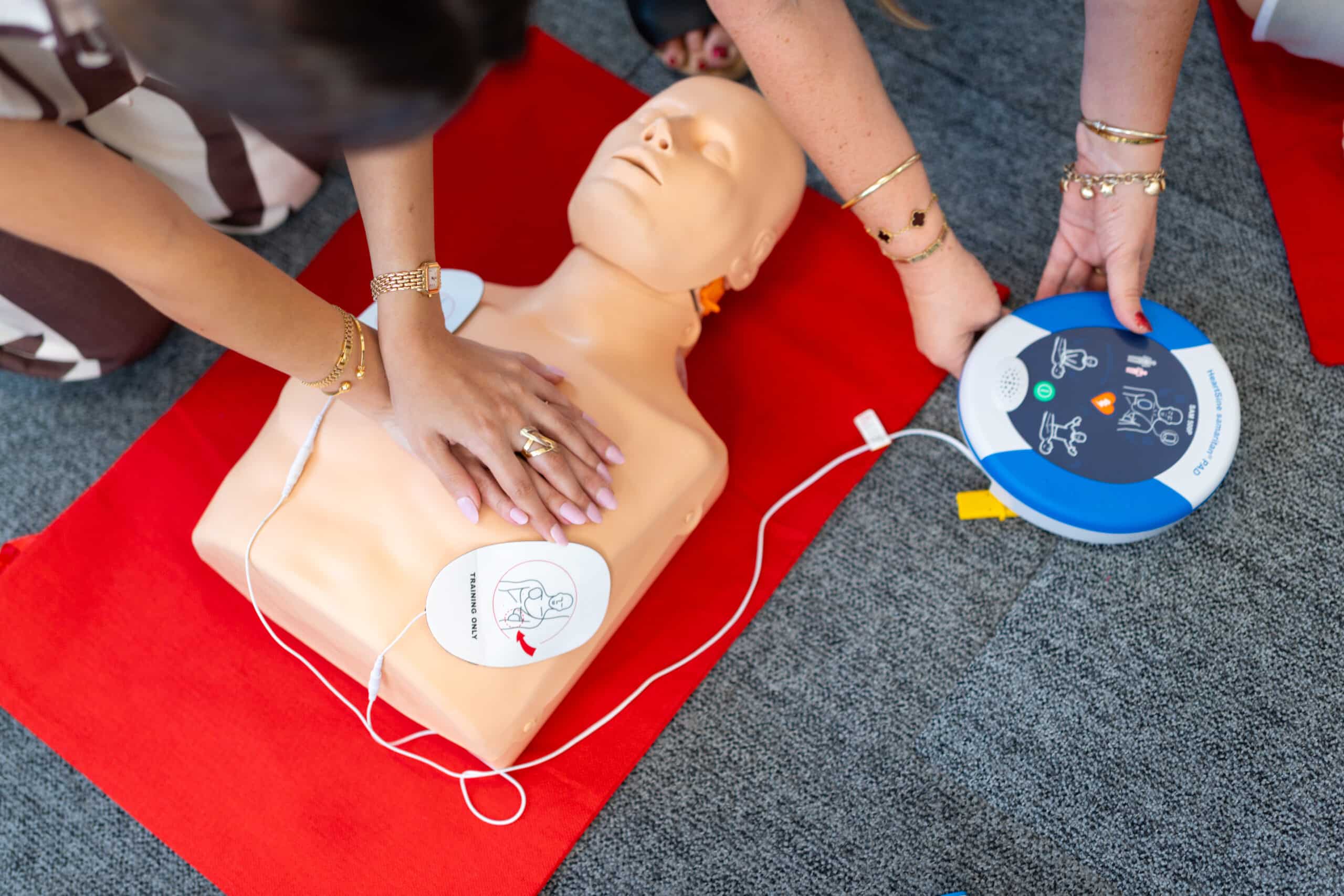
Some workplaces choose to extend this training to include first aid or CPR, which enhances overall emergency preparedness and ensures that wardens can provide basic first aid assistance while waiting for paramedics to arrive.
Choosing the Right Fire Warden Training Provider
Not all training providers offer the same standard of education or practical experience. Choosing a Registered Training Organisation (RTO) ensures that the certification is nationally recognised and meets Australian legal requirements.
🧭 What to Look For
When comparing providers for Chief Warden training, use this quick checklist to choose quality, compliance, and value.
-
✅
Accreditation
Choose an RTO that delivers PUAFER006 so your certification is nationally recognised. -
🧯
Scenario realism
Prioritise hands-on, scenario-based training over theory-only classroom sessions. -
📍
Delivery flexibility
Look for on-site options and blended delivery to suit your workplace and shift patterns. -
🎖️
Instructor background
Prefer trainers with emergency services or WHS experience for real-world insight. -
💰
Transparent pricing
Confirm there are no hidden fees for resources, assessment, or certification.
First Aid Pro offers Chief Warden Training across major Australian cities and provides the option to bring the training to your workplace, making it easier for teams to learn together in a familiar environment. This on-site approach is particularly useful for high-occupancy buildings or complex facilities with multiple floors or zones.
Enrol your team in Chief Warden Training with First Aid Pro and build confidence where it matters most.
🧭 The Chief Warden's Emergency Response Sequence
Chief Warden Emergency Flow (PUAFER006) — a compact, step-by-step sequence to lead and document workplace emergency responses.
This sequence provides a clear, structured approach that can be applied across industries and workplaces of different sizes. Each step builds upon the previous one, ensuring that nothing critical is overlooked during the high-stress period of an emergency response.
Knowledge Test: Are You Chief Warden Ready?
Test your understanding of Chief Fire Warden responsibilities and requirements.
Take the Lead in Safety
Emergencies don’t give you time to plan. When the alarm sounds, your workplace needs someone trained, confident, and ready to lead. A Chief Fire Warden provides that leadership — turning potential confusion into coordinated action. The investment in proper training is minimal compared to the potential cost of unpreparedness, whether measured in human lives, legal liability, property damage, or reputational harm.
Enrolling your team in PUAFER006 Lead an emergency control organisation with First Aid Pro ensures your workplace is prepared to respond effectively and meet its legal obligations. The training provides practical skills that can be applied immediately, builds confidence in your emergency procedures, and demonstrates to staff, visitors, and regulators that you take workplace safety seriously.
Enrol in Chief Warden Training today and give your team the confidence to lead when it matters most.
References
- Safe Work Australia — Emergency Plans
- Standards Australia — AS 3745: Planning for emergencies in facilities
- Fire and Rescue NSW — Evacuation Guidelines
- Country Fire Authority — Workplace Fire Safety
Frequently Asked Questions
Most courses can be completed in a half-day session, though some workplaces opt for full-day programs to include additional scenario-based practice and site-specific planning.
Refresher training is recommended every one to two years, or sooner if your workplace undergoes major structural or operational changes.
Any responsible and trusted employee can undertake Chief Warden training. It’s often recommended that managers, supervisors, or health and safety representatives complete this training.
Under WHS legislation and AS 3745, workplaces must have an emergency plan and appoint trained wardens. Compliance is not optional — it’s essential to protect lives and meet legal duties of care.