




- The Most Common Natural Disasters In Australia - 26/04/2023
- Soft Tissue Injuries – What Are They & How Can You Best Recover? - 26/04/2023
- 8 Dangerous Myths About First Aid - 24/04/2023
Mental Health First Aid Courses, What are they, and are they helpful or harmful? What qualifications do you get, and how legitimate is this field in providing any form of Mental First Aid?
What Is Mental Health First Aid In The Workplace
Let’s first look at the definition of what mental health is:
“A person’s condition with regard to their psychological and emotional state of well-being.”
To imply that mental health should in any way be attached to the umbrella of First Aid, is, at first glance, well out of place. First Aid is about rendering assistance in a potentially life-threatening situation to someone who is not able to help themselves. Given the premise of First Aid, mental health does not meet that parameter. As I have some serious bias to this misnomer concept, I sought to get clarity and find a way to remove my bias and get to the true essence and reason for this blurring of the ‘definition’ lines from someone qualified, who regularly teaches the course material to a variety of people for an equally varying list of reasons.
When talking about workplace mental health First Aid, we are looking at our colleagues and managers to establish a baseline one would call ‘normal behaviour’. Everyone is somewhat unique, but even with their differences, they have a set pattern of behaviours and social interaction that sets a precedence. When that established precedence alters, shifts, or changes and new behaviours emerge, it is a sign that something is not well in their life and that they are struggling with the situation and need some form of help.
Not everyone who enters a ‘rough patch’ has mental health issues. Sometimes, life throws obstacles that are difficult to surmount and take a lot out of a person. They need time to recover and heal from their ordeal, and they will return to their normal baseline self fairly quickly without intervention. But that is not always the case; some people don’t have the skills or the will to look for the light and a solution.
This course is designed to allow participants to recognise and pick up on the subtle shifts and then act as a bridge to guide the person to the correct professional assistance before things escalate out of hand and reach a worst-case crisis point.

You Are Not Qualified To Diagnose, Only To Support And Inform
One thing the trainer stressed that stood out was that mental health First Aid was a brand name credited to Mental Health Australia, who designed the course material and structure taught to participants across the country using MHFA-qualified instructors with the same program. She emphasised that the course is not designed to produce unqualified wanna-be psychologists. Rather, the course was designed to normalise and expose the endless list of mental health issues that everyday people can, at some point in their life, be subjected to for a range of reasons.
Some situations labelled as mental health issues are transitory in nature, meaning they might only appear at a certain point in a person’s life, given a strict set of conditions surrounding the person at the time. They might be going through a messy divorce or be grieving for the loss of a loved one, and with time and support, they will heal and recover to full good mental health.
Other conditions are life-long and the result of trauma like PTSD or an event that traumatised them in childhood that requires clinical assessment, counselling, and in some cases, medication for short to medium-term use to establish new brain chemistry levels and correct chronic depression.
Other conditions are permanent clinical psychosis disorders like Schizophrenia and MPD.
The course is designed to destigmatise mental health conditions and stop them from being hidden in the cupboard and unaddressed. It is designed to remove the stigma of shame that being diagnosed with a mental health condition has typically engendered in the past.
The course gives the participants a clear understanding of the most common mental health issues, how to recognise them, and how to give support and point anyone they see with classic symptoms or signs in the right direction to get the professional attention and counselling they require. Read more on mental health support workers.
To cite the MHFA course page, “The Aim is to teach adults how to provide initial support to people who are developing a mental illness or experiencing a mental health crisis.”

Topics covered include:
- Depression And Anxiety Problems
- Psychosis
- Substance Use Problems
- Mental Health Crisis Situations Covered
Mental health crisis situations covered include:
- Suicidal Thoughts And Behaviours
- Non-suicidal Self-injury
- Panic Attacks
- Traumatic Events
- Severe Effects Of Drug Or Alcohol Use
- Severe Psychotic States
- Aggressive Behaviours
Is This A Legitimate First Aid Certificate
No. Please note this course is an educational course provided by MHFA and taught by MHFA instructors throughout Australia via other training organisations like FirstAidPro. The aim is to teach lay people how to recognise the signs and symptoms and offer support and guidance to people who fit the profiles addressed in the course material displaying signs of having an existing mental health condition or developing a mental health crisis.
In the context of ‘Mental Health First Aid’, the ability to see the patterns and recognise the signs of someone who is suffering from Schizophrenia, PTSD, Manic Depression, Bipolar Disorder, or who might have suicidal or homicidal inclinations, and directing them to get the qualified clinical help they require, could save the life of the person with the condition, and potentially the lives of innocent people who might become victims to a violent or homicidal rage event.
Any interested adult can attend, and there are no prerequisite qualifications required. No formal accreditation or certification will be gained by completing the course; however, you will receive a certificate of completion from Mental Health First Aid Australia, not from FirstAidPro.

What Does The Acronym ALGEE Stand For
Citing the MHFA website: ‘The ALGEE action plan is: Approach, assess and assist with any crisis – assess the risk of suicide or harm and look for signs of trauma and high anxiety. Listen to the person non-judgmentally. Give the person reassurance, support, and information. Encourage the person to seek appropriate professional help.’
The first rule of life is that you cannot fix someone else. They have to take the actions to fix themselves. You can advise them, implore them, argue with them, but at the end of the day, if that person chooses not to get the help or medication they need, or talk to a professional to get to the root of the problem and a diagnosis, there is nothing you can do about it.
There is a high likelihood that your good intentions will be met with an angry, curse-filled directive to mind your own business in some cases where denial is still present in the individual, or they take offence at you putting your nose in where it wasn’t wanted or asked for. In others, the gentle approach to a sensitive topic might be the catalyst for the person in need to reach out for help and discover the information they require to get the help they need.
What Is PTSD
PTSD is a disorder characterised by the failure to recover after experiencing or witnessing a traumatic event. War, sexual assault, domestic physical abuse are three common causes of PTSD experienced by those suffering with the condition.

PTSD has no set time limits and may persist for months, years or a lifetime. PTSD is often ‘triggered’ by an unrelated sound, smell, image, or situation that causes flashback memories of the traumatic event accompanied by intense emotional and physical reactions.
Symptoms may include nightmares or flashbacks, avoidance of people or situations that bring back the trauma, heightened reactivity to stimuli, anxiety, irritability, or frequent mood swings and depression. In some cases, violent outbursts ending in physical altercations can occur when the person is triggered.
Treatment includes several types of psychotherapy to manage the direct symptoms and medications to treat the outlying issues like anxiety, or depression.
The 4 Components Of Mental Health First Aid
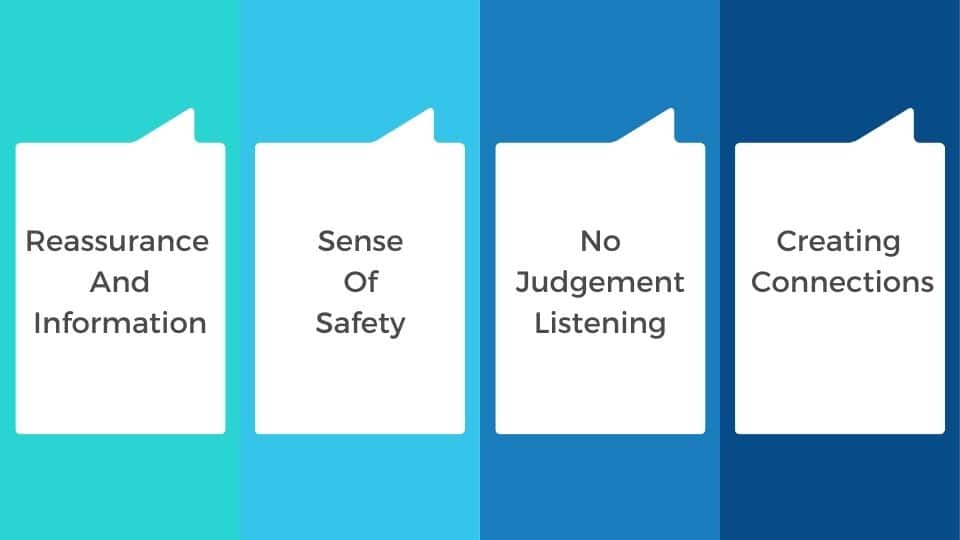
Reassurance And Information: To build hope, give reassurance, and point them to qualified clinical professionals starting with their family GP, who can assess and refer them to the appropriate specialist.
Sense Of Safety: When people feel safe, they can relax, focus, and relay their concerns or situation freely.
No Judgement Listening: A person suffering from a mental health condition wants to be listened to without criticism and without judgement.
Creating Connections: Create a connection by building relationships and connecting them to their family, friends, and other professionals to assist them on their journey to recovery.
What Is Youth Mental Health First Aid
Adolescence has always been a difficult transition from childhood to adulthood. These days, the extremes, and volumes of information they are exposed to in their childhood have never in the history of humanity been more destructive to good mental health than here and now. Children and teens are forced to grow up and experience information and situations unheard of thirty years ago.

The brain of a child and teenager is constantly developing and has a malleable property that easily distorts and becomes corrupted by external factors. It is also the time when mental health problems first show signs of emerging, and if picked up, the condition can be diagnosed and treated in its infancy.
Mental health problems are among the leading causes of falling grades, truancy, school dropouts, problems with friends, and relationships, substance use or abuse, and sexual promiscuity.
The trauma experienced can have a lifelong impact and steal from them their potential to do the improbable and become amazing. They get lost in the system and pull back into their protective shells to hide from the world with some resorting to self harm or attempted suicide.
Proactively educating the youth, and wider community at large, on what good mental health is means they are better placed to recognise when their mental health or that of their friends is slipping. Nipping a problem in the bud has far greater benefits than getting them the help they need a decade or two after the problem first appears.
How Does Mental Health First Aid Training Help
With a focus on improved mental health literacy and early intervention. An MHFA training course is for adults who work, live, or care for other adults, adolescents, and children such as office managers, emergency services personnel, teachers, school support staff, parents, coaches, community group leaders, and youth workers.
The course was written and designed by MHFA to arm people with the skills to spot the classic signs and attempt to intervene and get the adult or youth the appropriate clinical assessment, treatment, or assistance that could save their lives and turn them around. FirstAidPro delivers this course with a passionate MHFA trained and qualified instructor.