


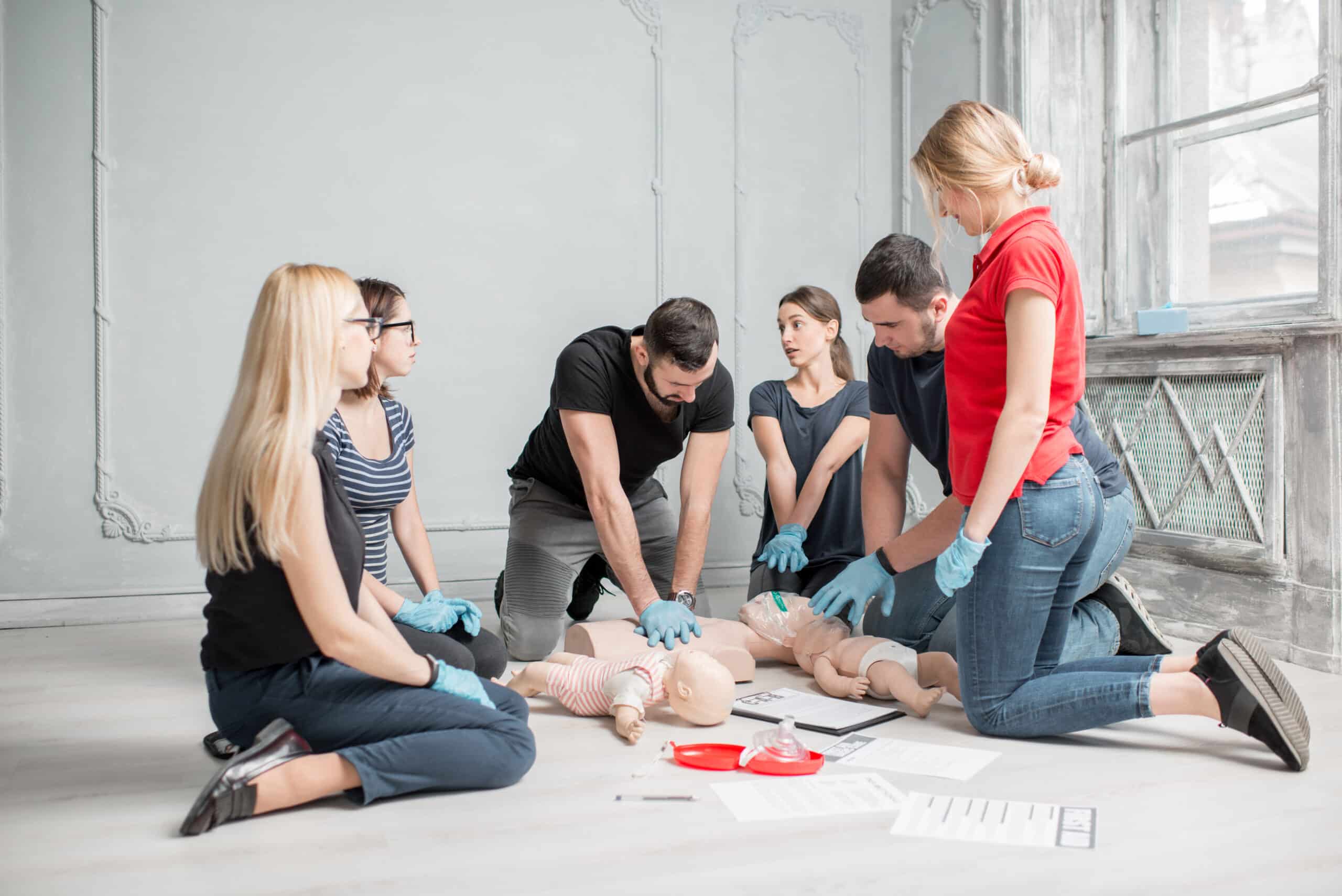
An Australian National First Aid Course teaches you how to respond safely and confidently during emergencies such as cardiac arrest, choking, burns, bleeding, fractures, and medical conditions. Whether you choose online, blended, or face-to-face learning, these courses follow national standards and help ordinary people make extraordinary differences in critical moments.
Would you know what to do if a loved one suddenly stopped breathing? It’s an unsettling thought, yet thousands of Australians experience medical emergencies every year — often at home, at work, or in public places. Having accredited first aid skills can mean the difference between life and death. An Australian National First Aid Course helps individuals and workplaces gain certified, life-saving capabilities under the nationally recognised HLTAID011 Provide First Aid unit, aligned with the Australian Resuscitation Council (ARC) and ASQA training standards.
Key Takeaways: Australian National First Aid Course
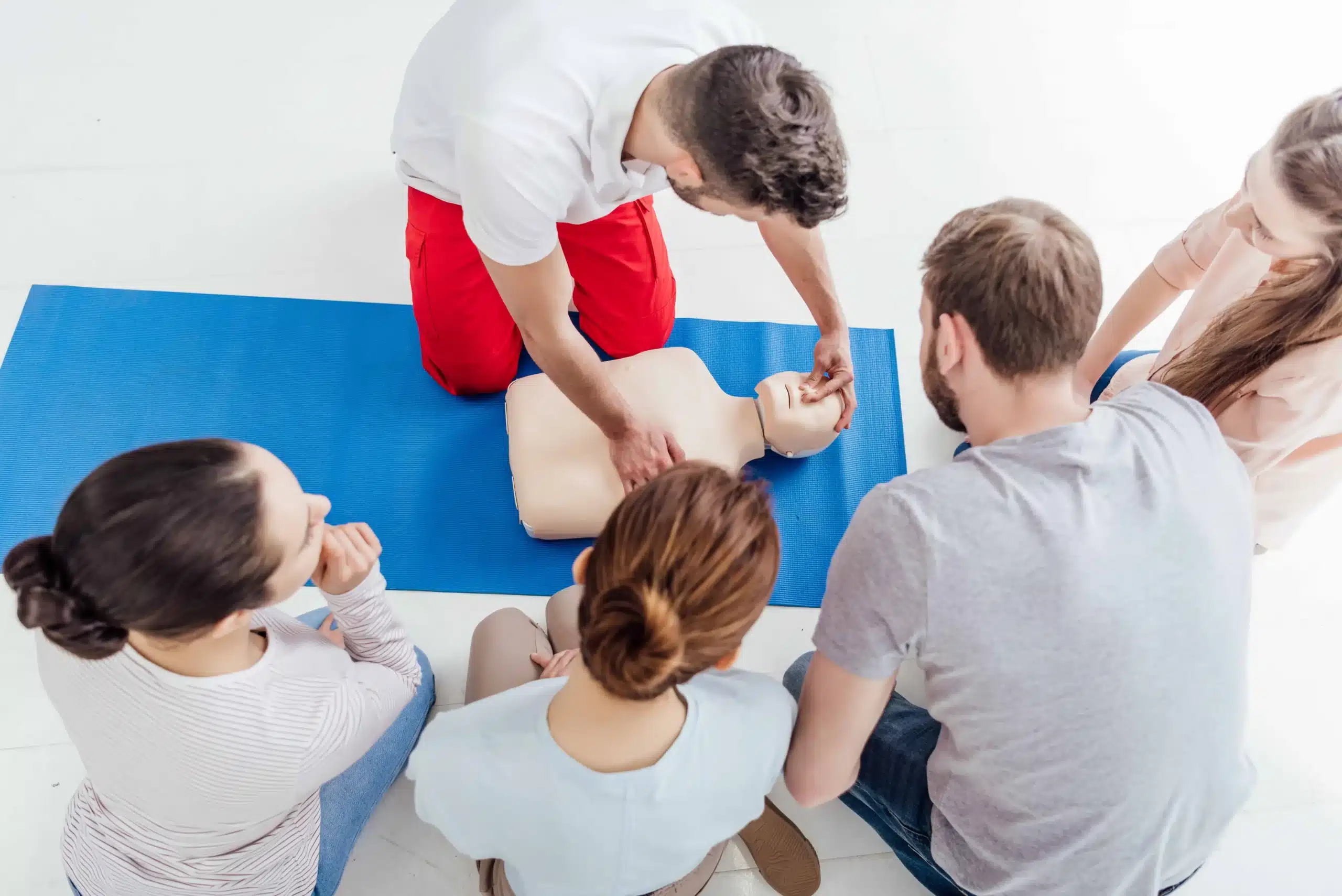
- A first aid course teaches essential skills for responding to medical and injury-related emergencies, including CPR, bleeding control, burns management, fractures, allergic reactions, and common first aid situations.
- The nationally recognised qualification HLTAID011 Provide First Aid is the standard requirement across many Australian workplaces and industries, with certification valid for three years and annual CPR training recommended.
- Completing a first aid training course through a registered training organisation ensures you receive an accredited course aligned with Australian Resuscitation Council and ASQA requirements.
- Learners can choose from multiple training options, including online/blended learning, face-to-face classes, workplace first aid, mental health first aid, remote first aid, and advanced first aid.
- A CPR course such as HLTAID009 Provide Cardiopulmonary Resuscitation focuses solely on resuscitation, while HLTAID011 provides a broader skill set suitable for most workplace needs.
- First aid courses are available across Australia, and students can easily find a first aid course near their location with flexible schedules, weekend classes, and practical, hands-on sessions.
- Completing a nationally accredited first aid course gives participants the confidence to provide a first aid response in an emergency situation at home, work, or in public.
- Employers often require staff to hold a first aid certificate for compliance, particularly in childcare, construction, hospitality, healthcare, transport, community services, and education.
- First aid training strengthens safety culture in workplaces and communities by equipping individuals with the skills and knowledge required to manage first aid emergencies before professional help arrives.
- Enrolling in a nationally recognised first aid training course today helps individuals and workplaces remain compliant, prepared, and capable of delivering first aid when it matters most.
Why First Aid Education Matters in Australia
Emergencies happen without warning. From cardiac arrest at home to burns in the kitchen, playground injuries, respiratory emergencies, and allergic reactions, everyday Australians are often the first people on the scene. That makes first aid skills essential — not optional.
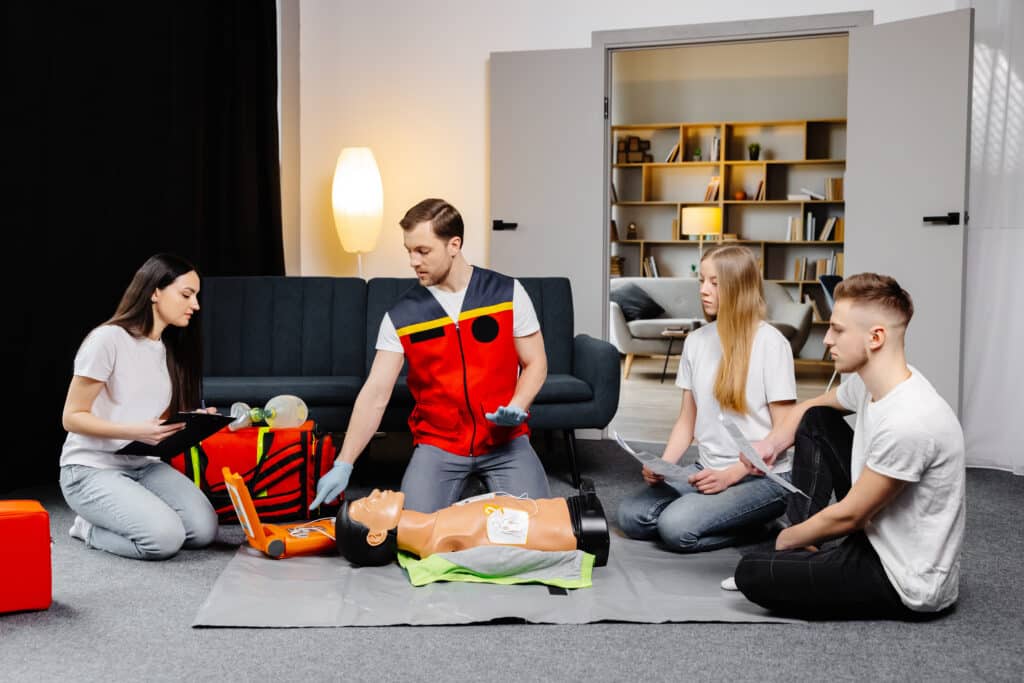
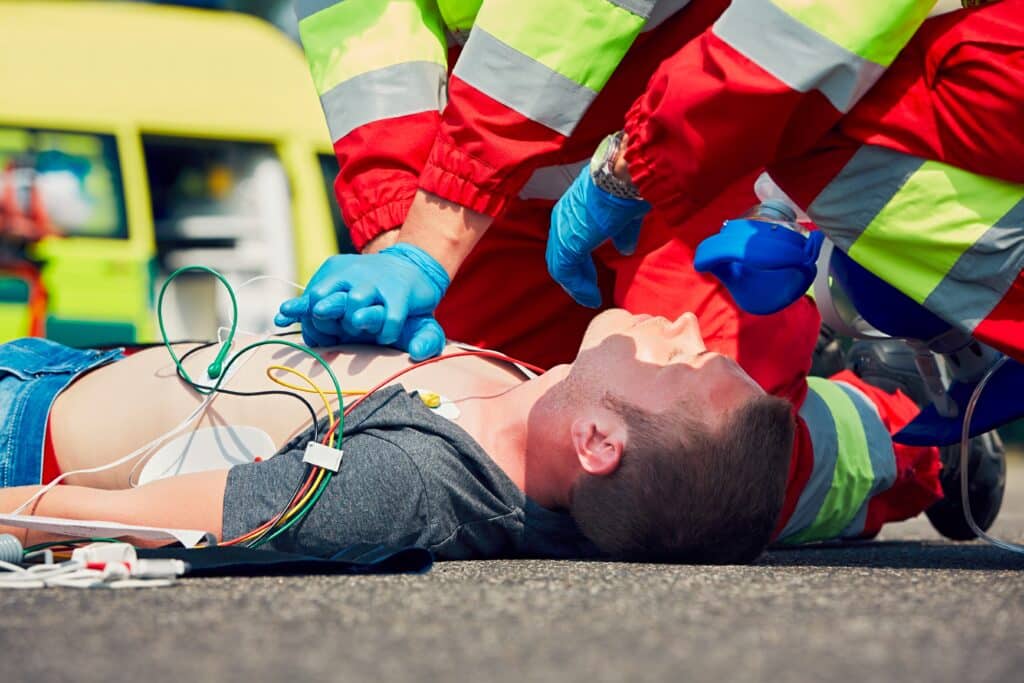
An Australian National First Aid Course gives you the skills to manage emergencies effectively, apply CPR, use an AED (defibrillator), control bleeding, treat fractures, respond to burns, manage shock, and stabilise a condition until professional help arrives. Courses are delivered by Registered Training Organisations (RTOs) and provide a nationally recognised certification accepted throughout Australia.
Click the video below to hear how former Yellow Wiggle Greg Page, survived a sudden cardiac arrest because of the swift first aid provided by concert bystanders.
What Is a National First Aid Course?
A national first aid course is an accredited qualification recorded against the national training package. Two of the most common, HLTAID011 Provide First Aid, and HLTAID012 Provide First Aid in an Education & Care Setting, and are required across many industries including childcare, construction, hospitality, education, community services, disability support, aged care, and more.
What HLTAID011 Covers
Core First Aid Skills Taught
Learn how to respond to emergencies using the full DRSABCD action plan.
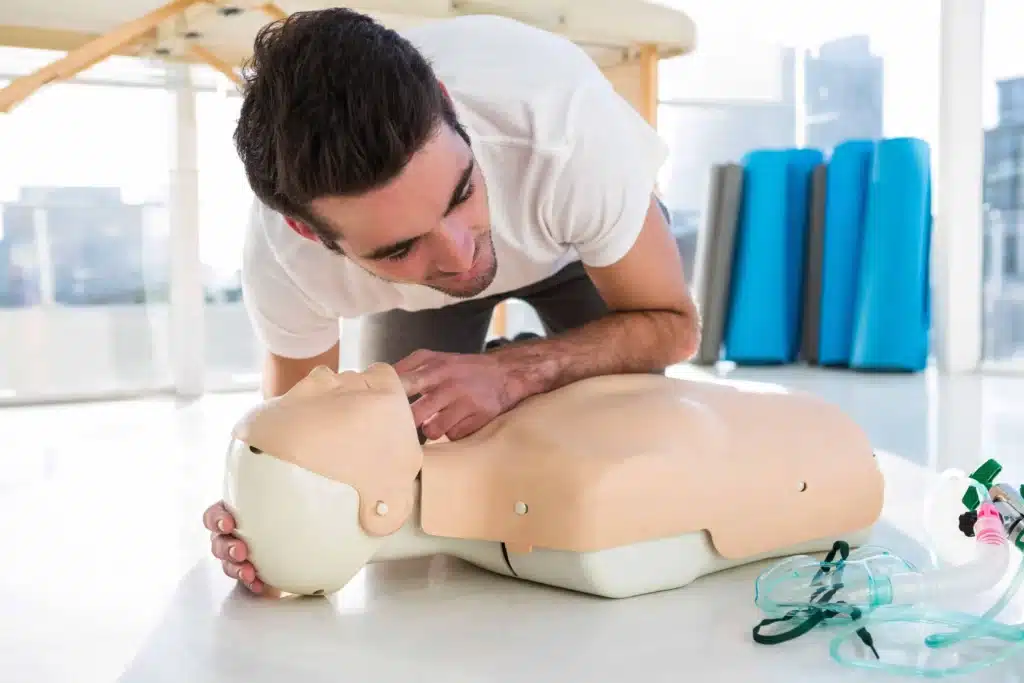
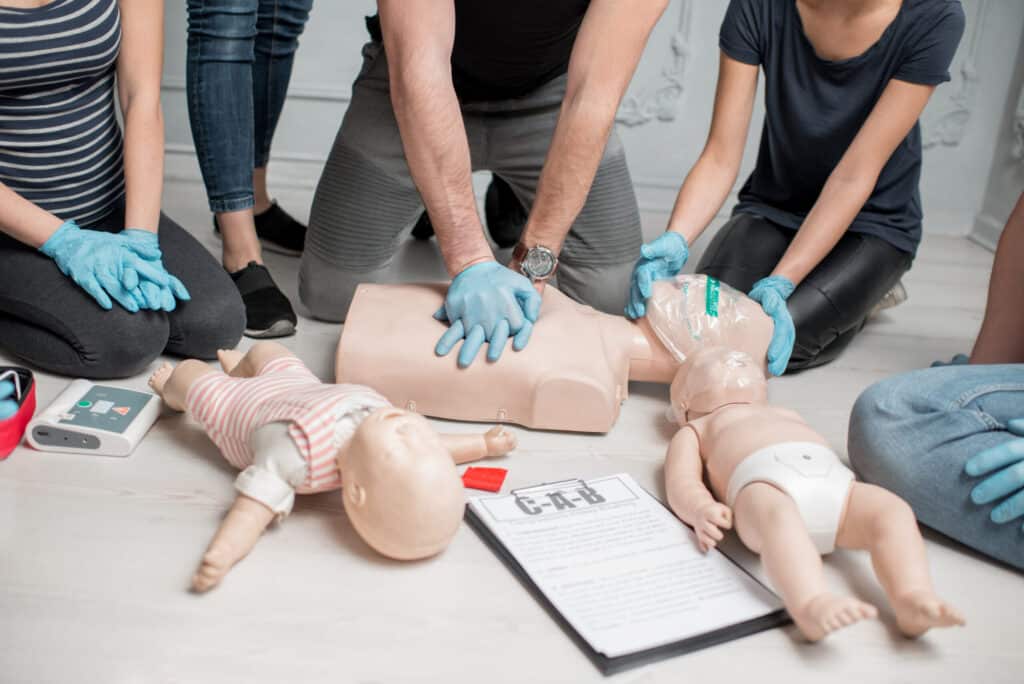
Perform high-quality CPR on adult and paediatric manikins.
Safely apply and operate an Automated External Defibrillator.
Bandaging, wound care, burn cooling, and soft-tissue injury management.
Recognise symptoms and administer correct first aid.
Immobilisation techniques, slings, and care for musculoskeletal injuries.
Manage shock, diabetes emergencies, seizures, and other illnesses.
Provide clear information when contacting emergency services.
Complete required workplace documentation and reports.
Who Oversees HLTAID011 Training?
Sets CPR and resuscitation guidelines used in all accredited courses.
Regulates RTOs delivering first aid training, ensuring compliance and quality.
Specifies assessment requirements for HLTAID011 Provide First Aid.
These national bodies ensure consistent, high-quality training and assessment for every student across Australia.
Types of First Aid Courses Available
Australia offers a range of accredited courses to suit different needs.
1. HLTAID011 – Provide First Aid
This is the most popular and widely required course. It covers CPR, basic life support, first aid response, and management of common injuries and illnesses.
2. HLTAID009 – Provide Cardiopulmonary Resuscitation (CPR)
Ideal for those needing annual CPR refreshers. Covers adult and infant CPR, AED usage, airway emergencies, and recovery position techniques.
3. HLTAID012 – Provide First Aid in an Education and Care Setting
A course designed for childcare educators, teachers, and parents. Includes asthma, anaphylaxis, paediatric CPR, and emergency response for children.
4. Nationally Accredited First Aid Mental Health Course
Teaches participants how to recognise signs of mental health challenges and support someone in crisis.
5. HLTAID013 Remote First Aid
Covers extended care, environmental injuries, and situations where medical help may be delayed.
6. Advanced First Aid HLTAID014
This course equips learners to respond to more complex or multiple-casualty emergencies, including coordinating other first aiders and using additional equipment, beyond the standard workplace first aid level. It typically covers advanced life support skills such as managing severe trauma, major bleeding, spinal injuries, and high‑risk incidents, and is aimed at roles in higher-risk or larger workplaces
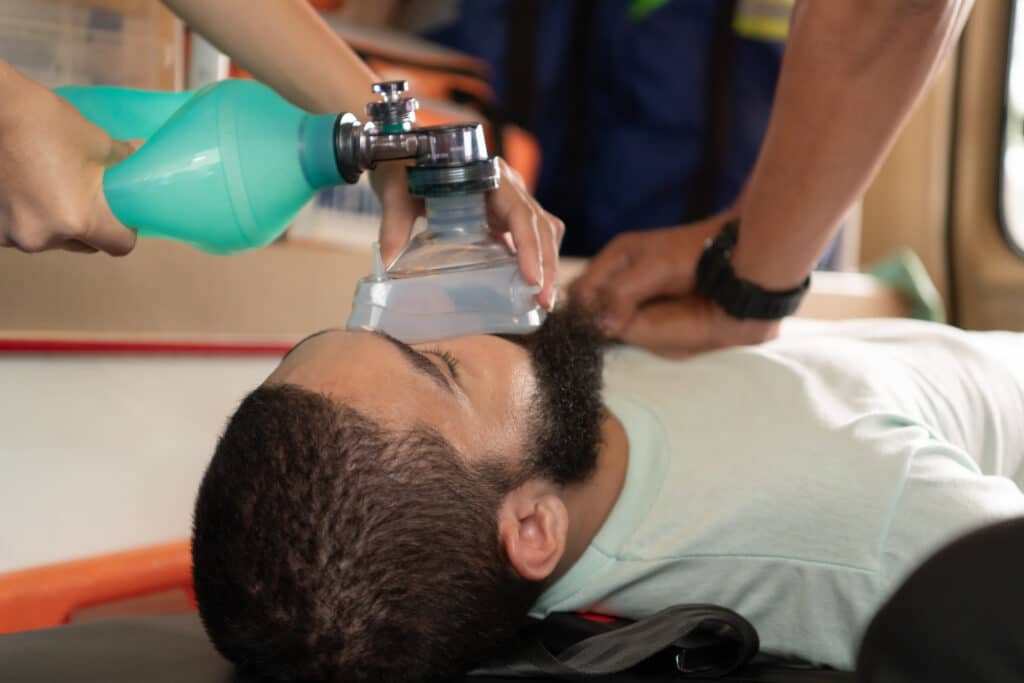
7. Advanced Resuscitation Course HLTAID015 (oxygen Therapy)
Focuses on advanced resuscitation techniques, including use of oxygen equipment, airway adjuncts, and defibrillation in line with Australian Resuscitation Council guidelines. It is designed for people who may need to manage cardiac arrest or compromised breathing using specialised resuscitation equipment in workplace or community settings.
Course Comparison Table
Course | Duration | Assessment | Suitable For | Typical Cost |
HLTAID011 Provide First Aid | 5.5 in-person, or 2 hrs + online (blended) | CPR assessment, scenarios | Workplaces, general public | $79–$99 |
HLTAID009 CPR | 1–2 hrs | 2 mins continuous CPR | Annual refresher | $30–$50 |
HLTAID012 Childcare | 6.5 Or, 2 hrs +online for blended | Paediatric scenarios | Teachers, childcare staff | $99 |
First Aid Mental Health Course (Accred.) | 6 hrs | Practical skills | Community, managers | $129 |
Remote / Advanced First Aid | 5 – 6 hours | Advanced skills | Outdoor workers, rural areas | $199 (Remote)–$120 (Advanced) |
Please note: prices are for RTO: First Aid Pro, and times may vary depending on the student’s choice of delivery option and their own personal skill levels and experience.
How Long Is National First Aid Course Certification Valid For?
While a national first aid course certification does not technically expire, the ARC provides clear guidelines for renewal timelines which are widely accepted as first aid industry requirements.
Renewal Requirements
Course | Valid For |
HLTAID011 Provide First Aid | 3 years |
HLTAID009 CPR | 12 months |
HLTAID012 Childcare First Aid | 3 years |
Mental Health First Aid | 3 years |
Refreshing your qualification ensures your skills remain current, particularly because CPR guidelines can change over time.
Why Choose a National Provider?
Enrolling with a recognised national training provider ensures you receive consistent training regardless of your location. Quality national RTOs offer:
- Experienced, industry-qualified trainers
- Modern training resources and equipment
- Multiple training rooms across Australia
- Online and blended learning options
- National recognition across all states and territories
A well-known and trusted provider such as FirstAidPro gives you confidence that your national first aid course certification is accepted by employers in all Australian states and territories.
In addition, national first aid course providers also generally offer corporate bookings, allowing entire workplaces to become compliant in one session.
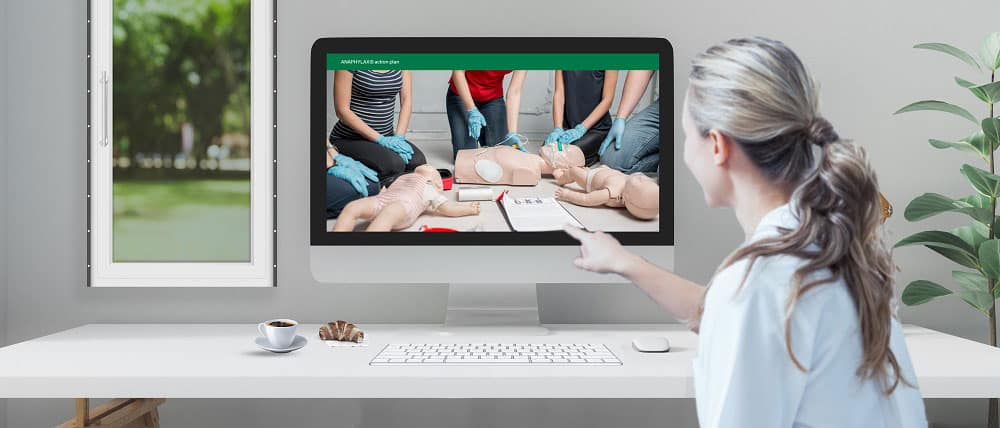
Online vs In-Person Training — Which Is Best for You?
Australian national first aid course training providers now offer flexible training models to suit busy schedules.
Online (Blended) First Aid Courses
Learners complete theory online at their own pace, then attend a short face-to-face practical session to demonstrate skills such as CPR, recovery position, and bandaging.
Benefits:
- Study anytime
- Shorter in-class time
- Ideal for busy workers and parents
- Accepted by employers if delivered by an RTO
In-Person Training
Perfect for hands-on learners who enjoy classroom interaction. Provides greater opportunities for group interactions and teamwork while practicing first aid skills.
Which Should You Choose?
Online is ideal if you prefer flexibility, while in-person suits those wanting more group interaction and support. Both deliver the same nationally recognised certificate when provided through a registered RTO.
Key National First Aid Course Skills You Will Learn
CPR & AED Use
Learn correct compression depth, rate, hand placement, and how to apply AED pads safely.
Bleeding Control
Use firm pressure, elevation, wound dressings, and shock management to control bleeding.
Burns First Aid
Cool for 20 minutes under running water, remove jewellery, and cover with a sterile non-stick dressing.
Fracture Care
Immobilise fractures and soft tissue injuries using slings and bandages, and regularly check circulation.
Medical Emergencies
Respond to asthma, anaphylaxis, diabetic emergencies, seizures, fainting, and other sudden illnesses.
Paediatric First Aid
Learn infant CPR, choking response, febrile convulsion care, and everyday safety scenarios for children.
Enrol Today and Start Saving Lives
Completing an accredited national first aid course will equip you with essential skills for emergencies at home, work, school, or in public. With flexible schedules, online enrolment, and instant digital certificates, taking action has never been easier.
Why Enrol Now?
- Courses aligned with ARC and ASQA guidelines
- National RTO provider recognition
- Small class sizes for personalised training
- Certificates accepted in all industries
Book Your Accredited National First Aid Course Today
Knowledge Test: Australian National First Aid Course Quiz
Test your understanding of Australian first aid course essentials.

Why a National First Aid Course Is Essential for Everyday Safety
The Australian National First Aid Course options provide a strong foundation for anyone who wants to make a positive difference. Whether you’re a parent, worker, teacher, carer, or simply someone who wants to be prepared, gaining accredited first aid skills empowers you to protect your family, colleagues, and community with confidence.
References
- Australian Resuscitation Council (ARC) – Guidelines and Resources
- ANZCOR Guidelines for CPR and First Aid
- Healthdirect: First Aid Basics
- Safe Work Australia — First Aid in the Workplace Code of Practice
- Better Health Channel: First Aid